


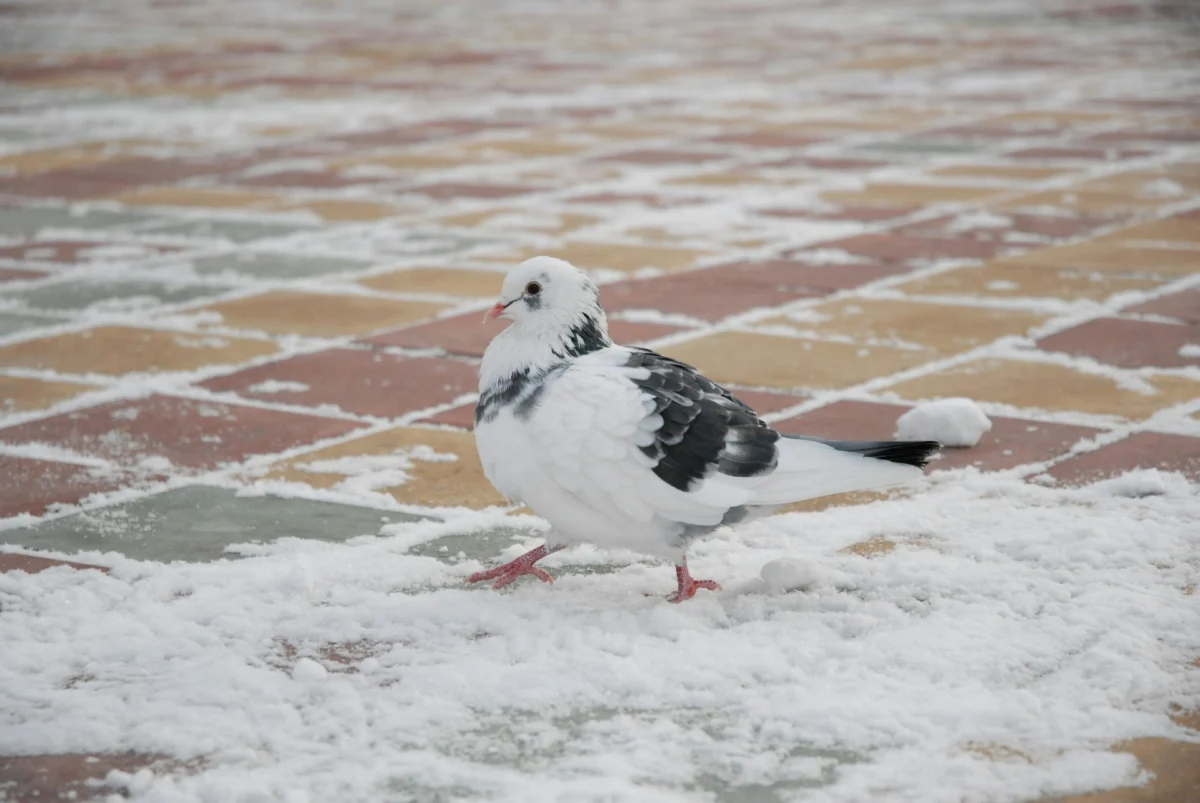
Witnessing a common gull standing with apparent indifference on a frozen expanse, or observing a duck serenely navigating water that would send a human into hypothermic shock within minutes, presents one of winter’s most profound and beautiful mysteries. For months on end, these feathered creatures exist on the very precipice of frostbite, their extremities subjected to extreme cold, yet their feet remain remarkably functional, unmarred by injury, and astonishingly warm. This seemingly impossible feat is not a matter of magic, but rather a testament to a sophisticated physiological engineering marvel known as countercurrent heat exchange.
The Ingenious Design: Why Bird Feet Remain Functional in Freezing Temperatures
The anatomical makeup of a bird’s legs is a key factor in their extraordinary cold tolerance. Unlike mammals, a bird’s legs possess very little muscle mass. The primary muscles responsible for leg movement are strategically located higher up in the body, nestled within the warmth and protection of feathers. The portions of the leg exposed to the elements – the tibiotarsus and tarsometatarsus – are largely composed of bone, tendon, and an incredibly dense, intricately woven network of blood vessels. This specialized structure allows birds to withstand cold far beyond the capabilities of most mammalian species.
At the heart of this adaptation lies the elegant principle of countercurrent heat exchange. This biological mechanism involves the precise arrangement of arteries and veins within the bird’s legs. Warm arterial blood, carrying heat from the bird’s core, flows downwards from the body towards the feet. Simultaneously, cold venous blood, returning from the extremities after losing heat to the environment, flows upwards towards the body. The remarkable efficiency of countercurrent heat exchange is achieved by placing these descending warm arteries in direct, intimate contact with the ascending cold veins.
As the warm arterial blood descends, it encounters the cold venous blood. Through the principle of thermal conductivity, heat is transferred from the warmer artery to the colder vein. This continuous exchange means that by the time the venous blood reaches the bird’s torso, it has been significantly pre-warmed, effectively protecting the vital core temperature from dropping. Conversely, the arterial blood, as it travels down towards the feet, loses a considerable amount of its initial heat. Consequently, the blood reaching the extremities is already cooled, minimizing the temperature gradient between the foot and the frigid environment. This reduction in heat loss to the ice and water is paramount for survival.
Furthermore, the tissues within a bird’s foot are not simply passive recipients of this cooled blood. They have evolved a remarkable ability to adapt to these low internal temperatures. This adaptation involves a reduction in the amount of freezable water within the cells and a biochemical recalibration of cellular components, allowing them to tolerate extreme cold without succumbing to ice crystal formation and cellular damage. Birds also possess the ability to dynamically regulate blood flow to their legs. In exceptionally harsh conditions, they can consciously reduce circulation to their extremities, conserving precious body heat without pushing the tissues to the point of irreversible damage. This controlled vasoconstriction is a critical survival mechanism.
Species such as mallards and gulls are frequently observed pushing these remarkable physiological limits, spending extended periods standing on icy surfaces or swimming in frigid waters. However, birds like loons, grebes, and various diving ducks face even more extreme challenges. These aquatic birds often immerse their entire bodies in water that is significantly colder than the ambient air temperature, yet their legs and feet remain fully functional, allowing them to dive, swim, and forage effectively.

Feathered Insulation and Behavioral Adaptations: A Multifaceted Survival Strategy
While the countercurrent heat exchange system is the primary physiological mechanism for keeping bird feet warm, other factors contribute to their overall winter survival. Feathers, though not directly involved in warming the feet, play a crucial role in preventing heat loss from the rest of the bird’s body. The dense, insulating properties of their plumage ensure that the body’s core temperature is maintained efficiently, thereby providing the necessary warmth for the countercurrent system to operate without being overwhelmed. This conserved body heat is what fuels the process of warming the returning venous blood.
Beyond physiological adaptations, birds also employ a range of behavioral strategies to further minimize heat loss and protect their extremities. Many species, when standing on ice or snow, will habitually alternate their weight between legs, allowing one leg to rest and recover its temperature while the other is in use. Another common behavior is to tuck one foot up into the warmth of their belly feathers, effectively shielding it from the cold and allowing it to regain heat. This combination of advanced physiological design and intelligent behavioral adaptation creates an exceptionally elegant and effective solution for life in cold environments.
Evolutionary Engineering at its Finest: A Masterclass in Adaptation
The countercurrent heat exchange system found in birds is widely regarded as one of the most refined examples of evolutionary engineering in the natural world. It is a prime illustration of how natural selection can sculpt intricate biological mechanisms to overcome environmental challenges. This adaptation allows birds to exploit a vast range of habitats, from the frozen tundra and snow-laden forests to the frigid waters of lakes and oceans. They are able to remain active, forage for food, and reproduce in conditions that would render most other animals immobile or lead to their demise.
The ability of birds to thrive in cold climates has profound implications for ecological dynamics. Their continued presence and activity in winter can influence seed dispersal, insect populations, and nutrient cycling in otherwise dormant ecosystems. For instance, birds that feed on berries and seeds during winter help to distribute plant genetic material across landscapes, a crucial role for plant regeneration in the spring. Their foraging activities can also keep insect populations in check, preventing potential outbreaks that could damage vegetation.
Broader Implications and Scientific Fascination
The scientific study of avian thermoregulation, particularly the countercurrent heat exchange system, has not only deepened our understanding of bird biology but has also inspired innovations in human engineering. Principles derived from studying this natural phenomenon have been applied in the design of advanced materials and medical devices aimed at managing heat loss in various applications, from prosthetics to specialized clothing for extreme environments.
The ongoing research into how birds endure such extreme cold continues to reveal the intricate biochemical and genetic underpinnings of their resilience. Scientists are investigating the specific proteins and enzymes that enable bird tissues to function at sub-zero temperatures, as well as the genetic pathways that control blood flow regulation. Understanding these mechanisms could potentially lead to new therapeutic strategies for conditions involving cold injury or circulatory problems in humans.
As winter blankets landscapes, the seemingly effortless grace of birds navigating the frost serves as a constant reminder of nature’s remarkable ingenuity. Their ability to thrive in conditions that would challenge our own resilience is a powerful testament to the enduring force of evolution and the extraordinary adaptations that life can develop. The silent efficiency of their countercurrent heat exchange system is a quiet marvel, unfolding daily across the globe, a stark and beautiful contrast to the harshness of the winter season.
