

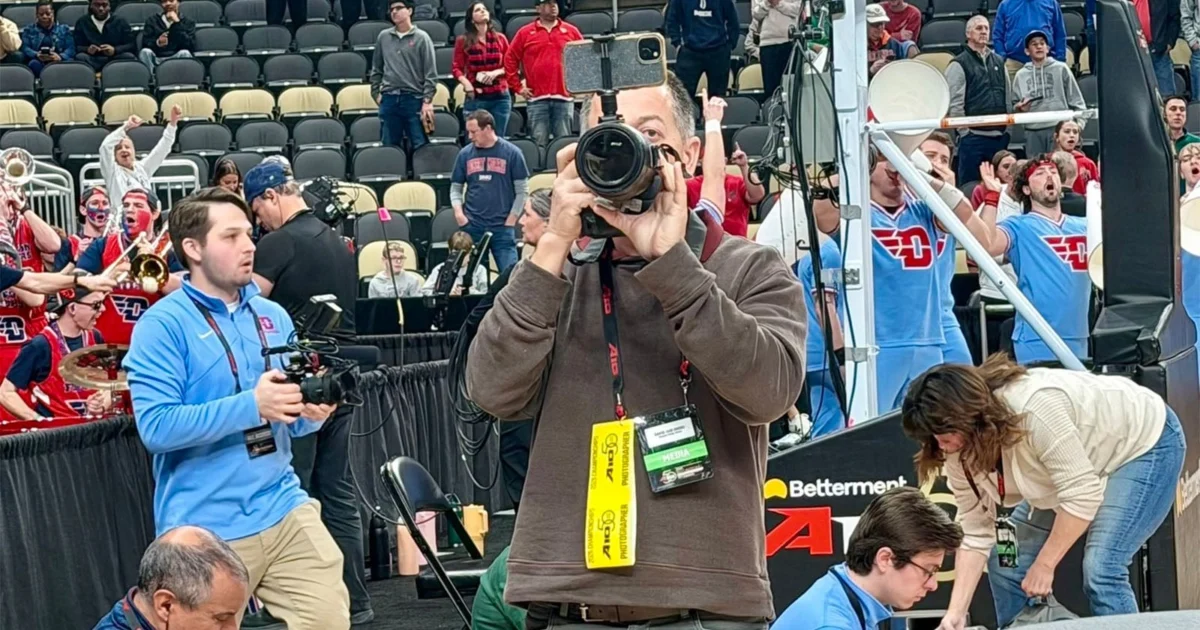
In an era where newsrooms are shrinking and the demand for instantaneous, multi-platform content is at an all-time high, the traditional boundaries of sports journalism have effectively dissolved. Leading this transition is David Jablonski, a veteran sports journalist for Cox-owned newspapers in Ohio, who has spent nearly two decades refining what he calls the "journalism trifecta." By mastering the simultaneous delivery of high-quality prose, professional-grade photography, and real-time videography, Jablonski has become a living blueprint for the modern hybrid reporter. His approach—often referred to as "triple filing"—is not merely a survival tactic in a "do-more" job market, but a strategic evolution that brings readers closer to the action than ever before.
The Anatomy of a Multimedia Game Day
The logistical demands of modern sports coverage are perhaps best illustrated by Jablonski’s coverage of the University of Dayton Flyers during their National Invitational Tournament (NIT) run. On March 21, when the Flyers faced the University of North Carolina Wilmington, Jablonski’s workday commenced at 3:00 a.m. in Ohio. The journey involved a multi-leg flight from Columbus through Charlotte, eventually landing on the East Coast.
For a traditional reporter, the flight might be a time for rest or research. For Jablonski, the reporting begins at the terminal. Using platforms like X (formerly Twitter) and Instagram, he documents the travel experience, humanizing the beat and building a narrative arc for fans before the first whistle even blows. Upon arriving at the arena, the workload intensifies. Jablonski’s routine involves a rapid-fire sequence of tasks: scouting the venue, checking player availability, and filing pre-game stories for digital platforms.
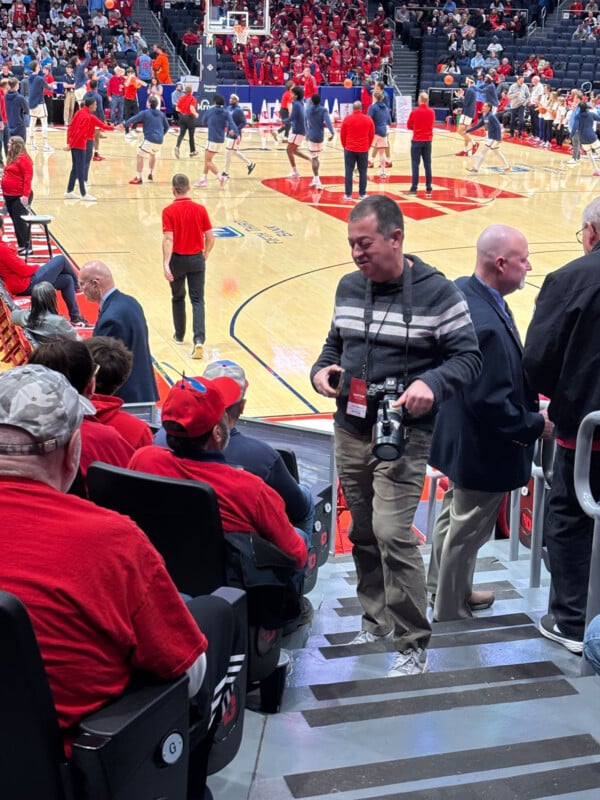
During the game, Jablonski moves from the relative comfort of the press box to the floor. "Earlier in my career, I would sit in the press box during games," Jablonski noted. "Compared to what I do now, that feels like wasted time." From the sidelines, he manages a complex workflow. He provides halftime updates, files immediate post-game recaps, and compiles extensive photo galleries and highlight reels. The day finally concludes around midnight at a hotel, where he puts the finishing touches on a "digital-only" long-form piece that will eventually find its way into the print edition two days later.
A Chronology of Skill Acquisition and Industry Evolution
Jablonski’s path to becoming a multimedia pioneer was not paved by formal institutional training, but by necessity and self-directed learning. A 1999 graduate of the E.W. Scripps School of Journalism at Ohio University, he entered the field at a time when reporters and photographers were distinct, often non-overlapping roles. The expectation was simple: the writer provided the text, and the photo department provided the visuals.
The shift began in earnest nearly 20 years ago as digital platforms started to prioritize video content. However, the true turning point for Jablonski occurred in 2013. Tasked with covering 70 Cincinnati Reds games in a single season, he was handed a DSLR camera by his employer. This immersive experience served as a trial-by-fire apprenticeship. Without a formal background in optics or composition, Jablonski relied on trial and error to master the technical nuances of sports photography—shutter speeds, aperture settings, and the timing required to capture a split-second play at home plate.
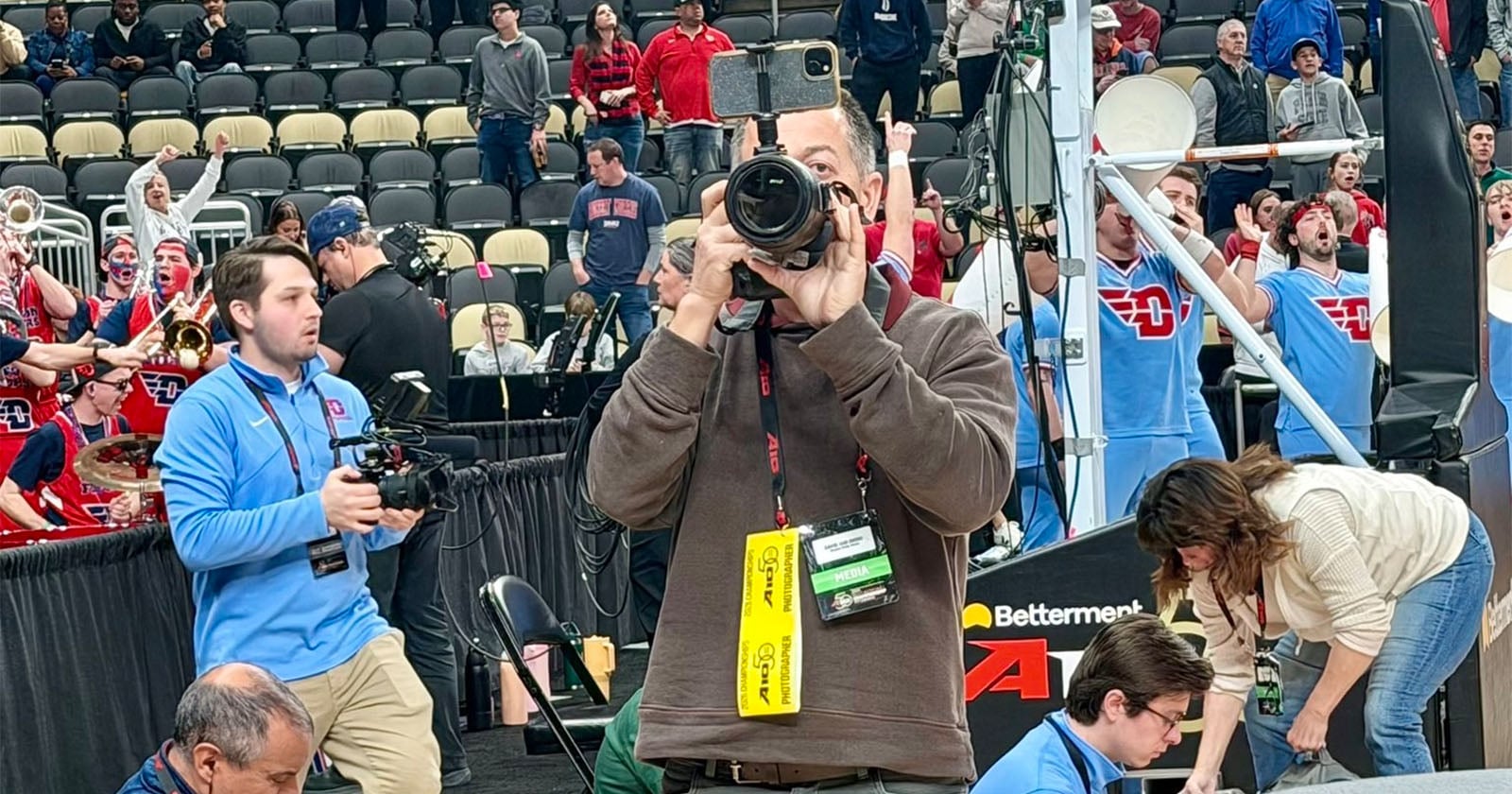
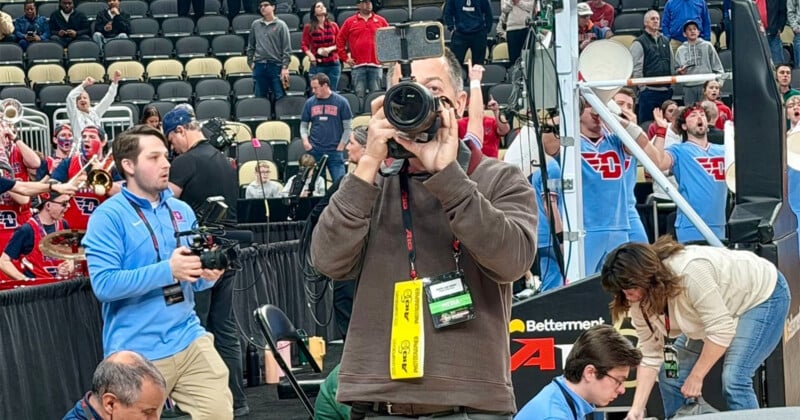
By 2015, Jablonski had moved beyond merely using the tools provided; he began innovating his own hardware solutions. To solve the problem of choosing between a still photo and a video clip, he engineered a custom device to attach his smartphone to the end of his professional camera lens. This allowed him to record high-definition video of a play while simultaneously firing the shutter on his DSLR to capture high-resolution stills. This "hybrid" approach ensured that his digital stories were the most comprehensive in the market, featuring a richness of media that traditional outlets struggled to match with larger teams.
Data and Context: The Shift to Digital-First Journalism
The evolution of Jablonski’s role reflects broader trends within the American media landscape. According to data from the Pew Research Center, newsroom employment in the United States dropped by over 50% between 2008 and 2020. This contraction forced a radical shift in labor dynamics. The "one-man band" or "MMJ" (multimedia journalist) became the standard rather than the exception.
In the sports world, this shift is particularly acute. Sports fans are among the most digitally active consumers, demanding "second-screen" experiences. A 2023 industry report indicated that over 70% of sports fans use a mobile device while watching games on television, seeking out real-time stats, alternate angles, and social media commentary. Jablonski’s triple-filing method feeds directly into this appetite. By providing the photo, the video, and the analysis in one package, he increases the "dwell time" on his publications’ websites—a key metric for digital advertising revenue.
Furthermore, the University of Dayton Flyers represent a unique beat. The program has a storied history, and the UD Arena is frequently cited as one of the most electric environments in college basketball. Jablonski’s deep connection to this history—exemplified by his authorship of "The Epicenter of College Basketball: A History of University of Dayton Arena"—allows him to add a layer of historical context to his multimedia work that a freelance photographer or a general assignment reporter could not provide.
Professional Standing and Industry Recognition
Despite the heavy emphasis on visuals, Jablonski maintains that "writing and reporting are always the priorities." His peers in the industry have validated this commitment to journalistic excellence. Jablonski is a member of the U.S. Baseball Writers Association of America (BBWAA) and the U.S. Basketball Writers Association (USBWA). Most notably, he serves as a Top-25 voter for the Associated Press in both college football and basketball—a role reserved for the most knowledgeable and respected voices in the field.
His work has been consistently honored by the Ohio Associated Press Media Editors, proving that the quality of his prose has not suffered under the weight of his additional technical responsibilities. This balance is rare; while many reporters now take "cell phone photos" for social media, few manage to produce professional-grade photojournalism that meets the standards of a major metropolitan daily while simultaneously filing AP-style game recaps.
Interestingly, the theme of professional versatility extends to his personal life. His spouse, Barbara J. Perenic, was an award-winning photojournalist at The Columbus Dispatch for over a decade. In a mirror image of the industry’s fluid roles, she transitioned in 2024 to a staff position at The Ohio State University Wexner Medical Center, where her title is "Writing and Editing Specialist." This highlights a growing trend: the most successful professionals in the communication arts are those who can navigate the entire spectrum of media production, from the lens to the keyboard.
Implications for the Future of Sports Media
The career of David Jablonski offers a significant case study for the future of journalism education and the labor market. As news organizations continue to seek efficiencies, the "hybrid" model is likely to become the baseline requirement for entry-level positions. Journalism schools, like Jablonski’s alma mater, the E.W. Scripps School, have already begun integrating "cross-platform" training into their core curricula, ensuring that the next generation of reporters is as comfortable with a gimbal and a light meter as they are with an interview notebook.
However, Jablonski’s success also raises questions about the sustainability of such high-intensity roles. A workday that spans 21 hours and involves international or cross-country travel while managing three different media formats is a grueling standard. While Jablonski notes that his multimedia skills are now "second nature," the mental load of "triple filing" requires a level of cognitive multitasking that can lead to burnout if not managed carefully.
Ultimately, Jablonski’s work serves as a bridge between the storied past of print journalism and the fragmented, high-speed future of digital media. By refusing to let the quality of any single medium slip, he has demonstrated that the "do-more" era of journalism does not have to mean "do-less" in terms of quality. For the fans of the Dayton Flyers, the Cincinnati Reds, and the various Ohio sports teams he covers, Jablonski’s hybrid approach provides a comprehensive window into the games they love—one that is written, photographed, and filmed by a single, dedicated observer.
