


The vibrant Myiopsitta monachus, commonly known as the quaker parrot or monk parakeet, presents a fascinating duality as both a cherished companion animal and a species with significant ecological implications when outside its native range. Originating from the diverse landscapes of South America, these cheerful and intelligent parrots have garnered considerable attention from pet enthusiasts and conservationists alike. Understanding their natural history, unique characteristics, and global impact is crucial for responsible pet ownership and effective wildlife management.
Species Overview: Origin and Characteristics
The monk parakeet is a small to medium-sized parrot, typically reaching up to 33 centimeters (13 inches) in length and weighing approximately 140 grams. Its natural distribution spans across Argentina and surrounding countries, inhabiting low-lying areas up to 1,000 meters (3,300 feet) in elevation. These adaptable birds thrive in various environments, from wooded and sparsely wooded areas to savannahs, palm forests, and even urban parks. Their lifespan can extend remarkably, often reaching up to 30 years in captivity with proper care. Despite their lively demeanor, their noise level is generally considered low to moderate compared to larger parrot species, though their flock calls can be quite distinctive and piercing.
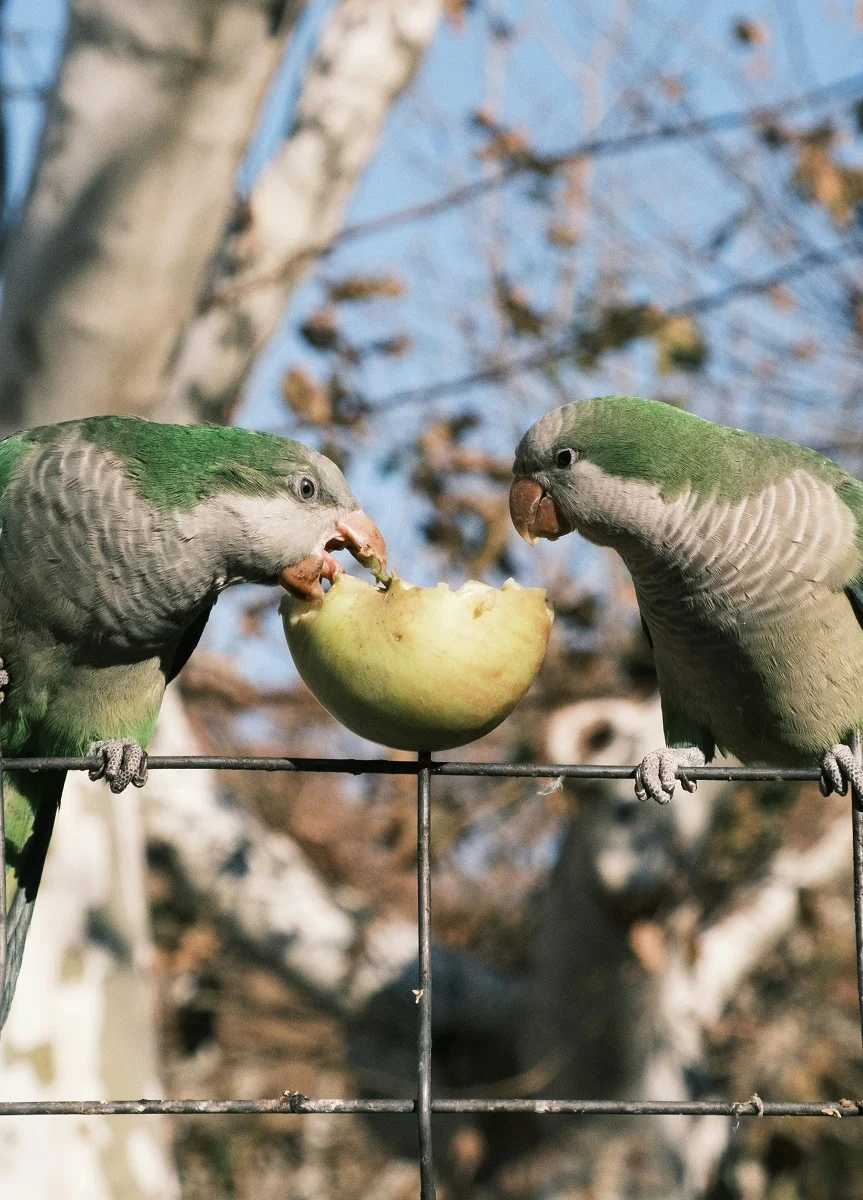
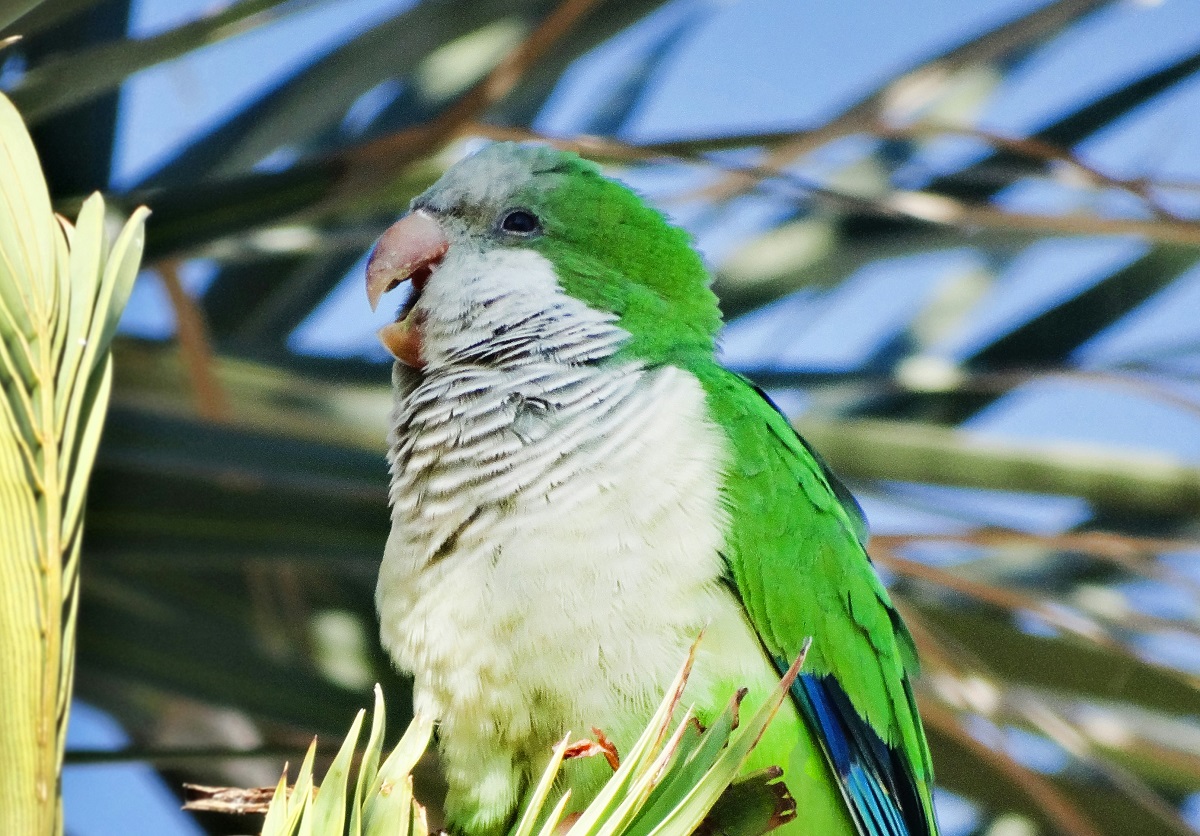
Wild monk parakeets are easily identified by their striking mossy green backs, contrasting gray fronts, and bright blue flight feathers. They possess long, tapered tails and a unique skin-colored beak. However, selective breeding within the pet trade has led to a remarkable array of color mutations. Beyond the natural green, captive-bred individuals can be found in vibrant shades of blue, yellow (Lutino), gray, white (Albino), and various combinations, offering diverse aesthetic choices for owners. While female monk parakeets tend to be slightly smaller than males, this difference is often imperceptible visually, necessitating DNA testing for accurate sex determination, particularly important for breeding programs or specific behavioral management.
Natural Range and Conservation Status
The indigenous range of Myiopsitta monachus is concentrated in South America, encompassing a small southern portion of Brazil, eastern Bolivia, the majority of Paraguay and Argentina, and all of Uruguay. This lowland species demonstrates remarkable adaptability, thriving in areas where a mix of wooded patches and open spaces provides both shelter and foraging opportunities.
According to the IUCN Red List, Myiopsitta monachus is classified as a species of "Least Concern." This designation reflects its widespread presence and generally stable, if not increasing, population trends within its native habitat. Interestingly, the species appears to be benefiting from certain human-induced changes to its environment. The expansion of Eucalyptus forests for paper pulp production, for example, provides additional nesting sites for these communal builders. Furthermore, the growth of agricultural practices, particularly the cultivation of maize and other grains, offers an abundant and readily available food source, contributing to their local commonality.
This success stands in stark contrast to its only congener, Myiopsitta luchsi, the Cliff Parakeet, which is considered "Near Threatened." M. luchsi has a much more restricted range, confined to specific dry inter-Andean valleys of Bolivia, and is particularly vulnerable to habitat degradation and the illegal pet trade due to its specialized ecological niche. The differing fates of these two closely related species underscore the complex interplay between human activities and avian populations.
The Global Phenomenon: Monk Parakeets as Invasive Species
Despite their stable status in their native lands, monk parakeets have gained notoriety globally as a highly invasive species. Their ability to adapt to diverse climates and exploit human-modified landscapes has facilitated the establishment of self-sustaining feral populations in numerous countries across North America, Europe, and parts of Asia.
The chronology of their global spread largely traces back to the mid-20th century. Introduced primarily through the international pet trade, escapes and deliberate releases of these hardy birds led to the formation of wild colonies. In the United States, for instance, populations began to proliferate in the 1960s and 1970s, with significant concentrations now found in states like Florida, Texas, Illinois, New York, and Connecticut. Similarly, European cities such as Madrid, Barcelona, London, and Brussels host thriving monk parakeet colonies. The species’ ability to construct large, communal stick nests, a unique trait among parrots, provides excellent insulation and protection, allowing them to survive even in colder temperate climates where other parrot species might struggle.
The ecological and economic impacts of these invasive populations are a serious concern. Ecologically, monk parakeets compete with native bird species for food and nesting sites, potentially disrupting local biodiversity. Their aggressive nature and communal nesting habits can displace native cavity-nesting birds, and they may also contribute to the spread of avian diseases. Economically, their taste for seeds and grains makes them agricultural pests, causing significant crop damage to corn, sunflowers, and other cultivated plants. Furthermore, their large stick nests, often built on utility poles and communication towers, can pose a fire hazard, interfere with electrical equipment, and necessitate costly removal efforts, leading to infrastructure damage and power outages.
Regulatory Landscape and Management

Given the documented negative impacts, many jurisdictions have implemented strict regulations concerning the ownership and management of monk parakeets. In the United States, several states, including California, Pennsylvania, Georgia, and Kansas, have enacted bans or severe restrictions on their ownership, sale, or breeding. These measures aim to prevent further escapes and mitigate the spread of existing feral populations. For example, in California, possession of a monk parakeet is illegal without specific permits, reflecting a proactive stance against invasive species.
Official responses to established invasive populations often involve monitoring, trapping, and removal programs. Wildlife agencies and local governments collaborate to assess population sizes, track movements, and implement humane control measures. Public awareness campaigns are also crucial, educating pet owners about the risks of releasing non-native species and emphasizing the importance of secure enclosures. From a legislative perspective, the consensus among wildlife management authorities is that prevention of establishment is far more effective and less costly than eradication once populations are entrenched. Responsible pet ownership, therefore, plays a vital role in preventing new introductions into sensitive ecosystems.
Caring for Myiopsitta monachus in Captivity
For those considering a monk parakeet as a pet, understanding their specific care requirements is paramount to ensuring a long and healthy life.
Dietary Requirements:
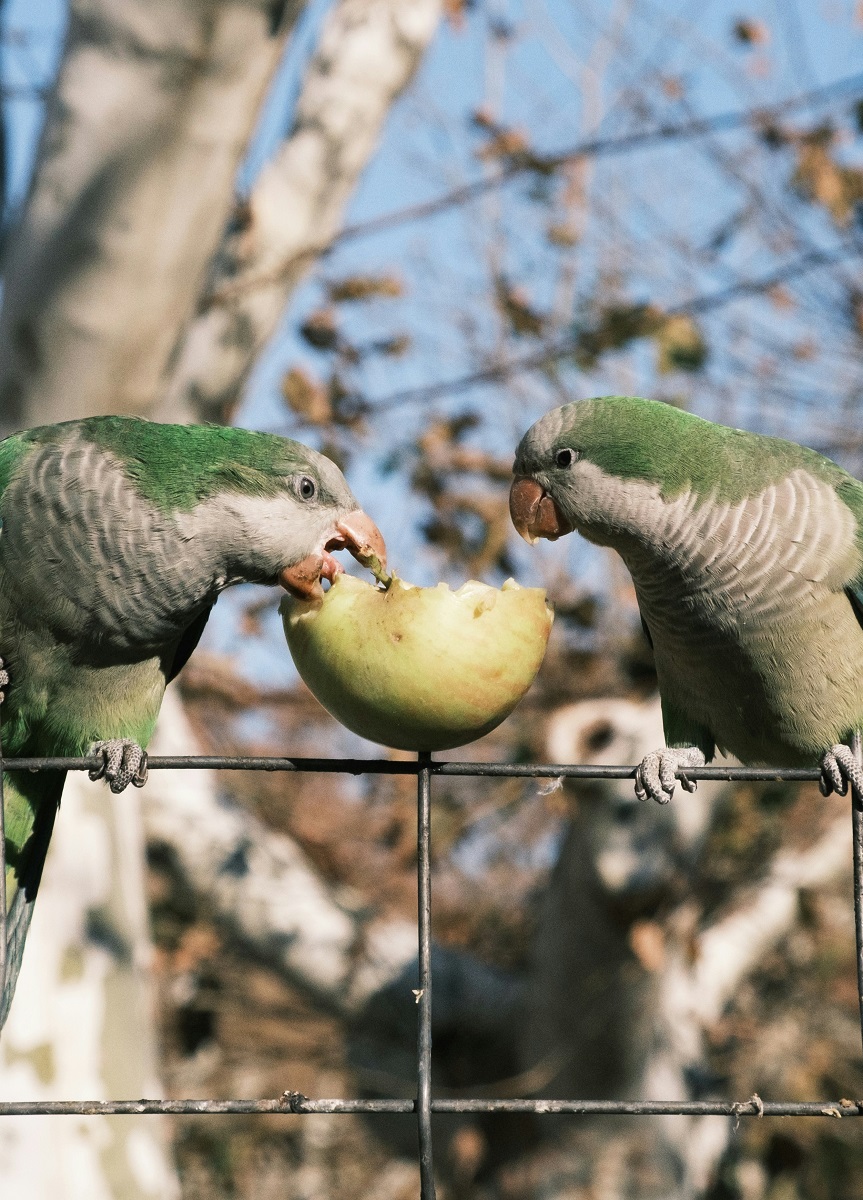
In the wild, monk parakeets consume a diverse herbivorous diet primarily consisting of seeds, wild fruits, and the succulent stems of cacti. They are opportunistic feeders and will occasionally supplement their diet with insects and grubs. Their strong preference for seeds often leads them to agricultural fields, where they are considered pests due to their foraging on corn and other grains.
In captivity, a healthy diet for a monk parakeet should deviate significantly from a seed-heavy mix. Avian veterinarians universally recommend a high-quality formulated pellet as the foundation of their diet. These pellets are nutritionally complete and prevent selective eating, which can lead to deficiencies. This staple should be supplemented daily with a wide variety of fresh fruits and vegetables. Excellent choices include dark leafy greens (kale, spinach, romaine lettuce), orange and yellow vegetables (carrots, sweet potatoes, bell peppers), berries (blueberries, raspberries), and other fruits (apples, bananas, melon). Foods to avoid include avocado, chocolate, caffeine, alcohol, fruit pits, onion, garlic, and excessive amounts of high-fat seeds. Additionally, parrots require access to a mineral block for essential calcium and other trace elements, alongside multiple sources of fresh, clean water.
Housing and Environment:
Despite their relatively small size, monk parakeets are active birds that require ample space. A cage with minimum dimensions of 76 cm wide x 50 cm deep x 76 cm high (30"W x 20"D x 30"H) is recommended for a single bird, with larger being always better. Crucially, cage length is often more important than height, as parrots tend to utilize the upper portions of their enclosure. Bar spacing should be appropriate for their size, typically between 1.25 cm to 1.9 cm (1/2" to 3/4") to prevent escape or injury.
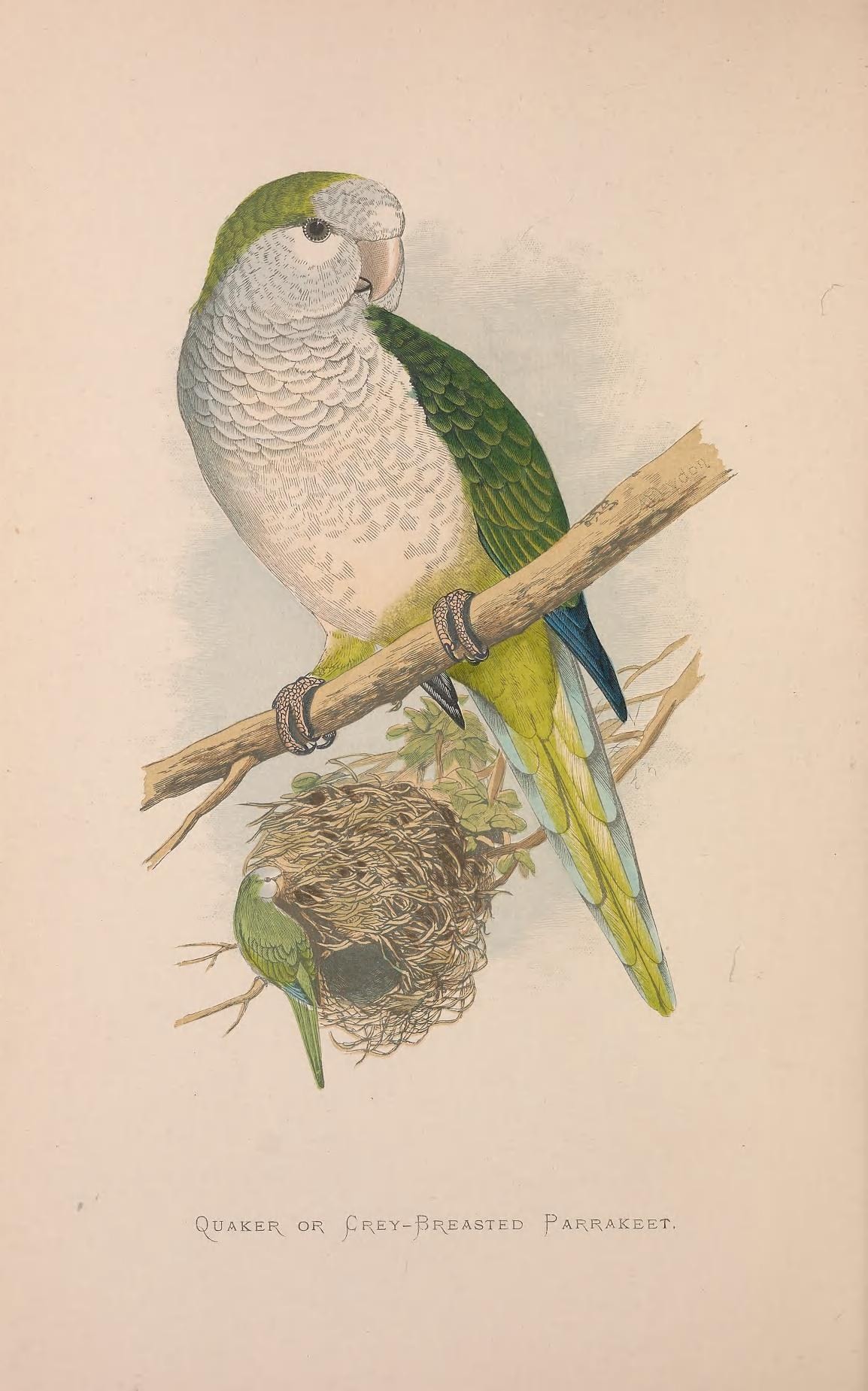
The cage should be furnished with a variety of natural wood perches of different diameters and textures (e.g., manzanita, java wood, rope perches) to promote foot health and prevent pressure sores. Clean food and water bowls are essential, along with a diverse selection of parrot-safe toys. Monk parakeets possess a unique and strong nest-building instinct, a trait rare among parrots. If provided with elongated small items like sticks, paper, or pens, they will meticulously collect and stack them to construct elaborate, communal-style nests. While fascinating to observe, this behavior can trigger hormonal changes, potentially leading to increased territoriality or aggression. Owners can manage this by limiting access to nesting materials, though it is a deeply ingrained behavior. The cage should be placed in a safe, draft-free location within the home, allowing the bird to be part of family activity without being overwhelmed.
Enrichment and Mental Stimulation:
Monk parakeets are highly intelligent and social creatures, making enrichment a critical component of their care. Without sufficient mental and physical stimulation, they can easily become bored, leading to behavioral problems such as excessive screaming, feather plucking, or aggression. A variety of toys—including shredding toys, chew toys, puzzle toys, and foraging devices—should be rotated regularly to maintain interest. Foraging boxes, which encourage natural problem-solving behaviors, are particularly beneficial.
Daily out-of-cage time is essential for exercise and social interaction. A parrot play gym placed atop the cage or in a bird-proofed room provides a safe space for exploration and activity. Bird-proofing a room involves identifying and eliminating potential hazards such as whirling ceiling fans, open toilets, hot surfaces, toxic plants, cleaning chemicals, open windows, and other household pets. For single birds, consistent and meaningful social interaction with their human companions for several hours a day is vital to prevent loneliness and stress. Owners should also be prepared for emergencies, having the contact information of an avian veterinarian readily available and a basic parrot first-aid kit containing items like styptic powder, sterile gauze, and tweezers.
Temperament and Communication
Monk parakeets are renowned for their confident, boisterous, and playful personalities. A well-socialized individual is often described as clownish and a joyful presence in the home. They form strong bonds with their human companions and can be quite cuddly, thriving on attention. However, this strong bonding can sometimes lead to them becoming overly attached to a single person, potentially exhibiting aggression or shyness towards other family members. Early and consistent socialization with all household members can help mitigate this.
These parrots also display strong territorial instincts, particularly concerning their cage. They may become possessive of their perceived space, making routine tasks like cleaning or refilling food and water bowls challenging. Approaching the cage calmly, speaking softly, and using positive reinforcement can help manage this behavior. The common name "quaker parrot" is believed to originate from a distinctive behavior, particularly in younger birds, where they "quake" or tremble and flap their wings while begging for food or expressing excitement.
Vocalization:
While not as ear-splitting as some larger parrot species, monk parakeets are far from silent. Their noise level can be categorized as low to moderate, but their natural flock calls can be quite grating and persistent. Beyond these louder calls, they produce a steady stream of whistles, chirps, and chattering sounds. A truly contented monk parakeet may even emit a soft "purring" sound, and like many parrots, they often grind their beaks when relaxed and comfortable. Prospective owners should always endeavor to experience a parrot’s noise level firsthand before committing, perhaps by listening to recordings on platforms like xeno-canto or visiting a breeder.
Talking Ability:
Monk parakeets are widely recognized as excellent talkers, ranking among the best parrot species for mimicry. They possess squeaky, somewhat robotic voices but are highly motivated to learn and can develop impressive vocabularies, often imitating not just human words and phrases but also common household sounds like doorbells, telephones, or microwave beeps. It is important to remember that while they can mimic human speech with remarkable clarity, they do not inherently understand the meaning of the words they utter. Teaching a monk parakeet to talk requires consistent repetition, short training sessions, and positive reinforcement, associating words with actions or objects whenever possible.
Conclusion
The monk parakeet, Myiopsitta monachus, embodies a complex narrative. As a pet, its intelligence, playful temperament, and talking ability make it an engaging and rewarding companion for the right owner, demanding significant time and commitment. However, its remarkable adaptability and resilience have also propelled it into the global spotlight as an invasive species, posing substantial ecological and economic challenges. Understanding the full spectrum of the monk parakeet’s biology, behavior, and impact is essential for both responsible pet ownership and informed conservation efforts, ensuring that these vibrant birds can thrive sustainably, whether in their native South American habitats or within the confines of a caring home.
