



Birdwatching in the United States has undergone a profound transformation, evolving from a purely visual pursuit into an immersive auditory experience, thanks to the advent of sophisticated smartphone applications. These digital tools are empowering both novice enthusiasts and seasoned ornithologists to identify avian species not just by their plumage, but by the intricate symphony of their songs and calls. Much like Shazam revolutionized music discovery, these bird song identification apps allow users to record a bird’s vocalizations, analyze them using advanced artificial intelligence, and instantly learn the species responsible for the melody. This technological leap has democratized a previously specialized skill, making bird identification by sound accessible to anyone with a smartphone.
The fundamental principle behind these revolutionary apps lies in their ability to translate complex sound waves into visual data that artificial intelligence can interpret. When a user records a bird song, the application converts the audio into a spectrogram, also known as a sonogram. This visual representation meticulously maps the frequency, pitch, and temporal patterns of the vocalization. This spectrogram is then fed into a Deep Convolutional Neural Network (CNN), a powerful form of AI that has been trained on vast datasets of expertly verified bird recordings. These datasets, often sourced from reputable institutions like the Cornell Lab of Ornithology’s Macaulay Library, contain millions of vocalizations, enabling the AI to learn the unique "visual fingerprint" of thousands of bird species.
To further enhance accuracy, these apps integrate biogeographical data. By leveraging the smartphone’s GPS and the current date, the application filters potential identifications, excluding species that are not geographically present in the user’s location or that have migrated for the season. Some applications even provide a confidence score, indicating the AI’s certainty about a match. This powerful combination of bioacoustics, machine learning, and citizen-science data allows these apps to decipher even the most complex dawn choruses, identifying individual birds singing simultaneously in near real-time.

Leading the Charge: Top Bird Song Identification Apps
The market now offers a range of specialized applications catering to different user needs, from comprehensive free guides to highly specific identification tools. Here’s a look at some of the most prominent options available to birdwatchers today:
Merlin Bird ID: The All-Around Champion for All Birders
Developed by the renowned Cornell Lab of Ornithology, Merlin Bird ID stands as a premier application, lauded for its accuracy and user-friendliness, making it an indispensable tool for both beginners and experienced birders. Available free of charge on both iOS and Android platforms, Merlin offers a seamless integration of identification methods, including visual observation, photo analysis, and its standout feature: real-time sound identification.
Key Features of Merlin Bird ID:
- Real-Time Sound ID: This groundbreaking feature listens to bird songs and calls as they occur, instantly suggesting potential species. It effectively places an ornithologist in your pocket, providing immediate feedback in the field.
- Extensive Species Database: Merlin’s database encompasses over 2,000 species, with a significant focus on North American birds, and is regularly updated to reflect new data and regional variations.
- Multi-Modal Identification: Beyond audio, Merlin excels at visual identification, allowing users to identify birds through photos or by answering a series of descriptive questions about the bird’s appearance.
- Offline Functionality: Users can download regional bird packs, ensuring the app remains fully operational even in remote areas lacking cellular service, a crucial feature for wilderness exploration.
- Educational Resources: The app serves as a comprehensive learning platform, offering detailed range maps, extensive sound libraries for study, and the ability to track personal "life lists" of observed species.
Merlin Bird ID is accessible via the App Store for iOS devices and Google Play for Android devices.

BirdNET: Bridging Citizen Science and Global Ornithology
BirdNET, developed in collaboration with researchers, offers a distinct approach focused on scientific rigor and global data collection. This free application is particularly appealing to those who wish to contribute to ornithological research and gain a deeper understanding of bird populations and migration patterns.
Key Features of BirdNET:
- AI Probability Scoring: BirdNET provides a qualitative probability score for each identification, offering insight into the AI’s confidence level and fostering a more analytical approach to bird song analysis.
- Citizen Science Integration: The app actively encourages users to submit their recordings to the BirdNET research project. This data is invaluable for scientists studying migration patterns, species distribution, and habitat health on a global scale.
- Direct Access to Information: BirdNET streamlines the learning process by providing instant links to Wikipedia and scientific databases for each identified species, offering comprehensive details on habitat, behavior, and conservation status.
- Advanced Analysis Tools: For users interested in the technical aspects of bioacoustics, the BirdNET-Analyzer feature allows for the processing of large audio datasets, making it a favorite among researchers and data-driven enthusiasts.
- Global Species Coverage: With an extensive database capable of identifying thousands of species worldwide, BirdNET is an ideal companion for international travelers and those exploring diverse ecosystems.
BirdNET is available on the App Store for iOS devices and Google Play for Android devices.
Song Sleuth: Cultivating Expertise in Bird Song Interpretation
Developed in partnership with renowned ornithologist David Sibley and Wildlife Acoustics, Song Sleuth is designed for birders who aim to move beyond simple identification and truly master the art of "birding by ear." This paid application emphasizes learning and understanding the nuances of bird vocalizations.

Key Features of Song Sleuth:
- Spectrogram Analysis: Song Sleuth’s defining feature is its detailed spectrogram visualization. By presenting the visual structure of a bird’s song, users can learn to recognize the patterns and characteristics that differentiate species, fostering a deeper memorization and understanding.
- Curated North American Database: The app focuses on approximately 200 common North American birds. This curated selection, developed with David Sibley’s expertise, provides a solid foundation for learners without overwhelming them with less common species.
- Collaborative Identification Process: Instead of providing a single answer, Song Sleuth presents a ranked shortlist of suggestions, encouraging users to actively compare their recordings with high-quality reference samples and Sibley’s distinctive illustrations.
- Complete Offline Functionality: All reference recordings, spectrogram tools, and species data are stored locally on the device, ensuring uninterrupted use in areas without internet connectivity.
Song Sleuth is available on the App Store for iOS devices. An Android version is not currently available.
ChirpOMatic: Swift and Sensitive Sound Identification
ChirpOMatic offers a streamlined, sound-centric approach to bird identification, prioritizing speed and ease of use for those who want quick answers in the field. This application is particularly noted for its sensitive audio detection capabilities.
Key Features of ChirpOMatic:
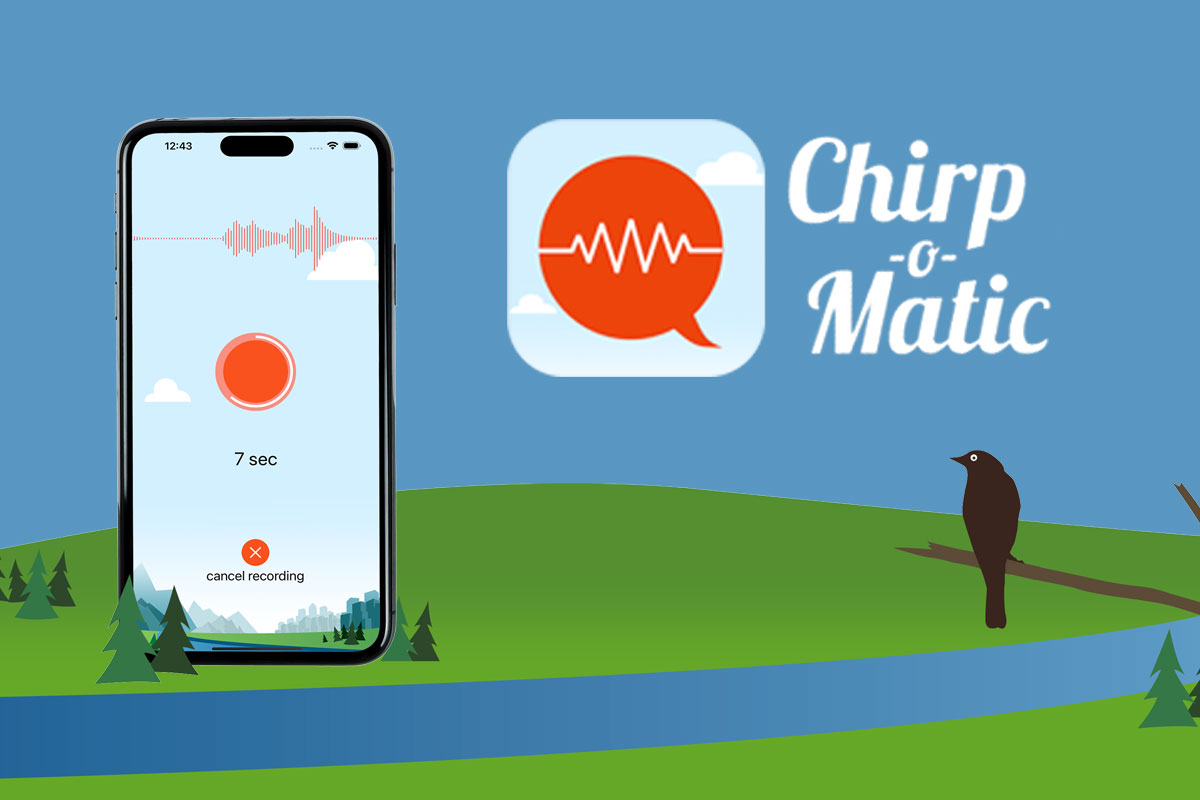
- Fast Audio ID System: ChirpOMatic provides rapid identification of singing birds, delivering immediate matches from regional species databases.
- Sensitive Microphone Analysis: The app is engineered to detect even faint or distant bird calls, which might be missed by less sensitive identification tools.
- Evidence Ranking System: In noisy environments, ChirpOMatic employs an evidence ranking system to present a curated list of the most probable species, allowing users to make informed comparisons.
- Pro Upgrade Features: The premium version unlocks organizational tools such as saving, renaming, and exporting recordings to build a personal audio library. It also includes interactive bird-call quizzes for skill enhancement.
- Apple Watch Integration: ChirpOMatic’s compatibility with Apple Watch allows users to capture recordings directly from their wrist, a significant convenience for active birders.
- Bird-Safe Mode: A unique feature that prevents loud playback of bird calls, ensuring that users do not disturb the wildlife they are observing.
ChirpOMatic is available on the App Store for iOS devices and Google Play for Android devices.
The Technological Underpinnings of Bird Song Recognition
The technology powering these bird song identification apps represents a convergence of advanced fields. At its core, the process begins with the conversion of sound waves into a visual spectrogram. This process, often referred to as bioacoustics, transforms the complex frequencies and temporal patterns of bird vocalizations into a format that can be analyzed by machine learning algorithms.
The heavy lifting is performed by Deep Convolutional Neural Networks (CNNs). These sophisticated AI models are inspired by the structure of the human visual cortex and are particularly adept at identifying patterns in image data. In the context of bird song identification, the spectrogram serves as the "image" that the CNN analyzes. Through extensive training on vast libraries of bird sounds, these networks learn to recognize the subtle variations in pitch, duration, and harmonic structure that are unique to each species.
Complementing the AI analysis is the integration of contextual data. By using a smartphone’s GPS and the current date, the apps can infer the geographical location and time of year. This information is crucial for filtering potential identifications, as it allows the app to predict which species are likely to be present in that specific area at that particular time. For instance, a migratory bird would not be identified in its wintering grounds during its breeding season. This multi-layered approach, combining acoustic analysis, AI pattern recognition, and geographical context, is what enables these apps to achieve remarkable accuracy.

The Evolution of Birding in the Digital Age
The emergence and widespread adoption of bird song identification apps signal a significant shift in the landscape of birdwatching in the United States. Historically, identifying birds by sound required years of dedicated practice, extensive memorization, and often, the guidance of experienced mentors. These new technologies have effectively democratized this skill, making it accessible to a much broader audience.
For newcomers to birding, these apps provide an immediate and encouraging entry point. The ability to instantly identify a bird song can transform a casual walk in the park into an exciting discovery experience. For seasoned birders, these tools offer a way to refine their auditory skills, verify identifications, and learn the songs of unfamiliar species more efficiently. This technological advancement has not only expanded the number of people engaging in birdwatching but has also deepened their connection with the natural world by opening up a new dimension of sensory engagement.
The implications of this technological integration are far-reaching. It fosters a greater appreciation for avian biodiversity and can contribute to conservation efforts by increasing public awareness and engagement. As more people become attuned to the sounds of nature, there is a greater likelihood of reporting unusual sightings or environmental changes, which can be vital for ecological monitoring.
Choosing the Right Application for Your Birding Journey
The selection of a bird song identification app often depends on an individual’s specific needs and experience level.

- For Beginners: Merlin Bird ID is the undisputed leader due to its intuitive interface and immediate, accurate identifications. Its ease of use ensures that new birders can quickly gain confidence and begin enjoying the hobby.
- For Travelers and Data Enthusiasts: BirdNET is the preferred choice for those who travel extensively or have a keen interest in the scientific aspects of bird song. Its global reach and contribution to citizen science make it a powerful tool for both exploration and research.
- For Aspiring Experts: Song Sleuth is ideal for individuals committed to developing a deep understanding of bird vocalizations. Its focus on spectrogram analysis and educational features equips users with the knowledge to interpret bird songs with greater precision.
- For On-the-Go Birders: ChirpOMatic offers unparalleled convenience, especially for hikers and those who prefer minimal interaction with their devices. Its sensitive detection and Apple Watch integration make it a practical companion for active outdoor pursuits.
Tips for Maximizing Accuracy with Bird Song Apps
To ensure the most accurate results when using bird song identification apps, consider the following best practices:
- Record Clearly: Position your phone as close as possible to the source of the sound, minimizing background noise.
- Isolate the Song: Try to record a single bird’s song at a time. If multiple birds are singing, the app may struggle to differentiate them.
- Record Sufficient Duration: Allow the app to record for at least 10-20 seconds to capture enough data for analysis.
- Consider the Environment: Be aware of potential interference from wind, traffic, or human voices, as these can impact identification accuracy.
- Verify with Visuals: Whenever possible, try to locate the bird visually after its song has been identified to confirm the match.
- Update Regularly: Ensure your app and any downloaded regional packs are kept up to date to benefit from the latest data and improvements.
The Future of Birding: An Auditory Awakening
As of 2026, the integration of technology into birdwatching has irrevocably enriched the experience. Powerful applications now reside in our pockets, transforming the often-unseen avian world into an audible and comprehensible symphony. Whether one is exploring local parks at dawn or observing the seasonal migrations from their backyard, these digital tools offer an unprecedented opportunity to connect with birds on a profoundly deeper level. The future of birding is not just about what we see, but increasingly, about what we hear and understand, thanks to the innovations in sound identification technology. This auditory awakening promises to foster a more engaged and informed public, ultimately contributing to the preservation of the feathered wonders that grace our landscapes.
