


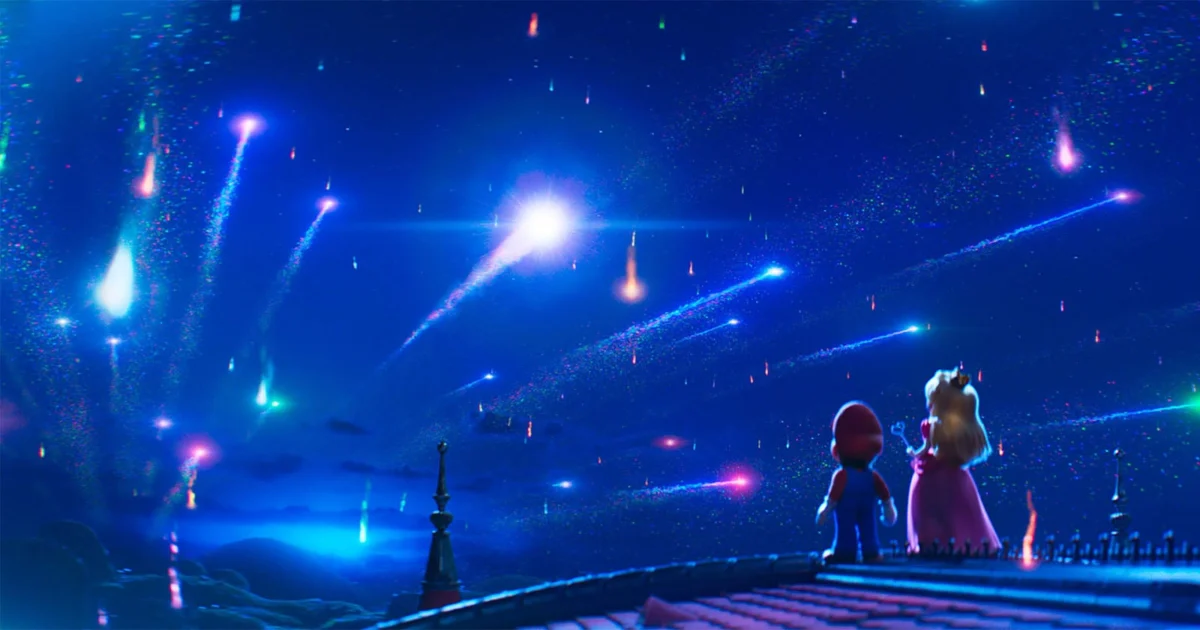
The release of The Super Mario Galaxy Movie has marked a significant milestone in the evolution of computer-generated imagery (CGI), not merely for its narrative expansion of the Nintendo universe, but for its sophisticated application of virtual cinematography. Produced by Illumination in association with Nintendo, the film represents a departure from the clean, mathematically perfect rendering styles that once defined the medium. Instead, the production team has opted for a rigorous simulation of real-world optical limitations, specifically those associated with anamorphic lenses. This technical choice serves to ground the fantastical, cosmic setting of the Mario franchise in a visual language traditionally reserved for high-budget, live-action spectacles.
The Technical Foundations of Anamorphic Simulation
To understand the visual impact of The Super Mario Galaxy Movie, one must first understand the nature of anamorphic cinematography. Historically, anamorphic lenses were developed to allow filmmakers to capture a widescreen aspect ratio on standard 35mm film. This was achieved by optically squeezing the image horizontally during filming and then "desqueezing" it during projection. This process introduces several distinct optical artifacts that have, over decades, become synonymous with the "cinematic look."
In The Super Mario Galaxy Movie, Illumination’s technical directors have gone beyond simple wide-angle rendering to replicate these artifacts with precision. The most notable of these is the oval bokeh. In a standard spherical lens, out-of-focus highlights appear circular. In an anamorphic system, these highlights become elongated ovals. The film consistently utilizes this effect during sequences set in the Comet Observatory and various planetary environments, where distant stars and light sources take on a characteristic vertical stretch.
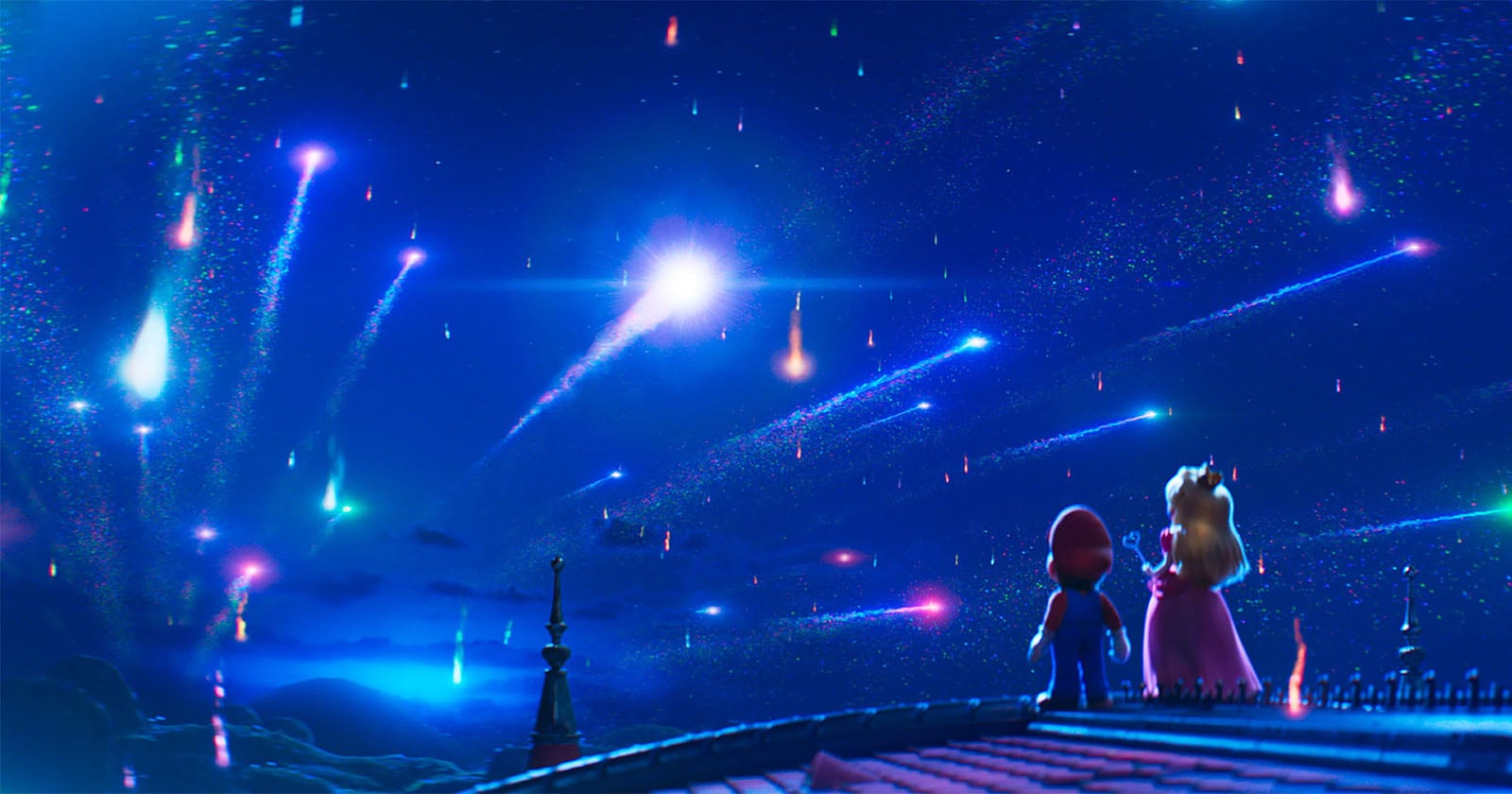
Furthermore, the film incorporates the "cat’s-eye" effect, a phenomenon where bokeh shapes become clipped or distorted toward the edges of the frame due to the physical housing of the lens. By intentionally introducing these "imperfections" into a digital environment where they do not naturally exist, the filmmakers have successfully mimicked the physical constraints of glass and metal, lending the digital world a sense of tangible reality.
A Chronology of Visual Evolution in Animated Features
The move toward simulated optical defects is part of a broader trend in the animation industry that has accelerated over the last decade. The Super Mario Galaxy Movie stands as the latest peak in a timeline of increasing visual complexity:
- 1995–2010: The Era of Digital Purity. Early CGI films, such as the original Toy Story, focused on achieving clean surfaces and clear lighting. Optical defects like lens flares or chromatic aberration were often viewed as errors to be avoided.
- 2011–2018: The Introduction of "Physicality." Films like Rango and Wall-E began to experiment with simulated camera movement and basic lens flares. Pixar’s Toy Story 4 later utilized virtual versions of 70mm lenses to create a shallow depth of field that mimicked live-action photography.
- 2018–2023: Stylistic Experimentation. Spider-Man: Into the Spider-Verse introduced intentional chromatic aberration and misregistration to mimic print media. The Super Mario Bros. Movie (2023) began the transition toward a more cinematic, lighting-focused approach.
- 2026: The Super Mario Galaxy Movie. The current release marks the full adoption of anamorphic simulation as a core component of the film’s identity. The simulation includes not just bokeh, but also edge softness, barrel distortion, and horizontal blue flares.
Detailed Analysis of Optical Aberrations
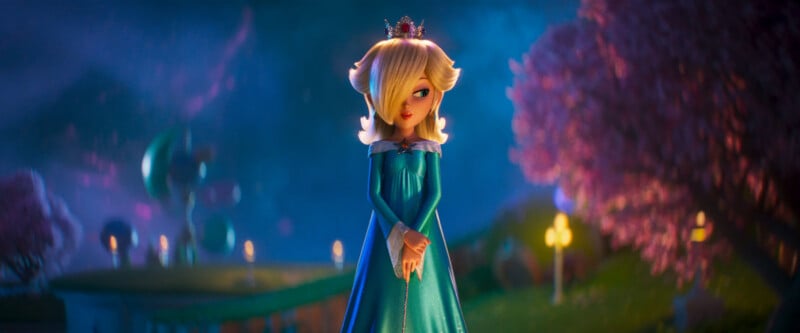
The Super Mario Galaxy Movie utilizes several specific types of optical aberrations to enhance its atmosphere. One of the most prominent is chromatic aberration—the failure of a lens to focus all colors to the same convergence point. In the film, this is visible as subtle color fringing (typically magenta and green) on the high-contrast edges of characters like Rosalina or the metallic surfaces of Bowser’s airships.
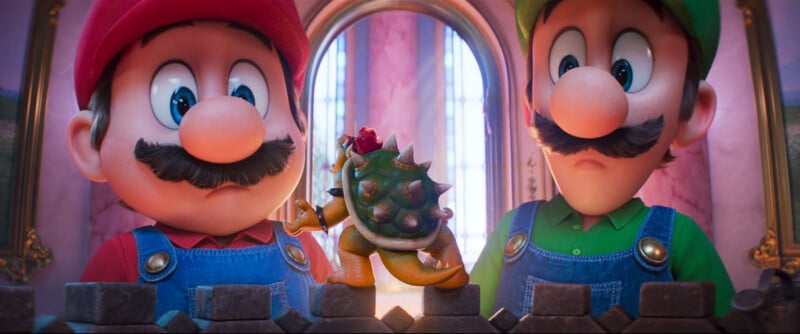
While computer software can easily render a perfectly sharp image from edge to edge, the "virtual lenses" used for this production exhibit "edge falloff." This is a softening of the image resolution as it moves away from the center of the frame. This technique directs the audience’s eye toward the central action—often Mario or Luigi—while simulating the performance of vintage cinema glass.
The film also features the "anamorphic flare," characterized by long, horizontal streaks of light. This occurs when bright light sources hit the cylindrical elements of an anamorphic lens. In the context of a galaxy-spanning adventure, where stars, nebulas, and glowing power-ups are constant, these flares create a sense of scale and luminosity that feels photographic rather than illustrative.
Production Insights and Industry Reactions
While official statements from Illumination and Nintendo have focused on the expansion of the "Mario Cinematic Universe," technical leads have hinted at the immense computational power required to render these effects. Simulating the way light bends through multiple virtual glass elements—a process known as physically-based rendering (PBR)—requires significantly more processing time than standard rendering techniques.
Industry analysts suggest that the decision to use anamorphic simulation is a strategic move to appeal to a wider demographic. By adopting the visual cues of Academy Award-winning live-action dramas, the film positions itself as more than "just a cartoon."
"We are seeing a convergence of mediums," says Dr. Elena Vance, a visual effects historian. "Audiences have been conditioned for nearly a century to associate certain lens defects with ‘prestige’ filmmaking. When Illumination applies these defects to a character like Toad or a Goomba, they are subconsciously elevating the stakes of the narrative. It feels like a ‘movie’ in the traditional sense, rather than a sequence of game assets."
Cinematographers in the live-action world have also noted the trend. The use of anamorphic lenses has seen a resurgence in television series and IMAX productions, and their digital counterparts are now being used to bridge the gap between the two formats. The Super Mario Galaxy Movie is being cited as a prime example of how digital "imperfection" can create a more immersive emotional experience for the viewer.
Broader Implications for Digital Cinematography
The success of the visual style in The Super Mario Galaxy Movie is likely to influence the next generation of animated features and high-end video game cinematics. As ray-tracing technology becomes more accessible in real-time engines, the line between pre-rendered films and interactive media continues to blur.
The implications of this shift are twofold:
- The Democratization of the "Film Look": As software tools for simulating anamorphic optics become standardized, smaller studios may be able to achieve a high-end "Hollywood" aesthetic without the need for multi-million dollar physical lens kits.
- A Shift in Aesthetic Standards: The industry is moving away from "realism" (the attempt to make things look like the real world) and toward "cinematic realism" (the attempt to make things look like they were filmed with a camera). This distinction is vital; the goal is no longer to make Mario look like a real person, but to make the audience feel like they are watching a high-quality film recording of a real Mario.
Conclusion: The Artistic Choice of Limitation
Ultimately, The Super Mario Galaxy Movie demonstrates that in the world of digital creation, the most powerful tool a filmmaker has is the ability to choose which limitations to impose. By rejecting the infinite clarity of the computer and embracing the "flaws" of 20th-century optics, the creators have crafted a visual experience that feels both nostalgic and cutting-edge.
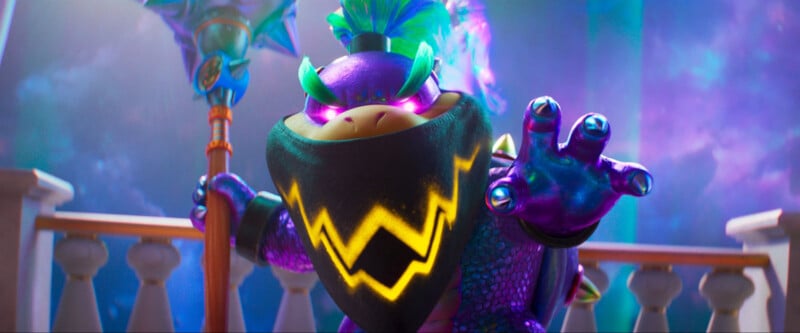
The film’s use of oval bokeh, cat’s-eye distortion, and horizontal flares does not distract from the story of Mario’s cosmic journey; rather, it provides a familiar frame for an unfamiliar world. As the franchise continues to grow, the technical precedents set by this film will likely serve as the blueprint for how animated characters can inhabit a world that feels as vast and "filmic" as any live-action blockbuster. The "Super Mario Galaxy" is no longer just a collection of pixels—it is a cinematic environment, viewed through a masterfully simulated lens.
