

Ant colonies, renowned for their intricate social structures, operate with a remarkable level of coordination, often described as a "superorganism." In this complex system, individual ants function akin to cells within a larger biological entity, each contributing to the survival and propagation of the collective. New research from the Institute of Science and Technology Austria (ISTA) has unveiled a sophisticated communication mechanism within these colonies, revealing that terminally ill ant pupae emit a distinctive olfactory signal, analogous to distress signals released by infected cells in a body. This chemical alarm serves as a crucial early warning system, enabling the colony to efficiently identify and neutralize potential threats before they can proliferate and compromise the entire community. The groundbreaking findings of this study were recently published in the esteemed scientific journal, Nature Communications.
A Stark Contrast to Individual Survival Strategies
In the animal kingdom, a common survival strategy involves individuals concealing signs of illness to avoid being ostracized or perceived as a burden by their social group. However, ant pupae, the developing larval stage of ants, exhibit a dramatically different approach when faced with an insurmountable infection. Instead of attempting to hide their deteriorating condition, they proactively generate a specific chemical alert. This scent acts as a direct warning to their nestmates, signaling the inherent danger they represent to the colony’s health. This altruistic behavior, while seemingly counterintuitive from an individualistic perspective, underscores the profound interconnectedness within ant societies.
The Worker Ant’s Swift and Decisive Response
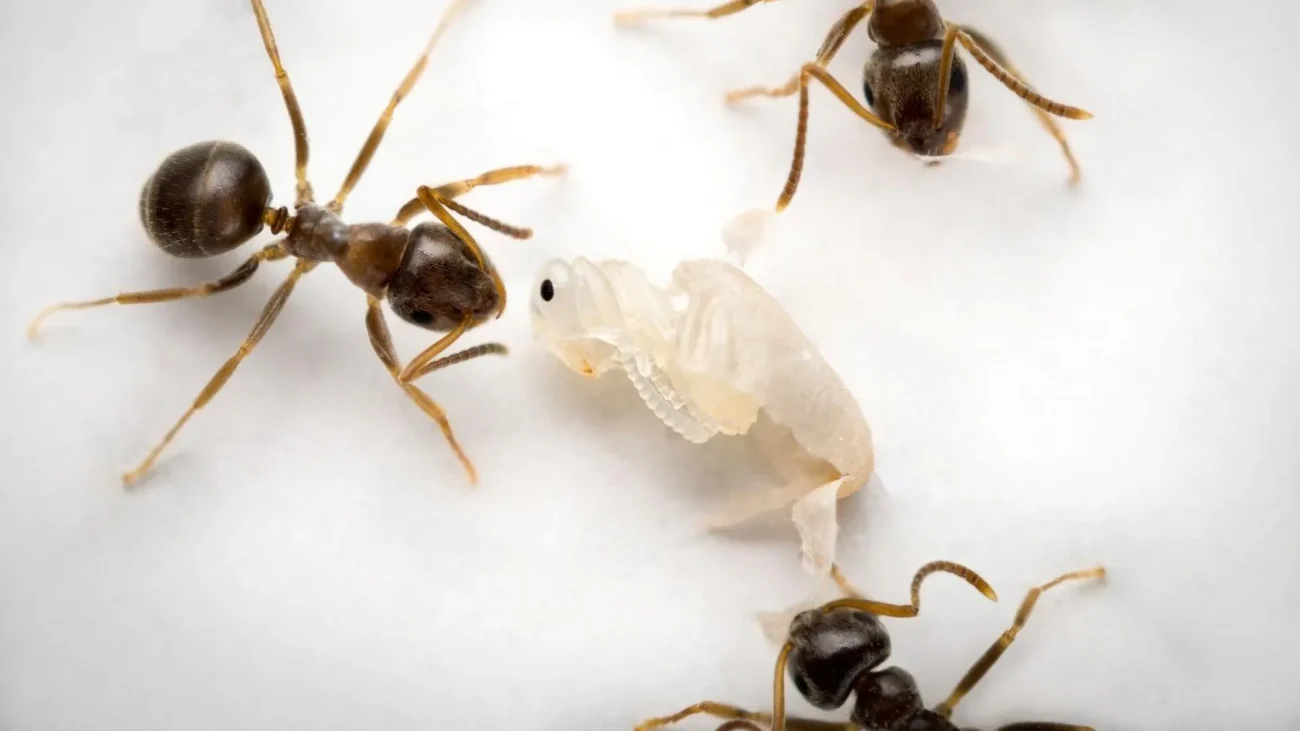
Upon detecting this unique alarm signal, worker ants initiate a rapid and decisive course of action. Their immediate response involves meticulously opening the cocoon of the infected pupa. Subsequently, they make small incisions in the pupa’s outer surface, a preparatory step for a potent defense. The workers then apply formic acid, a naturally occurring antimicrobial compound they produce themselves, directly to the wounded pupa. This targeted treatment is designed to eradicate the pathogens multiplying within, but it tragically also hastens the pupa’s demise.
Dr. Erika Dawson, the lead author of the study and a former postdoctoral researcher in ISTA’s "Social Immunity" research group, headed by Professor Sylvia Cremer, elaborated on the evolutionary significance of this behavior. "What appears to be self-sacrifice at first glance is, in fact, also beneficial to the signaler," Dr. Dawson explained. "It safeguards its nestmates, with whom it shares many genes. By warning the colony of their deadly infection, terminally ill ants help the colony remain healthy and produce daughter colonies, which indirectly pass on the signaler’s genes to the next generation." This exemplifies a sophisticated form of kin selection, where individual sacrifice can ultimately promote the survival of shared genetic material.
The research, a collaborative effort with chemical ecologist Professor Thomas Schmitt from the University of Würzburg in Germany, marks the first documented instance of such altruistic disease signaling in social insects. Prior to this discovery, the mechanisms by which ant colonies managed widespread disease outbreaks were not fully understood. The absence of such a warning system could have catastrophic consequences, allowing a dying ant to become a highly infectious vector, potentially decimating the entire colony. By signaling their condition early, incurably ill pupae provide the colony with a critical window of opportunity to neutralize the threat before it escalates into an unmanageable epidemic.
The Unifying Principle of Extreme Cooperation in Ant Colonies
The remarkable efficiency and resilience of ant colonies are largely attributable to their functioning as a "superorganism." At this macroscopic level, different members of the colony assume specialized roles that are indispensable for the collective’s survival. Queens are solely dedicated to reproduction, ensuring the continuation of the colony’s lineage. Worker ants, on the other hand, undertake a vast array of responsibilities, including foraging for food, maintaining the nest structure, and crucially, managing the colony’s health and sanitation. This division of labor mirrors the functional specialization observed in the human body, where reproductive cells are responsible for generating new life, while somatic cells perform the myriad of daily biological tasks essential for maintaining the organism’s integrity.
Both individual organisms and these complex superorganisms are fundamentally dependent on the seamless cooperation between their reproductive and non-reproductive components. In the case of ants, this cooperative synergy is so profound that it extends to behaviors that may incur a cost to the individual but yield significant benefits for the colony as a whole. The sacrifice of fatally infected brood exemplifies this principle, highlighting the ultimate prioritization of colony survival over individual well-being.
The Imperative for an Early-Warning System
A pertinent question arises: why have ants evolved such an elaborate alarm system if sick individuals could simply isolate themselves to prevent contagion? Professor Cremer addressed this by noting that adult ants exhibiting signs of severe illness often leave the nest to die outside the colony, a behavior known as "behavioral fever" or a form of social distancing. Similarly, worker ants exposed to infectious agents like fungal spores may also practice social distancing, limiting their contact with healthy colony members. However, this option is not available to brood, particularly pupae, which are immobile and incapable of independent movement. Like infected cells within a multicellular organism, these vulnerable individuals require external intervention to manage the threat they pose.
The challenges faced by developing pupae and the immune system’s response to infected body cells share striking parallels. Both utilize chemical cues to attract essential assistance. Infected body cells release chemical signals that draw immune cells to the site of infection, prompting their removal. In a similar fashion, infected ant pupae release signals that attract worker ants, who then act as the colony’s "immune system," removing the source of contagion. Immunologists refer to such signaling cues in vertebrates as "find-me and eat-me" signals, which direct immune cells to engulf and eliminate pathogens or cellular debris.
"The signal must be both sensitive and specific," Professor Cremer emphasized. "It should help to identify all terminally-sick ant pupae but be precise enough to avoid triggering the unpacking of healthy pupae or those capable of overcoming the infection with their own immune system." This raises a critical question regarding the mechanism by which such a high degree of precision is achieved in the olfactory communication of ants.
Deciphering the Scent of Infection: How Pupal Odor Shifts
Professor Schmitt, whose research expertise lies in the chemical communication strategies of social insects, pointed out the remarkable ability of worker ants to accurately identify and target a single infected pupa amidst a multitude of healthy brood. "This means the scent cannot simply diffuse through the nest chamber but must be directly associated with the diseased pupa," he stated. "Accordingly, the signal does not consist of volatile compounds but instead is made up of non-volatile compounds on the pupal body surface." This suggests a localized and specific chemical signature rather than a general airborne alarm.
The research revealed that two specific components of the ants’ natural scent profile are significantly amplified when a pupa becomes fatally infected. To rigorously test whether this alteration in odor alone was sufficient to trigger the colony’s disinfection response, the researchers conducted a series of controlled experiments. They meticulously extracted the altered scent from signaling pupae and then applied it to healthy, uninfected pupae. The subsequent observation of the worker ants’ behavior provided compelling evidence.
"We extracted the smell from the signaling pupae and applied it to healthy brood," Professor Cremer recounted. The results were unequivocal: the altered scent alone was sufficient to prompt the worker ants to unpack the treated pupae, demonstrating that the modified odor of terminally infected brood functions precisely as the "find-me and eat-me" signal observed in infected body cells within vertebrate immune systems. This finding provides a direct link between insect and vertebrate immune signaling mechanisms.
The Selective Nature of the Warning Signal
A crucial aspect of this discovery is that not all brood emit this alarm signal. Dr. Dawson elaborated on this selective signaling, stating, "Queen pupae, which possess stronger innate immune defenses compared to worker pupae and are capable of containing infections independently, were not observed to emit this warning signal to the colony." In contrast, worker pupae, which generally have less robust immune systems and are therefore more vulnerable to overwhelming infections, consistently signaled for help.
This selective signaling mechanism ensures that the colony’s resources and potentially risky interventions are reserved only for genuine threats. By only activating the alarm when an infection cannot be contained by the individual brood’s own immune system, the colony avoids unnecessary expenditure of energy and resources on pupae that are capable of recovery. This precise coordination between the individual brood’s physiological state and the colony’s collective response is precisely what makes this altruistic disease signaling so remarkably effective in maintaining the overall health and viability of the ant superorganism.
Broader Implications for Understanding Social Immunity and Evolution
The discovery of this sophisticated olfactory alarm system in ants has significant implications for our understanding of social immunity, the study of how social animals collectively defend against pathogens. It highlights the evolutionary pressures that drive the development of complex communication strategies in highly social species. The parallel with cellular signaling in vertebrates suggests convergent evolution, where similar environmental challenges have led to analogous solutions across vastly different life forms.
Furthermore, this research contributes to the ongoing debate about the definition and boundaries of the "superorganism" concept. By demonstrating a level of integration and coordinated response that mirrors biological organisms, ant colonies provide a compelling case study for understanding emergent properties in collective systems. The ability of individual units (ants) to sacrifice themselves for the benefit of the whole, guided by intricate communication, underscores the power of cooperation in biological evolution.
The study also raises questions about the diversity of disease signaling mechanisms across the insect world and the potential for similar, yet undiscovered, systems in other social invertebrates. Future research could explore the specific chemical compounds involved in the ant pupal signal and the genetic underpinnings of this olfactory response.
Ethical Considerations in Animal Research
It is important to acknowledge the ethical considerations inherent in research involving animals. The study conducted at ISTA adheres to strict legal regulations governing the collection, rearing, and handling of animals. The researchers emphasize that such studies are essential for advancing fundamental biological understanding in areas such as behavioral biology, immunology, and genetics, and that alternative methods, including computational approaches, cannot fully replicate the insights gained from observing living organisms in their natural or semi-natural contexts. The knowledge derived from such research ultimately contributes to a broader appreciation of life’s complexities and can inform conservation efforts and disease management strategies, not only for insects but potentially for other social species as well.
