


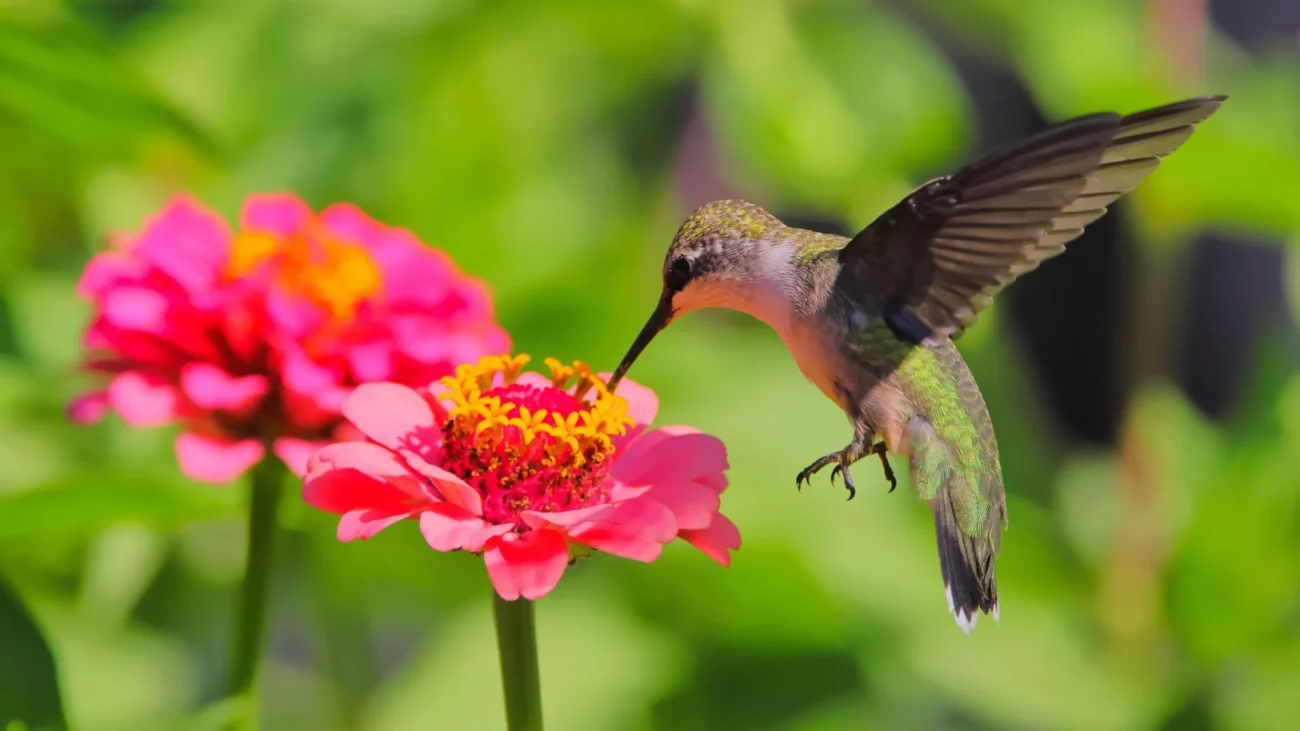
The delicate ballet of pollination, a vital ecological dance performed daily by bees and hummingbirds, has revealed a surprising secret: these tireless foragers are not just sipping nectar for sustenance, but also inadvertently consuming small quantities of alcohol. A groundbreaking study by biologists at the University of California, Berkeley, has for the first time comprehensively surveyed alcohol content in floral nectar, uncovering a widespread presence of ethanol that prompts a re-evaluation of animal dietary habits and evolutionary adaptations.
A Widespread, Yet Subtle, Presence of Ethanol in Nectar
The extensive survey, the first of its kind to quantify alcohol in floral nectar across numerous plant species, detected ethanol in a significant majority of the samples analyzed. Researchers examined nectar from 29 different plant species and found detectable levels of ethanol in at least one sample from 26 of them. While most nectar samples contained only trace amounts, typically attributed to the natural fermentation of sugars by yeasts present in the flower, one sample registered a notable concentration of 0.056% ethanol by weight. To put this into perspective for human understanding, this is roughly equivalent to 1/10th of a standard "proof" – a unit used to measure the alcohol content of spirits.
This discovery challenges the long-held perception of nectar as a purely sugary energy source. The presence of ethanol, even in seemingly minute quantities, is significant given the substantial volumes of nectar consumed by many pollinator species.
Quantifying the Tiny Tipple: How Much Alcohol Do Pollinators Ingest?
The implications of this finding are amplified when considering the prodigious feeding habits of some of these creatures. Hummingbirds, in particular, are renowned for their high metabolic rates and extensive nectar consumption. It is estimated that some species, like the Anna’s hummingbird (Calypte anna), which is commonly found along the Pacific coast of North America, can drink between 50% and 150% of their body weight in nectar on a daily basis.
Based on these remarkable feeding volumes and the measured ethanol concentrations, the UC Berkeley researchers have estimated the daily alcohol intake for an Anna’s hummingbird. Their calculations suggest that an average Anna’s hummingbird consumes approximately 0.2 grams of ethanol per kilogram of body weight each day. This intake level is remarkably comparable to a human consuming about one alcoholic drink in a day.
Despite this regular, albeit small, daily intake of alcohol, bees and birds do not exhibit overt signs of intoxication. This phenomenon can be partly explained by the gradual nature of their consumption, spread throughout the day, and their highly efficient metabolisms. Earlier research by the same team had already established that hummingbirds possess a notable tolerance for alcohol. In laboratory settings, they were observed to readily consume sugar water containing up to 1% alcohol. However, their preference shifted, and they began to actively avoid the solution when the alcohol concentration rose above this threshold.
This suggests a nuanced relationship with ethanol, where a certain level is tolerated, perhaps even incidentally beneficial, but excessive concentrations are actively avoided.
Beyond Intoxication: Potential Behavioral and Physiological Effects
The presence of ethanol in nectar raises intriguing questions about its potential effects on pollinator behavior and physiology, extending beyond simple intoxication. Nectar is known to contain a diverse array of compounds, including those with known psychoactive properties like nicotine and caffeine, which can influence animal behavior. It is plausible that ethanol, even in low concentrations, could exert similar subtle influences.
Dr. Aleksey Maro, a doctoral student involved in the nectar analysis, explained the metabolic efficiency of hummingbirds: "Hummingbirds are like little furnaces. They burn through everything really quick, so you don’t expect anything to accumulate in their bloodstream," he stated. However, he also acknowledged the unknown aspects of this interaction: "But we don’t know what kind of signaling or appetitive properties the alcohol has. There are other things that the ethanol could be doing aside from creating a buzz, like with humans."
This sentiment was echoed by Professor Robert Dudley, a senior researcher on the project and a professor of integrative biology at UC Berkeley. He suggested that ethanol might confer other advantages: "There may be other kinds of effects specific to the foraging biology of the species in question that could be beneficial," Dudley commented. "They’re burning it so fast, I’m guessing that they probably aren’t suffering inebriating effects. But it may also have other consequences for their behavior."
The implications of these findings are profound, suggesting that dietary ethanol might play an unappreciated role in the complex foraging strategies and ecological interactions of pollinators. The research team, including postdoctoral fellow Ammon Corl, Maro, and Dudley, along with colleagues Rauri Bowie and Jimmy McGuire, published their findings on March 25 in the esteemed scientific journal Royal Society Open Science.
Experimental Evidence: Unveiling Alcohol Tolerance and Metabolism
To further investigate the pollinators’ interaction with alcohol, the researchers conducted a series of controlled experiments. In one notable study, conducted at a feeder situated outside Professor Dudley’s office, Anna’s hummingbirds displayed a surprising indifference to sugar water with low alcohol concentrations, specifically below 1% by volume. However, a discernible shift in behavior occurred when the alcohol concentration reached 2%. At this higher level, the hummingbirds reduced their visits to the feeder by approximately half.
This observation led Professor Dudley to infer a natural regulatory mechanism: "Somehow they are metering their intake, so maybe zero to 1% is a more likely concentration that they would find in the wild than anything higher," he hypothesized. This suggests that pollinators may possess an innate ability to detect and avoid excessively high alcohol levels, ensuring their continued foraging success without detrimental effects.
Furthermore, a parallel study led by former graduate student Cynthia Wang-Claypool provided compelling evidence of alcohol metabolism in birds. This research detected ethyl glucuronide, a known byproduct of ethanol metabolism, in the feathers of various bird species, including Anna’s hummingbirds. The presence of this metabolite indicates that these birds not only ingest alcohol but also process it through metabolic pathways similar to those found in mammals.
These combined findings – the widespread presence of ethanol in nectar, the demonstrated tolerance of pollinators, and the evidence of alcohol metabolism – collectively suggest a fascinating evolutionary narrative. They imply that birds and other animals, potentially including our own primate ancestors, may have evolved a degree of tolerance, and perhaps even a subtle preference, for alcohol as a dietary component over vast evolutionary timescales.
Ammon Corl summarized the interconnectedness of these discoveries: "The laboratory experiment was showing that yes, they will drink ethanol in their nectar, though they have some aversion to it if it gets too high," he explained. "The feathers are saying that, yes, they will metabolize it. And then this study is saying that ethanol is actually pretty widespread in the nectar they consume."
Comparative Intake: Placing Pollinator Alcohol Consumption in Context
To better understand the significance of these findings, the research team undertook a comparative analysis of alcohol intake across various species. After meticulously measuring ethanol levels in nectar samples using a sophisticated enzymatic assay, they proceeded to estimate the daily alcohol intake for several nectar-feeding species. This estimation was based on their known caloric requirements and, where detailed feeding data was limited, extrapolated from typical nectar consumption patterns.
The study focused primarily on two hummingbird species and three species of sunbirds. Sunbirds, prevalent in South Africa, fulfill an ecological role analogous to that of hummingbirds in the Americas, feeding on plants such as honeybush (Melianthus major).
The researchers then broadened their comparison to include other animal groups, drawing parallels with the European honeybee, the pen-tailed tree shrew, fruit-eating chimpanzees, and humans consuming a single standard alcoholic drink per day (equivalent to approximately 0.14 grams per kilogram of body weight daily).
The results revealed a wide spectrum of alcohol intake:
- The pen-tailed tree shrew exhibited the highest recorded intake, consuming a remarkable 1.4 grams of ethanol per kilogram of body weight per day.
- In contrast, the European honeybee showed the lowest intake, at 0.05 grams per kilogram of body weight per day.
- Nectar-feeding birds, including the hummingbirds and sunbirds studied, fell within a comparable range, consuming approximately 0.19 to 0.27 grams of ethanol per kilogram of body weight per day when foraging on natural nectar sources.
Interestingly, the experimental feeder studies provided an additional layer of insight. They suggested that Anna’s hummingbirds might ingest even greater amounts of alcohol when presented with fermented sugar water in artificial feeders, reaching an estimated 0.30 grams per kilogram of body weight per day, compared to their intake from natural nectar. This finding highlights the potential for human-introduced food sources, such as sugar feeders, to influence animal dietary habits and alcohol exposure.
Evolutionary Adaptations: The Ubiquity of Dietary Ethanol
This multifaceted research is an integral component of a larger, five-year National Science Foundation-funded project. The overarching goal of this initiative is to gather extensive genetic data from hummingbirds and sunbirds to unravel the intricate mechanisms by which these species adapt to diverse environmental challenges. These challenges include navigating high-altitude terrains, processing sugar-rich diets, and coping with the ubiquitous presence of fermented nectar.
Professor Dudley articulated the broader significance of these ongoing studies: "These studies suggest that there may be a broad range of physiological adaptations across the animal kingdom to the ubiquity of dietary ethanol," he stated. "And that the responses we see in humans may not be representative of all primates or of all animals generally."
He further elaborated on the potential for undiscovered adaptations: "Maybe there are other physiological detoxification pathways or other kinds of nutritional effects of ethanol for animals that are consuming it every day of their lives," Dudley mused. "That’s the interesting thing — this is chronic through the course of the day, but that’s a lifetime exposure post-weaning. It just means that the comparative biology of ethanol ingestion deserves further study."
The research underscores a fundamental shift in our understanding of animal diets and the evolutionary pressures that shape physiological responses. It suggests that the human relationship with alcohol, often viewed through the lens of social consumption and addiction, may be a more ancient and widespread phenomenon rooted in natural dietary exposures. The ongoing work promises to shed further light on the biochemical and genetic underpinnings of these adaptations, potentially revealing novel insights into metabolic processes and evolutionary strategies across the animal kingdom. The subtle yet pervasive presence of alcohol in the natural world, it seems, has played a more significant role in shaping life than previously imagined.
