


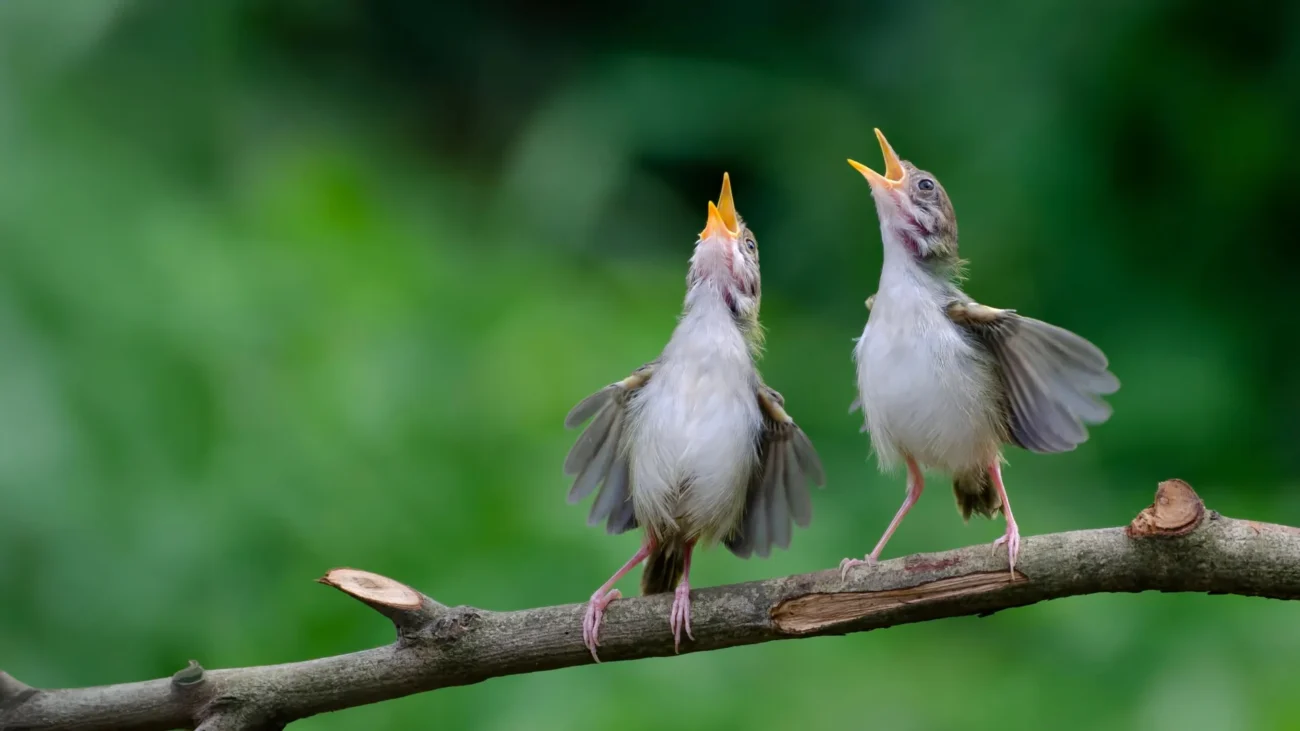
A groundbreaking international study has revealed a remarkable phenomenon in the avian world: birds separated by vast geographical distances and millions of years of evolutionary divergence produce strikingly similar warning calls when they detect parasitic threats near their nests. This discovery, published on October 3rd in the prestigious journal Nature Ecology and Evolution, offers unprecedented insights into the complex interplay between instinct and learning in animal communication, presenting the first documented instance of a vocalization that seamlessly blends both innate reactions and acquired knowledge.
The research, spearheaded by a collaborative team from Cornell University and the Doñana Biological Station in Seville, Spain, represents one of the most comprehensive investigations ever undertaken into the intricate dynamics of brood parasitism. For decades, ornithologists and evolutionary biologists have pondered the origins and mechanisms of animal communication. This study, however, shifts the paradigm by demonstrating a shared vocal strategy against a common ecological challenge, suggesting a deeper evolutionary resonance than previously understood.
The Ancient Arms Race: Host Birds vs. Brood Parasites
Brood parasitism is a sophisticated evolutionary strategy employed by a select group of avian species, most famously cuckoos, to offload the burden of raising offspring onto other birds. These parasitic species lay their eggs in the nests of unsuspecting host species, leaving the hosts to incubate the foreign eggs and nurture the alien chicks. This deceptive practice often comes at a significant cost to the host parents, who may dedicate crucial resources and time to raising unrelated young, sometimes to the detriment or complete loss of their own progeny. Consequently, host species have evolved a powerful incentive to recognize and deter these avian imposters before they can successfully infiltrate their nests.
The study meticulously observed over 20 different bird species from four distinct continents, spanning diverse ecological niches and geographical locations. Across this broad spectrum of avian life, researchers identified a shared vocal response to the presence of brood parasites: a distinctive "whining" alarm call. This acoustic signal, remarkably consistent in its structure and delivery, serves as a universal alert, notifying other birds in the vicinity of the impending danger.
A Shared Symphony: Uniting Continents with a Single Sound
The researchers were particularly captivated by the striking uniformity of this alarm call, especially considering the vast distances and evolutionary gulfs separating the studied species. Birds in Australia, for instance, were found to produce an acoustic signal virtually indistinguishable from that of birds in China or Zambia, regions with no possibility of direct contact or learned transmission of vocalizations between populations. This observation immediately raised questions about the underlying mechanisms driving such convergent vocal evolution.
"The fact that species living on different continents, with no opportunity for direct interaction, are using essentially the same sound to warn of a parasite is quite extraordinary," commented Dr. James Kennerley, a co-lead author of the study and a postdoctoral fellow at the Cornell Lab of Ornithology. "It points towards a deeply rooted evolutionary imperative."
The mechanism by which this shared vocalization is acquired and utilized is a central focus of the research. While the call itself appears to be an innate predisposition, its effective deployment and recognition are shaped by learned associations. When a bird hears this specific "whining" alarm call, it is instinctively prompted to investigate the source of the sound and the surrounding environment. During this period of heightened vigilance, the bird begins to associate the distinctive vocalization with visual and contextual cues that indicate the presence of a parasite. This process, known as social transmission, is crucial for refining the alarm call’s effectiveness.
Dr. Damián Blasi, a language scientist at Pompeu Fabra University in Spain and a co-author of the study, elaborated on this intricate learning process. "It’s during this moment of investigation, when birds are absorbing the clues around them, that they learn to associate the call with the threat. This learning then influences when they themselves will produce the sound in the future," Dr. Blasi explained.
Bridging the Gap: From Instinctive Reactions to Learned Communication
This dual nature of the alarm call – its innate acoustic structure and its learned contextual deployment – positions it as a pivotal point in the evolution of communication. "The fascinating thing about this call is that it represents a midpoint between the instinctive vocalizations we often see in animals and fully learned vocal units like human words," stated Dr. William Feeney, an evolutionary ecologist at Doñana Biological Station in Seville, Spain, and a co-lead of the study. "It’s a vocalization that is partly hardwired, and partly learned through experience and social interaction."
Further analysis within the study revealed a compelling correlation between the prevalence of species producing the "whining" call and regions characterized by particularly complex host-parasite interactions. This suggests that the evolutionary pressure exerted by brood parasitism is a significant driver in the development and dissemination of this sophisticated alarm system.
"In areas where brood parasitism is a major challenge, birds need to be highly attuned to potential threats and coordinate their responses effectively," Dr. Kennerley observed. "The shared alarm call facilitates this cooperation, allowing birds to work together to drive away parasites. It’s essentially a highly efficient communication system that has emerged in response to a persistent ecological threat."
The implications of this finding extend beyond the immediate context of avian defense. The study posits that the evolution of this specific vocalization is actively shaping patterns of cooperative behavior among bird populations worldwide, fostering interspecies collaboration in the face of a common enemy.
Darwin’s Echoes: The Evolutionary Genesis of Learned Signals
The significance of this research lies in its groundbreaking documentation of a vocalization that simultaneously possesses innate and learned components. "For the first time, we’ve documented a vocalization that has both learned and innate components, potentially showing how learned signals may have evolved from innate calls in a way first suggested by Charles Darwin," Dr. Feeney remarked. This discovery provides empirical support for Darwin’s theories on the evolution of communication, offering a tangible example of how natural selection can enable species to imbue sounds with learned meanings, thereby enhancing their communicative repertoire.
This finding challenges long-held assumptions that animal communication systems are fundamentally distinct from and less complex than human language. The research team proposes that the evolution of intricate communication systems, including human speech, may have followed a similar trajectory, gradually blending instinctive vocalizations with learned elements over vast stretches of evolutionary time. This perspective suggests that the building blocks of complex communication might be present in the natural world, waiting to be uncovered.
The study’s methodology involved extensive fieldwork, acoustic analysis, and comparative evolutionary modeling. Researchers meticulously recorded alarm calls from numerous bird species in their natural habitats, employing advanced spectrographic analysis to compare the fine-grained details of these vocalizations. This was then cross-referenced with data on the prevalence and intensity of brood parasitism in each region. The team also incorporated genetic data to estimate the evolutionary divergence between the studied species, further strengthening the argument for convergent evolution rather than recent shared ancestry.
Broader Implications: Unraveling the Threads of Communication
The implications of this research extend beyond ornithology, offering valuable insights for fields such as linguistics, cognitive science, and evolutionary biology. Understanding how learned and innate elements coalesce in animal communication can shed light on the origins of human language and the cognitive processes that underpin our own communicative abilities.
For instance, the study’s findings could inform ongoing debates about the evolutionary trajectory of language, suggesting that complex vocalizations may not have emerged de novo but rather evolved through a gradual process of adding learned meaning to pre-existing innate calls. This could also have implications for artificial intelligence research, potentially guiding the development of more sophisticated and nuanced communication systems for machines.
Moreover, the research highlights the power of international scientific collaboration in tackling complex global challenges. The pooling of resources, expertise, and data from institutions across continents was essential for the scale and scope of this ambitious project. The study serves as a testament to what can be achieved when scientists from diverse backgrounds unite under a common scientific inquiry.
As researchers continue to explore the nuances of animal communication, this study on avian alarm calls stands as a landmark achievement, reminding us of the profound and often surprising connections that bind the natural world together, even across the seemingly insurmountable barriers of distance and time. The "whining" call, once a subtle sound in the symphony of nature, has now become a powerful testament to the elegant and intricate ways in which life communicates and adapts.
