

In a comprehensive educational session that marks a significant milestone for the herpetological veterinary community, Dr. Douglas Mader, a triple-board-certified specialist in canine, feline, and reptile/amphibian practice, presented a detailed webinar focused on the evolving standards of care for reptilian species. Hosted by LafeberVet on December 2, 2025, and subsequently updated on January 11, 2026, the presentation addressed the intricate physiological requirements that differentiate reptile therapeutics from traditional mammalian medicine. The session, which offers Registry of Approved Continuing Education (RACE) credits, underscores a growing demand for specialized knowledge as the population of captive reptiles continues to rise globally. Dr. Mader’s insights highlighted the critical intersection of environmental management and pharmacological efficacy, emphasizing that the successful treatment of these ectothermic patients is entirely dependent on maintaining their metabolic equilibrium.
The Foundation of Ectothermic Medicine: Understanding the POTZ
The central thesis of Dr. Mader’s presentation revolves around the Preferred Optimal Temperature Zone (POTZ), a physiological range unique to each reptile species within which their metabolic processes function at peak efficiency. Unlike mammals, which generate internal heat to drive enzymatic reactions, reptiles rely on external heat sources. Dr. Mader noted that failing to stabilize a patient within its POTZ before or during treatment can render even the most advanced medications ineffective or potentially toxic.
When a reptile is in a state of hypothermia—often the result of improper husbandry or the systemic shock of illness—its metabolic rate slows significantly. This slowdown affects drug absorption, distribution, and excretion. For instance, an antibiotic administered to a cold reptile may sit in the muscle tissue or gastrointestinal tract without being absorbed into the bloodstream, or conversely, it may reach the blood but fail to be cleared by the kidneys or liver, leading to toxic accumulation. By warming patients to their species-specific POTZ, clinicians ensure a predictable pharmacological response, allowing for standardized dosing protocols that align with current veterinary literature.
Chronology of Clinical Intervention and Stabilization
The therapeutic process for a reptile patient typically follows a strict chronological sequence to ensure safety and efficacy. According to the data presented, the initial phase of treatment is not the administration of drugs, but rather the stabilization of the patient’s core temperature and hydration status.
- Triage and Thermal Assessment: Upon arrival at a clinical facility, the patient’s current thermal state is assessed against its natural POTZ. Immediate, gradual warming is initiated if the animal is hypothermic.
- Hydration Correction: Dehydration is a common comorbidity in sick reptiles. Dr. Mader emphasized that fluid therapy often precedes drug therapy to ensure that the circulatory system can transport medications and the kidneys can filter them.
- Route Selection: Once stabilized, the clinician must choose the most appropriate route for drug delivery—ranging from oral to intraosseous—based on the urgency of the condition and the specific anatomy of the species.
- Monitoring and Adjustment: Post-administration monitoring involves tracking the animal’s activity levels and physiological markers, with dosages adjusted based on the animal’s thermal and metabolic recovery.
This timeline reflects a shift in exotic medicine away from "emergency-only" interventions toward a more holistic, physiology-based approach that prioritizes the animal’s baseline biological needs.
Diverse Routes of Administration and Anatomical Considerations
A significant portion of the webinar was dedicated to the technical nuances of drug and fluid delivery. Reptile anatomy presents unique challenges, such as the presence of scales, varying skin thickness, and the renal portal system—a specialized circulatory pathway that can direct blood from the hind limbs and tail directly to the kidneys before it enters general circulation.
Oral (PO) Administration
While the oral route is often the least invasive, it is frequently the most difficult in reptiles due to their ability to tightly close their jaws and the potential for aspiration. Dr. Mader discussed the use of esophageal tubes and the importance of ensuring the patient is warm enough to digest any carriers or oral medications provided.
Subcutaneous (SQ) and Intramuscular (IM) Injections
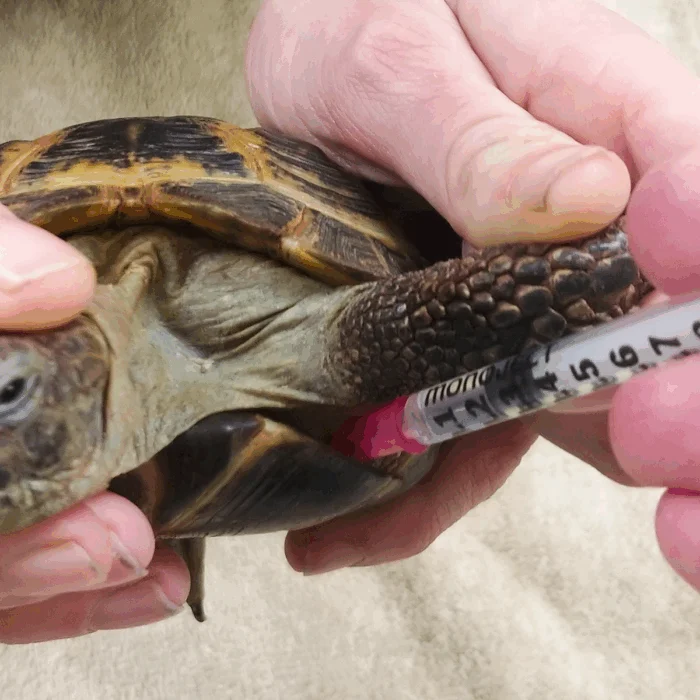
Subcutaneous injections are commonly used for fluid therapy, though the limited elasticity of reptile skin compared to mammals can restrict the volume of fluid administered at a single site. Intramuscular injections are preferred for many antibiotics and anesthetics. However, Dr. Mader cautioned that injections should generally be administered in the front half of the body to avoid the renal portal system, which could lead to the rapid excretion or nephrotoxicity of certain drugs if they pass through the kidneys before reaching the target tissues.
Intravenous (IV) and Intraosseous (IO) Access
For critical patients requiring rapid volume expansion or emergency drugs, IV or IO access is paramount. Intravenous access can be challenging in smaller species or those with thick osteoderms (bony plates in the skin). In such cases, intraosseous catheters—placed into the marrow cavity of long bones—provide a reliable alternative for delivering life-saving fluids and medications directly into the systemic circulation.
Intracoelomic (ICe) Administration
The intracoelomic route involves injecting fluids or medications into the body cavity. While useful for large-volume fluid administration, it carries the risk of accidental organ puncture or interference with the animal’s respiratory capacity, as reptiles lack a diaphragm and rely on the volume of their coelomic cavity for lung expansion.
Supporting Data: The Link Between Temperature and Metabolism
The implications of Dr. Mader’s findings are supported by decades of herpetological research. Data indicates that the half-life of common medications can vary by as much as 300% to 400% depending on whether the animal is at the low end or the high end of its POTZ. For example, a study on certain chelonians (turtles and tortoises) showed that the clearance of aminoglycoside antibiotics was significantly delayed in cooler temperatures, leading to an increased risk of renal failure.
Furthermore, the immune response in reptiles is highly temperature-dependent. The "behavioral fever" observed in wild reptiles—where they seek out hotter areas when infected—is a natural mechanism to boost white blood cell activity and enzyme function. In a clinical setting, replicating this by maintaining the upper end of the POTZ can significantly improve the success rate of treating infectious diseases.
Professional Reactions and Industry Impact
The veterinary community has responded to Dr. Mader’s presentation with a call for more standardized protocols in exotic animal practices. Dr. Mader, whose textbooks are considered the "gold standard" in herpetological medicine, is viewed by peers as a pivotal figure in elevating reptile care to the same level of rigor as domestic pet medicine.
"The emphasis on POTZ is a game-changer for practitioners who may only see reptiles occasionally," noted one veterinary attendee in a post-webinar forum. "It moves the conversation from ‘what drug do I use’ to ‘how do I prepare the patient to receive the drug.’ That shift in mindset is what saves lives in these species."
The implications of these therapeutic techniques extend beyond private practice. Zoos, conservation centers, and wildlife rehabilitators utilize these methods to treat endangered species. By refining the delivery of medications and fluids, these institutions can improve the survival rates of animals that are vital to global biodiversity.
Broader Implications and Future Outlook
As the field of reptile medicine matures, the integration of advanced diagnostic imaging, such as CT and MRI, with the therapeutic techniques discussed by Dr. Mader is becoming more common. However, the fundamental principles of ectothermic physiology remain the most critical factor. The Jan 11, 2026, update to the presentation included new data on the use of constant rate infusions (CRI) in reptiles, a technique that was once thought too difficult due to the slow metabolic rates of these animals but is now proving effective for pain management and anesthesia.
The educational initiative by LafeberVet highlights a broader trend in the veterinary industry: the move toward specialization and the democratization of expert knowledge through digital platforms. As more veterinarians become proficient in these specialized therapeutic techniques, the disparity in care between "traditional" and "exotic" pets continues to narrow.
In conclusion, "Therapeutic Techniques in Reptile Patients" serves as both a practical guide for clinicians and a testament to the complexity of herpetological medicine. Dr. Mader’s insistence on the synergy between environment and pharmacology provides a roadmap for the future of the discipline. For the millions of reptiles kept as pets and the countless others in conservation programs, these advancements in therapeutic strategy represent a significant leap forward in ensuring their health, longevity, and welfare in a captive environment. The message is clear: in the world of reptile medicine, the environment is not just a backdrop for treatment—it is the most powerful tool in the clinician’s arsenal.
