


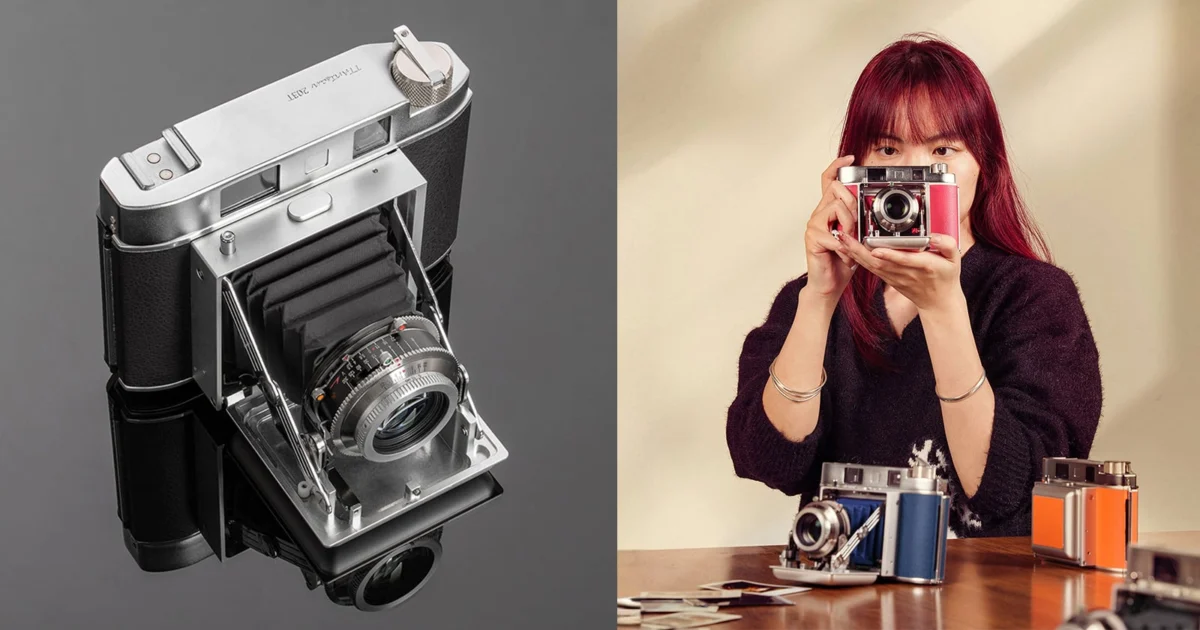
TTArtisan, a manufacturer primarily recognized for its prolific output of affordable, high-quality manual lenses for mirrorless and rangefinder systems, has officially moved into the hardware sector with the announcement of its first-ever camera body. The TTArtisan 203T, a retro-styled folding instant camera that utilizes Fujifilm’s Instax Mini film format, represents a significant pivot for the Shenzhen-based company. However, the excitement surrounding the product’s technical specifications and nostalgic aesthetic has been met with a degree of industry skepticism due to the company’s unconventional "paid beta" launch strategy. Rather than a standard retail rollout, TTArtisan is requiring prospective users to apply for the privilege of purchasing the device at a premium price point, with the added caveat that they cannot choose the color of the unit they receive.
The 203T first emerged as a prototype during the CP+ 2025 trade show in Yokohama, Japan. At the time, it was presented as a concept that blended the mechanical charm of mid-20th-century bellows cameras with the modern convenience of instant photography. The final specifications, revealed through a series of official unboxing videos and technical briefings, confirm that the 203T is a fully mechanical, manual-focus instrument. It features a 75mm f/3.5 lens based on the classic Cooke triplet design, providing an equivalent focal length of approximately 50mm in the 35mm full-frame format. This "normal" perspective, combined with a relatively fast aperture for the instant film medium, positions the 203T as a more "serious" photographic tool compared to the plastic-lensed, fully automatic offerings that dominate the Instax market.
Technical Specifications and Mechanical Design
The core appeal of the TTArtisan 203T lies in its tactile, mechanical operation. Unlike Fujifilm’s own Instax Mini 12 or Mini 99, which rely on electronic shutters and automated exposure systems, the 203T utilizes a traditional leaf shutter. This mechanical shutter is capable of speeds up to 1/300 of a second, allowing for better motion freezing and more flexibility in bright lighting conditions. Because it uses a leaf shutter, the camera can theoretically sync with external flashes at all speeds, although the primary focus of the device remains on available-light photography and portable use.
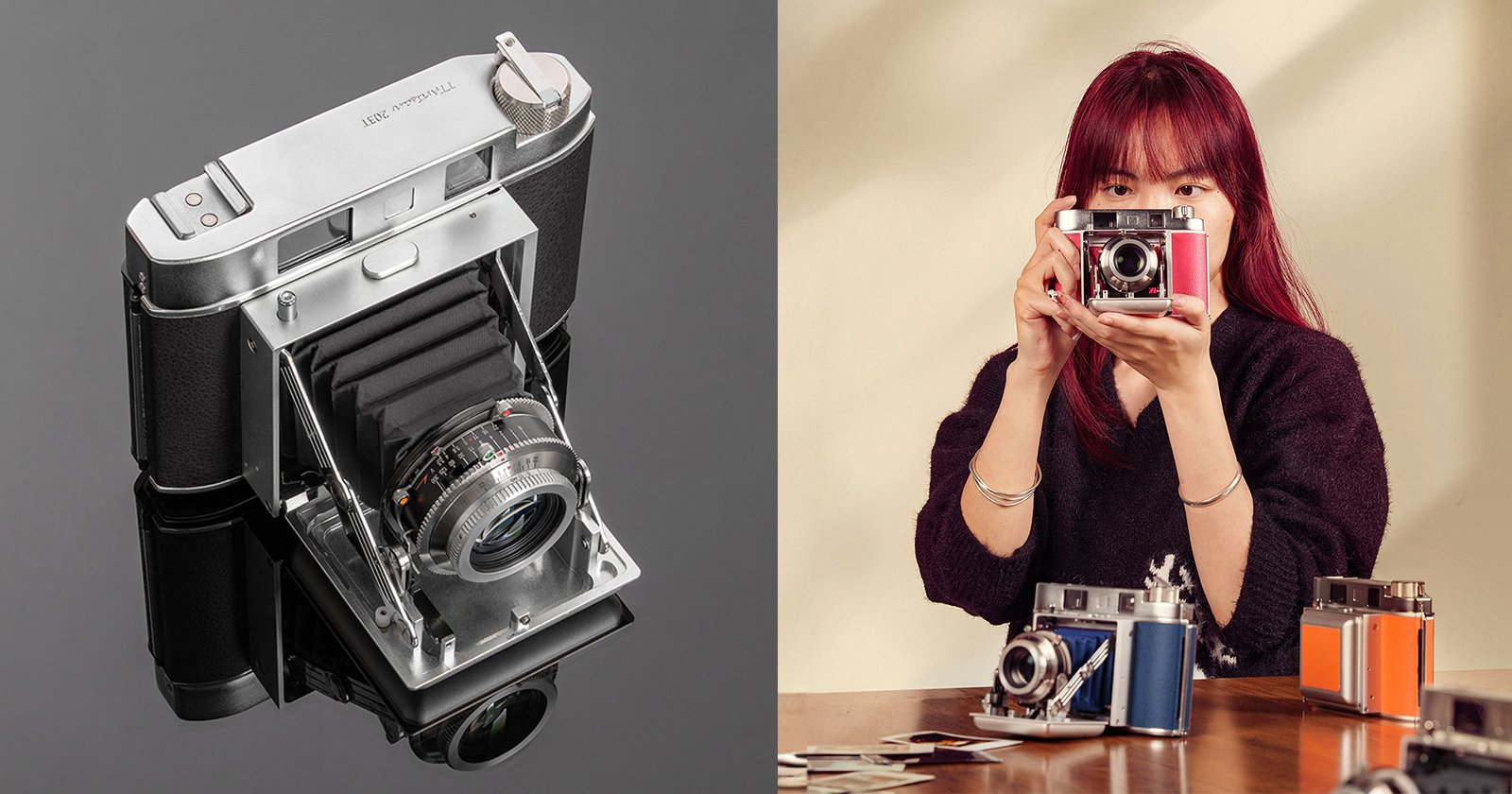
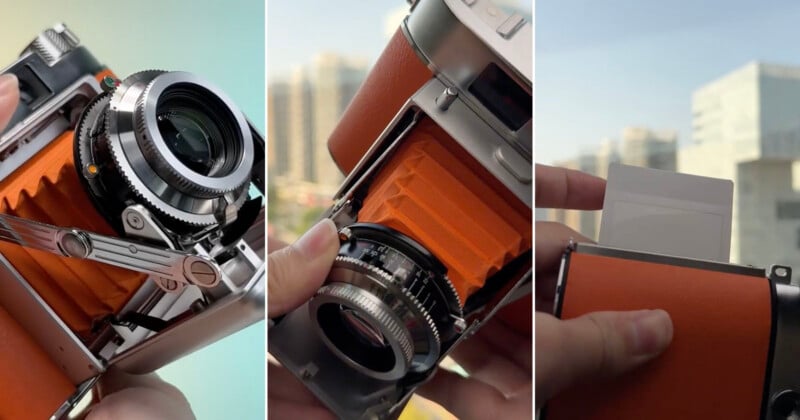
The camera’s physical construction is a tribute to the folding cameras of the 1930s and 40s. It features a collapsible bellows system that allows the lens assembly to retract into the body, making the device significantly more pocketable when not in use. When deployed, the lens extends forward, locking into place to establish the correct flange focal distance. The focus is handled manually, requiring the user to estimate distance or use external aids, as the camera does not appear to feature an integrated rangefinder mechanism.
To assist with exposure, the 203T is designed for photographers who understand the "exposure triangle." The manual controls for aperture and shutter speed require a fundamental knowledge of light metering. While modern instant cameras often handle these calculations internally, TTArtisan is targeting an audience that finds value in the deliberate process of manual settings. The use of Instax Mini film—the most widely available and affordable instant film on the market—lowers the per-shot cost compared to larger formats like Instax Wide or Polaroid, yet the 203T’s optics aim to squeeze higher resolution and better contrast out of the small frames than typical entry-level instant cameras.
The Controversial "Paid Beta" Program
The most debated aspect of the TTArtisan 203T is not its hardware, but its path to market. The company has eschewed traditional pre-orders or retail stock in favor of a "beta tester" application process. Under this program, photographers must fill out a detailed questionnaire to be considered for a purchase code. The survey asks potential buyers about their experience with manual lenses, their understanding of the exposure triangle, and their proficiency with bellows-style cameras. Crucially, the application also inquires about the user’s social media presence, suggesting that TTArtisan is looking for a specific demographic of "knowledgeable influencers" to seed the initial market.
The financial terms of the beta program have drawn significant criticism from the photographic community. Selected participants are required to pay $400 USD for the camera. Furthermore, the company has stated that the color of the camera—available in black, red, orange, or blue—will be assigned randomly. Participants have no say in which aesthetic they receive, and the company has implemented a strict "no returns" policy for non-quality issues. This means that if a buyer receives a color they dislike, or finds the manual workflow too cumbersome, they have no recourse for a refund.

Industry analysts have noted that the $400 price tag is remarkably high for an Instax Mini camera. For comparison, Fujifilm’s flagship analog instant camera, the Instax Mini 99, retails for approximately $200, while the base Mini 12 model often sells for under $80. Even boutique competitors like the MiNT Camera InstantKon RF70, which features a true rangefinder, operate at a higher price bracket but offer a more established retail experience. The decision to charge a 100% premium over market leaders for the "privilege" of testing a beta-stage product has led to accusations that TTArtisan is offloading its Quality Assurance (QA) costs onto its most loyal customers.
Community Reaction and Market Context
The reaction from photographers has been mixed, ranging from admiration for the camera’s design to frustration with the sales model. Josh Laverty, a Canadian photographer and videographer, voiced a common sentiment on social media, noting that the price point for beta testing is significantly higher than buying a finished, polished product from established brands like Fujifilm. "There is no way I can support this kind of approach," Laverty commented. "If you want qualified feedback on the function of the product and awesome results to share in your marketing, get professionals or influencers on board who know what they’re doing [rather than charging them]."
This strategy highlights a growing trend in the niche camera market where small manufacturers use "early access" or crowdfunding-style models to mitigate the financial risk of new hardware development. However, where companies like Pentax spent years researching and transparently communicating the development of the Pentax 17 (their recent film camera), TTArtisan’s sudden jump from a February reveal to a March paid beta has left some feeling the product may not be fully ready for a general audience.
The "beta" label itself raises questions about the camera’s longevity and support. If the 203T currently in distribution is a beta unit, it implies that a "final" version may eventually be released with hardware improvements or bug fixes. This leaves early adopters in a precarious position, potentially owning a first-generation device that lacks the refinements of a later, possibly cheaper, retail version.
Timeline of Development
The journey of the 203T from concept to consumer hands has been relatively rapid:
- February 2025: TTArtisan debuts a non-functional prototype of a folding instant camera at the CP+ show in Yokohama. The design attracts immediate attention for its vintage aesthetic.
- Early March 2025: The company begins teasing the camera on social media platforms like Instagram and Weibo, showcasing various colorways and the bellows mechanism.
- Mid-March 2025: An unboxing video is released, demonstrating the camera’s operation, the film loading process, and the mechanical shutter sound.
- March 20, 2025: The "Beta Program" application form goes live, outlining the $400 price and the random color selection.
- March 27, 2025: TTArtisan is scheduled to send out private purchase codes to selected applicants, marking the first official sales of the device.
Broader Implications for the Analog Industry
The launch of the TTArtisan 203T occurs during a massive resurgence in analog photography. Fujifilm recently reported record-breaking profits driven largely by its Instax division, and the demand for film-based cameras has seen a steady incline among Gen Z and Millennial consumers. By entering this space, TTArtisan is attempting to bridge the gap between the "toy camera" feel of entry-level Instax units and the high-end enthusiast market.
The success or failure of the 203T’s beta program will likely serve as a case study for other independent manufacturers. If the program sells out despite the high price and restrictive terms, it may signal to the industry that there is a "price-insensitive" segment of the market willing to pay a premium for unique, mechanical hardware, regardless of the consumer-friendliness of the launch. Conversely, if the backlash limits the camera’s reach, it may force TTArtisan to reconsider its pricing and distribution strategy for future hardware releases.
For now, the TTArtisan 203T stands as one of the most visually striking and mechanically ambitious instant cameras released in recent years. Whether its performance justifies its $400 "test" price remains to be seen, as the first units will not reach the hands of the selected beta testers until early April. As the photography world watches the results of this experiment, the 203T remains a symbol of the current "analog gold rush"—a period where nostalgia and high-end engineering meet, sometimes at a confusing and controversial crossroads.
