

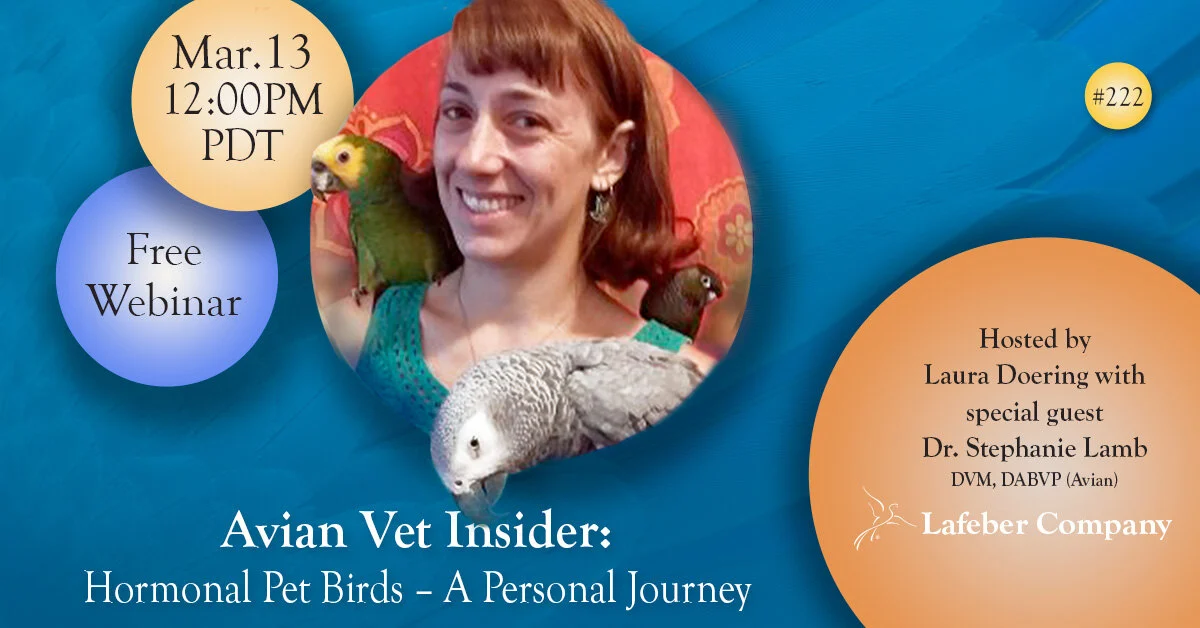
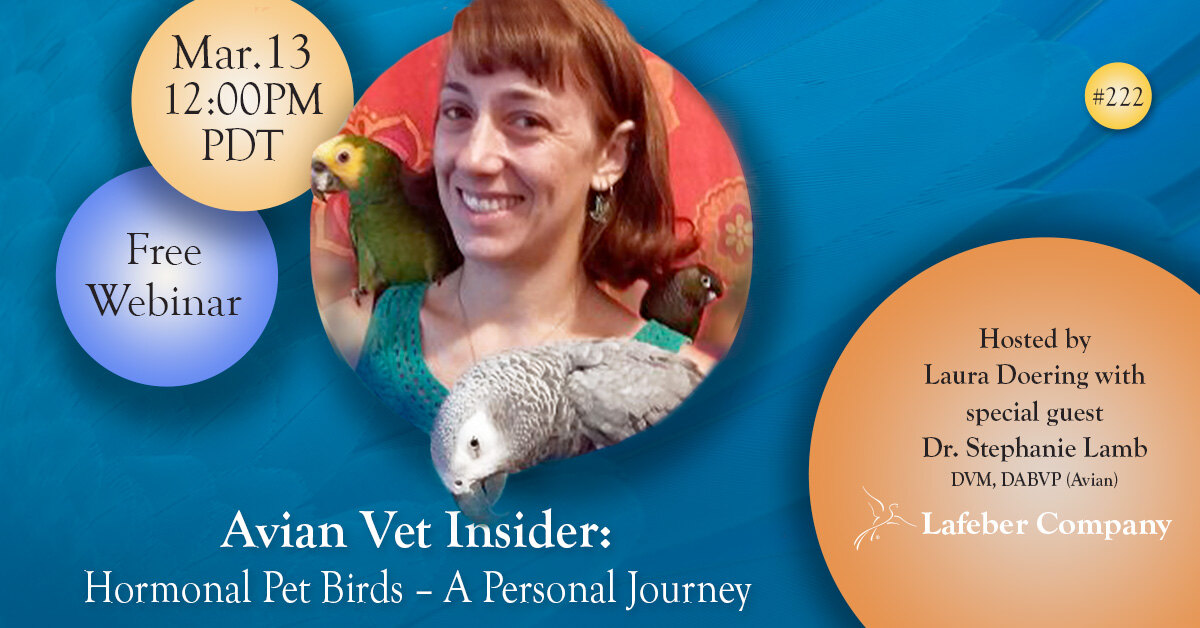
The avian community is poised to benefit from an insightful and deeply personal exploration into one of the most pervasive challenges faced by parrot owners: hormonal behaviors. Scheduled for Friday, March 13, 2026, at 12:00 p.m. PDT, this free, live, and interactive webinar, hosted by renowned avian media veteran Laura Doering, will feature Dr. Stephanie Lamb, DVM, DABVP (Avian Practice). Dr. Lamb is set to deliver a presentation titled "Hormonal Pet Birds – A Personal Journey," promising a unique blend of professional expertise and firsthand experience in managing the complex hormonal fluctuations in companion parrots. This event, organized by Lafeber Company, underscores a commitment to fostering informed pet bird ownership and addressing critical welfare issues through accessible expert education.
Addressing a Pervasive Challenge in Avian Companionship
Hormonal behaviors in pet birds represent a significant concern for owners, often leading to frustration, behavioral problems, and even health complications for the birds themselves. While a natural part of avian biology, the manifestation of these behaviors in a captive environment can be drastically different from their wild counterparts, frequently becoming chronic or exaggerated due to various environmental and social factors. Owners of species such as cockatoos, cockatiels, conures, Amazon parrots, and African greys are particularly familiar with the seasonal or intermittent challenges posed by hormonal surges, which can transform an otherwise docile companion into an aggressive, demanding, or self-destructive animal.
The prevalence of these issues has spurred a growing demand for reliable information and practical solutions. Many owners find themselves navigating a labyrinth of conflicting advice from online forums, general pet stores, and even well-meaning but ill-informed friends. The lack of specialized avian veterinary care in many regions further exacerbates this problem, leaving owners feeling isolated and overwhelmed. This webinar aims to bridge that knowledge gap, offering a scientifically sound yet relatable perspective that empowers owners to better understand and manage their birds’ hormonal cycles. By providing a platform for direct engagement with a board-certified avian veterinarian who has personally navigated these challenges, the event seeks to demystify complex physiological processes and offer actionable strategies.
The Expert Voices: Dr. Stephanie Lamb and Laura Doering
The synergy between the webinar’s expert presenter and its seasoned host is central to its anticipated impact. Both individuals bring a wealth of experience and credibility to the forefront of avian education.
Dr. Stephanie Lamb: Bridging Professional Expertise with Personal Experience
Dr. Stephanie Lamb stands as a distinguished figure in avian veterinary medicine, holding the esteemed DVM degree and board certification as a Diplomate of the American Board of Veterinary Practitioners (Avian Practice). Her credentials signify a rigorous commitment to advanced training and specialized knowledge in avian health. However, what sets this particular webinar apart is Dr. Lamb’s willingness to delve into her personal journey with a hormonal pet bird. This candid approach promises to offer attendees an unparalleled "insider’s view of the daily happenings at your Avian Vet’s clinic," not merely from a clinical perspective but from the vantage point of an owner who understands the emotional and practical toll these behaviors can take.
Her presentation will likely cover the full spectrum of hormonal issues, from subtle behavioral shifts to severe, health-threatening conditions. By sharing her own experiences, Dr. Lamb humanizes the often-clinical discussion around avian health, making the information more accessible and relatable to a broad audience of pet bird owners. This personal narrative is expected to foster a deeper connection with attendees, validating their struggles and demonstrating that even avian specialists grapple with the complexities of companion bird care. Furthermore, her insights from the veterinary clinic will provide a crucial understanding of diagnostic processes, treatment options, and the long-term management strategies that are vital for improving both bird welfare and the owner-pet bond. This dual perspective—as both a leading clinician and a dedicated owner—positions Dr. Lamb as an exceptionally credible and empathetic educator on this challenging topic.
Laura Doering: A Seasoned Facilitator of Avian Knowledge
Complementing Dr. Lamb’s expertise is Laura Doering, a name synonymous with high-quality avian journalism and education. As the former editor of two of the most influential publications in the pet bird world, Bird Talk magazine and Birds USA magazine, Doering has spent decades curating and disseminating vital information to pet bird owners. Her extensive background provides her with a unique understanding of the information needs and common questions within the avian community.
As the webinar host, Doering’s role extends beyond mere introductions; she is a facilitator, tasked with guiding the discussion, posing relevant questions from the audience, and ensuring that the complex medical and behavioral topics are presented in an understandable and engaging manner. Her experience in editorial leadership means she is adept at identifying key takeaways, clarifying ambiguities, and maintaining a focus on practical application. Her presence ensures that the webinar will not only be informative but also well-structured and accessible, maximizing its educational impact for attendees of all experience levels. Doering’s long-standing dedication to avian welfare through education makes her an ideal moderator for a topic that requires both sensitivity and scientific rigor.
Understanding Avian Hormones: A Biological Imperative
To effectively manage hormonal behaviors, it is crucial for owners to grasp the underlying biological mechanisms. Avian hormones are not simply a nuisance; they are fundamental to a bird’s existence, driving instincts essential for survival and reproduction in the wild.
The Natural Cycle and Its Domestication Challenges
In their natural habitats, wild birds exhibit distinct seasonal hormonal cycles, primarily dictated by environmental cues such as photoperiod (day length), temperature, food availability, and social interactions. These cues trigger the release of hormones like GnRH (gonadotropin-releasing hormone), LH (luteinizing hormone), FSH (follicle-stimulating hormone), and sex steroids (estrogen, progesterone, testosterone), which regulate everything from courtship rituals and nest building to egg-laying and chick rearing. These cycles are finely tuned to ensure breeding success coincides with optimal environmental conditions.
However, the captive environment often inadvertently disrupts these natural rhythms. Pet birds are typically exposed to artificial light cycles that mimic perpetual spring or summer, constant food availability, and interactions with human companions that can be misinterpreted as pair-bonding. An owner’s affectionate stroking down a bird’s back, for instance, can be perceived as courtship or pre-copulatory behavior, stimulating hormonal production. Similarly, providing dark, enclosed spaces (like boxes or even oversized food bowls) can trigger nest-site instincts. A rich, high-fat diet, common in many seed mixes, can signal abundant resources, further stimulating reproductive drives. These factors can lead to a state of chronic hormonal activation, where birds remain in a perpetual breeding state, regardless of the calendar. This sustained hormonal imbalance is the root cause of many challenging behaviors and health issues observed in pet parrots.
Recognizing the Signs: Behavioral and Physical Manifestations
Identifying hormonal behaviors is the first step toward effective management. These manifestations can be broadly categorized into behavioral and physical signs.
Behavioral Manifestations:
- Aggression: A common and often alarming sign. Birds may become territorial, biting or lunging at owners, especially when guarding perceived nest sites, specific people, or objects. This can be directed at family members, other pets, or even inanimate objects.
- Screaming and Vocalizations: An increase in loud, insistent vocalizations, often described as "contact calls" or "demand screams," designed to attract a mate or signal reproductive readiness.
- Nest-Building: Shredding paper, digging in cages, trying to get into dark spaces, or rearranging cage contents to create a perceived nest site.
- Regurgitation: Birds may regurgitate food onto toys, cage bars, or even their owners as a courtship feeding behavior, intended for a mate or chicks.
- Excessive Masturbation: Rubbing their vent on perches, toys, or owners.
- Feather Destructive Behavior: While not exclusively hormonal, feather plucking or chewing can be exacerbated or triggered by stress and frustration stemming from unresolved hormonal drives.
- Territoriality: Guarding specific areas of the cage or house, becoming agitated if approached.
- Changes in Affection: Some birds may become overly affectionate and clingy, while others become withdrawn and irritable.
Physical Manifestations:
- Egg-laying: For female birds, chronic egg-laying is a significant concern. Each egg depletes the bird’s calcium reserves, leading to potential nutritional deficiencies, egg-binding (a life-threatening condition where an egg gets stuck), cloacal prolapse, and peritonitis.
- Vent Swelling: Both male and female birds can exhibit swelling around the vent.
- Changes in Droppings: May become larger or more frequent, especially in egg-laying females.
- Cloacal Prolapse: A serious condition where the cloaca (the opening for reproductive, urinary, and digestive tracts) protrudes from the body, often associated with straining from egg-laying or chronic hormonal masturbation.
- Feather Condition: Can sometimes appear dull or ruffled, though this is less specific to hormonal issues alone.
Recognizing these signs early is crucial for intervening and preventing more serious complications. The webinar will undoubtedly provide detailed examples and visual cues to help owners accurately identify these manifestations in their own birds.
Health Implications and Veterinary Interventions
The prolonged state of hormonal activation, often seen in pet birds, is not benign. It carries significant health risks and can severely impact a bird’s quality of life and the owner’s ability to provide appropriate care.
Risks Associated with Chronic Hormonal Activity
Chronic hormonal issues pose a spectrum of dangers. For female birds, persistent egg-laying is perhaps the most critical, leading to calcium depletion (potentially causing bone fractures and neurological issues), egg-binding (a veterinary emergency requiring immediate intervention), cloacal prolapse, and reproductive tract infections or tumors. The stress of constant reproductive effort also weakens the immune system, making birds more susceptible to other illnesses. For both sexes, chronic hormonal frustration can manifest as feather destructive behavior or self-mutilation, behaviors that are incredibly difficult to treat and can result in severe physical injury and psychological distress.
Beyond the physical, the mental health implications are profound. Birds are intelligent, social creatures, and unresolved hormonal drives can lead to chronic stress, anxiety, and aggression, which can erode the human-animal bond. Owners, often feeling helpless and frustrated by aggressive or destructive behaviors, may struggle to interact positively with their pets, sometimes leading to neglect, rehoming, or even euthanasia. This breakdown in the relationship highlights the critical need for effective management strategies that prioritize both the bird’s well-being and the owner’s capacity to provide a loving home.
A Spectrum of Management Strategies
Addressing hormonal issues in pet birds typically requires a multi-faceted approach, often combining environmental, dietary, behavioral, and sometimes medical interventions. Dr. Lamb’s presentation is expected to provide an overview of these strategies, grounded in her professional and personal experience.
- Environmental Modification: This is often the first line of defense. It involves adjusting the bird’s surroundings to reduce hormonal triggers. This includes controlling photoperiod (ensuring 10-12 hours of uninterrupted darkness), removing perceived nest sites (shredding toys, dark boxes), and rearranging cage furniture to discourage territoriality.
- Dietary Adjustments: Moving away from high-fat, seed-heavy diets to a balanced pelleted diet supplemented with fresh fruits and vegetables can reduce the perception of abundant resources that signal breeding readiness.
- Behavioral Training and Interaction: Redirecting hormonal behaviors through positive reinforcement, teaching appropriate play, and avoiding petting in sexually stimulating areas (e.g., back, under wings). Encouraging independent play and providing mental enrichment can help mitigate frustration.
- Medical Interventions: When environmental and behavioral changes are insufficient, veterinary medicine offers options.
- Hormone-regulating medications: Such as leuprolide acetate (Lupron) or deslorelin implants, which temporarily suppress reproductive hormones. These are often used for chronic egg-layers or severely aggressive birds.
- Surgical Options: In extreme cases, particularly for chronic egg-laying with associated health risks, a gonadectomy (removal of ovaries or testes) may be considered, though this is a significant and irreversible procedure.
- Supportive Care: For conditions like egg-binding or cloacal prolapse, immediate veterinary attention is paramount, involving fluid therapy, calcium supplementation, and sometimes manual extraction or surgical repair.
The webinar will likely emphasize the importance of a holistic and individualized approach, recognizing that what works for one bird may not work for another. The "insider’s view" promised by Dr. Lamb suggests practical advice on how owners can work effectively with their avian veterinarians to develop a comprehensive management plan.
The Significance of the Webinar: Education as a Proactive Measure
This webinar represents more than just a single educational event; it is a significant step in the ongoing effort to improve avian welfare through proactive education.
Empowering Pet Bird Owners
One of the primary goals of this initiative is to empower pet bird owners with the knowledge and tools they need to better understand and care for their avian companions. Many owners acquire birds without fully appreciating the complexity of their needs, especially concerning their powerful hormonal drives. By demystifying these processes, the webinar aims to:
- Reduce Owner Frustration: Providing clear explanations and actionable strategies can alleviate the stress and confusion owners often experience when dealing with challenging behaviors.
- Improve Bird Welfare: A better-informed owner is better equipped to create an environment that minimizes hormonal triggers and addresses issues proactively, leading to healthier, happier birds.
- Foster Informed Decision-Making: With expert guidance, owners can make more educated choices regarding their bird’s diet, environment, and interactions, preventing many issues before they escalate.
- Strengthen the Human-Animal Bond: Understanding the biological basis of seemingly "naughty" behaviors can foster empathy and patience, ultimately strengthening the relationship between owners and their birds.
Contributing to Avian Veterinary Education and Support
While primarily aimed at owners, this webinar also serves as a valuable resource for veterinary professionals, particularly those who may not specialize in avian medicine but encounter pet birds in their practice. It reinforces the importance of specialized knowledge and provides a platform for continuing education within the broader veterinary community. Events like these can encourage general practitioners to refer complex avian cases to board-certified specialists and provide them with a better understanding of the challenges faced by bird owners. Furthermore, for avian veterinary technicians and support staff, it offers insights that can enhance client communication and support services. The personal narrative from Dr. Lamb can also serve as a reminder to all professionals about the emotional dimension of pet care, encouraging a more empathetic approach in their practice.
Event Details and Registration
The "Hormonal Pet Birds – A Personal Journey" webinar is scheduled for Friday, March 13, 2026, at 12:00 p.m. PDT. Recognizing the global nature of the pet bird community, participants are strongly encouraged to utilize the provided time zone converter to ensure they can attend the live session, which promises interactive Q&A opportunities. The event is completely free of charge, reflecting Lafeber Company’s dedication to making expert avian health information accessible to all. Interested individuals can secure their spot by registering through the provided Zoom link: https://us02web.zoom.us/webinar/register/WN_vZOuLegtQvuW8nEUJirAvw. Early registration is advisable to ensure participation in this highly anticipated educational event.
Looking Ahead: The Future of Avian Welfare Education
The organization of webinars such as "Hormonal Pet Birds – A Personal Journey" by entities like Lafeber Company signifies a crucial trend in pet care education. As pet bird ownership continues to grow globally, so does the recognition of the unique and often complex needs of these intelligent animals. Initiatives that provide free, expert-led, and interactive educational content are indispensable in fostering a community of responsible and well-informed owners.
The implications extend beyond individual pet birds and their owners. By raising awareness and providing solutions for common behavioral and health issues, these educational platforms contribute to reducing the number of birds relinquished to rescues or subjected to neglect due to owner frustration. They also encourage greater collaboration between owners and avian veterinarians, promoting proactive healthcare rather than reactive crisis management. Ultimately, the sustained effort to educate and empower pet bird owners is vital for elevating the overall standard of avian welfare, ensuring that these captivating creatures receive the compassionate and knowledgeable care they deserve for generations to come. This webinar, through its unique blend of professional expertise and personal narrative, stands as a testament to the power of shared knowledge in building a healthier, happier future for companion birds.
