


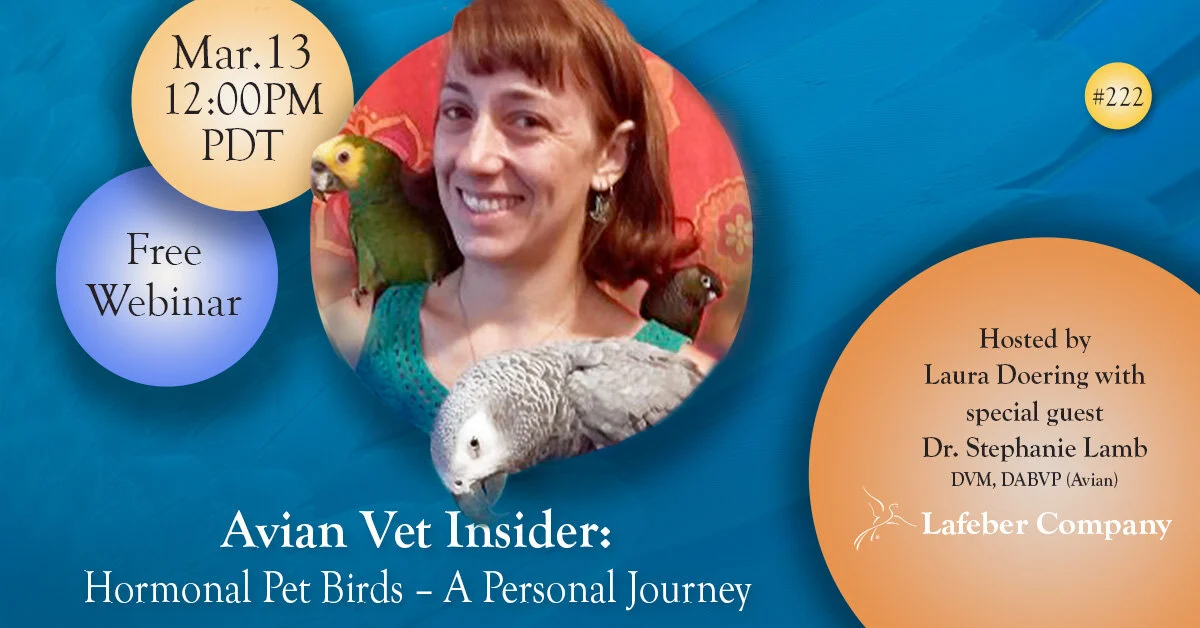
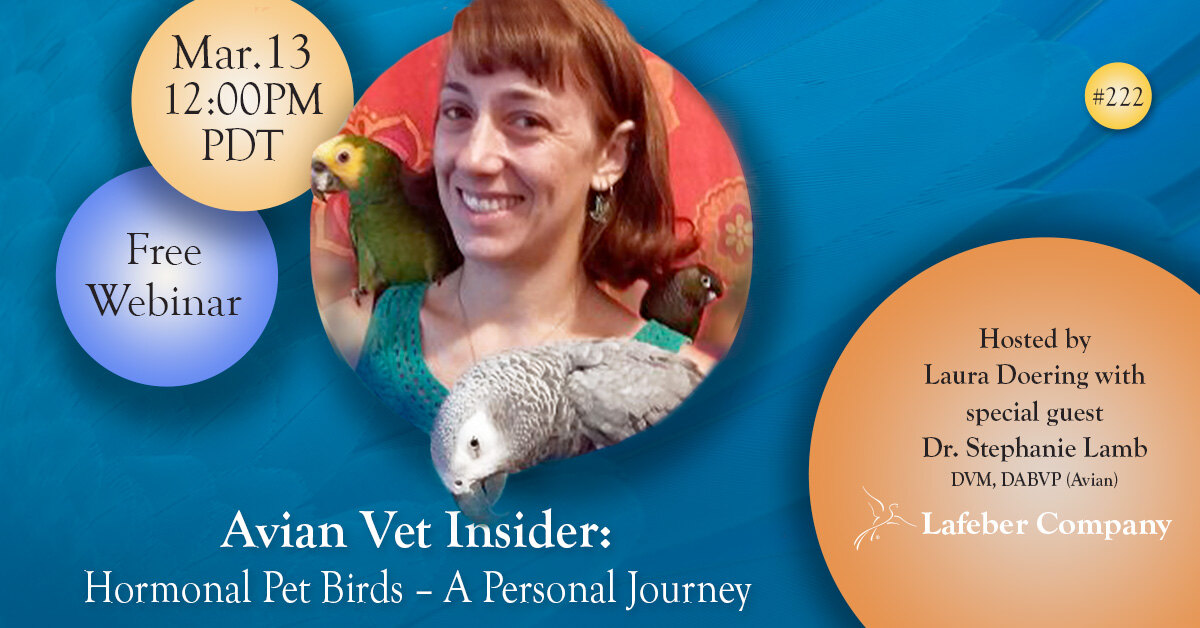
A pivotal educational event for the avian community, the webinar "Hormonal Pet Birds – A Personal Journey," is scheduled for Friday, March 13, 2026, at 12:00 p.m. PDT. This free, live, and interactive session promises to delve into one of the most persistent and often challenging aspects of companion parrot ownership: hormonal behavior. Hosted by renowned avian expert Laura Doering, former editor of Bird Talk and Birds USA magazines, the webinar will feature Dr. Stephanie Lamb, DVM, DABVP (Avian Practice), who will share her professional insights uniquely augmented by her personal experiences with hormonal pet birds. The event aims to equip parrot owners with a deeper understanding of these complex behaviors, offering practical strategies and a rare "insider’s view" from an avian veterinary clinic.
The Pervasive Challenge of Hormonal Behavior in Companion Birds
Hormonal fluctuations are an inherent part of a bird’s natural life cycle, driving reproductive instincts vital for species survival in the wild. However, in the captive environment of a pet home, these natural urges can manifest as a range of behaviors that are often misunderstood, disruptive, and even detrimental to the bird’s well-being and the owner-bird bond. Pet parrots, despite being domesticated for generations, retain their wild instincts, which are largely dictated by their endocrine system. Owners frequently encounter a spectrum of hormonal behaviors, from increased aggression and territoriality to persistent screaming, regurgitation, excessive nesting, and chronic egg-laying. For some birds, these periods are seasonal, aligning with natural breeding cycles, while for others, they can be unpredictable, sporadic, or even chronic due to environmental triggers within the home.
The challenges posed by hormonal pet birds are a consistent topic of discussion among avian veterinarians and experienced bird owners. The behaviors, while natural, can lead to significant stress for both the bird and its human companions. For instance, a parrot experiencing intense hormonal surges might become aggressive towards its owner, biting or lunging, leading to fear and frustration. Chronic egg-laying in female birds can lead to severe health issues such as calcium depletion, egg binding, oviduct prolapse, and even death. Males might exhibit excessive regurgitation towards perceived mates (often their owners or toys), or engage in self-mutilating behaviors if their natural urges are unfulfilled or misdirected. Understanding the root causes and appropriate management strategies is paramount for fostering a harmonious environment and ensuring the long-term health and welfare of these intelligent creatures. This webinar aims to bridge the knowledge gap, offering actionable advice grounded in both scientific understanding and practical experience.
Dr. Stephanie Lamb: A Blend of Professional Expertise and Personal Experience
The choice of Dr. Stephanie Lamb, DVM, DABVP (Avian Practice), as the special guest speaker underscores the webinar’s commitment to providing authoritative and empathetic guidance. Dr. Lamb’s credentials as a Diplomate of the American Board of Veterinary Practitioners in Avian Practice signify a rigorous level of advanced training, experience, and expertise specifically in avian medicine. Achieving DABVP status requires extensive clinical practice, a demanding credentialing process, and a comprehensive examination, making her one of a select group of veterinarians recognized for their specialized knowledge in bird health.
What sets Dr. Lamb’s presentation apart is her personal connection to the topic. The webinar title, "A Personal Journey," explicitly highlights that she has navigated the complexities of hormonal behavior with her own pet birds. This dual perspective—that of a highly qualified avian veterinarian and a compassionate bird owner—is invaluable. It allows her to articulate not only the physiological and behavioral aspects from a clinical standpoint but also to empathize deeply with the frustrations, concerns, and emotional toll that hormonal challenges can impose on pet owners. Her ability to translate complex medical concepts into relatable experiences will undoubtedly resonate with the audience, making the information more accessible and actionable. This unique blend of professional authority and personal insight positions her as an ideal guide for owners seeking solutions and understanding. Her "insider’s view of the daily happenings at your Avian Vet’s clinic" promises to offer a rare glimpse into how these issues are diagnosed and managed in a clinical setting, informed by firsthand understanding of the owner’s journey.
Laura Doering: A Stalwart in Avian Communication and Education
The webinar’s host, Laura Doering, brings a wealth of experience in avian communication and pet bird advocacy. As the former editor of two of the most influential pet bird publications, Bird Talk and Birds USA magazines, Doering has spent decades at the forefront of disseminating vital information to bird owners. Bird Talk, in particular, was a cornerstone publication for the avian community for many years, providing comprehensive articles on species-specific care, behavior, nutrition, and health from leading experts. Her editorial tenure signifies a deep understanding of the common questions, concerns, and educational needs of pet bird owners.
Doering’s role as host is crucial for facilitating an engaging and informative session. Her expertise allows her to guide the discussion, ask pertinent questions, and ensure that the content is presented in a clear, digestible manner for a diverse audience. Her long-standing reputation within the avian world also lends significant credibility to the event, assuring attendees that they are receiving information from trusted sources. Her involvement highlights the ongoing commitment of experienced professionals to foster better understanding and care for companion birds, building upon a legacy of education established through traditional media now transitioning into the digital sphere.
Understanding the Avian Reproductive Cycle and Its Triggers
To effectively manage hormonal behavior, it is essential to comprehend the underlying biological mechanisms. The avian reproductive cycle is governed by a complex interplay of internal hormones and external environmental cues. Internally, hormones such as Gonadotropin-Releasing Hormone (GnRH), Luteinizing Hormone (LH), Follicle-Stimulating Hormone (FSH), estrogen, testosterone, and prolactin dictate various stages of reproduction, from gonad development to egg-laying and parental care.
In the wild, these hormonal surges are typically seasonal, triggered by specific environmental factors that signal optimal breeding conditions. Key external triggers include:
- Photoperiod (Light Cycles): Longer daylight hours often signal the approach of spring and breeding season. In captivity, artificial lighting, especially prolonged exposure (more than 12-14 hours), can constantly trick a bird’s system into a reproductive state.
- Abundance of Food: A sudden increase in rich, high-fat foods, or a consistently calorie-dense diet, can signal to a bird that resources are plentiful enough to support raising offspring.
- Availability of Nesting Sites: Dark, enclosed spaces, such as bird huts, cardboard boxes, cabinets, or even spaces under furniture, can act as powerful stimuli for nesting behavior.
- Perceived Mate: Constant petting, especially on the back or under the wings, can be interpreted by a bird as mating behavior. Mirrors, reflective surfaces, or even other birds (of the same or different species) can also act as perceived mates, triggering hormonal responses.
- Temperature and Humidity: While less dominant than light and food, stable warm temperatures and increased humidity can also contribute to triggering reproductive cycles in some species.
In a typical home environment, many of these triggers are inadvertently provided year-round. Consistent artificial light, readily available high-calorie diets, and owner interactions that mimic courtship can lead to a state of chronic hormonal activation, which is both unnatural and unhealthy for the bird.
Common Manifestations and Their Impact
The consequences of chronic or intense hormonal activity in pet birds extend beyond mere inconvenience; they pose significant health and welfare risks.
-
Behavioral Issues:
- Aggression: Birds may become territorial around their cage, nesting sites, or even their perceived mate (owner), leading to biting, lunging, and screaming.
- Screaming: Excessive vocalization, often described as "contact calls" or "attention-seeking," can escalate during hormonal periods.
- Regurgitation: Birds may regurgitate food for their perceived mate, a natural courtship behavior that can become problematic when directed at owners or inanimate objects.
- Nesting and Destructive Behavior: An intense drive to build a nest can lead to excessive chewing of furniture, walls, or cage bars, and a strong desire to seek out dark, enclosed spaces.
- Mate Guarding: A bird might aggressively defend its perceived mate (owner) from other family members or pets.
-
Health Risks:
- Chronic Egg-Laying: This is a major concern for female birds. Each egg depletes the hen’s calcium reserves, leading to potential metabolic bone disease, brittle bones, and muscle weakness. It also increases the risk of egg binding (an egg getting stuck in the oviduct), oviduct prolapse (the oviduct turning inside out and protruding from the cloaca), and peritonitis from ruptured eggs.
- Cloacal Prolapse: Straining from egg-laying or chronic masturbation can lead to the cloaca prolapsing, requiring immediate veterinary attention and often surgery.
- Nutritional Deficiencies: Chronic egg-laying can lead to severe calcium and vitamin deficiencies if not adequately managed through diet and supplementation.
- Feather Destructive Behavior: While not exclusively hormonal, stress and frustration from unfulfilled reproductive drives can contribute to feather plucking or mutilation.
- Increased Stress and Reduced Quality of Life: A bird constantly in a hormonal state is often stressed, anxious, and unable to engage in normal, non-reproductive behaviors, significantly impacting its overall welfare.
The cumulative impact on owners can be equally profound. Dealing with an aggressive, noisy, or sick bird can lead to frustration, guilt, and emotional exhaustion. In severe cases, it can even lead to the difficult decision of rehoming the bird if the owner feels unable to manage the behaviors or health issues.
Veterinary Approaches to Managing Hormonal Imbalance
Effective management of hormonal issues in pet birds typically involves a multi-faceted approach combining environmental modification, behavioral adjustments, and, when necessary, medical intervention.
- Diagnosis: An avian veterinarian will begin with a thorough physical examination and a detailed history of the bird’s behavior and environment. Diagnostic tools may include blood tests (to check calcium levels, hormone panels if available, and general health), radiographs (X-rays) to assess reproductive tract health, detect eggs, or evaluate bone density, and sometimes ultrasound.
- Environmental Modification: This is often the first line of defense and involves altering the bird’s surroundings to reduce reproductive triggers:
- Light Cycle Management: Establishing a strict 10-12 hour light cycle followed by 12-14 hours of uninterrupted darkness (achieved by covering the cage or moving the bird to a dark room).
- Dietary Adjustments: Reducing high-fat, high-sugar foods and ensuring a balanced diet, often transitioning to a high-quality pelleted diet supplemented with fresh vegetables.
- Nest Box Removal: Eliminating all potential nesting sites, including bird huts, boxes, dark corners, and shredded paper.
- Toy Rotation and Enrichment: Providing a variety of foraging toys and enrichment activities to redirect energy away from reproductive behaviors.
- Cage Location: Moving the cage away from busy areas or windows if external stimuli are a trigger.
- Behavioral Modification:
- Changing Interaction Patterns: Avoiding petting the bird on its back or under its wings. Limiting extended cuddles or direct mouth-to-mouth feeding. Encouraging independent play.
- Training and Redirection: Using positive reinforcement to train desired behaviors and redirect undesirable ones.
- Medical Interventions: For severe or chronic cases, veterinary medicine offers several options:
- Hormone Implants: Deslorelin implants are commonly used. These implants slowly release a GnRH agonist, which initially stimulates and then down-regulates the bird’s own GnRH production, effectively suppressing the reproductive cycle for several months.
- Pharmacotherapy: Medications may be used to address secondary symptoms, such as pain relief for egg binding or calcium supplementation for chronic egg layers.
- Oviposition Control: For chronic egg layers, a veterinarian might manually remove eggs, or administer calcium injections and fluids.
- Surgical Options: As a last resort for chronic egg layers with life-threatening conditions, a salpingectomy (removal of the oviduct) or hysterectomy may be considered. These are complex procedures with risks and are typically reserved for cases where other methods have failed.
The Significance of an "Insider’s View" from an Avian Vet’s Clinic
Dr. Lamb’s promise to provide an "insider’s view of the daily happenings at your Avian Vet’s clinic" is particularly compelling. This perspective offers attendees a unique opportunity to understand how hormonal issues present in a clinical setting, what diagnostic steps are taken, and the range of treatment protocols employed. Owners often arrive at the clinic with distress and a limited understanding of the biological underpinnings of their bird’s behavior. Dr. Lamb’s ability to illustrate these scenarios from a veterinary standpoint, enriched by her personal encounters, can demystify the diagnostic and treatment process.
This insight can empower owners to recognize early warning signs, understand the rationale behind veterinary recommendations, and proactively seek help. It underscores the importance of a strong partnership between bird owners and their avian veterinarians. By sharing real-world examples (anonymized, of course) of cases she has encountered, Dr. Lamb can illuminate the varied presentations of hormonal problems and the tailored solutions required for each individual bird. This fosters a more informed and collaborative approach to avian healthcare, emphasizing that there is no one-size-fits-all solution for managing such complex behavioral and physiological challenges.
Broader Implications for Avian Welfare and Owner Education
The webinar on hormonal pet birds carries significant broader implications for avian welfare and owner education. The growing popularity of companion parrots has brought with it an increased responsibility to understand their complex needs. Educational initiatives like this webinar are vital for raising awareness about issues that directly impact a bird’s quality of life. When owners are equipped with accurate information and practical strategies, they are better able to prevent, recognize, and manage hormonal behaviors, leading to healthier, happier birds and more fulfilling relationships.
Organizations like Lafeber (implied by the webinar’s association with their platform, as seen in the image URL) play a crucial role in supporting such educational endeavors. By facilitating access to expert knowledge, they contribute to the professional development of avian veterinarians and the empowerment of pet owners. This aligns with a broader movement within the pet industry to promote responsible pet ownership, moving beyond basic care to address the psychological and behavioral well-being of companion animals. The webinar’s focus on a personal journey also humanizes the veterinary profession, making experts more relatable and approachable, which can encourage owners to seek professional help sooner rather than later.
The Digital Age and Accessibility of Avian Expertise
The choice to host this event as a free, live, interactive webinar highlights the transformative power of digital platforms in democratizing access to specialized knowledge. In a field as niche as avian veterinary medicine, geographical barriers can often prevent owners from accessing expert advice. Webinars overcome these limitations, allowing participants from across different time zones (with the provision of a time zone converter, acknowledging the 12:00 p.m. PDT timing) to engage directly with leading professionals. The interactive nature, particularly the opportunity for live Q&A sessions, allows attendees to get real-time answers to their specific questions, fostering a more dynamic learning environment than pre-recorded content.
This accessibility is crucial for strengthening the avian community and ensuring that the latest research and best practices reach a wider audience. It represents a modern evolution of the educational efforts traditionally provided by magazines like Bird Talk and Birds USA, leveraging technology to deliver timely and impactful information directly to those who need it most.
A Call to Action and Future Outlook
The webinar "Hormonal Pet Birds – A Personal Journey" on March 13, 2026, represents a critical opportunity for pet parrot owners to deepen their understanding of a ubiquitous and often challenging aspect of avian care. By combining the professional authority of a board-certified avian veterinarian with the relatable insights of personal experience, and guided by a seasoned avian communicator, the session promises to be both informative and empowering.
Prospective attendees are encouraged to register promptly via the provided link to secure their spot for this enlightening event. Active participation will not only benefit individual bird owners but also contribute to a collective advancement in avian welfare. As research in avian endocrinology and behavior continues to evolve, ongoing educational initiatives like this webinar are indispensable. They empower owners to navigate the complexities of their birds’ natural instincts within a domestic setting, fostering healthier relationships and ensuring that these remarkable creatures can thrive in human care. The dialogue initiated by such events paves the way for a future where pet birds are not just kept, but truly understood and cherished.
