

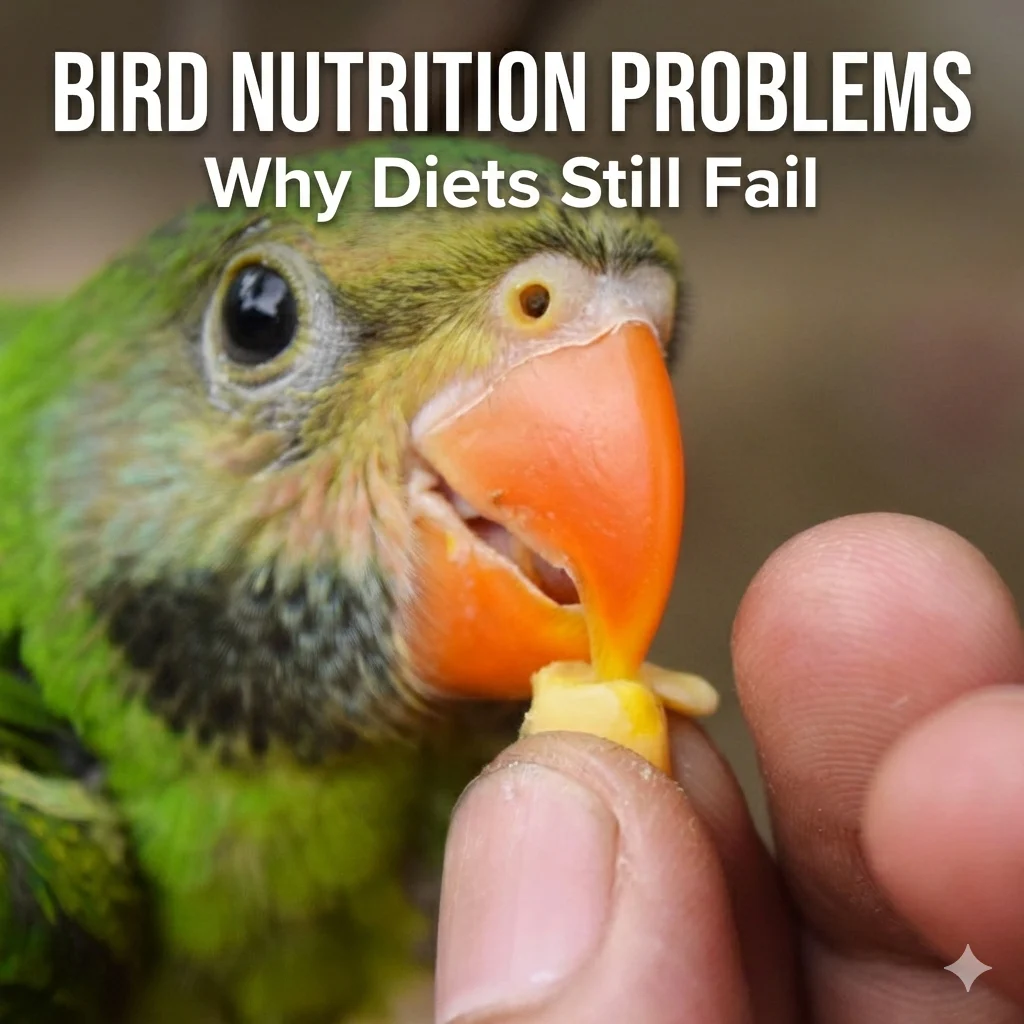
Despite diligent efforts by pet bird owners to provide high-quality diets, many avian companions continue to exhibit signs of weakness, dull plumage, or subtle behavioral changes. The perplexing reality that "good diets" can seemingly fail stems not from a lack of owner care, but from complex metabolic processes involving nutrient intake, absorption, and activation. A balanced diet in the bowl does not automatically translate to optimal health within the bird’s body; if any step in this physiological chain is compromised, the bird’s overall well-being inevitably suffers.
The Metabolic Disconnect: Beyond the Food Bowl
The fundamental challenge in avian nutrition lies in understanding that feeding a bird well is a multi-layered process. It’s not merely about providing a variety of food items, but ensuring those nutrients are efficiently utilized. Avian expert Diane Burroughs, LCSW, a recognized authority in bird nutrition and health, frequently points out that the problem often lies in metabolism, where critical links in the nutrient pathway—intake, absorption, and activation—can falter independently or in conjunction.
For instance, a bird might consume ample calcium, yet without sufficient vitamin D3, that calcium cannot be effectively absorbed through the intestinal wall and transported into the bloodstream. This process further relies on adequate exposure to ultraviolet B (UVB) light, which birds require to synthesize their own D3. When these interconnected steps are disrupted, even a meticulously planned diet can fall short, leading to a spectrum of health issues that often manifest subtly before progressing to more severe conditions.
Subtle Indicators: When a "Good Diet" Isn’t Enough
Owners often question why their bird appears weak despite consuming a seemingly balanced diet. The answer frequently lies in a compromised metabolic system that prevents the body from utilizing essential nutrients.
-
Weak Grip and Neuromuscular Control: Calcium plays a pivotal role in nerve signaling and muscle contraction. When circulating calcium levels are marginal, neuromuscular control is among the first functions to be affected. Owners might observe their bird exhibiting a weak grip, slipping toes, difficulty stabilizing on perches, or an overall subtle loss of strength. These signs are often quiet and progressive, easily dismissed as normal aging or minor clumsiness until they become more pronounced. Research published in veterinary journals consistently highlights hypocalcemia as a common underlying cause for such symptoms in captive birds, particularly those housed indoors without proper environmental enrichment, including UVB light.
-
Shorter Flights and Clumsy Landings: The precision required for flight and controlled landings demands robust neuromuscular function. When calcium levels are inadequate, even slightly, birds may hesitate before takeoff, exhibit shorter flight durations, or land less smoothly. This can be an early warning sign of systemic metabolic instability, indicating that the high-demand activity of flight is taxing an already compromised system.
-
Dull Feathers Despite Eating Pellets: Feather quality is a direct reflection of a bird’s metabolic health and nutrient status, not just the variety of its diet. During molting, birds require a significant supply of specific amino acids, vitamins, and minerals to produce strong, vibrant new feathers. If mineral balance or absorption is compromised—for example, due to inefficient calcium metabolism—feather shafts may appear thinner, duller, structurally weaker, or develop stress bars. Even birds consuming high-quality pellets can display compromised feather condition if underlying nutrient absorption or utilization is inefficient. Studies show that deficiencies in methionine, lysine, zinc, and biotin, alongside calcium and vitamin A, can severely impact feather structure and pigmentation.
The Peril of Pellet Conversion: Neophobia and Seed Addiction
One of the most significant hurdles for bird owners is transitioning their birds from seed-heavy diets to a more nutritionally complete pellet-based regimen. Parrots, by nature, are "neophobic," meaning they exhibit a fear or avoidance of new things, including unfamiliar foods. This innate caution, coupled with a learned preference for the high fat and calorie content of seeds, makes "cold turkey" pellet swaps not only ineffective but potentially dangerous, as birds may choose starvation over consuming an unknown food.
-
Neophobia and Food Refusal: Birds raised on seeds do not automatically recognize pellets as food. The sudden removal of familiar food sources can trigger rapid food refusal and significant weight loss. Avian veterinarians universally advise against abrupt dietary changes, emphasizing that successful transition is less about hunger and more about building trust and familiarity with the new food while ensuring the bird’s nutritional needs are met during the process.
-
Seed Addiction and Nutritional Imbalance: Seed-only diets are notoriously high in fat and calories but critically deficient in bioavailable calcium, vitamin A, and essential amino acids. While birds on such diets may appear energetic, they are often slowly developing insidious nutrient imbalances that silently undermine their health, affecting immunity, bone strength, and feather quality. The preference for seeds is a learned feeding behavior, driven by palatability, texture, and fat content, rather than any intrinsic nutritional wisdom. This "addiction" makes gradual, supportive transition essential.
-
Safe Pellet Conversion Strategies: The key to safe and effective pellet conversion is a gradual approach coupled with rigorous monitoring. Owners should introduce small amounts of pellets mixed into the bird’s existing diet, slowly increasing the proportion over weeks or even months. Crucially, a gram scale should be used to weigh the bird weekly. A drop of more than 3-5% of body weight signals inadequate intake and necessitates slowing down the transition. Caloric stability must be prioritized; nutritional optimization follows once the bird reliably consumes the new food. Expert advice from figures like Diane Burroughs underscores the importance of "supplementing the bridge" during this transition to ensure birds receive critical nutrients like calcium and amino acids, preventing deficiencies during the learning phase.
The "Seed-Only" Fallacy: Hidden Deficiencies
Many owners, observing their bird’s apparent vitality on a seed-heavy diet, wonder if it’s "really so bad." The answer, unequivocally, is yes. While seeds provide calories, they create predictable and severe nutritional gaps that lead to long-term health problems.
-
Predictable Nutrient Gaps: Most commercial seed mixes are profoundly deficient in vital nutrients such as vitamin A, calcium, and essential trace minerals like zinc, iodine, and selenium. Over time, these deficiencies lead to a cascade of issues affecting epithelial health, bone density, immune response, and feather integrity, even if the bird initially appears active and well-fed. This insidious progression is why symptoms often go unnoticed until significant damage has occurred.
-
Vitamin A Deficiency (Hypovitaminosis A): Vitamin A is crucial for maintaining the healthy epithelial lining of the mouth, sinuses, respiratory tract, and gastrointestinal system. When deficient, these tissues thicken, lose their protective function, and become highly susceptible to bacterial and fungal infections. Early signs, often subtle, include dull feathers, overgrown beaks, flaky skin, nasal discharge, sneezing, poor appetite, and swollen eyes or periocular tissue. These visible changes often appear before laboratory abnormalities are detectable, making early recognition by owners vital. The long-term implications include chronic respiratory disease, kidney issues, and reproductive problems.
-
Pellets vs. Seeds vs. Fresh Food: Understanding the role of each food type is critical. Seeds primarily offer calories and fats. Pellets are engineered to provide a structured, balanced foundation of micronutrients. Fresh foods, such as vegetables and fruits, supply phytonutrients, enzymes, and hydration. However, variety alone cannot correct underlying deficiencies if the foundational diet is inadequate. The most stable and recommended approach combines a formulated pellet as the primary base, supplemented with measured fresh vegetables and fruits, and controlled, minimal use of seeds as treats. This structured approach prevents the slow, cumulative nutrient drift that seed-heavy diets inevitably create.
The D3 Dilemma: When Pellets and Veggies Aren’t Enough
Even birds consuming high-quality pellets and fresh vegetables can suffer from nutrient deficiencies if those nutrients are not properly activated and absorbed. This is particularly true for calcium, whose pathway is inextricably linked to vitamin D3.
-
Calcium Absorption and Vitamin D3: The adage "calcium in the bowl does not equal calcium in the bloodstream" highlights a critical metabolic truth. Vitamin D3 acts as a hormone, activating specific intestinal transport proteins that facilitate the movement of calcium across the gut wall and into circulation. Without adequate D3, dietary calcium largely passes through the digestive system unutilized.
-
The UVB Connection: Birds, unlike humans, primarily synthesize vitamin D3 in their skin and the preen gland through exposure to specific wavelengths of ultraviolet B (UVB) light. While window light may appear bright, standard window glass blocks almost all beneficial UVB rays. Consequently, indoor birds, even those with prime window access, remain metabolically "under-activated" for D3 synthesis. This widespread lack of appropriate UVB exposure is a leading cause of calcium deficiency in pet parrots, regardless of their dietary intake. Scientific studies consistently demonstrate that birds housed without adequate UVB supplementation have significantly lower circulating D3 and calcium levels.
Efficacy of Supplements: Water vs. Food Delivery
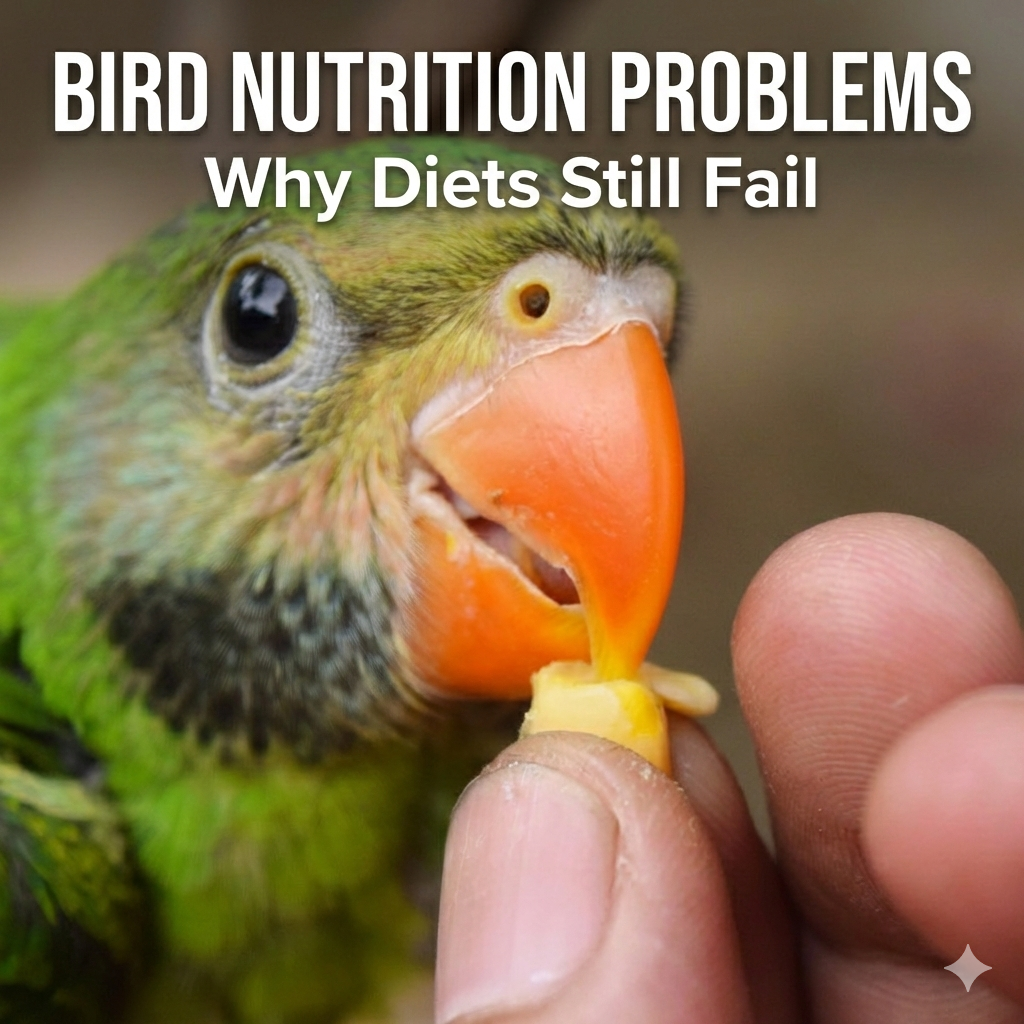
When a bird exhibits signs of deficiency, owners often turn to supplements. The question then arises: "Do supplements in water actually work?" The effectiveness of avian vitamin supplements hinges on three critical variables: ingredient stability, consistent intake, and bioavailability.
-
Challenges with Water Supplements: Water-soluble nutrients can degrade rapidly when exposed to light, heat, or even certain minerals in tap water. Moreover, the actual dose a bird receives from water supplements is highly variable, depending on daily water intake fluctuations. If a bird’s drinking habits vary, or if the nutrients degrade before consumption, the results become unpredictable, leading to potential under-dosing or inconsistent benefit.
-
Food vs. Water Supplements: Food-based delivery generally offers improved dose reliability. When a supplement is mixed into a known portion of chop, soft food, or a small amount of pellets, owners can confirm consumption more accurately than by estimating water intake. For nutrients like calcium, magnesium, biotin, or certain amino acids that require consistent dosing for therapeutic effect, controlled food application reduces the risk of underdosing and waste. Veterinary recommendations often favor food-based supplements for these reasons, especially when precise dosing is critical.
-
When Calcium Supplementation is Needed: Indoor housing without access to natural sunlight or artificial UVB exposure significantly increases the risk of low vitamin D3 and poor calcium absorption. Egg-laying hens, birds exhibiting weak grip strength, those with seasonal neuromuscular decline, or birds producing recurring thin-shelled eggs often require additional calcium support. A properly formulated combination of calcium, magnesium, and D3 helps maintain nerve signaling, muscle contraction, and bone stability, particularly when environmental D3 activation is limited. However, over-supplementation can lead to adverse effects, emphasizing the need for targeted and measured approaches, ideally under veterinary guidance.
The Winter Worsening: Seasonal Impacts on Avian Health
Many parrot species originate from tropical or subtropical regions where daylight hours and light intensity remain relatively stable throughout the year. For these birds, residing in northern climates presents a unique challenge, as winter brings dramatic reductions in natural daylight and weaker sunlight, profoundly impacting their physiology.
-
Winter Light Loss and Vitamin D3: Shorter days and reduced sunlight intensity directly correlate with decreased natural UVB exposure. As discussed, UVB is essential for the skin’s synthesis of vitamin D3. Consequently, reduced UVB leads to reduced D3 synthesis, which in turn impairs calcium utilization, even if dietary calcium intake remains constant. This explains why subtle weakness or other deficiency signs often become more pronounced during the late winter months.
-
Indoor Birds and Calcium Deficiency: The combination of tropical evolutionary biology and modern indoor living creates a perfect storm for calcium deficiency. Indoor glass completely blocks UVB rays, meaning pet birds receive virtually no D3-activating light. Without supplemental UVB lighting or dietary D3, these birds are perpetually at risk, and diet alone cannot fully compensate for this environmental deficit.
-
Seasonal Behavioral Changes: Light exposure is a crucial regulator of circadian rhythms, hormone signaling, and metabolic stability in birds. Inconsistent or shortened photoperiods, typical of northern winters, can trigger a range of behavioral and physiological changes, including irritability, reduced activity, decreased grip strength, and compromised molt quality. When a bird’s internal biological clock, adapted for tropical consistency, is thrown off by environmental light shifts, both behavior and structural strength can decline in unison.
Navigating Diagnosis: Deficiency vs. Disease
Distinguishing between vitamin A deficiency, calcium deficiency, or "something worse" is a critical task that necessitates professional veterinary intervention. While the symptoms of nutritional imbalances are well-documented, they can often mimic other illnesses, and both excessively low and dangerously high levels of certain nutrients can cause severe harm.
-
Importance of Avian Veterinary Diagnosis: The symptom lists provided in educational materials are guides, not diagnostic tools. Bloodwork, radiographs, and other diagnostic imaging performed by an avian veterinarian are the only reliable methods to confirm a deficiency or toxicity. Self-diagnosis and self-treatment carry significant risks.
-
Signs of Vitamin A Deficiency: These can include white plaques or abscesses in the mouth, choanal papillae blunting, nasal discharge, sneezing, poor feather quality, footpad lesions, and swelling around the eyes. While these signs are indicative, they can also overlap with bacterial or fungal infections. Critically, excessive synthetic vitamin A supplementation can also stress the liver, emphasizing that balance, not just quantity, is paramount.
-
Signs of Hypocalcemia: These often manifest as neuromuscular weakness, including weak grip, seizures, tremors, ataxia (loss of coordination), and in laying hens, soft-shelled or retained eggs. As with vitamin A, excess calcium can lead to serious issues such as soft tissue mineralization, kidney strain, and metabolic imbalances. Supplementation must be intentional, species-appropriate, and guided by professional advice.
-
When to Call an Avian Vet Immediately: Certain symptoms demand immediate veterinary attention. These include acute calcium crashes (sudden onset seizures, severe tremors), severe infections secondary to vitamin A deficiency (e.g., respiratory distress, profound lethargy), or any signs suggestive of systemic illness (e.g., profound weakness, vomiting, bloody droppings, prolonged anorexia). These are not "watch and wait" symptoms; they indicate an emergency that cannot be safely managed at home. An avian veterinarian can provide critical diagnostic testing, supportive care, and appropriate medical treatment.
Holistic Solutions: Correcting the Metabolic Chain
Effectively addressing nutritional deficiencies in pet birds requires a holistic approach that targets the weak link in the metabolic chain: intake, absorption, or activation. Partial solutions often lead to partial improvements.
-
Correcting Vitamin A Deficiency: This primarily involves a dietary overhaul. Gradually transitioning to a high-quality pellet diet, supplemented with vitamin A-rich vegetables (e.g., carrots, sweet potatoes, dark leafy greens, bell peppers), is crucial. Improvement is often first seen in oral tissue color and a reduction of nasal debris, indicating the rebuilding of epithelial tissues. Sporadic vegetable intake is insufficient; consistent dietary correction is key. Caution is advised against excessive synthetic vitamin A, which can burden the liver.
-
Installing a Safe UVB Bird Light: Since glass blocks UVB, indoor birds require artificial UVB lighting. Specialized avian UVB bulbs should be installed at an appropriate distance from the bird’s favorite perching spots, ensuring regular exposure. Consistency of exposure is more critical than intensity. It is vital to replace these bulbs according to the manufacturer’s schedule, as their UVB output degrades over time even if they still appear bright to the human eye. This ensures ongoing D3 synthesis and calcium utilization.
-
Using Calcium, Magnesium & D3 Together: Calcium alone is rarely sufficient. Vitamin D3 activates its absorption, and magnesium supports neuromuscular signaling and proper calcium regulation. This coordinated system is essential for metabolic stability. Birds showing weak grip, seasonal decline, egg-laying stress, or permanent indoor housing often benefit from an integrated supplement approach rather than isolated dosing. Again, over-supplementation can be detrimental, stressing kidneys and soft tissues, thus emphasizing measured, species-appropriate dosing.
Conclusion: A Unified Approach for Avian Health
The failure of "good diets" in pet birds is a complex issue rooted in the intricate interplay of nutrient intake, absorption, and activation. Birds do not fail because their owners lack care, but often because one or more links in their metabolic chain are compromised. The journey to optimal avian health demands a structured diet (primarily pellets with fresh vegetables), appropriate environmental enrichment (especially consistent UVB light), and targeted nutritional support when deficiencies are confirmed.
When intake, absorption, and activation are aligned through a comprehensive and informed approach, the benefits are profound: strength returns, grip improves, feathers regain their structure and vibrancy, and overall energy stabilizes. Persistent symptoms, however, always warrant the expertise of an avian veterinarian, as early diagnosis and intervention are paramount to preventing acute crises and ensuring the long-term well-being of our feathered companions.
