


The global conservation community has long wrestled with a fundamental dilemma in species restoration: how to successfully reintroduce apex predators into depleted natural habitats without triggering maladaptive behaviors that compromise their survival. For large crocodilians—creatures renowned for both their formidable physical presence and their remarkably sophisticated cognitive mapping abilities—this challenge is particularly acute. Traditional conservation frameworks have frequently relied on the release of fragile hatchlings to rebuild plummeting populations, yet these vulnerable youngsters face exceptionally high mortality rates and require decades to reach reproductive maturity.
However, a groundbreaking study recently published in the journal Wildlife Research offers a transformative perspective on saltwater crocodile conservation. According to the research, saltwater crocodiles born or raised in captivity may lack the compulsion to return to their breeding centers once released into the wild. This behavioral distinction could fundamentally reshape how wildlife authorities and conservationists approach repopulation initiatives in critical ecosystems, opening the door for the strategic release of older, more resilient subadult and adult animals.
The implications of these findings extend far beyond a single research project, addressing decades-old frustrations regarding animal relocation programs. For generations, behavioral ecologists have documented the powerful homing instincts embedded within the animal kingdom. While many species utilize navigation for routine daily foraging trips back to fixed nests or burrows, others undertake monumental migrations across vast geographic expanses spanning weeks or months. Among the world’s large tropical, subtropical freshwater, and brackish environments, crocodilians represent a uniquely challenging subset of species when subjected to spatial displacement.
The Persistence of Homing Behavior and Historical Context
To understand the magnitude of the recent findings, one must examine the documented behavioral patterns of crocodilians. Behavioral ecologist and Adjunct Associate Professor Ru Somaweera from Murdoch University notes that crocodiles possess an uncanny aptitude for orientation and spatial memory.
"Crocodiles are remarkably good at finding their way home, often returning to their original capture sites and limiting the success of relocation programs," Somaweera explained. This stubborn adherence to familiar territory has historically undermined human intervention strategies. When problem crocodiles or displaced animals are moved away from human-inhabited zones, their intrinsic navigation systems frequently compel them to traverse vast distances to reclaim their original territories, often crossing hazardous terrain or re-entering conflict zones.
What remained entirely unclear, however, was whether individuals that had been bred, nurtured, or maintained in captivity for extended periods shared this inflexible geographical tether. If captive-raised specimens exhibited the same ingrained desire to return to their concrete enclosures or feeding pools upon release, conservationists feared that reintroduction projects would inevitably collapse as the animals abandoned wild habitats to seek out human-managed facilities.
This uncertainty was particularly pressing in regions where wild populations have been pushed to the absolute brink of extinction. The recent study was conducted within the ecologically rich yet fragile Sundarbans mangrove forest in Bangladesh. Spanning the delta of the Ganges, Brahmaputra, and Meghna rivers, the Sundarbans represent one of the last major refuges for the saltwater crocodile (Crocodylus porosus) in South Asia.
The historical trajectory of this species in Bangladesh mirrors the devastating impacts of human exploitation seen across the globe. Heavy commercial hunting driven by the lucrative global trade in crocodile skins decimated the species throughout the country over the course of the mid-20th century, bringing populations close to total eradication by the 1970s. Although the government of Bangladesh instituted legal protections for saltwater crocodiles in 1973, bestowing upon them formal conservation status, the species has stubbornly refused to stage a measurable recovery in the decades since.
Today, the vast majority of Bangladesh’s remaining native saltwater crocodiles are isolated within the complex tidal network of the Sundarbans. Even within this protected sanctuary, the population remains precariously small. The most recent comprehensive wildlife surveys estimate that the entire region harbors a mere 140 mature individuals—a number perilously close to the threshold of demographic collapse and highly vulnerable to stochastic environmental events, disease, or localized habitat degradation.
Evaluating the Viability of Captive-Reared Adults
Faced with stagnant wild numbers and the acknowledged shortcomings of releasing vulnerable hatchlings, researchers sought to determine whether larger, captive-bred crocodiles could serve as viable candidates for population augmentation.
"If crocodiles who are bred and raised in captivity subsequently return to their enclosures or breeding facilities after being released, attempts to reintroduce them into the wild as part of conservation efforts will ultimately fail," Somaweera emphasized. "The traditional approach has to been to use hatchlings in reintroduction programs, but their survival rates are extremely low and they take a long time to reach reproductive maturity. Understanding whether larger, captive-bred crocodiles can be used instead represents an important knowledge gap."
To bridge this critical divide in scientific literature, an international and interdisciplinary team of researchers designed a rigorous tracking methodology. The project was led jointly by IUCN Bangladesh and the Bangladesh Forest Department, with vital financial backing provided by the Deutsche Gesellschaft für Internationale Zusammenarbeit (GIZ).
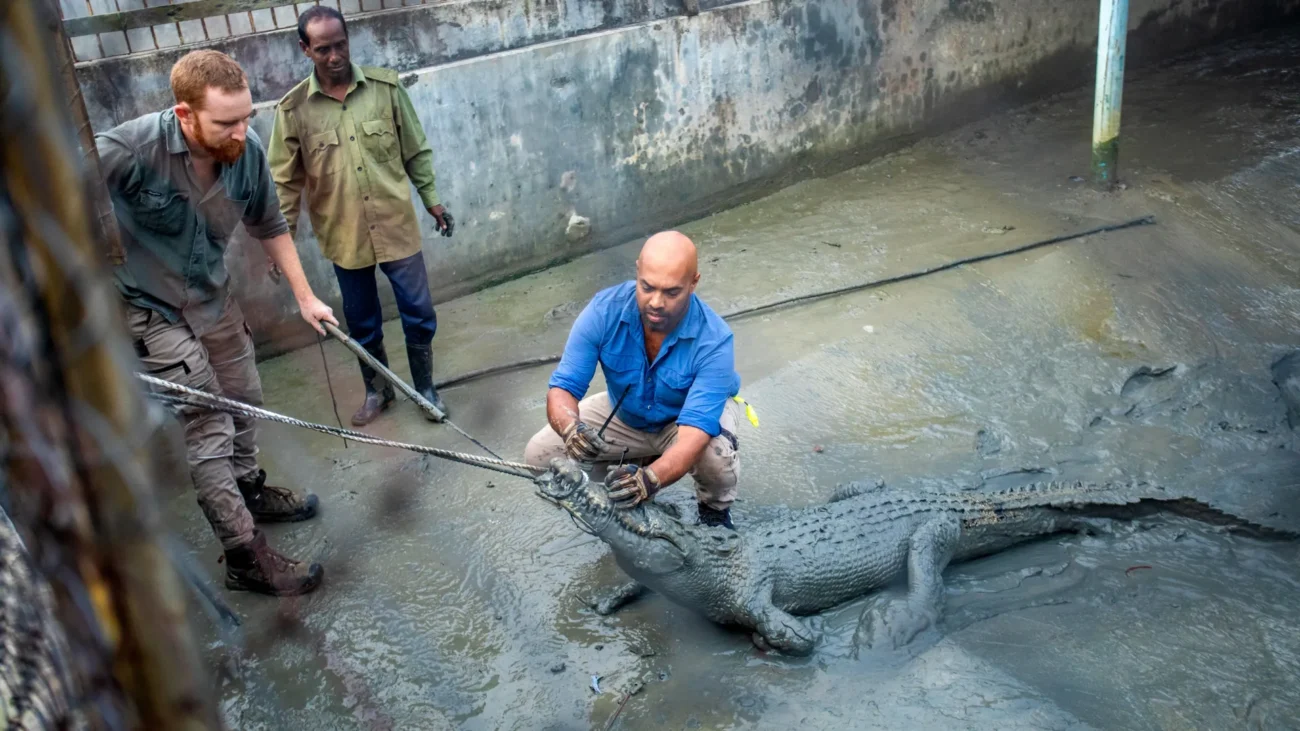
The scientific team selected a cohort of five mature saltwater crocodiles to monitor via advanced satellite telemetry. This experimental group was intentionally diverse to capture varying behavioral responses based on life history and origin. It included three captive-reared females that had spent between 8 and 22 years confined within artificial environments, one local wild crocodile that served as a control baseline by being captured and immediately released back into its native habitat, and a second wild crocodile that was intentionally translocated—meaning it was captured and moved a significant distance away from its home territory to test classical homing responses.
Following the attachment of high-precision satellite tracking devices, the researchers released the animals into the wild ecosystems of the Sundarbans and monitored their real-time spatial dynamics, movement velocities, and habitat utilization patterns over the course of several months.
Behavioral Divergence: Captive Adaptation Versus Wild Homing
The empirical data yielded striking contrasts between the subjects, providing unprecedented insights into post-release behavioral ecology. Most encouragingly for conservation planners, the three captive-reared females demonstrated a complete absence of the homing instinct that typically plagues animal relocation programs. None of the three subjects displayed behavioral indicators of attempting to navigate back to the breeding facility where they had spent the majority of their lives.
Instead, the telemetry data revealed a smooth and remarkably rapid ecological integration. The captive-reared crocodiles settled into small, well-defined geographic home ranges shortly after release. Their daily movement metrics, localized foraging patterns, and spatial dispersion closely mirrored those of the local wild control crocodile being monitored concurrently. This behavioral convergence strongly suggests that despite spending up to two decades in captivity, adult saltwater crocodiles retain sufficient behavioral plasticity to adapt seamlessly to natural, complex aquatic ecosystems without harboring a psychological anchor to human-managed facilities.
The narrative played out starkly different for the wild-born translocated crocodile, known in the study as Jongra. Captured and transported approximately 132 kilometers away from his established home range before being released into unfamiliar waters, Jongra immediately activated a classic homing response.
"Unfortunately, the results weren’t as good for the wild crocodile Jongra, who was translocated about 132km from his home before being released," Somaweera noted. "Although Jongra didn’t make it back to his original capture site during the study, his movements were very clearly going in that direction. He traveled far more each day than any other crocodile we tracked, covered an exceptionally large area, and even recorded single-day movements of more than 30 kilometers: all typical signs of homing behavior."
Jongra’s frenetic journey highlights the immense physiological and energetic toll exacted by displacement stress in wild apex predators. While he ultimately did not complete the grueling 132-kilometer trek during the monitoring window, his directional persistence, expansive home range utilization, and bursts of high-speed daily travel underscore the severe challenges wildlife managers face when attempting to move mature, wild-adapted crocodiles away from human settlement zones.
Practical Applications and Conservation Implications
The clear dichotomy observed between the captive-reared females and the translocated wild male carries profound, practical value for contemporary wildlife management and conservation biology. As biodiversity loss accelerates globally, conservationists are frequently forced to look beyond passive protection and engage in active population restoration techniques, including captive breeding and reintroduction.
The findings from the Sundarbans study suggest that wildlife authorities can safely pivot away from relying exclusively on high-mortality hatchling releases. Instead, the strategic release of subadult and adult crocodiles raised in captivity can be embraced as a viable, highly effective strategy to accelerate population recovery in depleted ecosystems. Because these older individuals have bypassed the vulnerable early juvenile mortality stage and have demonstrated an ability to integrate into wild habitats without attempting to return to captive facilities, they represent a robust demographic injection for struggling wild populations.
At the same time, the study provides a vital cautionary note regarding the handling of wild-caught problem animals. For translocated crocodiles that retain deep cognitive maps of their native territories, the data emphasizes the absolute necessity of meticulous release planning. Wildlife managers must anticipate intense homing behaviors, factoring in large movement corridors, potential human-wildlife conflict risks along the transit route, and the potential need for specialized barrier management or alternative placement strategies if translocation is the only viable option.
Broader Impacts on Global Apex Predator Management
The publication of this study in Wildlife Research—titled What is home? Post-release movements of captive-reared and translocated mature saltwater crocodiles in Bangladesh—arrives at a critical juncture for Asian wetland conservation. As human populations continue to expand along tropical and subtropical river systems, the overlap between human livelihoods and crocodile habitats inevitably intensifies.
By demonstrating that captive environments do not permanently imprint a homing desire onto saltwater crocodiles, the research removes a major theoretical barrier to captive-reared reintroductions. Conservation breeding programs housed within zoos, sanctuaries, and specialized breeding centers can now be integrated more directly into national species recovery action plans with empirical backing.
Furthermore, the methodologies deployed in this research—utilizing satellite telemetry to evaluate post-release spatial dynamics—establish a benchmark for future wildlife interventions. As international bodies, government agencies, and non-governmental organizations collaborate to safeguard remaining populations of the world’s largest living reptiles, science-backed behavioral insights will remain the cornerstone of successful conservation. Through careful planning, informed release protocols, and a deeper understanding of animal cognition, programs in the Sundarbans and beyond may finally provide the critical momentum needed to pull threatened apex predators back from the precipice of localized extinction.

