


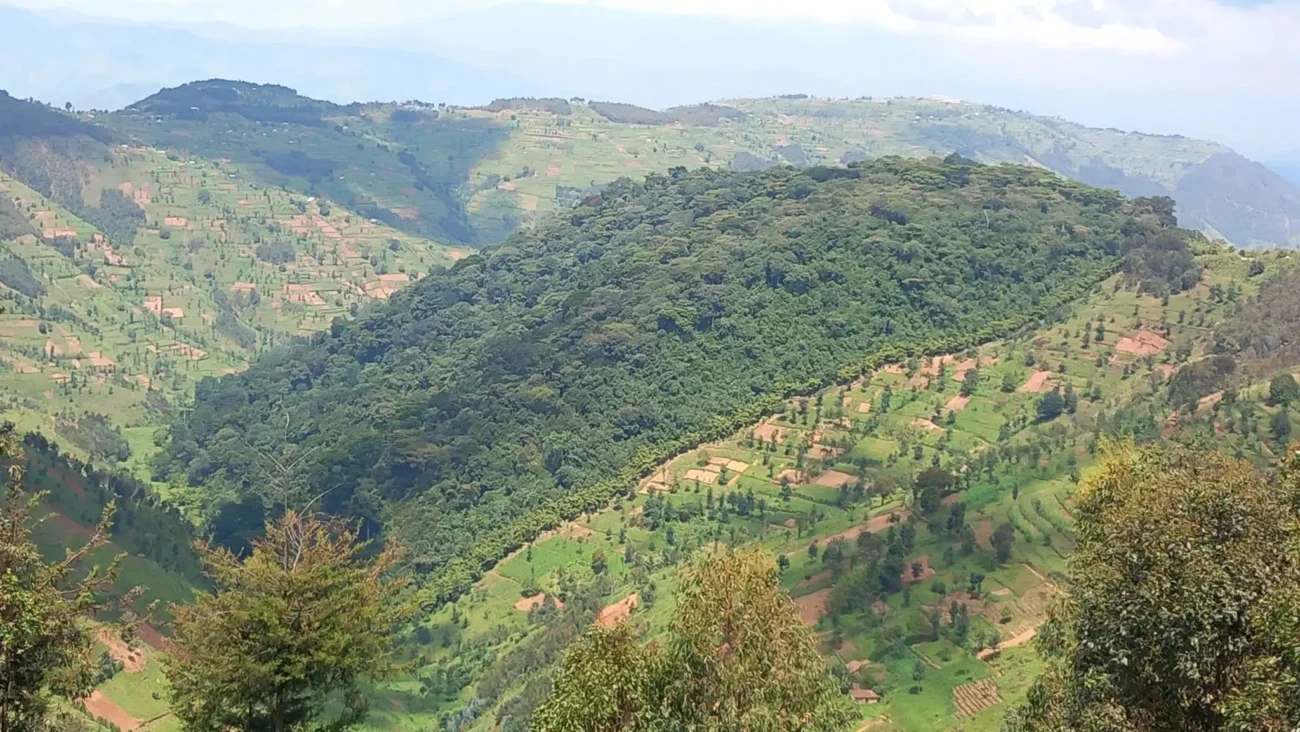
Forests play a crucial part in sustaining life. They are home to over 80% of terrestrial biodiversity, including 75% of bird species. These critical ecosystems provide several benefits to humanity, including oxygen and water purification, crucial carbon sinks to combat climate change, in addition to supporting the livelihoods of about 1.6 billion people around the world. However, forests are increasingly under threat, with the world losing an estimated 10 million hectares of forest annually due to logging, agriculture expansion, urbanization, and climate change, among others. On this International Day of the Forests, we shine a spotlight on some of our Partners’ forest conservation efforts across Africa.
The Imperative of Forest Conservation: A Global Crisis
The alarming rate of deforestation globally underscores a critical environmental challenge with profound implications for biodiversity, climate stability, and human well-being. According to the Food and Agriculture Organization of the United Nations (FAO), the world loses approximately 10 million hectares of forest each year. This immense scale of loss is driven by a complex interplay of factors, including agricultural expansion for commodities like palm oil and soy, unsustainable logging practices, urban development encroaching on natural landscapes, and the intensifying impacts of climate change, which exacerbate forest fires and pest outbreaks.
Forests are not merely collections of trees; they are intricate ecosystems that form the backbone of terrestrial life. They act as vital carbon sinks, absorbing vast quantities of atmospheric carbon dioxide, a greenhouse gas primarily responsible for global warming. Their role in regulating water cycles is equally critical, influencing rainfall patterns and preventing soil erosion. Furthermore, forests provide essential habitats for an estimated 80% of the world’s terrestrial biodiversity, including a significant proportion of avian species. The economic and social benefits are also substantial, with an estimated 1.6 billion people worldwide relying directly on forests for their livelihoods, ranging from timber and non-timber forest products to ecotourism and medicinal resources.
The International Day of the Forests, observed annually on March 21st, serves as a crucial reminder of these invaluable contributions and the urgent need for concerted global action. This year, the focus on Africa highlights the continent’s rich forest ecosystems and the innovative, community-driven approaches being implemented to protect them against escalating threats.
Restoring and Conserving Rwanda’s Busaga Landscape
In the heart of Rwanda’s Southern Province, within the Muhanga District, a critical conservation battle is being waged to protect and restore the Busaga Forest. This montane rainforest, spanning approximately 152 hectares, is not just another patch of woodland; it is a vital sanctuary for a critically endangered species. Nature Rwanda, a dedicated environmental organization, is spearheading efforts to safeguard this invaluable ecosystem.

Busaga Forest holds the unique distinction of being the only known breeding site in Rwanda for the Hooded Vulture (Necrosyrtes monachus). This magnificent raptor is listed as Critically Endangered on the International Union for Conservation of Nature (IUCN) Red List, a designation that signals its extremely high risk of extinction in the wild. The survival of this species is inextricably linked to the health and integrity of Busaga Forest.
Recognizing its ecological significance, Busaga Forest was officially designated as an Important Bird and Biodiversity Area (IBA) in 2025. This international recognition, facilitated by organizations like BirdLife International, places Busaga on the global conservation map. It provides a stronger foundation for protective actions, drawing attention from international conservation bodies and offering local and national decision-makers a more robust framework for implementing conservation policies and securing funding.
However, legal recognition alone is insufficient to halt the forest’s degradation. The communities living in close proximity to Busaga Forest remain heavily reliant on its resources for their daily needs, including firewood for energy, food from forest products, and income generation. This dependence creates a delicate tension between immediate human needs and the long-term imperative of forest preservation.
To bridge this gap, Nature Rwanda, with crucial support from BirdLife International through its Forest Impact Accelerator (FIA) program, launched a community-led restoration initiative in October 2025. The project is designed to restore and protect Busaga Forest while simultaneously empowering women and youth within the local communities. The core philosophy underpinning this approach is that conservation efforts are most sustainable and enduring when they are intrinsically linked to livelihood development.
Under the FIA project, 343 farmer households surrounding Busaga Forest are actively participating in a reforestation and land restoration program. They are being provided with 10,000 high-quality avocado trees to plant across 30 hectares of degraded farmland adjacent to the forest. This dual-pronged strategy serves multiple critical objectives: the avocado trees help to restore degraded soils, reduce the pressure on the forest for resources, and, importantly, generate a sustainable source of income for the participating households. To date, an impressive 7,500 trees have already been planted, a testament to the community’s active engagement and their role as stewards of their local environment.
Erneste Twagirimana, a local farmer from Muyebe Village, expressed the profound impact of this initiative. "This project is changing our lives," he stated. "For so long, the forest and our farms felt like they were in competition. Now we see that by taking care of the land by planting these avocado trees, improving our soils, we are also taking care of the forest itself. We expect better nutrition for our families, better harvests, income, and healthier soils. This is what we have been waiting for." This sentiment highlights the transformative power of integrating conservation with socio-economic development, demonstrating that environmental protection and community well-being can indeed be mutually reinforcing.

Women at the Forefront of Forest Conservation in Uganda’s Echuya Landscape
In Uganda, the Echuya Landscape, a vital montane forest ecosystem in the southwestern part of the country, is benefiting from the dedicated efforts of BirdLife Partner NatureUganda. The Echuya Central Forest Reserve, covering approximately 3,400 hectares, is a biodiversity hotspot that harbors unique flora and fauna. Among its most notable inhabitants is the globally threatened Grauer’s Rush Warbler (Bradypterus graueri), a species facing significant conservation challenges.
Beyond its rich biodiversity, Echuya Forest provides indispensable ecosystem services, including crucial water regulation, climate stabilization, and a wealth of natural resources that underpin the livelihoods of surrounding communities. However, like many of Africa’s precious forests, Echuya faces mounting pressures. Agricultural expansion, driven by growing populations and the demand for food, coupled with the relentless collection of fuelwood for energy, are exerting considerable strain on the forest’s delicate balance. For many households living on the forest’s doorstep, these natural resources are not a luxury but a necessity for daily survival, creating a complex and often precarious relationship between livelihood needs and conservation imperatives.
To address these challenges and foster a more sustainable coexistence, NatureUganda is implementing the AfricElle Project. This initiative, "Women as Champions for Biodiversity, Agroforestry and Nature Conservation around Protected Areas of Africa," is supported by the Nature and Biodiversity Conservation Union (NABU), BirdLife’s partner in Germany, and is being rolled out across six African countries: Kenya, Côte d’Ivoire, Tanzania, Burkina Faso, Ghana, and Uganda.
The AfricElle Project is built on the fundamental belief that empowered women can become formidable agents of conservation and sustainable landscape management. By equipping women with knowledge, leadership skills, and access to sustainable livelihood opportunities, the project aims to transform them into active custodians of the forests that sustain their communities.
"When women are empowered with knowledge, leadership skills, and sustainable livelihood opportunities, they become custodians of the forests that sustain their communities," states Loy Natukunda, AfricElle Project Officer at NatureUganda. This empowering approach recognizes the pivotal role women often play in household resource management and community decision-making.
The project has actively engaged six community women’s groups, providing comprehensive training to over 150 women. The training modules cover essential areas such as leadership development, effective communication skills, gender equality principles, and raising awareness about gender-based violence, which can often be a barrier to women’s participation and empowerment. From these trained groups, five women champions have been identified and are currently undergoing mentorship. These champions are being equipped to mobilize their communities, promote sustainable practices, and champion the vital importance of protecting forest resources.

Annet Akandinda, a woman champion from Karengyere Village, shared her inspiring experience: "I used to be afraid of bees, but after the apiary trainings, I now feel confident to take up beekeeping. Visiting Kenyan members inspired me even more – seeing how beeswax can be turned into Vaseline showed me the possibilities of adding value to our products." This personal testimony illustrates how the project not only provides technical skills but also fosters confidence and opens up new economic avenues, directly linking conservation efforts to tangible improvements in women’s lives.
Safeguarding Guinea’s Pic de Fon Protected Forest
In southeastern Guinea, within the strategically significant Simandou region, lies the Pic de Fon Protected Forest. This expansive area, covering approximately 26,000 hectares, is recognized as one of Guinea’s premier biodiversity hotspots. The forest’s rich ecological tapestry supports critical habitats for numerous threatened and endemic species, including the Hooded Vulture (Necrosyrtes monachus) and the Black-headed Rufous-warbler (Bathmocercus cerviniventris). The immense biodiversity value of this protected area solidifies its central role in the nation’s conservation policies and strategies.
Despite its ecological importance and protected status, the Pic de Fon Protected Forest faces a formidable array of threats. These include encroachment for agricultural purposes, the destructive impact of bushfires, unsustainable resource exploitation, the pressures of a growing population, the pervasive effects of climate change, and the potential impacts of mining activities in the region.
In response to these escalating challenges, conservation efforts have been significantly bolstered since 2025 through the implementation of a comprehensive 2025-2030 Development and Management Plan (PAG). This ambitious plan is supported by Rio Tinto and is being executed through a collaborative partnership involving BirdLife, Guinée Écologie, and the N’Zérékoré Forestry Center. The establishment of a robust framework and a dedicated Project Management Unit has been instrumental in improving coordination among key stakeholders, fostering a more unified and effective approach to conservation.
Monitoring and surveillance activities have also been intensified, utilizing advanced systems such as the SMART (Spatial Monitoring and Reporting Tool) system. Regular patrols are conducted to identify and address suspicious activities within the protected area. In October 2025 alone, 37 sites of suspicious activity were identified, leading to the enforcement of protective measures. Concurrently, scientific research focused on priority species within the forest has been initiated in collaboration with international partners, aiming to deepen our understanding of these unique ecosystems and inform future conservation strategies.
The involvement of local communities is recognized as an indispensable pillar of this conservation endeavor. Through the Community Acceleration Plan and a series of consultations conducted in 18 villages, a total of 468 participants, including 135 women, have been actively mobilized. These engagements have been crucial in identifying potential beneficiaries for conservation initiatives, strengthening local dialogue and trust between conservation authorities and communities, and laying the groundwork for the implementation of effective community governance mechanisms for the forest.

A Collective Future for Forests
The stories emerging from Rwanda, Uganda, and Guinea paint a compelling picture: forests are not merely static ecosystems; they are dynamic lifelines essential for the survival of people, the richness of nature, and the sustainability of our shared future. These narratives underscore a fundamental truth: lasting conservation is achieved when communities are empowered, partnerships are strong, and nature is recognized not as an optional amenity, but as an essential component of human existence. As the threats to our planet’s forests continue to mount, so too must our collective resolve and action.
George Illebo, Africa Forests Programme Coordinator at BirdLife International, emphasized this point, stating, "I have seen it time and again across Africa: When forests thrive, communities thrive. Through community-led restoration, sustainable forest businesses, and ecotourism initiatives, our BirdLife partners are demonstrating that when local people are in the driver’s seat, forests recover, incomes rise, and local economies build real resilience. This should give us impetus to protect and conserve our forests."
The success of these initiatives is bolstered by significant financial and collaborative support. The Forest Impact Accelerator, for instance, has successfully operated for five years, benefiting from the generous contributions of the Hempel Foundation, the Waterloo Foundation, and the King Charles III Charitable Fund. Furthermore, substantial additional funding, totaling £6 million, has been secured through collaborative efforts with partner organizations. This year marks a significant milestone with the awarding of a Darwin Initiative Extra grant, funded by the UK Government’s Biodiversity Challenge Funds. This grant, amounting to £4,978,335, will be instrumental in expanding and scaling these achievements, with the ambitious goal of securing one million hectares of Key Biodiversity Areas while simultaneously generating substantial economic benefits for an estimated 200,000 local people. This vital investment signals a growing international commitment to addressing the complex challenges of biodiversity conservation, poverty reduction, and climate change mitigation through integrated, community-focused forest protection strategies.

