


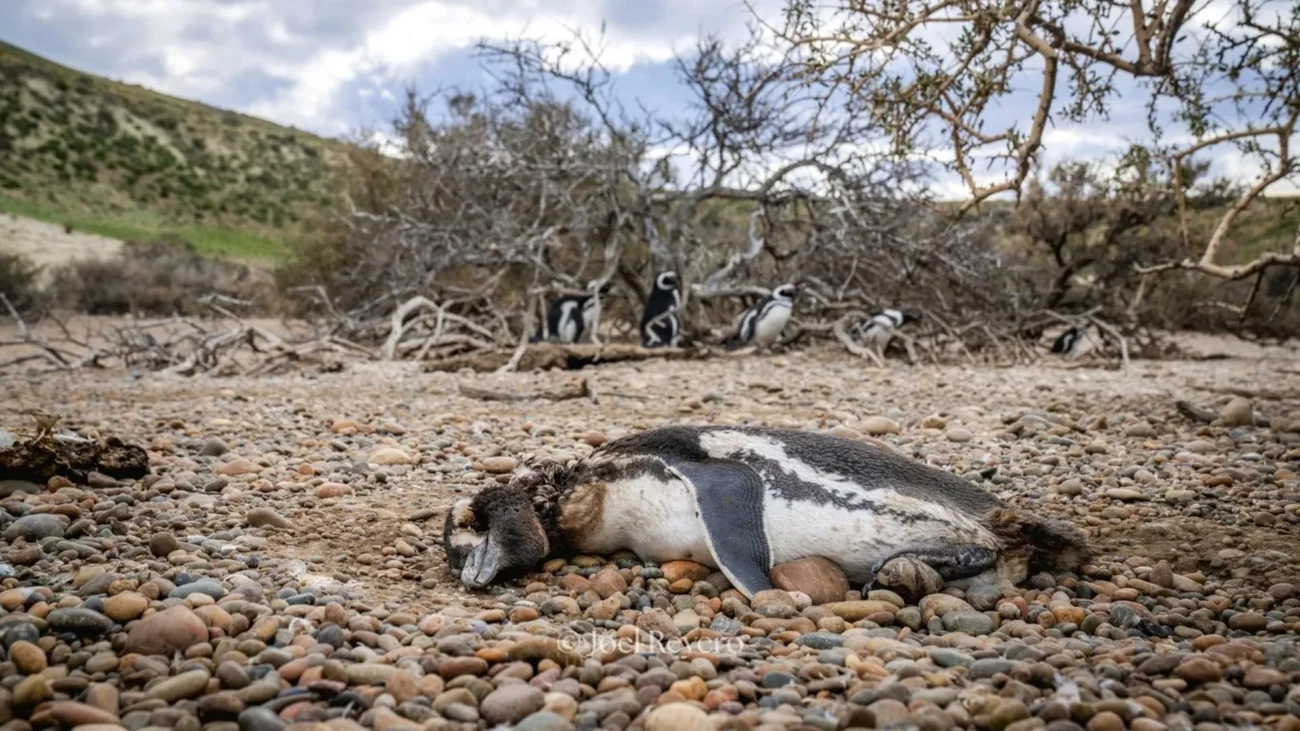
The windswept Patagonian coast of Argentina, a region synonymous with vast, untamed landscapes, is now the stage for a complex conservation drama. At Monte Leon National Park, a fundamental question is emerging, one that challenges conventional approaches to wildlife protection: should conservation efforts prioritize one iconic species if its resurgence inadvertently poses a threat to another, particularly in ecosystems still bearing the scars of human alteration? This intricate scenario, where the return of a top predator, the puma, has brought it into novel contact with a vulnerable seabird, the Magellanic penguin, underscores the profound challenges of ecological restoration in a rapidly changing world.
The establishment of Monte Leon National Park in 2004 marked a significant turning point for this stretch of coastline. Prior to its designation, the land was extensively used for cattle ranching, a practice that for decades suppressed native wildlife populations and altered natural ecological processes. The cessation of these activities in the early 1990s initiated a slow but steady recovery of the natural environment, allowing species to reclaim their historical territories. Among the most notable returns has been that of the puma ( Puma concolor ), the apex predator of South America, whose presence had been significantly diminished by human persecution.
However, the pumas’ reoccupation of their ancestral range has led to an unprecedented ecological interaction. Magellanic penguins ( Spheniscus magellanicus ), historically reliant on offshore islands, had, in the absence of terrestrial predators, expanded their nesting colonies to the mainland. This shift provided them with a new habitat but also exposed them to new threats. Without the evolutionary experience of defending against large carnivores, these penguins have become relatively easy prey for the newly arrived pumas. While this interaction was observed, its true impact on the penguin populations remained largely unknown until recent scientific investigations.
A Long-Term Study Uncovers a Stark Reality
The initial establishment of Monte Leon National Park in 2004 laid the groundwork for sustained ecological observation. Researchers from the Centro de Investigaciones de Puerto Deseado of the Universidad Nacional de la Patagonia Austral, in collaboration with park rangers, began a comprehensive monitoring program of the penguin colonies. This long-term commitment was crucial in tracking population dynamics and understanding the emerging ecological pressures.
A pivotal phase of this research occurred between 2007 and 2010, a four-year period during which scientists meticulously documented instances of puma predation on penguins. The collected data provided the first quantitative evidence of the scale of this interaction. Recognizing the need for advanced analytical tools to interpret these findings and assess their long-term implications, the local research team forged a critical partnership with the esteemed Wildlife Conservation Research Unit (WildCRU) at the University of Oxford. This collaboration brought together local expertise with international research capabilities, enabling a deeper dive into the complex ecological dynamics at play.
Thousands of Penguins Fall Victim to "Surplus Killing"
The findings from the combined research effort were sobering. An analysis of carcass counts revealed that over an estimated 7,000 adult Magellanic penguins were killed by pumas during the four-year study period. This figure represents approximately 7.6% of the estimated adult population of around 93,000 individuals at the time.
What particularly concerned the researchers was the condition of the prey. A significant proportion of the penguins were found only partially consumed or, in many cases, uneaten altogether. This pattern strongly suggests that the killings were not driven solely by the pumas’ need for sustenance.
Melisa Lera, a postgraduate student at WildCRU and lead author of the study, explained this phenomenon: "The number of carcasses showing signs of predation we found in the colony is overwhelming, and the fact that they were left uneaten means pumas were killing more penguins than they required for food. This is consistent with what ecologists describe as ‘surplus killing’." She drew a parallel to domestic cats, noting that when prey is abundant and vulnerable, such as birds in a colony, their ease of capture can lead to hunting behaviors that exceed immediate nutritional needs. "We needed to understand if the penguin colony’s persistence could be threatened due to this behavior," Lera stated, highlighting the urgency of the research.
Population Models Offer a Nuanced Perspective
To assess the potential threat to the penguin colony’s survival, the research team employed sophisticated population models. These models integrated the data on puma predation with other crucial demographic factors influencing penguin populations, such as breeding success and juvenile survival rates.
The results of these simulations offered a more nuanced understanding of the threats facing the penguins. The models indicated that puma predation alone, at the observed levels, was unlikely to drive the Monte Leon colony to extinction. Instead, the research pointed to other, less direct factors as being far more influential in determining the colony’s long-term viability.
Extinction scenarios were projected only under hypothetical conditions involving extremely low juvenile survival rates, where approximately 20% of young penguins failed to reach adulthood, coupled with severely limited reproductive success, where pairs produced a maximum of one chick. In such dire hypothetical circumstances, high levels of puma predation would exacerbate the problem but would not be the primary driver of decline.
Dr. Jorgelina Marino, a co-author of the study from WildCRU, emphasized the broader significance of these findings: "This study captures an emerging conservation challenge, where recovering carnivores are encountering novel prey. Understanding how these dietary shifts affect both predators and prey is essential to inform conservation." Her statement underscores the growing recognition that as ecosystems heal and wildlife populations rebound, new and unexpected ecological interactions can emerge, demanding adaptive conservation strategies.
Broader Environmental Pressures and Climate Change
The study’s emphasis on breeding success and juvenile mortality highlights the critical role of environmental conditions in shaping the future of the penguin colony. Factors such as the availability of food resources, nutrient levels in the ocean, and prevailing temperatures, all of which are known to be significantly influenced by climate change, are likely to play a decisive role in the colony’s resilience.
This challenge is not unique to Monte Leon National Park. Similar ecological scenarios are unfolding in various parts of the world as formerly suppressed land predators expand their territories and encounter new prey species, particularly in coastal and island environments. For instance, on the Georgia coast in the United States, non-native feral hogs have become a significant predator of loggerhead sea turtle eggs, disrupting a vulnerable life stage. Concurrently, coyotes in eastern North America are increasingly colonizing coastal barrier islands, altering those delicate ecosystems. These examples illustrate a global trend of rewilding and the subsequent renegotiation of ecological relationships, often with unforeseen consequences for species that have adapted to human-altered landscapes.
The vulnerability of mainland seabird colonies and other coastal species is likely to increase as these shifts continue. The ease of access to nesting sites and food sources on the mainland, which initially benefited the penguins, now makes them more susceptible to novel predators.
The Imperative of Continued Monitoring and Adaptive Management
The authors of the study are unequivocal in their assertion that ongoing monitoring is not merely beneficial but essential. Early detection of population declines and the ability to understand the underlying causes are paramount for implementing effective management decisions before irreversible ecological damage occurs.
At Monte Leon National Park, this means that authorities and researchers must continue to maintain a close watch on both puma and penguin populations. The dynamic interplay between these species, influenced by the park’s ongoing ecological recovery and broader environmental changes, requires a flexible and adaptive approach to conservation. The challenge lies in finding ways to support the recovery of apex predators while simultaneously ensuring the resilience of vulnerable prey populations, particularly in the face of uncertainties posed by a changing climate.
The situation at Monte Leon serves as a potent case study for conservationists worldwide. It highlights the inherent complexities of restoring ecosystems that have been profoundly altered by human activities. The return of natural processes, while a triumph for conservation, can also introduce new ecological pressures. Successfully navigating these challenges will require a sophisticated understanding of ecological interactions, robust scientific data, and a willingness to adapt conservation strategies as new evidence emerges. The ultimate goal is to foster a landscape where the recovery of one species does not come at the prohibitive cost of another, but rather contributes to a more robust and resilient ecosystem for all. The ongoing efforts at Monte Leon National Park will undoubtedly provide valuable lessons for conservation efforts in an era of unprecedented ecological change.

