


Migratory birds, undertaking awe-inspiring journeys that span continents and oceans, serve as crucial connectors of landscapes, nations, and even entire global ecosystems. These remarkable avian travelers rely on established routes, known as flyways, to navigate between their breeding and non-breeding grounds. In a significant collaborative effort, the RSPB, a leading conservation organization in the UK, in partnership with the Ghana Wildlife Society and supported by the Ecological Restoration Fund (ERF), is implementing an ambitious project to safeguard migratory birds along the extensive African-Eurasian Flyway. This vital corridor stretches from the Arctic Circle down to the southernmost reaches of Africa, highlighting the interconnectedness of avian life across vast geographical distances.
The African-Eurasian Flyway: A Critical Artery for Avian Life
The African-Eurasian Flyway is one of the world’s most important migratory bird routes, hosting an estimated 700 million birds annually. These journeys, often spanning thousands of kilometers, are fraught with peril, including habitat loss, climate change, and human-induced pressures. Protecting these flyways is paramount not only for the survival of individual species but also for the ecological health of the numerous ecosystems that migratory birds connect and support. The ERF plays a crucial role in this endeavor by funding initiatives that protect biodiverse hotspots, restore degraded landscapes, and foster local environmental activism, aiming to re-establish natural interconnections while promoting socio-economic opportunities for communities living within these critical habitats.
Ghana’s Wooded Savannahs: A Crucial Haven for Migratory Birds
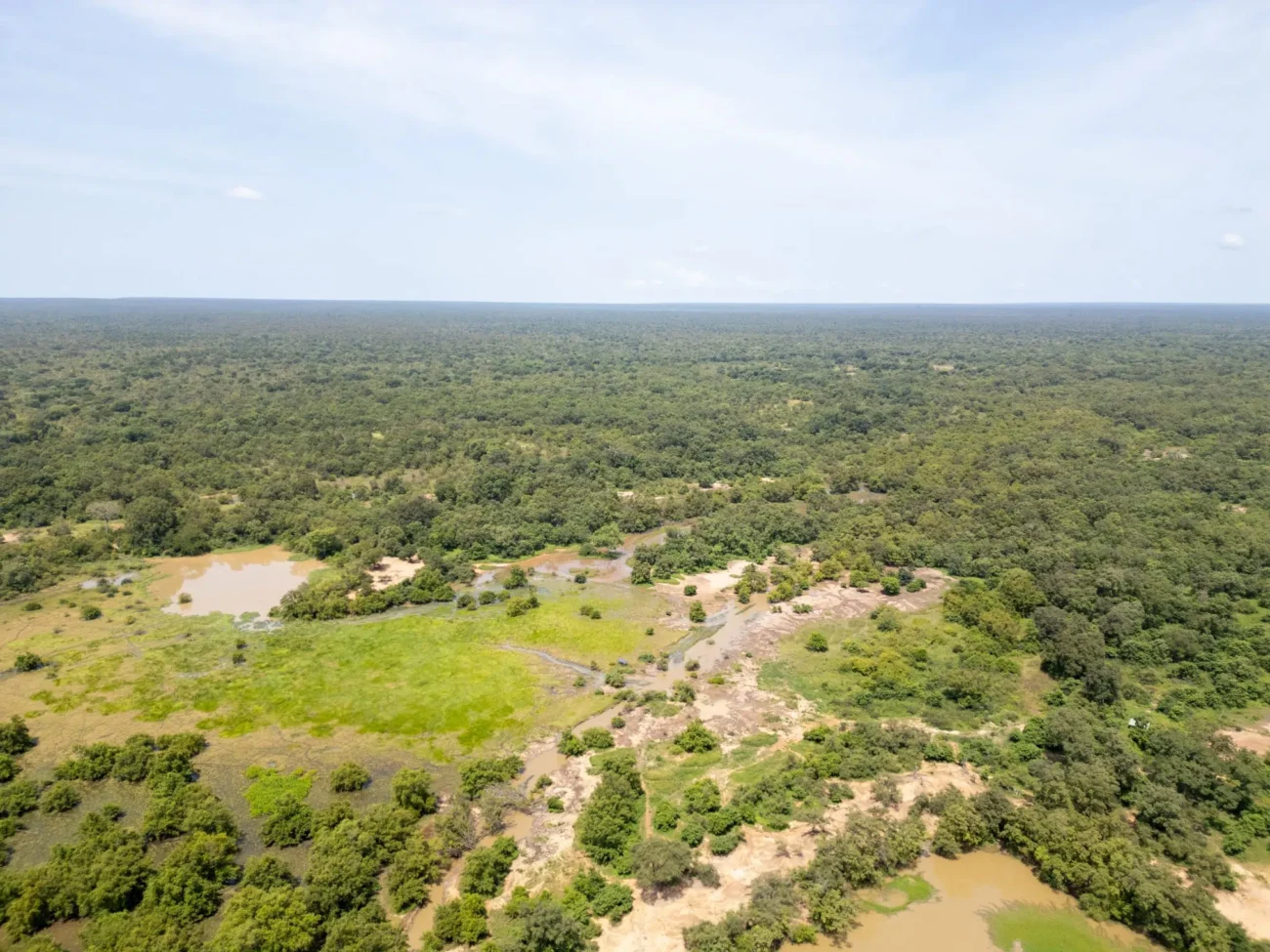
Within the vast expanse of the African-Eurasian Flyway, the wooded savannahs of northern Ghana have emerged as a particularly significant stopover and wintering ground for a multitude of migratory landbirds. These areas provide essential resting and feeding opportunities for birds that have braved the arduous crossing of the Sahara Desert. Kwame Boafo, Programme Manager for the Research & Conservation Unit at the Ghana Wildlife Society, elaborates on the importance of this region. "The Mole Ecological Landscape is in north-western Ghana," Boafo explains, "and within this landscape, you have savannah woodland and grassland, as well as riverine and close canopy forest."
At the heart of this ecological landscape lies Mole National Park, a sanctuary that annually welcomes a diverse array of migratory species. These include the European Pied Flycatcher, Willow Warblers, and Tree Pipits, all of which undertake considerable journeys to reach this African haven. Migratory raptors, such as the Osprey, European Honey-buzzard, and Montagu’s Harrier, also frequent the park, underscoring its importance for a broad spectrum of avian life. Furthermore, Mole National Park is a critical stronghold for several of Ghana’s Critically Endangered vulture species, highlighting its multifaceted conservation significance. Boafo describes the landscape as "a place of refreshment during these strenuous annual journeys," emphasizing its role as an indispensable lifeline for birds navigating the challenges of long-distance migration.

A Landscape of Resilience and Transformation
The Mole Ecological Landscape is characterized by its dynamic annual transformation. The dry season is followed by extensive burning, a phenomenon often exacerbated by livestock grazing and attempts to manage wider fire risks. This cyclical process, while posing challenges, also speaks to the resilience of the region’s biodiversity and the adaptive strategies of its human inhabitants. "It is a landscape that tells a story of resilience and transformation," Boafo notes. "Resilience on the part of the biodiversity and also on the part of the people that have to navigate these extreme changes and with whom we are working to help manage the land sustainably for the benefit of both communities and wildlife."
Engaging Communities: The Cornerstone of Conservation
A key element of the project’s strategy involves deep engagement with the local communities living in close proximity to Mole National Park. Approximately 40,000 people reside within a 5-kilometer radius of the park. Recognizing the importance of community participation, the project has focused on establishing Community Resource Management Areas (CREMAs). These CREMAs empower local communities to sustainably manage the landscape and its resources, fostering a sense of ownership and shared responsibility.
"In the south, however, we identified a gap around the communities of Kananto and Kabampe," Boafo states. "Due to the strategic location of these communities, sandwiched between two protected areas, we have been working with them to establish a CREMA to assist them to sustainably participate in the management of the landscape and its resources as well as reduce human-wildlife conflict. And, in brilliant news for the project, the new CREMA has now been officially inscribed." This official recognition of the Kananto-Kabampe CREMA signifies a crucial step forward, granting the community greater influence over resource management and decision-making processes.
Restoration Efforts: Rebuilding Habitats, Supporting Livelihoods
Beyond community empowerment, the project is actively involved in the restoration of degraded areas using native tree species. This initiative serves a dual purpose: providing essential habitat for wildlife and restoring vital ecosystem services, while simultaneously supporting the livelihoods of local communities. For instance, a significant portion of women in the Kananto-Kabampe CREMA rely on shea nuts, a major source of income.
"So we collect seeds of shea, dawadawa, and other ecologically and economically important species," Boafo explains. "We then nurse the seedlings for propagation within a nursery that has been established by the ERF project. We have already planted 5,000 seedlings thanks to the help of local communities and now we are monitoring germination ready to plant more during the upcoming rainy season. We aim to have planted at least 10,000 young trees by the end of the project." The project emphasizes not only planting but also the critical aspect of ensuring seedling survival through diligent tending and strategic planting during the appropriate seasons.

Diversifying Initiatives for Sustainable Futures
The project’s scope extends beyond tree planting and CREMA establishment. It encompasses a range of initiatives designed to foster sustainable development and reduce pressures on protected areas. Training in agroforestry techniques aims to increase farm yields, making local agriculture more resilient and productive. Furthermore, efforts are underway to connect communities to external markets, providing them with new economic opportunities.
A notable initiative is the promotion of beekeeping, recognizing the crucial role of bees as pollinators for numerous tree species essential to both the community and the wider landscape. "Our hope is that these initiatives will reduce encroachment into the reserves, especially during the dry season," Boafo explains. "Because when communities have more money, there will be less pressure to venture into the park or to cut trees."
Citizen science is also playing an increasingly important role. The project is collaborating with local communities to deploy acoustic monitoring devices, enabling passive acoustic monitoring of birds. This data will be invaluable in comparing bird activity across degraded, restored, and undisturbed areas, providing crucial insights for adaptive management.
Navigating Challenges: Fire, Climate, and Community Trust
The conservation work in northern Ghana faces several significant challenges. Slash-and-burn agriculture, while a traditional practice, poses a constant threat, with fires sometimes spreading beyond intended areas into neighboring farms or protected reserves. The harsh environmental conditions, characterized by dry spells and a limited rainy season, further complicate restoration efforts, demanding meticulous planning and a deep understanding of ecological principles.
"When it comes to our restoration work, it’s not just fire that is a challenge," Boafo elaborates. "You have a harsh environment that is dry and has a relatively limited rainfall season. So you have to be very strategic in how you are planting, and you must be very mindful of the science and understand the ecology and the phenology of the trees."

Building trust with communities is another ongoing challenge. Initial skepticism, often rooted in concerns about land rights and resource appropriation, has required persistent effort and demonstrated commitment. "One of the other difficulties we’ve faced is getting communities to buy into what we are doing when there is often concern for their livelihoods," Boafo admits. "It’s about trying to find a balance that accommodates both their livelihoods and the conservation of migratory birds and other wildlife while knowing that they face issues of crop-raiding, human-wildlife conflict, and limited resources to compensate and manage this. So it’s challenging but not impossible."
Seeds of Optimism: Building Bridges Between People and Nature
Despite the obstacles, Boafo expresses profound optimism about the progress being made. He highlights the growing willingness of communities to collaborate, a testament to the developing trust between conservationists and local populations. "We’ve seen how these communities, despite the challenges they face and sometimes varying appreciation for wildlife, are willing to come together and work with us," he states. "The trust is building, but it has been a process."
The perception of researchers has shifted from potential land-grabbers to dedicated stewards of the natural environment. As Boafo notes, "When we first started speaking with them about the CREMA, they thought it was about grabbing their land. But as time went on and they saw researchers in the forest looking for birds, they realised ‘no, these people are just here for the birds.’" This evolving understanding fosters a greater appreciation for wildlife beyond its immediate utilitarian value. "And they are beginning to appreciate the importance of wildlife beyond seeing it as food or as a nuisance on their farms," Boafo adds.
The core philosophy guiding the project is that "Conservation is about both people and nature." The successful establishment of this link is a source of great encouragement. "We’ve been able to establish the link between the people and nature, and we are hoping to build on this," Boafo concludes, underscoring the long-term vision of integrated conservation and community development.
A Moment of Unexpected Discovery
Boafo also shares a lighthearted anecdote that illustrates the unpredictable nature of fieldwork. "Recently, some of our acoustic monitoring devices got burned – and this was at a time when we were not expecting any fire," he recounts. "But the funny thing was that, even after the devices were burned, they were still recording! That was very interesting, and we were very happy to retrieve the data from those recorders." This small, unexpected success underscores the resilience of the technology and the dedication of the team to data collection, even in challenging circumstances.

Looking Ahead: A Shared Commitment to Flyway Conservation
The work undertaken along the African-Eurasian Flyway, particularly in regions like Ghana’s wooded savannahs, is a critical component of global efforts to conserve migratory birds. The collaborative approach, integrating scientific research, community engagement, and habitat restoration, offers a model for sustainable conservation practices. The continued support from organizations like the Ecological Restoration Fund is vital in ensuring that these vital migratory corridors remain safe havens for countless species for generations to come. The intricate web of life that migratory birds represent underscores the profound interconnectedness of our planet and the imperative for collective action to protect it.

