


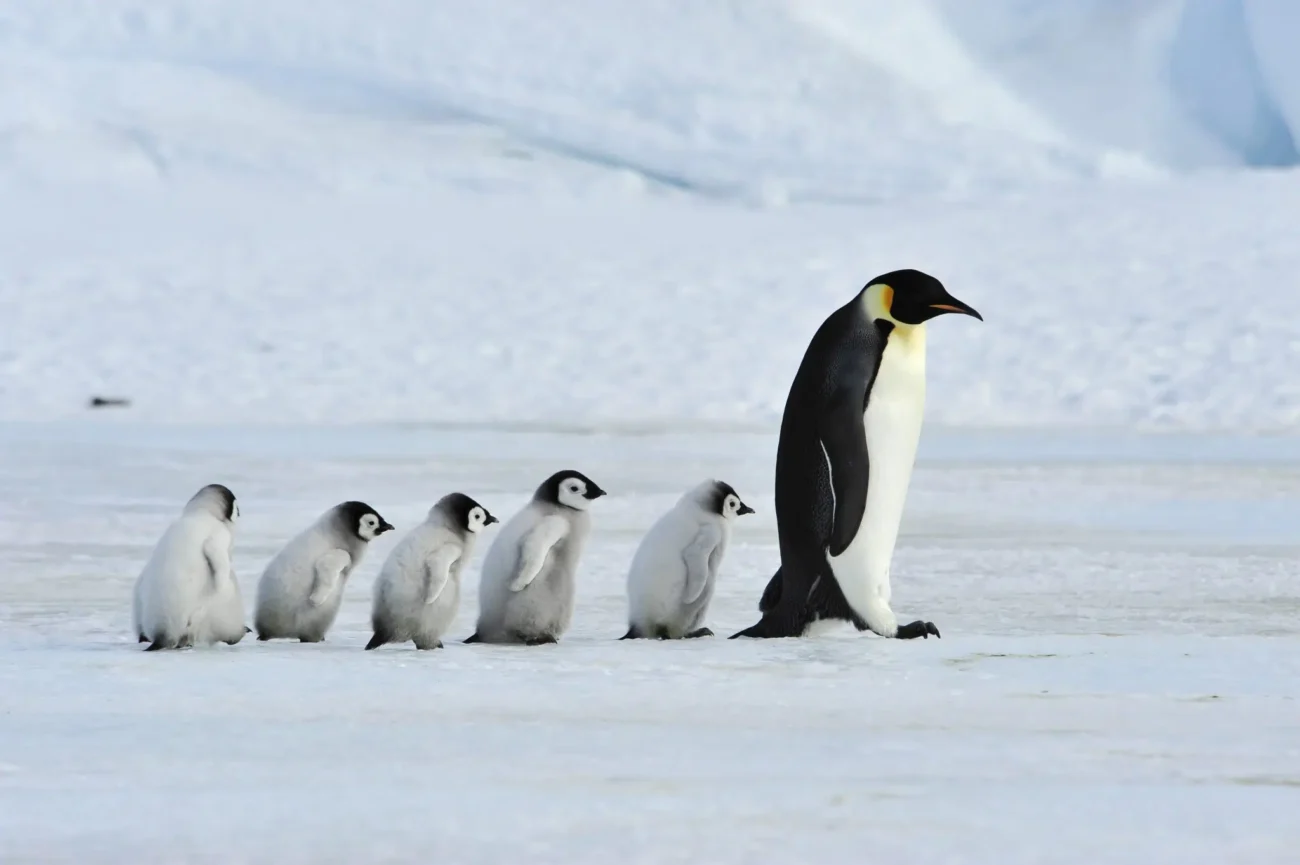
The Emperor Penguin, an iconic symbol of the Antarctic wilderness, has been officially categorized as Endangered on the IUCN Red List of Threatened Species, a dire warning from BirdLife International and its collaborators about the escalating threats posed by climate change. This significant reassessment, coordinated by BirdLife International, the official Red List Authority for birds, in partnership with the IUCN SSC Penguin Specialist Group, highlights the profound and accelerating impact of global warming on this charismatic Antarctic inhabitant. The species’ classification has shifted from Near Threatened to Endangered, reflecting a critical decline in population and an increased risk of extinction.
The Accelerating Threat of Climate Change
The primary driver behind this alarming uplisting is the drastic and unpredictable alteration of Antarctic sea ice conditions, a direct consequence of climate change. Emperor Penguins are inextricably linked to the Antarctic marine environment, relying on stable sea ice for crucial life stages including breeding, moulting, and feeding. Projections indicate that without substantial global action to curb greenhouse gas emissions, the Emperor Penguin population is expected to be halved by the 2080s. This stark forecast underscores the vulnerability of species in even the most remote and seemingly untouched corners of the planet to human-induced environmental changes.
The reliance of Emperor Penguins on specific sea ice conditions is particularly acute during their breeding season. They require what is known as "fast ice" – sea ice that is attached to the coastline, ocean floor, or grounded icebergs. This stable ice platform serves as a nursery for their chicks, providing a safe haven until they are old enough to fledge and enter the ocean. The moulting season also necessitates the presence of stable ice, as penguins are unable to enter the water when their feathers are not fully waterproofed.

Data Reveals Devastating Sea Ice Loss
Evidence gathered from satellite imagery paints a grim picture of the ongoing decline in sea ice crucial for Emperor Penguin survival. Between 2009 and 2018 alone, an estimated 10% of the Emperor Penguin population was lost, translating to more than 20,000 adult birds. This period coincided with a significant increase in the early break-up and loss of sea ice, with record lows being observed since 2016. The premature disintegration of these vital ice platforms can have catastrophic consequences, leading to the loss of entire breeding colonies before chicks can develop the necessary swimming capabilities to survive in the frigid ocean waters.
Rob Martin, Red List Team Manager at BirdLife International and the coordinator of this reassessment, emphasized the gravity of the situation. "The Emperor Penguin’s shift from Near Threatened to Endangered is a worrying signal of the reach of climate change impacts into the most remote parts of the globe," Martin stated. "Future projections for the species robustly point to severe reductions over the rest of this century. Emperor Penguins are completely dependent on the Antarctic habitat for breeding, moulting and feeding, but it will become harder for them to survive as ice patterns become less predictable and this crucial habitat keeps decreasing."
A Long History of Vulnerability and Concern
While this reassessment marks a significant escalation in the Emperor Penguin’s conservation status, concerns about its future have been growing for years. Previous studies and observations by ornithologists and polar researchers have documented instances of breeding failures linked to unstable ice conditions. The complex life cycle and specific habitat requirements of the Emperor Penguin have always made it susceptible to environmental shifts, but the accelerated pace of climate change has amplified these threats to an unprecedented level.
The IUCN Red List, managed by the International Union for Conservation of Nature (IUCN), serves as a critical tool for assessing the conservation status of species worldwide. BirdLife International’s role as the official Red List Authority for birds means that their rigorous scientific assessments carry significant weight in global conservation efforts. This latest evaluation of the Emperor Penguin is part of a continuous process to monitor the health of avian populations and to identify those most in need of urgent conservation action.

The Critical Role of Antarctic Treaty Consultative Meeting
The upcoming 48th Antarctic Treaty Consultative Meeting, scheduled to take place in Hiroshima in May, presents a crucial opportunity for governments to take decisive action for the protection of the Emperor Penguin. This meeting brings together nations that are signatories to the Antarctic Treaty, providing a platform to discuss and shape environmental protection policies for the continent. BirdLife International’s Red List assessment for the Emperor Penguin will be a vital piece of evidence informing the deliberations and decision-making processes at this important summit.
A key proposal being advocated by BirdLife International and its partners is the designation of the Emperor Penguin as an Antarctic Specially Protected Species. Such a designation would confer legally binding obligations on signatory governments to implement measures that prevent direct harm or disturbance to Emperor Penguins and their essential habitat. This would include stricter regulations on human activities in the Antarctic, such as tourism, scientific research, and fishing, to minimize their impact on penguin colonies and their food sources.
A Call for Urgent Global Climate Action
Martin Harper, CEO of BirdLife International, issued a strong appeal for immediate governmental action. "Penguins are already among the most threatened birds on Earth," Harper stated. "The Emperor Penguin’s move to Endangered is a stark warning: climate change is accelerating the extinction crisis before our eyes. Governments must act now – starting by designating the Emperor Penguin as an Antarctic Specially Protected Species this May."
The implications of the Emperor Penguin’s uplisting extend far beyond the fate of a single species. As an apex predator in the Antarctic food web, its decline could have cascading effects throughout the ecosystem. Furthermore, the Emperor Penguin serves as a powerful indicator of the health of the Antarctic environment. Its vulnerability to climate change serves as a potent reminder of the broader threats facing polar regions, including the melting of ice sheets, rising sea levels, and the disruption of marine ecosystems.

Broader Implications for Global Biodiversity
The plight of the Emperor Penguin is emblematic of a wider biodiversity crisis driven by climate change. As global temperatures continue to rise, numerous species across all continents and oceans are facing unprecedented challenges to their survival. The scientific community has repeatedly warned that the current trajectory of greenhouse gas emissions is incompatible with maintaining the planet’s biodiversity and the ecological services that support human well-being.
The analysis of future climate scenarios for the Emperor Penguin underscores the critical need for ambitious and immediate reductions in greenhouse gas emissions. Without a significant and rapid decarbonization of global economies, conservation efforts, while important, may ultimately prove insufficient to prevent widespread extinctions. The Emperor Penguin’s future is intrinsically linked to the global community’s commitment to addressing the root causes of climate change.
A Symbol of a Fragile Planet
The image of the Emperor Penguin, with its distinctive gait and devoted parenting, has captured the human imagination for generations. Its struggle for survival in the face of a warming planet serves as a poignant symbol of the interconnectedness of all life and the profound responsibility humanity has to protect the natural world. The scientific evidence is clear: the Emperor Penguin is at a critical juncture, and its fate will depend on the collective will of governments and individuals to act decisively to mitigate climate change and safeguard the fragile ecosystems of Antarctica. The designation as an Antarctic Specially Protected Species, coupled with a global commitment to climate action, offers a glimmer of hope for the long-term survival of this magnificent bird.

