


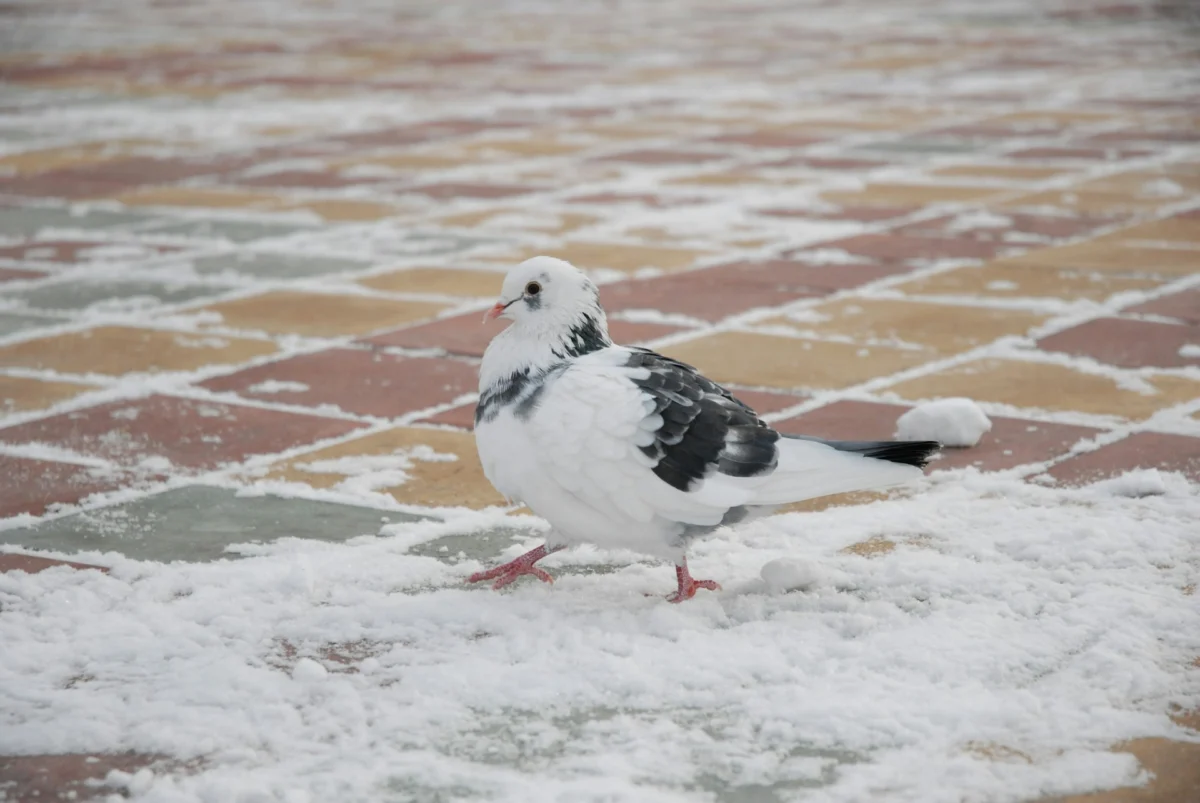
The sight of a gull standing with unwavering composure on a frosted ice floe, or a duck gracefully navigating waters that would instantly incapacitate a human, remains one of winter’s most profound and perplexing spectacles. For months on end, these avian creatures exist on the very precipice of frostbite, yet their extremities remain remarkably functional, unblemished, and astonishingly warm. The secret to this seemingly impossible feat lies not in some mystical insulation, but in a sophisticated physiological marvel of biological engineering known as countercurrent heat exchange. This intricate system allows birds to not only survive but thrive in environments where temperatures plummet to lethal levels for most other warm-blooded animals, showcasing an evolutionary triumph honed over millennia.
The architectural brilliance of a bird’s leg is fundamental to its cold-weather resilience. Unlike mammals, a bird’s legs possess very little musculature. The primary muscles responsible for leg and foot movement are strategically located higher up in the body, nestled within the warmth and protection of the feathered torso. The exposed portion of the avian leg is primarily composed of bone, tendons, and a densely packed, highly organized network of blood vessels. This specialized anatomy is the bedrock upon which their extraordinary cold tolerance is built, enabling them to endure thermal conditions far beyond the physiological limits of mammalian species.
At the heart of this remarkable adaptation is the countercurrent heat exchange mechanism. This biological circulatory system operates on a principle of efficient heat transfer. It involves the precise arrangement of warm arteries, carrying oxygenated blood from the bird’s core to its extremities, running in close proximity to cold veins, which are returning deoxygenated blood from the feet back to the body. As the warm arterial blood descends towards the feet, it transfers a significant portion of its heat to the cooler venous blood that is ascending from the cold ground or water. This constant heat exchange means that by the time the venous blood reaches the bird’s core, it has been substantially warmed, effectively safeguarding the vital internal body temperature. Simultaneously, the arterial blood, as it enters the foot, has been significantly cooled. This reduction in temperature minimizes the thermal gradient between the bird’s foot and its frigid environment, thereby drastically reducing the rate of heat loss to the ice or water.
Furthermore, the tissues within a bird’s foot are not merely passive recipients of this cooled blood. They have undergone profound adaptations to tolerate extreme cold. The internal temperature of a bird’s foot can drop to just above freezing, often between 0.6 and 5 degrees Celsius (33 to 41 degrees Fahrenheit). This is achieved through a reduction in the amount of freezable fluid within the cells and a shift in their biochemical composition. These cellular adjustments enhance their tolerance to frigid conditions, preventing the formation of ice crystals that would otherwise cause cellular damage. Birds also possess the remarkable ability to dynamically regulate blood flow to their legs. In exceptionally severe conditions, they can consciously reduce circulation to their extremities. This strategic vasoconstriction conserves precious core body heat without precipitating tissue damage, demonstrating a sophisticated level of physiological control.
Species such as mallards and gulls exemplify the extreme capabilities of this system, spending extended periods standing on frozen surfaces or swimming in ice-laden waters. Birds like loons, grebes, and diving ducks, which frequently immerse themselves in near-freezing water for prolonged periods while hunting, face even more demanding environmental challenges. Yet, their legs and feet remain fully functional, allowing them to dive, swim, and propel themselves with the same efficiency as they would in warmer climes.
The role of feathers, while not directly involved in warming the feet, is crucial for overall thermoregulation. The dense plumage of birds acts as an exceptional insulator, drastically minimizing heat loss from the rest of their bodies. This allows the energy-intensive, specialized system in their legs to operate efficiently without placing an undue burden on the bird’s core heat production. Many bird species also exhibit behavioral adaptations to further minimize heat exposure. They will frequently alternate their weight between legs, effectively giving one leg a respite from the cold. Additionally, they often tuck one leg up into the warmth of their abdominal feathers, a simple yet highly effective strategy to reduce the surface area exposed to the frigid air.
This synergistic combination of intricate physiological design and opportunistic behavioral adaptation creates an elegant and profoundly effective solution to the challenges of surviving in cold environments. The countercurrent heat exchange system stands as one of the most refined examples of evolutionary engineering found within the animal kingdom. It is this remarkable adaptation that empowers birds to not only inhabit but actively exploit snowy landscapes and frozen bodies of water, remaining robustly active in conditions that would rapidly incapacitate or prove fatal to most mammalian species.
The Evolutionary Genesis of Avian Cold Tolerance
The evolutionary trajectory that led to the development of countercurrent heat exchange in birds is deeply intertwined with their aerial lifestyle and the diverse habitats they occupy. As birds evolved from their reptilian ancestors, the demands of flight – requiring lightweight bodies and efficient metabolism – likely favored the reduction of heavy musculature in the lower extremities. This anatomical predisposition, coupled with the need to forage and survive in a wide array of climatic zones, from the tropics to the Arctic, spurred the development of sophisticated thermoregulatory mechanisms.
Fossil evidence, while not directly revealing the intricate workings of ancient circulatory systems, suggests that adaptations for surviving colder climates have been present for millions of years. Paleontological studies indicate that avian lineages were present and diversified even during periods of significant global cooling. The persistent presence of bird populations in temperate and polar regions throughout various geological epochs points to the long-standing success of their physiological strategies for combating cold. The development of feathers, themselves a remarkable evolutionary innovation, provided an initial layer of insulation, but the true mastery of cold environments necessitated more specialized internal adaptations.
The specific timeline for the emergence of countercurrent heat exchange is difficult to pinpoint with precision, as it represents a gradual refinement of biological systems rather than a singular event. However, it is reasonable to infer that the selection pressures imposed by colder climates would have favored individuals with even slightly more efficient heat-saving mechanisms in their legs. Over countless generations, these incremental advantages would have accumulated, leading to the highly optimized systems observed in modern bird species. The continuous presence of birds in environments where freezing temperatures are a regular occurrence—such as during glacial periods or in regions with pronounced seasonal winters—would have provided a constant evolutionary impetus for such adaptations.
Supporting Data: Quantifying Avian Thermoregulation

Scientific research has provided quantitative data that underscores the efficacy of countercurrent heat exchange. Studies utilizing thermal imaging and direct temperature measurements have consistently demonstrated the ability of birds’ feet to remain significantly cooler than their core body temperature while simultaneously preventing tissue damage. For instance, research published in journals such as The Journal of Experimental Biology has detailed how the temperature of a duck’s leg can be maintained as low as 2-5°C (35-41°F) while its core temperature remains around 40°C (104°F). This remarkable gradient is a direct testament to the efficiency of heat transfer within the leg vasculature.
Further analysis of blood flow rates and heat transfer coefficients has revealed that the countercurrent system in birds can recover as much as 80-90% of the heat that would otherwise be lost to the environment. This level of efficiency is critical for minimizing the metabolic cost of maintaining body temperature. When comparing the metabolic rates of birds in cold versus warm environments, researchers have observed that while birds do expend more energy to stay warm in cold conditions, the increase is often less dramatic than would be expected without such efficient heat-saving mechanisms. This suggests that their specialized leg physiology significantly reduces the overall energetic burden of cold exposure.
The biochemical adaptations within the tissues of bird feet also contribute to their resilience. Studies have investigated the composition of cellular fluids and the presence of cryoprotectants (substances that protect against freezing). While not as pronounced as in some insects or fish, birds exhibit altered concentrations of ions and proteins within their foot tissues that can lower the freezing point of extracellular fluids and stabilize cell membranes at low temperatures.
Behavioral Reinforcements: A Multi-Pronged Survival Strategy
Beyond the marvel of their internal physiology, birds employ a suite of observable behavioral strategies that further enhance their survival in frigid conditions. These behaviors, honed by natural selection, act in concert with their anatomical adaptations to ensure consistent success throughout the winter months.
As previously mentioned, the practice of alternating leg use is a common sight. By shifting their weight, birds allow one leg to experience a period of reduced heat loss while the other is more actively engaged in weight-bearing. This simple act of weight redistribution is akin to taking breaks in a strenuous activity, allowing for thermal recovery.
The act of tucking one leg up against the body, often referred to as "roosting posture," is another critical behavior. The ventral (underside) plumage of a bird is exceptionally dense and serves as a highly effective insulator. By bringing a leg into contact with this warm, feathered region, the bird effectively creates a personal microclimate, significantly reducing heat loss from the tucked limb. This behavior is particularly noticeable when birds are at rest or roosting for extended periods, such as overnight.
Some species also exhibit a phenomenon known as "panting" or "gular fluttering" in extremely cold conditions, though this is primarily a mechanism for heat dissipation in warmer weather. However, in very specific, harsh cold snaps, birds might adjust their breathing patterns, though the primary focus remains on conserving heat. The more prominent cold-weather behaviors are those directly related to minimizing heat loss from extremities.
The selection of foraging sites can also be influenced by temperature. Birds may seek out areas that offer some protection from the wind, such as dense vegetation or sheltered water bodies, to minimize convective heat loss. When resting, they may orient themselves to present the smallest possible surface area to the prevailing wind. These subtle, yet significant, behavioral adjustments collectively contribute to a bird’s ability to navigate the challenges of winter.
Implications and Broader Impact
The evolutionary success of countercurrent heat exchange in birds has profound implications for our understanding of adaptation and survival in extreme environments. It highlights how biological systems can evolve to overcome seemingly insurmountable physical barriers through ingenious design. This principle extends beyond avian biology, offering insights into potential biomimicry applications in engineering, such as the development of more efficient heat exchangers for industrial processes or advanced thermal management systems for human technologies.
The ability of birds to maintain activity levels during winter is also crucial for ecosystem dynamics. Birds play vital roles as seed dispersers, pollinators, and predators, even in cold climates. Their continued presence and activity ensure the functioning of these ecological services throughout the year. For example, seed-eating birds are essential for the germination and dispersal of many plant species, and their foraging activities in winter help to clear old seed stores and prepare the ground for spring growth. Predatory birds, such as owls and hawks, continue to regulate rodent populations, preventing potential imbalances.
Furthermore, the resilience of birds in cold environments provides a valuable indicator of ecological health. Declines in bird populations during winter can signal broader environmental issues, such as habitat degradation, food scarcity, or the impacts of climate change. Continued monitoring and research into avian winter survival strategies are therefore essential for conservation efforts and for understanding the intricate relationships within our planet’s ecosystems. The remarkable adaptations of birds serve as a constant reminder of nature’s capacity for innovation and the complex interplay between organisms and their environments. Their ability to thrive on the edge of winter’s freeze is a testament to the power of evolution and a source of ongoing scientific fascination.

