


Migratory birds, through their extraordinary long-distance journeys, serve as living bridges, connecting diverse landscapes, nations, and even entire continents. These avian travelers navigate ancient routes known as flyways, essential pathways that dictate their survival and the health of ecosystems across vast geographical expanses. A significant initiative, spearheaded by the RSPB (Royal Society for the Protection of Birds) in the UK, with crucial support from the Ecological Restoration Fund (ERF) and the Darwin Initiative, is dedicated to safeguarding these critical corridors. The focus of this ambitious project is the African-Eurasian Flyway, a sprawling migratory route that stretches from the frigid Arctic Circle down to the southernmost tip of Africa. This extensive network of sites is vital for millions of birds annually, and its protection is intrinsically linked to the health of global biodiversity.
The African-Eurasian Flyway: A Lifeline for Avian Migrants
The African-Eurasian Flyway is one of the most important migratory routes globally, encompassing over 800 bird species that travel between their breeding grounds in Eurasia and their non-breeding areas in Africa. This flyway is characterized by its immense scale, spanning approximately 14,000 kilometers, and its critical importance for a multitude of bird species, including waterfowl, raptors, and waders. The conservation efforts along this flyway aim to ensure that birds have access to safe resting, feeding, and breeding sites throughout their arduous annual migrations. The ERF, a significant contributor to this initiative, focuses on projects that protect biodiverse hotspots, restore degraded landscapes, and empower local communities to become environmental stewards. The Darwin Initiative, funded by the UK government, also plays a pivotal role, supporting projects that benefit biodiversity in developing countries.
Spotlight on Malawi: Protecting Chia Lagoon
Within this vast flyway, the Wildlife and Environmental Society of Malawi (WESM), the BirdLife Partner in Malawi, is actively engaged in critical conservation work. Blessings Chingagwe, Programme Manager at WESM, leads efforts at Chia Lagoon, a site recently recognized as a Key Biodiversity Area (KBA). Located in Malawi’s central Nkhotakota district, Chia Lagoon is a vital sanctuary for migratory waterbirds, providing essential non-breeding and stopover habitats.

"We work at Chia Lagoon, located in Malawi’s central district of Nkhotakota, and a location recently recognized as a Key Biodiversity Area (KBA)," Chingagwe explained. "The 1700 ha lagoon forms part of a global network of sites identified as critical for the survival of biodiversity."
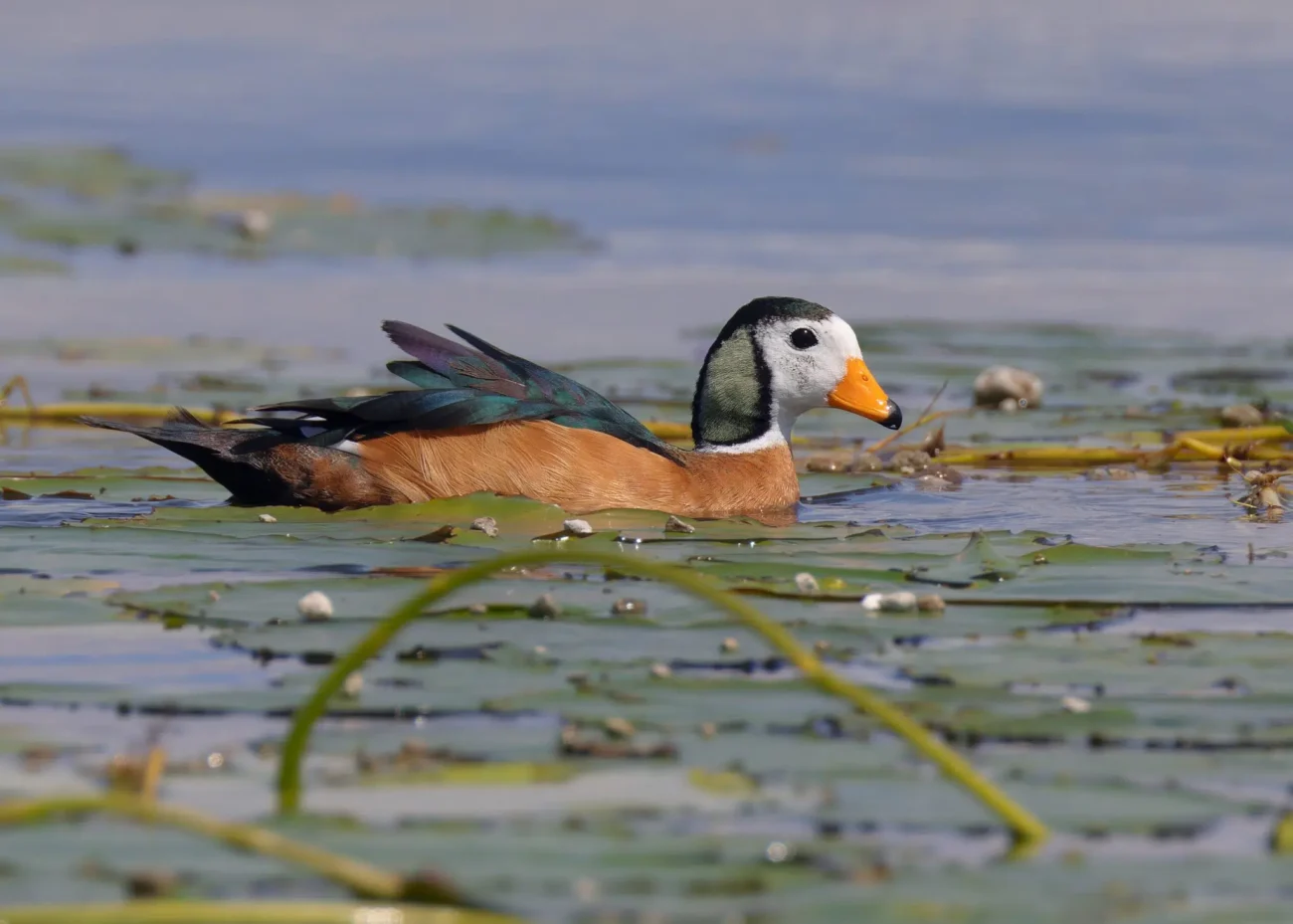
The lagoon’s ecological makeup is crucial to its importance. It is a shallow freshwater wetland characterized by open water bodies, extensive mudflats exposed during seasonal water level fluctuations, and surrounding grasslands that are seasonally flooded. These mudflats are rich in invertebrates, forming a vital food source for both migratory and resident waterbirds. The habitat diversity supports a wide array of species, including the Black Heron (Egretta ardesiaca), Ring-necked Dove (Streptopelia capicola), Lesser Masked Weaver (Ploceus intermedius), African Jacana (Actophilornis africanus), and the African Pygmy-goose (Nettapus auritus). For these species, Chia Lagoon serves as an indispensable feeding, resting, and refuge site, particularly during the challenging periods of migration and the non-breeding season. Its ecological productivity and strategic location make it an integral link within the broader African-Eurasian Flyway network.
A Chronology of Conservation Action at Chia Lagoon
The conservation efforts at Chia Lagoon have been multifaceted and have unfolded over several years, demonstrating a growing commitment to protecting this vital wetland.
Past Initiatives and Baseline Data: Prior to the current project, efforts to understand and protect Chia Lagoon were more localized. However, the need for comprehensive data became increasingly apparent as the migratory bird populations using the site faced mounting pressures.

Recent Three-Year Project (Supported by Darwin Initiative): Over the past three years, a significant undertaking has been the first comprehensive biodiversity and ecological assessment of Chia Lagoon. This marked a pivotal moment, as it was the first unprotected wetland in the region to undergo such an in-depth scientific evaluation. The data gathered is foundational for informed conservation planning.
Ongoing Waterbird Monitoring: For over two years, regular waterbird monitoring has been conducted. This continuous observation has yielded encouraging results, with a noticeable increase in bird records since 2023. The initial dataset documented 68 species, and this number has since risen to over 110, indicating the lagoon’s continued significance and potentially improving habitat conditions.
Community Engagement and Empowerment: A key strategy has been the establishment of 18 bird hunting clubs. These local groups are instrumental in regulating hunting practices, ensuring accountability regarding hunting quotas, target species, and methods. This approach empowers local communities to become active participants in conservation, fostering a sense of ownership and responsibility. Furthermore, 12 members from these clubs have been trained for ongoing monitoring and awareness-raising activities, extending the reach of conservation messages to wider local communities and stakeholders.
Developing a Ramsar Site Proposal: WESM has identified Lake Chilwa, another crucial site for migratory birds, as a priority for conservation. Efforts are underway to develop a comprehensive site profile, detailing threats, opportunities, and existing conservation projects. The Bird Hunters Association, active in the area since 2008, has expressed willingness to collaborate on safeguarding birds threatened by poaching, climate change, and habitat degradation.

Response to Mining Threats: In a significant demonstration of local activism, WESM mobilized local leaders, Friends of Mulanje, and the community to oppose bauxite mining in the iconic Mulanje Mountain, a designated Heritage Site. Mulhakho wa Alomwe, a cultural group directly benefiting from the mountain, strongly opposed these mining projects. The success of this advocacy was evident when local communities and the district council successfully evacuated miners from the mountain, demonstrating the power of community-led environmental protection, a success attributed in part to the ERF project’s support in fostering local environmental activism.
The Ecological Significance of Wetlands Along Flyways
Blessings Chingagwe emphasizes the interconnectedness of wetland ecosystems along migratory routes. "Migratory birds connect continents. A bird feeding at Chia Lagoon may have travelled thousands of kilometres from Europe or Asia," she stated. "If just one important wetland along the flyway is lost or degraded, it can affect populations across multiple countries. Protecting wetlands in Malawi is part of protecting a global ecological system." This statement underscores a critical analytical point: the health of a single wetland is not an isolated issue but has ripple effects that extend across national borders and ecological systems. The degradation of a stopover site can lead to increased mortality rates for birds, impacting breeding success and ultimately the viability of populations that span entire continents.
Challenges and Innovations in Conservation
Despite the progress, significant challenges persist in safeguarding Chia Lagoon and its avian inhabitants. Securing protection for the lagoon while simultaneously ensuring community benefits remains a central dilemma. While the project’s primary focus is on birds, fisheries activities, particularly in the vicinity of bird sanctuaries, pose a threat to aquatic vegetation. The establishment of new docks and fishing within sanctuaries directly impacts the delicate balance of the ecosystem.
"The Invasive Alien Species, such as Azolla and Water Hyacinth, are a threat to the habitat," Chingagwe noted. "The most challenging thing is the removal methodologies due to the presence of crocodiles, which are a threat to people. We have not progressed much with the removal of these invasive and we are still trying to find a feasible and safe way of doing this." The presence of dangerous wildlife, such as crocodiles, complicates direct intervention efforts, necessitating the development of innovative and safe removal strategies.

Ambassadors of the Flyway: Iconic Species and Community Stories
When asked to choose a species that best represents the flyway, Chingagwe selected the Whiskered Tern (Chlidonias hybrida). "I would choose the Whiskered Tern," she said. "With the tern being a long-range migratory bird, it is the best representation of global connectivity! Arriving in Malawi with the December rains, it reminds us that this small country, let alone a small wetland, is not isolated from the global community. If we are to protect the Whiskered Tern, we mean to protect every marsh, lake, river and wetland along its path. This is a perfect ambassador of the flyway because it knows no boundaries." The Whiskered Tern’s extensive migratory range, spanning from Europe and Asia to Africa, perfectly encapsulates the interconnectedness that flyway conservation aims to address.
The field experiences of conservationists often yield memorable and sometimes humorous anecdotes. Chingagwe shared a story about the local name for a bird, "Jane Tambala," which initially baffled the WESM team. Their investigation revealed that "Jane Tambala" was not the name of a bird but a participant in their monitoring program. The mystery was solved when an African Jacana was later pointed out, and someone exclaimed, "There is Jane Tambala!" This highlights the rich local knowledge and the unique ways in which communities perceive and interact with their environment.
Another common interaction involves community members inquiring if the conservationists are "feeding" the birds, reflecting a misunderstanding of conservation practices. In their perception, the project might be seen as a wild bird rearing initiative rather than habitat protection and management. This illustrates the ongoing need for effective public outreach and education to bridge knowledge gaps and build broader support for conservation goals.
Seeds of Optimism for the Future
Despite the challenges, Chingagwe expresses a strong sense of optimism about the future of conservation efforts in Malawi. "What makes me optimistic is that we now have solid scientific data for the first time, along with growing community awareness," she stated. "When local stakeholders understand the value of their wetland, conservation becomes a shared responsibility, and that gives real hope for long-term protection."

This growing awareness has led to tangible policy advancements. The District Council, influenced by the project’s findings, has begun discussions on developing a comprehensive management plan for the wetland ecosystem. Furthermore, the Department of National Parks and Wildlife, the focal point for the Convention on the Conservation of Migratory Species, has requested that Chia Lagoon be considered for designation as a Ramsar site, an international designation for wetlands of significant ecological importance. This indicates a growing governmental recognition of the lagoon’s global value and a commitment to its long-term protection.
The collaboration between international organizations like the RSPB and ERF, national partners like WESM, and local communities is a testament to the power of collective action in addressing complex environmental issues. The work at Chia Lagoon, and along the entire African-Eurasian Flyway, is a critical investment in the health of our planet and the preservation of its extraordinary biodiversity for generations to come.

