


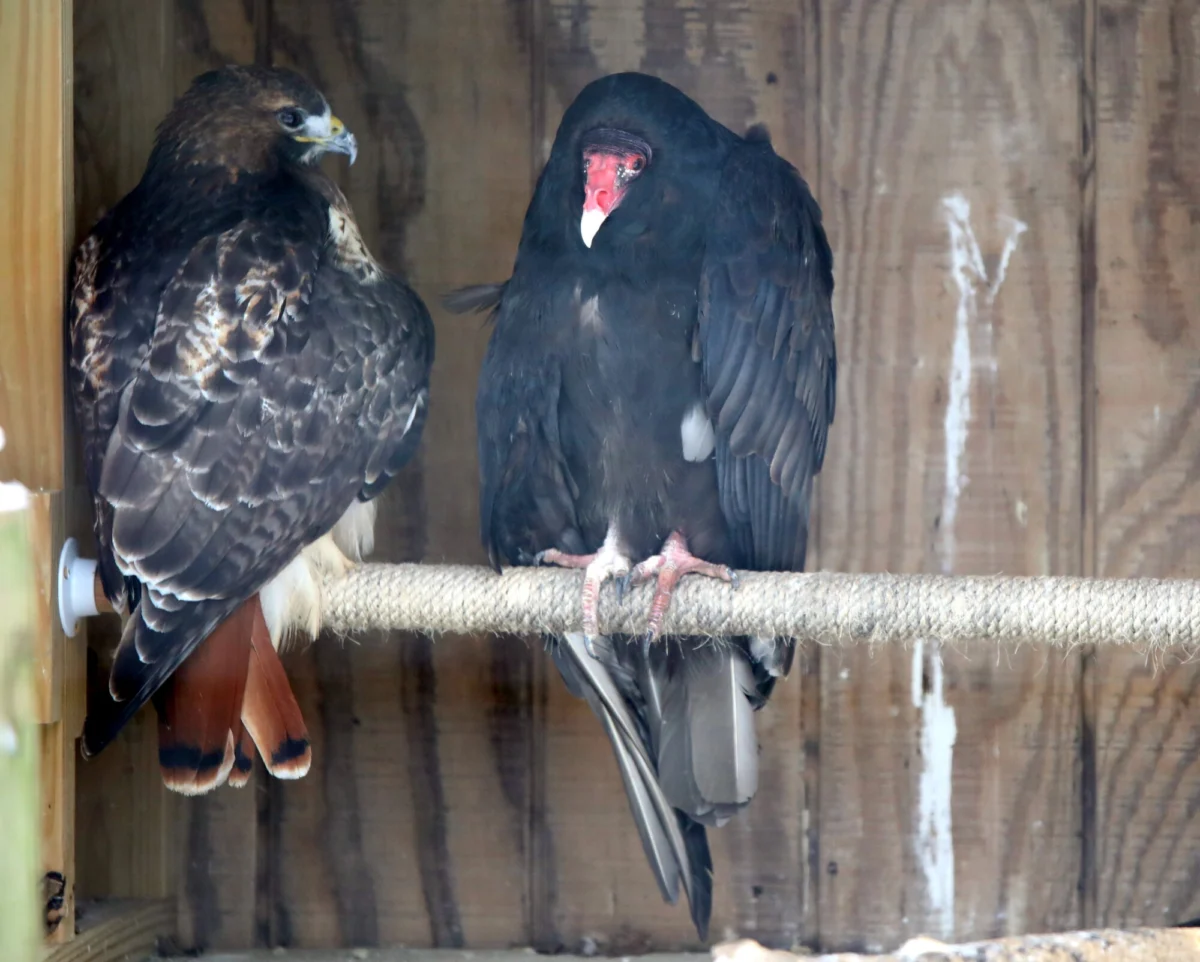
The Elmwood Park Zoo in Norristown, Pennsylvania, is home to a remarkable testament to the power of connection, a story unfolding within one of its aviaries that challenges conventional understandings of interspecies relationships. Here, two formidable raptors, a Turkey Vulture named Stan and a Red-tailed Hawk named Hunter, have forged an extraordinary and enduring friendship, transcending the typical predator-scavenger dynamics of their respective species. Their bond, sustained for over a decade, offers a poignant glimpse into the adaptability, resilience, and complex emotional lives of animals, particularly those under human care following life-altering injuries.
The Genesis of an Unusual Friendship
Stan, a 20-year-old female Turkey Vulture (Cathartes aura), and Hunter, a 22-year-old female Red-tailed Hawk (Buteo jamaicensis), arrived at the Elmwood Park Zoo in 2005, both victims of human-induced trauma. Their individual journeys to permanent residency at the zoo began with severe wing injuries that rendered them incapable of survival in the wild. It was this shared vulnerability and the subsequent necessity of living in a protected environment that inadvertently laid the groundwork for their unique companionship. The zoo staff, recognizing their profound and stable connection, refer to them as "bonded," a term usually reserved for pairs of the same species.
A Tale of Two Injuries: Hunter’s Arrival
Hunter, the Red-tailed Hawk, was the first to arrive at the Elmwood Park Zoo in July 2005. A juvenile at the time, she was transferred from a now-defunct rehabilitation center, bearing a grave injury: an air-rifle pellet had lodged itself in her right wing, causing a severe fracture to her humerus, the long bone of the upper wing. Despite the dedicated efforts of veterinary professionals, the damage was irreparable, and the bone never healed properly. This left Hunter with permanently limited flight capabilities, effectively ending any prospect of her returning to the wild where aerial prowess is paramount for hunting and survival.
Red-tailed Hawks are apex predators, renowned for their keen eyesight and powerful talons, capable of spotting and capturing prey from significant heights. In the wild, they are solitary hunters, fiercely territorial, and their survival hinges on their ability to soar, dive, and pursue small mammals, reptiles, and other birds. Hunter’s injury meant she could no longer fulfill these essential behaviors, making her a prime candidate for a permanent sanctuary where her needs could be met without the demands of natural predation.
Stan’s Ordeal: A Parallel Path
Just one month later, in August 2005, Stan, the Turkey Vulture, joined Hunter at the Elmwood Park Zoo. Her journey began after being discovered injured and subsequently brought to Tri-State Bird Rescue & Research, a highly respected avian rehabilitation center located in Newark, Delaware, known for its expertise in treating injured wild birds. Stan had also sustained a pellet wound, this time to her right wing, which likely fractured her radius and ulna – the two bones of the forearm. Like Hunter, the extensive damage meant that despite expert medical attention, the fracture did not heal sufficiently to restore her full flight capabilities.
Turkey Vultures, while sharing the skies with hawks, occupy a distinctly different ecological niche. They are primarily scavengers, equipped with an exceptional sense of smell that allows them to detect carrion from miles away. Their flight is characterized by graceful, energy-efficient soaring, relying on thermal air currents to conserve energy as they scan the landscape below for food. While often seen in groups, particularly around food sources or at roosting sites, they are not typically known for forming deep, lasting bonds with other raptor species, especially not with potential competitors or predators like Red-tailed Hawks. The shared trauma of their wing injuries, however, created a unique commonality between Stan and Hunter, setting them both on a course for permanent residency and an unexpected companionship.
The Confluence of Circumstances: Forging a Bond
The decision to house Stan and Hunter together in the same aviary, rather than separately or with conspecifics, was likely influenced by a combination of factors including available space, the specific needs of each bird, and perhaps an initial assessment of their temperament. Given their severe and debilitating injuries, both birds were deemed non-releasable, meaning their future lay in a zoological setting where they could receive lifelong care. This shared fate, coupled with the absence of other avian companions in their enclosure, created an environment ripe for the development of an extraordinary interspecies bond.
Over the ensuing years, what began as mere cohabitation blossomed into a profound friendship. Zoo staff observed a gradual but consistent evolution in their interactions, moving from simple tolerance to active, mutually supportive behaviors. The fact that both birds were rendered "flight-limited" by their injuries served as a powerful, unspoken common ground. In the wild, a hawk would typically view a vulture as a competitor for carrion, while a vulture might view a hawk with a degree of wary respect for its predatory prowess. In the aviary, these natural instincts were superseded by a shared reality of disability and dependence on human care, fostering a new kind of social dynamic.
Manifestations of an Enduring Alliance
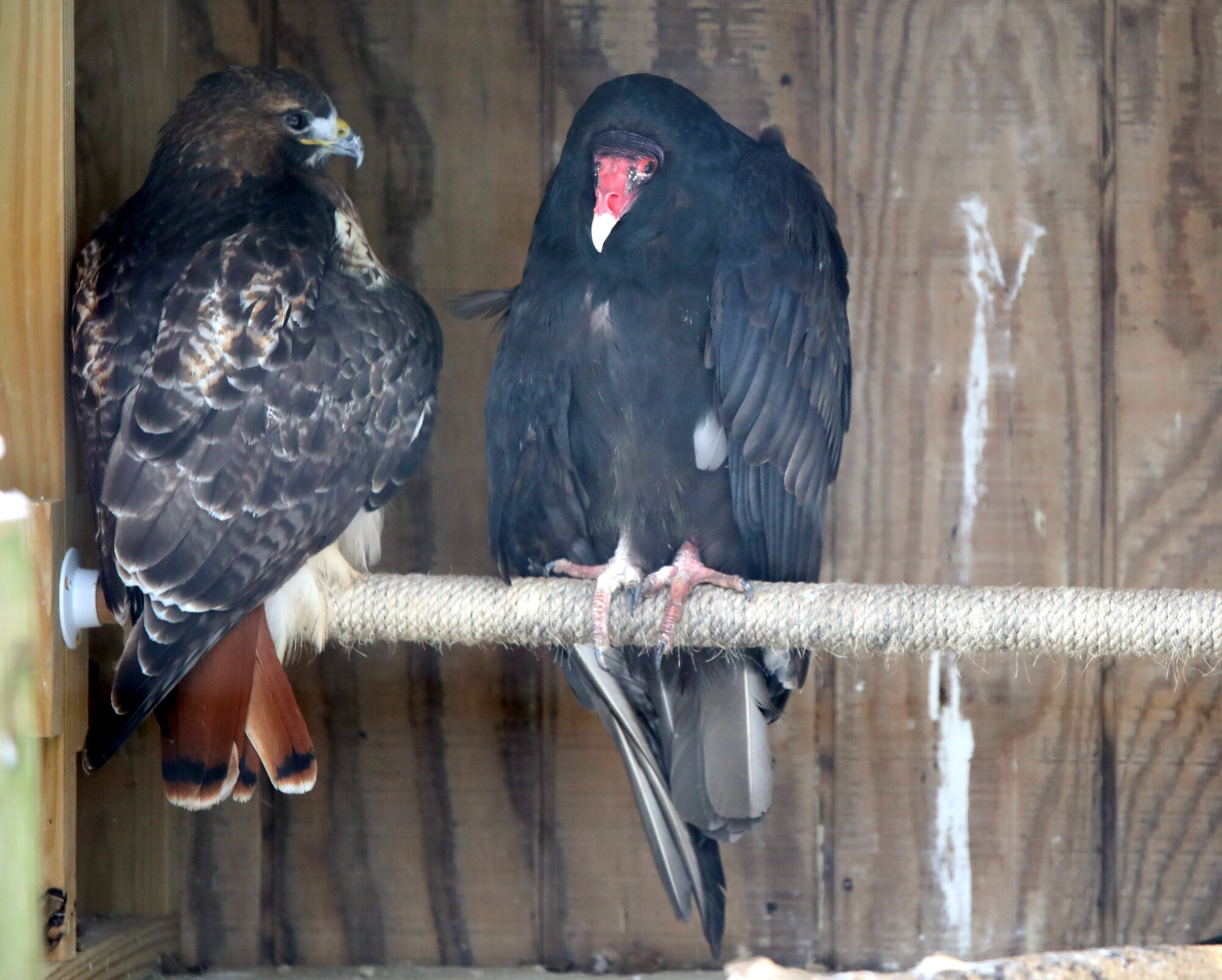
The depth of Stan and Hunter’s bond is evident in a range of behaviors that defy typical species-specific norms. Their interactions go far beyond mere proximity; they actively engage with and support one another in ways that are both touching and scientifically intriguing.
One of the most striking examples occurs during feeding times. Hunter, the Red-tailed Hawk, despite her predatory nature, frequently acts as the primary gatherer of food. Rather than consuming it immediately and solely, as a wild hawk might, she often collects the provisions and shares them with Stan. This act of provisioning, particularly from a natural predator to a scavenger, is highly unusual and underscores a deep level of trust and reciprocal care within their bond. It suggests that Hunter perceives Stan not as a competitor, but as a valued companion whose well-being she actively contributes to.
Further demonstrating their unique connection, the pair has been observed engaging in allopreening. Allopreening, or social preening, is a behavior common among many bird species, particularly those forming pair bonds or strong social groups, where individuals preen feathers on parts of the body that are difficult for their companion to reach. It is a clear indicator of social cohesion, trust, and affection. For a Red-tailed Hawk and a Turkey Vulture, two species not typically known for such intimate physical interactions, this behavior speaks volumes about the strength and depth of their relationship. It signifies a level of comfort and mutual grooming that transcends the boundaries of species.
Perhaps the most poignant and unexpected display of their bond involves Hunter’s eggs. Red-tailed Hawks lay eggs annually, even in captivity, although these are typically infertile without a male partner. When Hunter lays her eggs, Stan, the Turkey Vulture, has been observed sitting on them. While vultures do not typically incubate eggs of other species, this behavior from Stan could be interpreted as a form of nurturing, support, or shared parental instinct, further blurring the lines of species-specific roles and highlighting the unique dynamics of their friendship. It suggests a protective instinct or a shared investment in the activity, reinforcing the idea that they function as a cohesive unit.
Insights from Zoo Personnel and the Broader Implications
Zoo officials and animal care specialists at Elmwood Park Zoo have long recognized the unique nature of Stan and Hunter’s relationship. While specific quotes from staff are not available in the original content, it is reasonable to infer that their observations are central to understanding and managing the birds’ care. Keepers and veterinarians would undoubtedly attest to the consistency and stability of their bond, noting its positive impact on the birds’ overall welfare and enrichment.
"We consistently strive to provide an enriching environment for all our animal residents, especially those who cannot return to the wild," a hypothetical Elmwood Park Zoo curator might state. "Stan and Hunter’s bond is truly special. It demonstrates how adaptable animals can be, and how profound connections can form even between species that would typically avoid each other in nature. Their story is a powerful reminder of the individual personalities and emotional depth within the animal kingdom."
A veterinarian involved in their initial care or ongoing monitoring might add, "The severity of their wing injuries meant a permanent change in their lives. While we always hope for rehabilitation and release, providing a high quality of life in captivity becomes paramount. Their friendship undoubtedly contributes significantly to their psychological well-being, offering companionship and social interaction that might otherwise be absent."
The story of Stan and Hunter holds significant educational value for visitors to the Elmwood Park Zoo. Their presence allows the zoo to educate the public about:
- Wildlife Rehabilitation: Highlighting the critical work of organizations like Tri-State Bird Rescue & Research and the difficult decisions involved in caring for injured wildlife.
- Human Impact on Wildlife: The pellet wounds serve as a stark reminder of how human actions can profoundly and negatively affect wild animals.
- Interspecies Relationships: Challenging preconceived notions about animal behavior and demonstrating the complex social structures that can emerge in captivity.
- Animal Sentience and Welfare: Emphasizing that animals, even those from different species, can form deep emotional bonds and experience companionship.
- Ecological Roles: While their specific interactions are unusual, they still serve as ambassadors for their species, allowing visitors to learn about the vital roles Turkey Vultures play as nature’s clean-up crew and Red-tailed Hawks as keystone predators.
The Science of Interspecies Bonds
While Stan and Hunter’s friendship might seem extraordinary, similar instances of interspecies bonds have been documented in various captive settings. Factors contributing to such bonds often include:
- Shared Environment and Proximity: Being housed together without other conspecifics removes typical territorial or competitive pressures.
- Early Socialization: If introduced at a young age or during a critical developmental period, animals may be more receptive to forming bonds with other species.
- Shared Trauma or Vulnerability: As seen with Stan and Hunter, a common experience of injury or dependency can foster empathy and mutual support.
- Lack of Natural Threats: In a safe zoo environment, the natural predator-prey or competitor dynamics are largely absent, allowing for different social structures to emerge.
- Individual Personalities: Just like humans, individual animals have unique personalities. Some may be more tolerant, curious, or socially inclined than others.
The detailed observations of Stan and Hunter provide valuable anecdotal data for researchers studying animal behavior and welfare. Their story contributes to a growing body of evidence suggesting that animal social structures are far more fluid and complex than once understood, especially when influenced by environmental factors such as captivity and rehabilitation. It underscores the importance of enrichment programs in zoos that cater not just to species-specific needs but also to individual animal personalities and their potential for unique social connections.
A Lasting Legacy
For over a decade, Stan and Hunter have shared their enclosure, their lives intertwined by a bond forged through adversity. Their friendship is a living exhibit, offering more than just a view of two magnificent birds; it provides a powerful narrative about connection, resilience, and the unexpected ways that life can find harmony. As they continue to share food, preen each other, and even "incubate" eggs together, they stand as a quiet but profound testament to the intricate and often surprising magic of interspecies friendship, reminding visitors and scientists alike that the capacity for connection knows no bounds. Their story is a beacon of hope and understanding, showcasing the deep emotional lives of animals and the crucial role zoos play in providing sanctuary and fostering appreciation for the natural world.

