


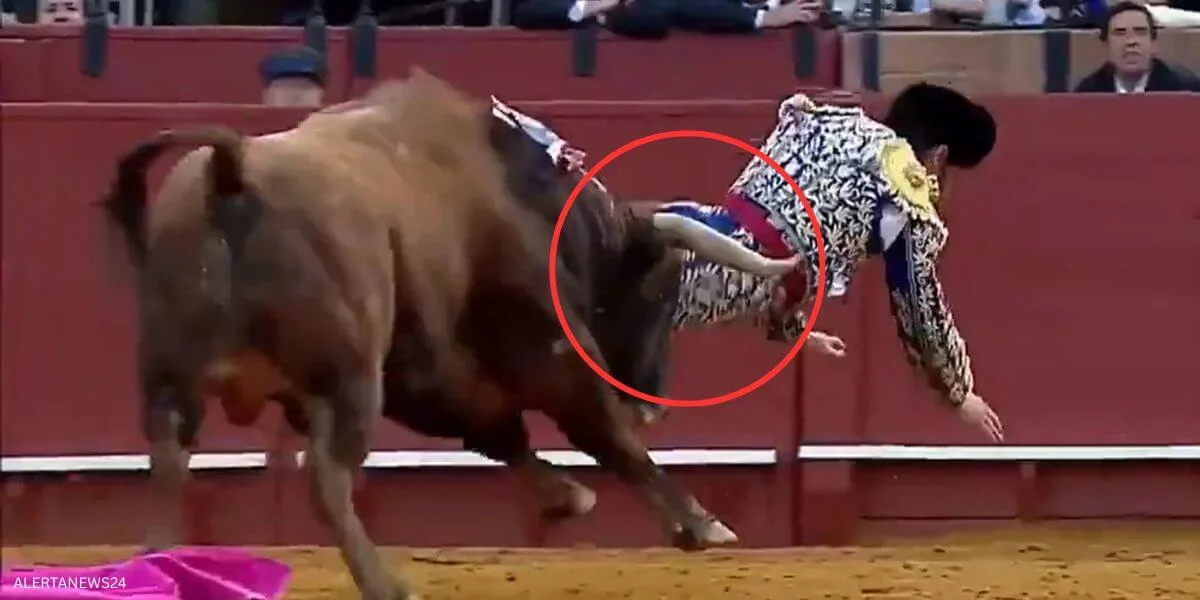
In a dramatic and violent turn of events at the historic Plaza de Toros de la Maestranza in Seville, one of Spain’s most high-profile bullfighters, José Antonio Morante de la Puebla, sustained a life-altering injury during his highly anticipated return to the arena. On the afternoon of April 20, 2026, the matador, widely regarded as a polarizing but legendary figure within the world of tauromaquia, was severely gored by the fourth bull of the session. The incident has reignited a fierce national debate regarding the safety of the participants and the ethical implications of bullfighting in modern Spanish society.
The Incident at La Maestranza
The event unfolded during the traditional Feria de Abril celebrations, a period when Seville becomes the epicenter of the bullfighting world. Morante de la Puebla, who had recently announced his return to the ring following a brief and enigmatic retirement, was facing his second bull of the afternoon. Witnesses reported that the bull, a formidable animal weighing over 500 kilograms, managed to catch the matador off-balance during a series of passes with the muleta.
The animal charged with significant force, hooking its left horn into the matador’s lower torso. Morante was lifted into the air and thrown violently to the ground, where the bull continued to strike. Assistant bullfighters, known as subalternos, rushed into the ring to distract the animal and allow the wounded matador to be carried to the infirmary.
Initial medical assessments conducted in the bullring’s onsite surgical suite described a "severe cornada" (goring) in the left gluteal and rectal region. Due to the depth of the wound and the potential for internal organ damage, Morante was rushed to a nearby specialist hospital. Medical bulletins released late that evening confirmed that the matador underwent a grueling surgery lasting more than two hours to repair extensive tissue damage and address the risk of infection, a common and often fatal complication in such injuries.
A Career Marked by Comebacks and Controversy
José Antonio Morante de la Puebla has long been a fixture of Spanish headlines. Known for his "artistic" and "unpredictable" style, he has often been compared to the great matadors of the early 20th century. However, his career has also been defined by frequent health issues, including struggles with mental health and physical injuries, leading to several temporary retirements.
His decision to return to the ring in 2026 was met with significant fanfare from traditionalists who view him as the last of the "romantic" bullfighters. Critics, however, viewed the comeback as a dangerous move for a veteran performer in a sport that demands peak physical reflexes. This latest injury, occurring so soon after his return, has led many analysts to speculate that his career in the ring may have reached its definitive conclusion.
The Medical Reality of the Cornada
In the specialized field of bullfighting medicine, a "cornada" is treated with the same urgency as a high-velocity ballistic wound. The horns of a bull are not only sharp but often carry significant bacterial loads from the arena soil. The injury sustained by Morante—a rectal goring—is considered among the most dangerous due to the complexity of the surgical repair required and the high risk of sepsis.
Surgeons involved in the case noted that the horn track was several inches deep, Narrowly missing major arteries but causing significant muscular disruption. The recovery period for such an injury is expected to be lengthy, involving both physical rehabilitation and psychological recovery. The matador remains in a "serious but stable" condition as of April 22, 2026.
A Rising Toll in the Arena
The goring of Morante de la Puebla is not an isolated incident in the 2026 bullfighting season. Just weeks prior, on April 5, the community was shocked by the death of a 51-year-old retired matador in Málaga. The veteran was gored while participating in a commemorative event on the eve of an annual festival. These back-to-back tragedies have cast a somber shadow over the spring festivals in Andalusia.
Statistically, while fatalities in the ring have decreased over the last century due to advancements in trauma medicine, the frequency of "serious" injuries remains high. According to data from the Spanish Ministry of Culture and Sport, dozens of professional bullfighters and assistants are hospitalized annually. The physical toll on the participants is often cited by labor advocates who argue for better protections and insurance for those employed in the industry.
The Mechanics of the Spectacle
To understand the context of Morante’s injury, one must look at the structure of the bullfight, or corrida de toros. The event is divided into three parts, known as tercios.
- Tercio de Varas: The bull enters the ring and is tested by the matador and picadors (horsemen with lances).
- Tercio de Banderillas: Three assistants attempt to plant barbed sticks into the bull’s shoulders.
- Tercio de Muerte: The final stage where the matador uses a sword to attempt a clean kill.
It was during the final tercio that Morante was injured. This stage is designed to be a display of bravery and proximity, where the matador stands inches from the bull’s horns. When the animal is disoriented, weakened by blood loss, and under extreme stress, its movements can become erratic, increasing the risk to the human participant.
Shifting Public Sentiment and Political Pressure
The injury to one of Spain’s most famous matadors has provided fresh ammunition for animal rights organizations and political groups seeking to ban the practice. Organizations such as PETA Latino and local Spanish animal welfare groups have used the incident to highlight what they describe as a "cycle of violence" that harms both animals and humans.
Data indicates a significant generational shift in how bullfighting is perceived in Spain. A 2025 survey suggested that approximately 84% of Spaniards between the ages of 18 and 34 express little to no interest in bullfighting, with a majority supporting a total ban or at least the removal of public subsidies for the industry. Currently, more than 125 cities across Spain have declared themselves "anti-bullfighting," and several autonomous regions, including Catalonia and the Canary Islands, have previously attempted or succeeded in implementing bans, though some were later overturned by constitutional courts.
The debate is deeply political. Proponents of bullfighting argue that it is a "Bien de Interés Cultural" (a site of cultural interest) and a vital part of Spanish heritage and the rural economy. They point to the thousands of jobs created by the breeding of the toro bravo (fighting bull) and the tourism revenue generated by major festivals like the Feria de Abril. Opponents, meanwhile, argue that tradition should not excuse animal cruelty and that public funds would be better spent on other cultural initiatives.
Economic and Legal Implications
The economic future of bullfighting remains precarious. While high-profile events in cities like Madrid, Seville, and Pamplona still draw large crowds, smaller provincial rings are struggling to remain solvent. The costs of insurance, medical staff, and the bulls themselves often outweigh ticket sales.
Legally, the industry is protected by a 2013 national law that designated bullfighting as part of the nation’s cultural heritage, making it difficult for local governments to ban it outright. However, the current coalition government in Spain has faced increasing pressure to remove the National Bullfighting Award and to restrict the broadcast of bullfights on public television, especially during hours when children might be watching.
The Global Perspective
Spain is not the only country grappling with this issue. Bullfighting persists in various forms in France, Mexico, Colombia, Venezuela, Peru, and Ecuador. In many of these nations, the legal status of the practice is in flux. For instance, Mexico City’s Plaza México, the largest bullring in the world, has faced several court-ordered suspensions in recent years following petitions from animal rights lawyers.
The injury to Morante de la Puebla has been reported by international news outlets, often framing the event as a "bloody return" and highlighting the inherent dangers of the sport. This international attention often puts pressure on the Spanish government to modernize its cultural exports in line with broader European animal welfare standards.
Conclusion: An Uncertain Future
As José Antonio Morante de la Puebla begins what will likely be a long and difficult recovery, the bullfighting world is forced to confront its own mortality. The image of the "invincible" matador has been shattered once again, replaced by the clinical reality of a two-hour emergency surgery and a life-threatening wound.
Whether this incident will serve as a catalyst for legislative change or simply be recorded as another "occupational hazard" in the history of the Maestranza remains to be seen. What is clear, however, is that the conversation surrounding bullfighting is no longer just about the "art" in the ring, but about the ethical, physical, and societal costs of maintaining a tradition built on the edge of a sword and the point of a horn. For now, the gates of the Maestranza remain open, but the voices calling for their closure have never been louder.

