


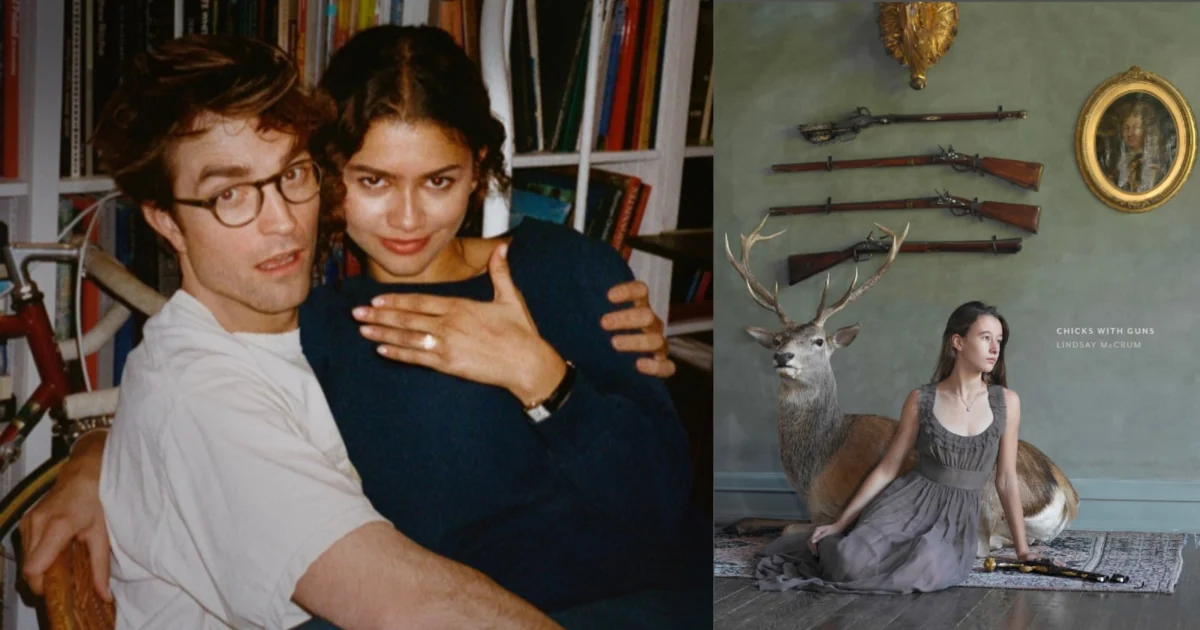
The release of Kristoffer Borgli’s 2026 psychological thriller The Drama has ignited a flurry of discussion among film historians, art critics, and photography enthusiasts regarding the origins of its most unsettling narrative device. The film, which stars Zendaya and Robert Pattinson, centers on a fictionalized photography book titled "Brainrot," a collection of images depicting young women posing with firearms. While the book within the film serves as a catalyst for the protagonist’s psychological unraveling, evidence suggests that its aesthetic and conceptual roots are firmly planted in a real-world art project from over a decade ago: Lindsay McCrum’s 2011 monograph, Chicks with Guns. This connection highlights a growing trend in contemporary cinema where documentary art is repurposed to explore the complexities of the American psyche, particularly concerning the intersection of gender, violence, and domesticity.
In The Drama, the narrative follows Charlie (Pattinson) and Emma (Zendaya), a couple on the precipice of marriage. Their domestic bliss is shattered just days before their wedding when Emma confesses a dark secret from her adolescence: she had meticulously planned a school shooting but ultimately chose not to carry it out. This revelation transforms the couple’s relationship from a romantic union into a psychological battlefield. As Charlie struggles to reconcile the woman he loves with the potential mass murderer she once was, he becomes pathologically obsessed with "Brainrot." In the film, this book serves as a visual manifestation of Charlie’s fears, as he begins to superimpose Emma’s identity onto the armed women captured in the photographs.
The striking similarities between "Brainrot" and McCrum’s Chicks with Guns have been noted by several major outlets, including Art News and Salon. Published by Vendome Press in 2011, Chicks with Guns was the result of a multi-year project by McCrum, a California-based photographer who sought to document the diverse demographic of female gun owners in the United States. Unlike the fictional "Brainrot," which the film portrays through a lens of modern "internet-age" obsession and moral decay, McCrum’s original work was intended as a neutral, documentary-style exploration of a significant subculture.
The Genesis of Chicks with Guns
The inspiration for Lindsay McCrum’s project was not born from a personal interest in firearms—McCrum herself has never owned a gun—but rather from a piece of economic data. In an interview with NPR following the book’s release, McCrum recalled reading an article in The Economist that detailed the staggering scale of the American gun industry. The report highlighted that approximately 15 million women in the United States were gun owners, a figure that challenged the prevailing cultural stereotype of the male-dominated firearm community.
Intrigued by this disconnect between cultural perception and statistical reality, McCrum began a three-and-a-half-year journey across the United States. She sought to capture the "extraordinary size and scope" of the gun business by photographing women from all walks of life. Her subjects were not models or activists; they were schoolteachers, ranchers, competitive shooters, and stay-at-home mothers. Over the course of the project, McCrum photographed 280 women in their personal environments, ranging from opulent living rooms and rustic barns to suburban backyards.
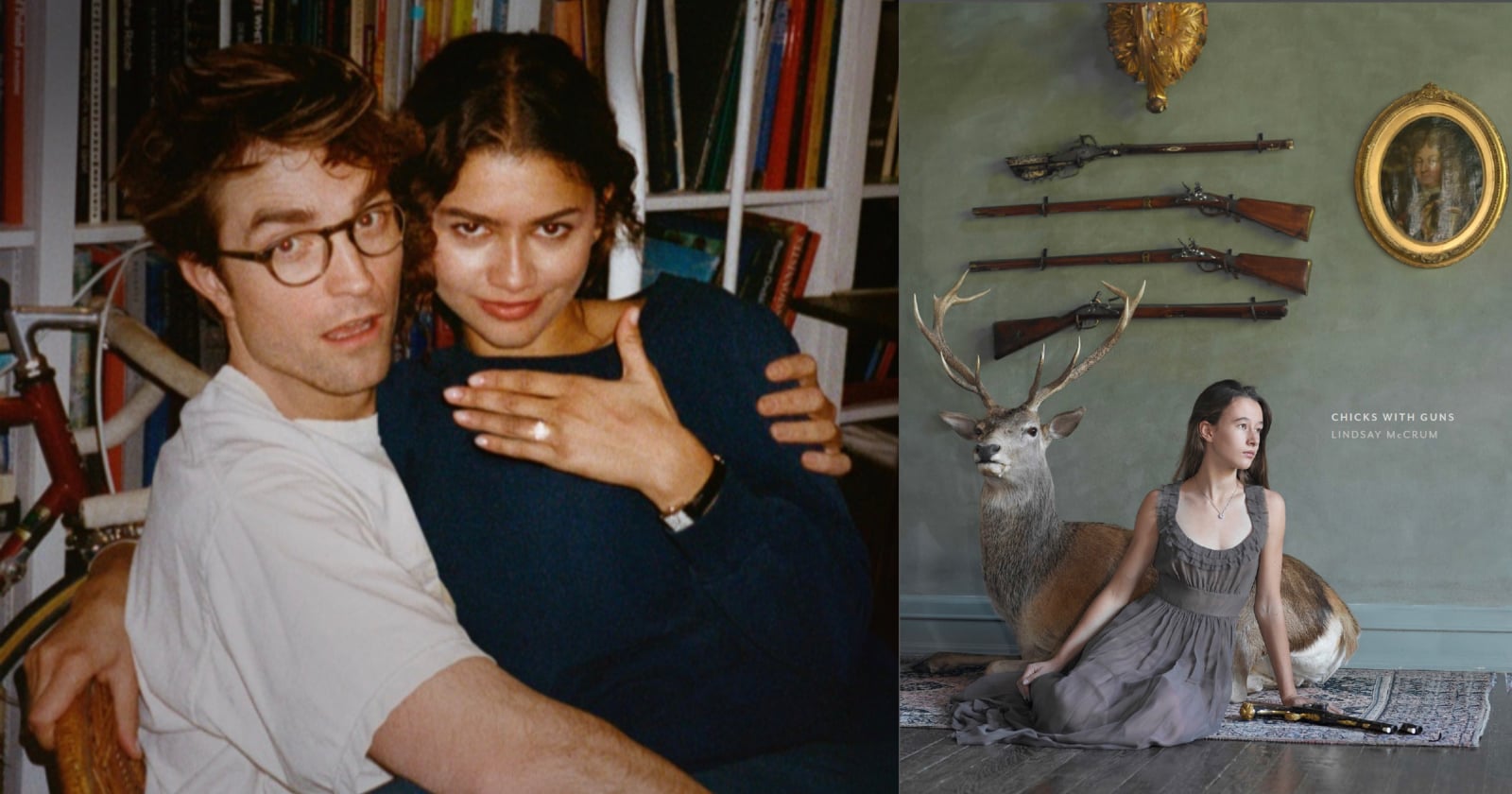
The final publication featured 81 portraits, accompanied by personal statements from the subjects. This contextualization was a late addition to the project; McCrum initially intended for the photographs to stand alone but realized that the stories behind the women were essential to understanding their relationship with their weapons. The age range of the subjects was particularly striking, spanning from an eight-year-old girl to an 85-year-old grandmother, a detail that mirrors the unsettling breadth of the fictional "Brainrot" book in The Drama.
From Documentary to Psychological Catalyst
The Drama’s director, Kristoffer Borgli, is known for his ability to take contemporary social anxieties and amplify them into surreal, often uncomfortable narratives. His previous work, such as the 2023 film Dream Scenario, explored the fragility of reputation and the viral nature of collective consciousness. In The Drama, Borgli uses the concept of a photography book to represent the "pre-crime" guilt that haunts Emma and the voyeuristic obsession that consumes Charlie.
The fictional title "Brainrot" is a deliberate nod to modern digital slang, referring to the degradation of cognitive function caused by excessive consumption of low-quality, sensationalist internet content. By titling the film’s book "Brainrot," Borgli suggests that Charlie’s obsession with Emma’s past is a form of mental decay—a fixation on an image that obscures the reality of the person standing in front of him.
While McCrum’s Chicks with Guns was celebrated for its lack of political or ideological agenda, The Drama takes that neutrality and weaponizes it. In the film, the lack of context in the "Brainrot" photos allows Charlie to project his worst fears onto the subjects. He begins to see the weapons not as tools for sport or protection—as McCrum’s subjects viewed them—but as symbols of latent, explosive violence. This transformation from a documentary study of a subculture into a source of psychological horror reflects a broader cultural shift in how society views the presence of firearms in domestic spaces.
Statistical Context and Cultural Impact
To understand the resonance of both the film and the book that inspired it, one must look at the data regarding female gun ownership in America. Since the publication of Chicks with Guns in 2011, the number of women owning firearms has continued to rise. According to data from the National Shooting Sports Foundation (NSSF), female gun ownership increased by 77% between 2005 and 2020. A 2023 report by Pew Research Center found that approximately 25% of American women personally own a gun, with another 10% living in a household where a gun is present.
The motivations for ownership vary significantly by gender. While men often cite hunting or sport as a primary reason, Pew Research indicates that nearly 75% of female gun owners cite "protection" as their leading motivation. McCrum’s book was a pioneer in visualizing this demographic, which had been largely ignored by mainstream media. Upon its release, the book’s first printing sold out on Amazon within 24 hours, signaling a deep public fascination with the subject matter.

The Drama taps into this fascination but adds a layer of modern anxiety regarding "the secret life." In an era of radical transparency and social media archiving, the idea that a partner could harbor a secret as significant as a planned mass shooting is a potent source of domestic horror. The film’s use of photography as a medium for this revelation is particularly apt; a photograph is a permanent record of a moment, much like Emma’s past is a permanent, if hidden, part of her identity.
Official Responses and Creative Interpretations
While A24 and director Kristoffer Borgli have not officially confirmed that Chicks with Guns was the sole source of inspiration for "Brainrot," the visual parallels are undeniable. Production designers for the film reportedly studied various ethnographic and documentary photography collections to create a book that felt both authentic and stylistically distinct. The use of high-fashion aesthetics—similar to McCrum’s choice to photograph some women in evening gowns or formal attire—creates a jarring contrast with the lethal nature of the firearms.
Lindsay McCrum has consistently maintained that her work was an objective look at a diverse group of people. "I would always make it very clear there was no political or ideological agenda attached to this body of work," she stated in 2011. This stance allowed the book to be received favorably by both gun rights advocates and art critics, though it also left the work open to various interpretations. The Drama represents perhaps the most extreme of these interpretations, suggesting that the "extraordinary range of reasons" women own guns can, in the eyes of a paranoid observer, be reduced to a single, terrifying impulse.
Broader Implications in Modern Cinema
The Drama joins a growing list of films that examine the "aftermath" of potential violence rather than the violence itself. By focusing on a character who didn’t commit a crime, Borgli explores the ethics of redemption and the permanence of intent. The film asks whether a person can ever truly be "cured" of a violent impulse and whether their partners are obligated to accept their past.
The inclusion of a photography book as a central plot point also speaks to the power of the still image in an increasingly video-dominated world. In The Drama, Charlie cannot stop looking at the photos in "Brainrot" because they allow him to pause, zoom in, and scrutinize a version of Emma that no longer exists. This mirrors the way audiences interacted with McCrum’s book in 2011—staring at the faces of women who challenged their preconceived notions of what a "gun owner" looks like.
As The Drama continues its theatrical run, the legacy of Chicks with Guns is being re-evaluated through a 2026 lens. What was once a documentary project about the scale of an industry has become a visual shorthand for the hidden complexities of the American home. Whether viewed as an objective art project or a psychological trigger, the imagery of women with firearms remains one of the most provocative and misunderstood subjects in the American cultural landscape. Through Borgli’s film, this imagery finds a new, darker life, reminding audiences that the most terrifying secrets are often those that hide in plain sight, captured in the stillness of a photograph.

