


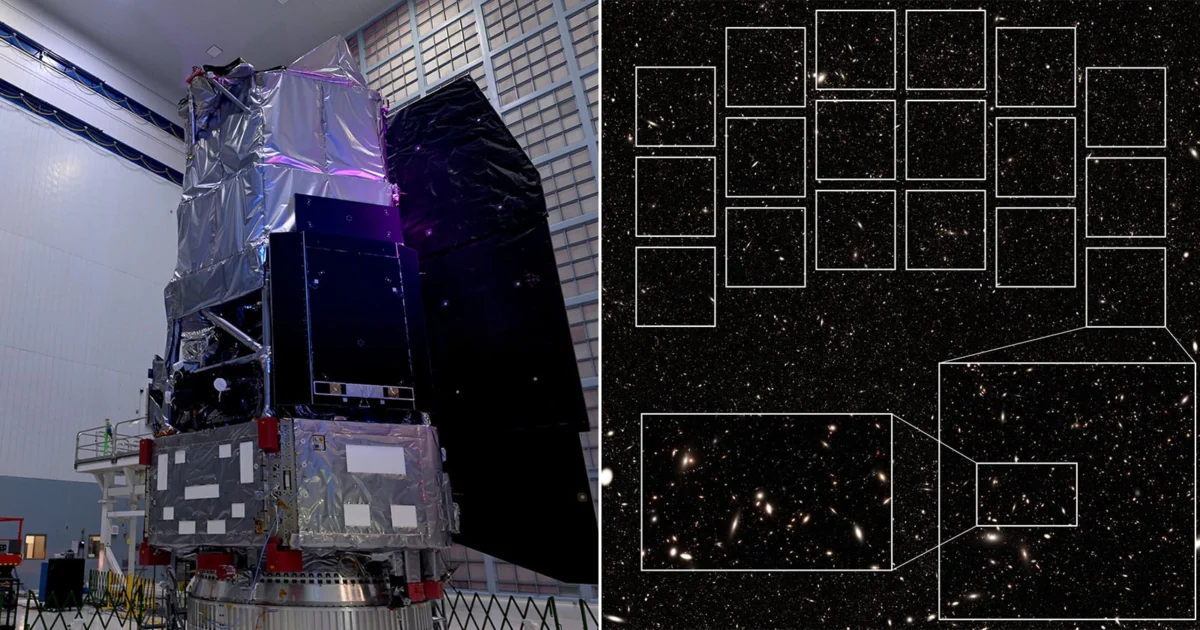
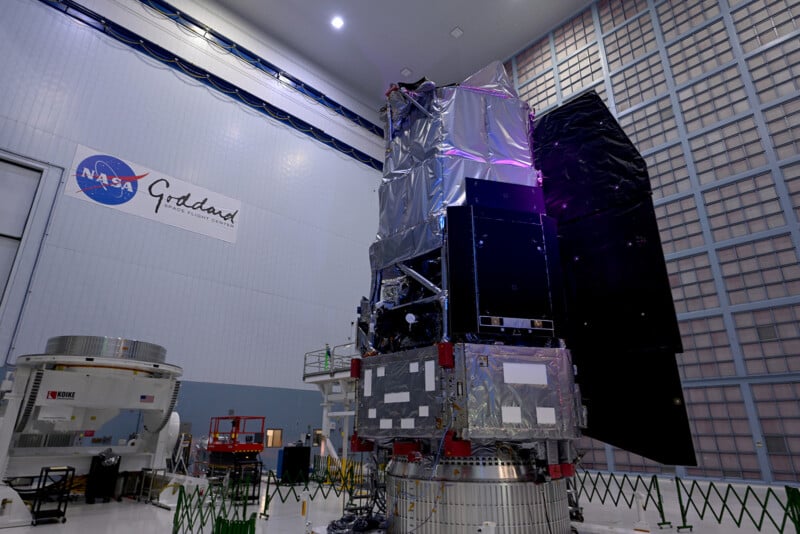
In a landmark achievement for federal aerospace management and deep-space exploration, NASA has officially announced the completion of the Nancy Grace Roman Space Telescope (NGRST). During a celebratory event at the Goddard Space Flight Center, agency officials revealed that the next-generation observatory is not only fully assembled but is currently trending ahead of its original timeline and remains remarkably under budget. This development marks a rare success story in the realm of "flagship" scientific missions, which are traditionally plagued by technical delays and fiscal overruns.
The observatory, named in honor of Dr. Nancy Grace Roman, NASA’s first chief astronomer who is widely regarded as the "Mother of Hubble," is now prepared for its final journey on Earth. It is slated for transport to the Kennedy Space Center in Florida, where it will be integrated with a SpaceX Falcon Heavy rocket. NASA has confirmed a launch window opening as early as September, setting the stage for a mission that promises to rewrite the textbooks on cosmology, dark energy, and the search for habitable worlds beyond our solar system.
A Technical Marvel: The Architecture of the Roman Space Telescope
The Roman Space Telescope represents a paradigm shift in how humanity observes the cosmos. While the James Webb Space Telescope (JWST) is designed to peer deep into specific, narrow points of the universe with unprecedented sensitivity, Roman is built for breadth. Its primary instrument, the Wide Field Instrument (WFI), is a 300.8-megapixel infrared camera that offers a field of view 100 times greater than that of the Hubble Space Telescope’s infrared camera.
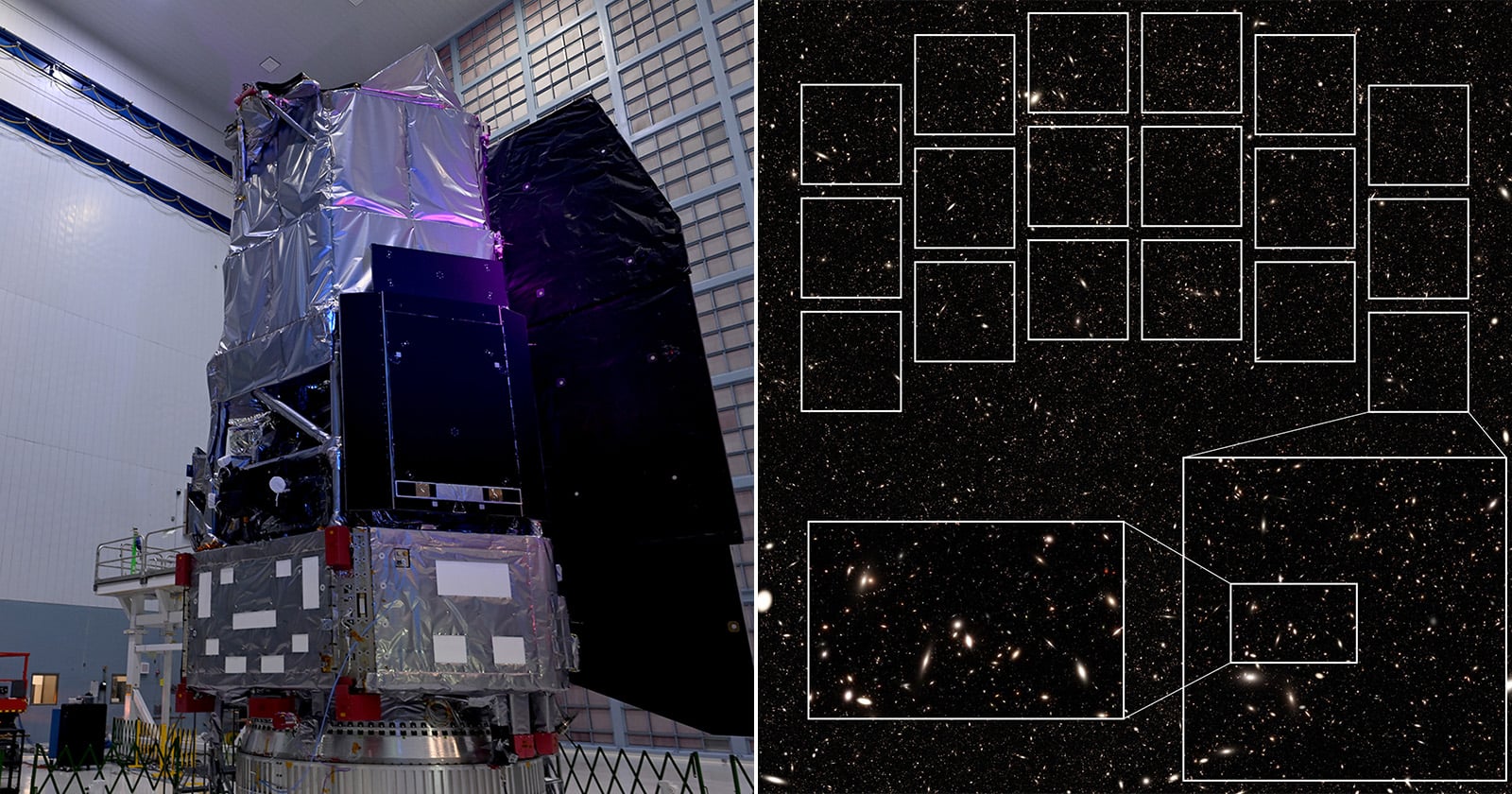
At the heart of the observatory lies a 2.4-meter (7.9-foot) primary mirror, identical in size to Hubble’s. However, the advanced optics and the massive sensor array allow Roman to capture a single image that covers an area of the sky equivalent to 100 Full Moons. This "wide-angle" capability allows the telescope to conduct vast surveys of the sky at a speed that was previously unimaginable. During a recent press briefing, NASA officials noted that what would take Hubble 2,000 years to map, the Roman telescope can accomplish in just one year.
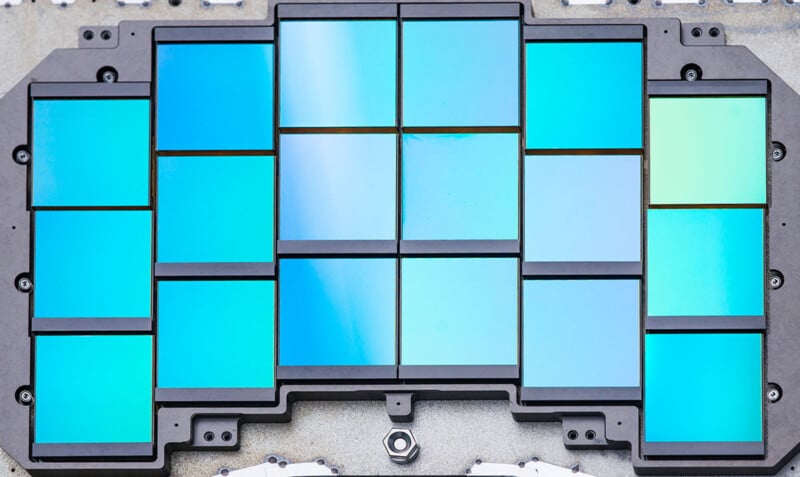
The Wide Field Instrument utilizes 18 custom-built Teledyne H4RG-10 image sensors, each boasting 16.8 megapixels. These detectors are engineered to "see" across both visible and near-infrared wavelengths (0.48 to 2.3 μm), allowing the telescope to pierce through cosmic dust clouds that obscure visible light. Complementing the WFI is the Roman Coronagraph Instrument, a high-contrast technology demonstration designed to block out the glare of distant stars, enabling the direct imaging of exoplanets that are millions of times fainter than their host stars.
Mission Objectives: Decoding the "Dark Universe"
The primary scientific driver for the NGRST mission is the investigation of the "Dark Universe." Modern astrophysics suggests that approximately 95 percent of the universe is composed of dark matter and dark energy—invisible components that cannot be seen directly but exert a measurable gravitational influence on visible matter and drive the accelerated expansion of the cosmos.
By mapping the distribution and shapes of hundreds of millions of galaxies, Roman will allow scientists to observe how dark matter acts as a "cosmic web," binding galaxies together. Simultaneously, the mission will use Type Ia supernovae as "standard candles" to measure the distance and expansion rate of the universe over time, providing critical data to test theories regarding the nature of dark energy.
Beyond cosmology, Roman is expected to be a powerhouse for exoplanet discovery. Using a technique called gravitational microlensing, the telescope will monitor the light from stars in the crowded center of the Milky Way. If a planet passes in front of a distant star, its gravity acts as a lens, briefly brightening the star’s light. This method will allow Roman to find planets that are similar to Earth in mass and distance from their stars, as well as "rogue" planets that drift through space without a host star.
Chronology of Development: From Concept to Completion
The journey of the Nancy Grace Roman Space Telescope has been a multi-decade endeavor. The mission’s origins can be traced back to the 2010 Decadal Survey of Astronomy and Astrophysics, where it was initially proposed as the Wide-Field Infrared Survey Telescope (WFIRST).
- 2010–2015: Initial conceptualization and feasibility studies. The mission was prioritized as the top large-scale space project for the decade.
- 2016: NASA officially began the development phase of the mission.
- 2020: The mission was formally renamed the Nancy Grace Roman Space Telescope to honor the legacy of Dr. Roman.
- 2021–2022: Critical Design Reviews (CDR) were completed, and the fabrication of the 18 flight detectors began. PetaPixel and other outlets began highlighting the telescope’s unique 300x field-of-view advantage over Hubble.
- 2023: Integration of the Wide Field Instrument and the primary mirror assembly was completed at the Goddard Space Flight Center.
- Late 2024: Final environmental testing, including vacuum and thermal testing, confirmed the observatory’s readiness for the rigors of space.
- Early 2025: NASA announces the completion of the observatory, confirming it is ready for shipment to Florida for a September launch.
Unprecedented Data Throughput and Ground Operations
One of the most significant challenges facing the Roman mission is the sheer volume of data it will generate. Because of its massive sensor array and rapid survey speed, Roman will transmit approximately 11 terabytes of data back to Earth every single day. For comparison, this is orders of magnitude more than the data output of Hubble or Webb.
To handle this influx, NASA has upgraded its ground station networks and developed advanced automated pipelines to process the imagery. The data will be made available to the global scientific community almost immediately, honoring Dr. Roman’s lifelong commitment to making scientific tools accessible to all.
"The mission will acquire enormous quantities of astronomical imagery that will permit scientists to make groundbreaking discoveries for decades to come," said Jackie Townsend, Roman’s deputy project manager at NASA Goddard. "I like to think Dr. Roman would be extremely proud of her namesake telescope and thrilled to see what mysteries it will uncover."
Strategic Importance and Future Implications
The success of the Roman mission in staying under budget and ahead of schedule is being viewed as a significant win for NASA’s project management protocols. By utilizing a "fixed-price" approach for certain components and leveraging existing mirror hardware (originally donated by the National Reconnaissance Office), the agency managed to avoid the "sunk cost" traps that have historically hampered large-scale space observatories.
The telescope will be positioned at the second Lagrange point (L2), located approximately one million miles from Earth. This stable orbital position will allow the telescope to keep its back to the Sun, Earth, and Moon, maintaining the ultra-cold temperatures required for sensitive infrared observations.
The implications for the future of astronomy are profound. Mark Melton, a systems engineer at NASA’s Goddard Space Flight Center, suggested that the mission’s greatest impact might be entirely unforeseen. "If Roman wins a Nobel Prize at some point, it’s probably for something we haven’t even thought about or questioned yet," Melton stated.
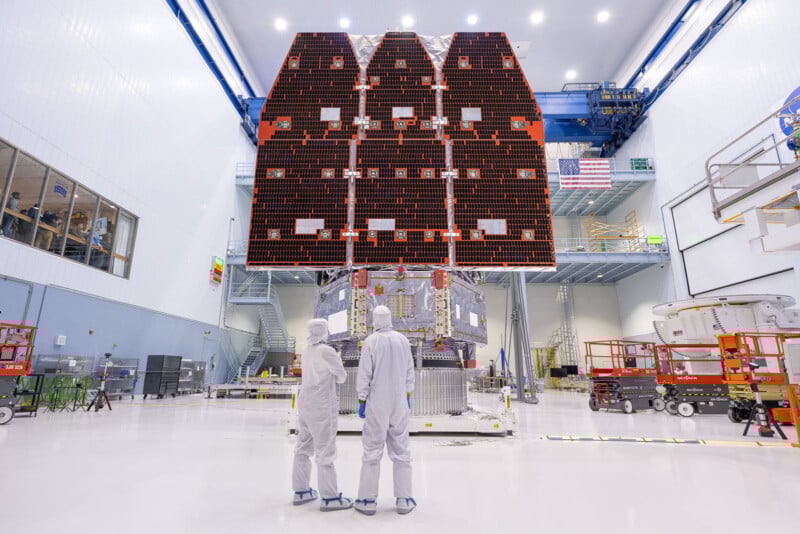
As the telescope prepares for its departure from the clean rooms of Maryland to the launch pads of Florida, the global scientific community remains in high anticipation. The Nancy Grace Roman Space Telescope is not merely a replacement for what has come before; it is a monumental expansion of the human eye, designed to capture the "big picture" of a universe that remains largely shrouded in mystery. With its launch just months away, the era of wide-field precision cosmology is officially on the horizon.

