


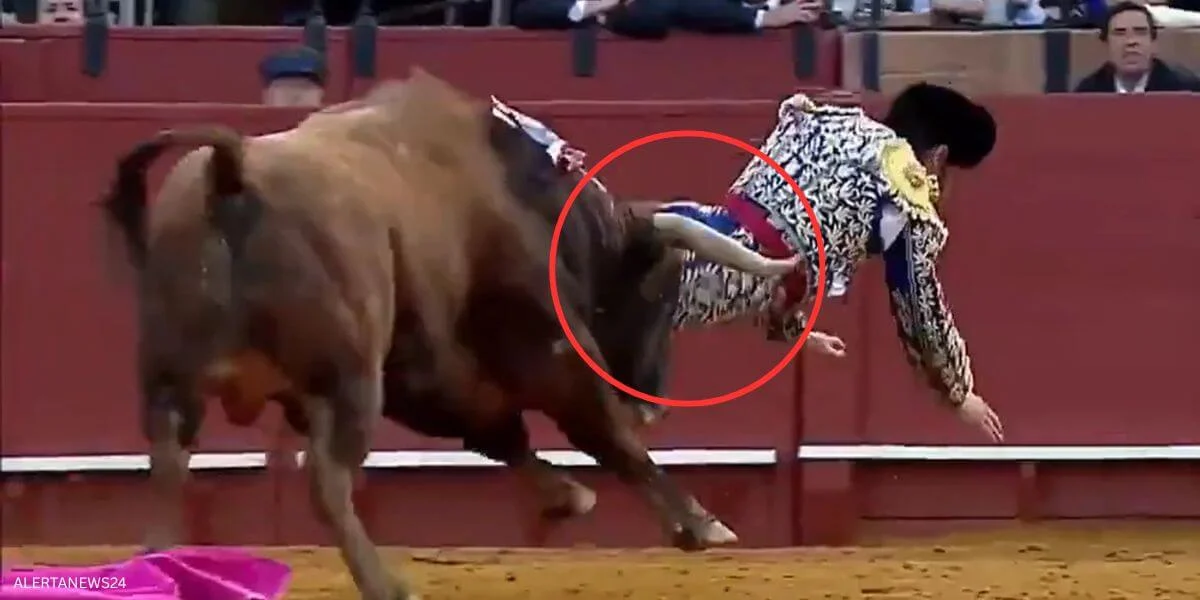
The event took place on Monday, April 20, 2026, at the historic Plaza de Toros de la Real Maestranza de Caballería de Sevilla, one of the most prestigious bullfighting arenas in the world. José Antonio Morante de la Puebla, widely regarded as the most influential and "artistic" matador of his generation, was participating in a highly anticipated corrida during the city’s famed spring festivities. The incident occurred during the encounter with the fourth bull of the afternoon, a powerful animal that caught the matador off-guard during a series of passes. Spectators reported that the bull charged with unexpected velocity, lifting Morante de la Puebla into the air and throwing him to the ground before delivering a severe puncture wound to the left gluteal and rectal region.
The matador was immediately rescued by his team of "subalternos," who diverted the bull’s attention while Morante was carried to the arena’s internal infirmary. Medical reports indicated that the wound was deep and complex, necessitating an emergency transfer to a local hospital. Surgeons performed a procedure lasting more than two hours to repair internal tissue damage and address the risk of infection, a common and often fatal complication in such injuries due to the bacteria present on the bull’s horns. While the surgery was successful, the matador remains under close observation, with his recovery expected to be lengthy and arduous.
The Return of a Legend: Context of the Comeback
Morante de la Puebla’s return to the ring had been the subject of intense media coverage across Spain and the international bullfighting community. Known for his "duende"—a Spanish term referring to a heightened state of emotion, expression, and authenticity—Morante had previously announced a hiatus from the sport, citing physical exhaustion and the mental toll of a decades-long career. His decision to return in 2026 was seen by aficionados as a vital boost for an industry that has faced declining ticket sales and increasing political pressure.
The Seville event was meant to be a crowning moment of his comeback. La Maestranza, often called the "Cathedral of Bullfighting," was filled to capacity, with tickets for the event selling out weeks in advance. The atmosphere was one of celebration until the moment of the goring, which silenced the crowd of thousands. The incident has once again highlighted the inherent dangers of the "Fiesta Nacional," where even the most skilled practitioners are a fraction of a second away from a life-threatening encounter.
A Chronology of Risk: Recent Incidents in the Ring
The injury to Morante de la Puebla is not an isolated event but rather the latest in a series of high-profile incidents that have marred the 2026 bullfighting season. Just weeks prior, on April 5, 2026, the community was shocked by the death of a 51-year-old retired matador in Málaga. That individual was gored during a private event held on the eve of a major festival, succumbing to his injuries before reaching the hospital.
These back-to-back incidents involving veteran matadors have sparked a debate regarding the physical requirements of the sport and the risks taken by older performers returning to the arena. In the last decade, medical advancements in "cirugía taurina" (bullfight surgery) have significantly reduced the mortality rate of gorings, yet the mechanical force of a half-ton bull remains a variable that no amount of medical preparation can fully mitigate. Data from the Spanish Ministry of Culture suggests that while the number of professional bullfights has fluctuated, the severity of injuries reported among matadors has seen a slight uptick, possibly due to the breeding of larger, more aggressive bulls intended to increase the "spectacle" of the event.
The Ethical Divide: Animal Welfare and Public Sentiment
While the bullfighting world focuses on the recovery of its star matador, animal rights organizations have used the incident to reiterate their calls for a total ban on the practice. Organizations such as PETA Latino have pointed out the inherent asymmetry of the spectacle, noting that while a matador’s injury is framed as a tragedy, the death of the bull is a predetermined and ritualized outcome.
In a bullfight, the animal undergoes a three-stage process known as "tercios." First, it is weakened by "picadores" on horseback who use lances to sever the neck muscles. Then, "banderilleros" plant barbed sticks into the bull’s shoulders to further drain its strength and cause blood loss. Finally, the matador attempts to kill the animal with a sword thrust between the shoulder blades. Critics argue that this process is one of prolonged torture, regardless of the cultural heritage or "artistry" claimed by proponents.
The narrative of "fairness" is also frequently challenged. Activists argue that bulls are often subjected to stress and disorientation before entering the ring, and that the physical environment—the blinding sun, the noise of the crowd, and the strategic use of capes—is designed to ensure the animal’s eventual defeat. The injury to Morante de la Puebla, though severe, is viewed by these groups as a predictable consequence of an industry built on the provocation of sentient beings.
Shifting Demographics and the Legislative Landscape
The social context surrounding bullfighting in Spain is undergoing a profound transformation. According to recent sociological surveys, public opinion has shifted dramatically over the last generation. Data indicates that approximately 84% of Spanish citizens between the ages of 18 and 24 express no interest in bullfighting or actively support its abolition. This demographic shift is reflected in the political arena, where more than 125 cities across Spain have declared themselves "anti-bullfighting" or have moved to cut public subsidies for festivals.
The legislative battle has been complex. In previous years, the Spanish Constitutional Court overturned regional bans, such as the one implemented in Catalonia, arguing that bullfighting is a part of the nation’s "cultural heritage" protected by federal law. However, the 2024 abolition of the National Bullfighting Award by the Ministry of Culture signaled a cooling of official state support. The current government has faced mounting pressure to redirect funds typically allocated to bullfighting schools and arena maintenance toward more contemporary cultural initiatives.
Economic Implications and the Industry’s Future
The economic impact of bullfighting remains a point of contention. Proponents argue that the industry generates thousands of jobs and contributes significantly to the tourism sector, particularly during events like the Feria de Abril in Seville or the San Fermín running of the bulls in Pamplona. They claim that the dehesas (the pastures where the bulls are raised) are essential for ecological preservation and the survival of the "Toro de Lidia" breed.
Conversely, economic analysts have pointed to a steady decline in "corridas de toros" held annually. Outside of major festivals, many arenas struggle to fill seats, and the industry relies heavily on local and regional government subsidies to remain solvent. The injury to a figure as prominent as Morante de la Puebla represents a significant blow to the industry’s marketing power. As the "face" of modern bullfighting, his absence from the 2026 season could lead to a measurable drop in attendance and television viewership, further straining the financial viability of the tradition.
Conclusion: A Tradition at a Crossroads
The goring of José Antonio Morante de la Puebla serves as a stark reminder of the violence inherent in bullfighting, a spectacle that continues to divide Spanish society along generational and ethical lines. For the aficionados, it is a moment of concern for a beloved artist and a testament to the bravery required to face a bull. For the critics, it is another example of a "cruel and outdated" practice that endangers both humans and animals for the sake of entertainment.
As Morante de la Puebla begins his recovery in a Seville hospital, the broader conversation regarding the future of bullfighting in the 21st century continues to intensify. Whether the industry can survive the dual pressures of waning public interest and increasing moral scrutiny remains to be seen. What is clear, however, is that the events at La Maestranza have reignited a national debate that transcends the boundaries of the bullring, touching upon questions of national identity, animal ethics, and the evolution of cultural traditions in a modernizing Spain.

