


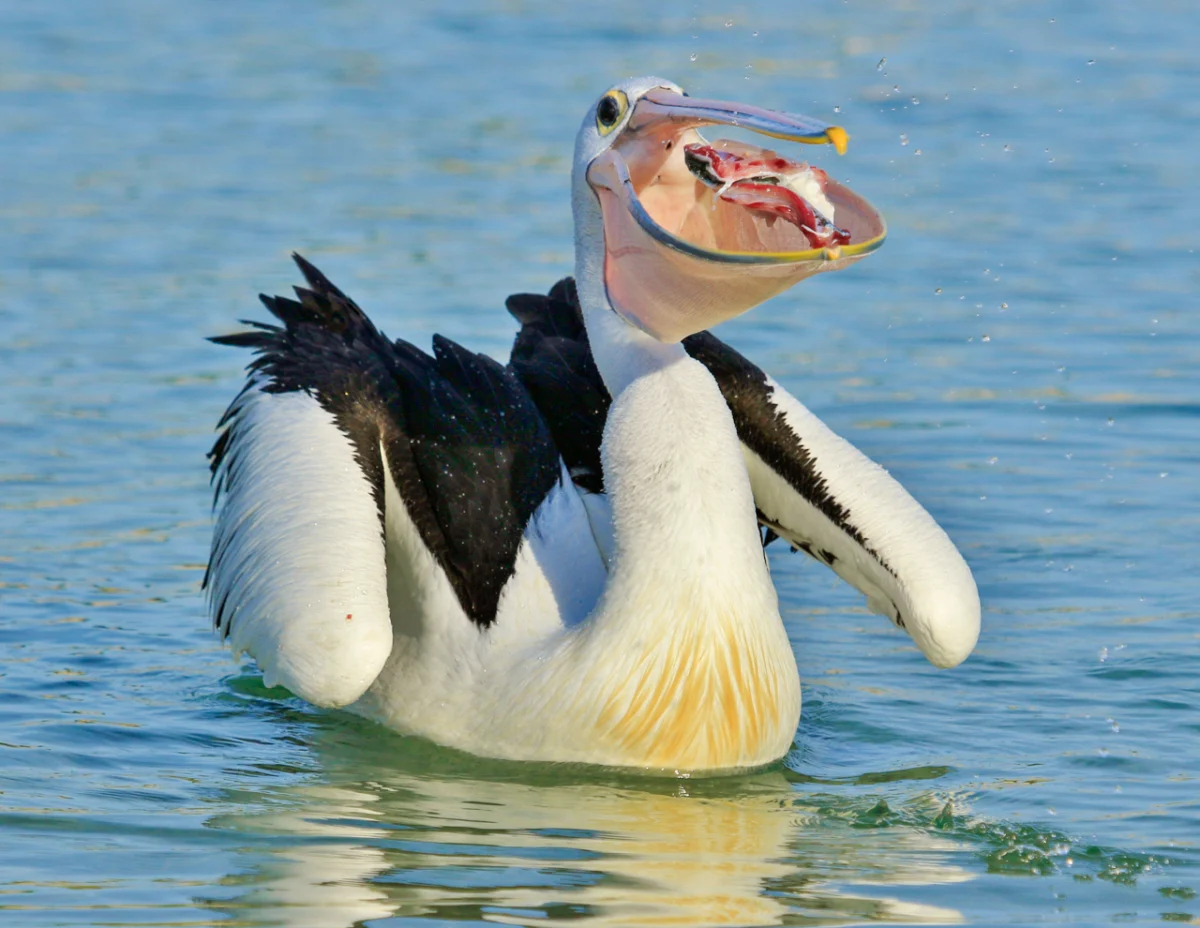
The avian world, a vibrant tapestry of flight and song, presents a curious anatomical paradox: birds, the descendants of toothed dinosaurs, are entirely toothless. This absence of a feature so fundamental to mammalian and reptilian diets sparks intrigue, leading us on a fascinating exploration through evolutionary history, paleontological discoveries, and the ingenious adaptations that allow birds to thrive without a single molar or incisor. From the delicate chirping of a sparrow cracking seeds to the powerful gape of a pelican engulfing its prey, the question of how birds eat without teeth is as compelling as the answer is complex.
The Toothless Truth: Modern Avian Anatomy
All extant bird species are characterized by a complete lack of teeth. Instead, they possess beaks, or bills, which exhibit an astonishing diversity in form and function, each meticulously sculpted by evolution to suit a specific diet and ecological niche. The hooked beak of a raptor, designed for tearing flesh, stands in stark contrast to the slender, needle-like proboscis of a hummingbird, perfectly adapted for siphoning nectar. These beaks are not mere bony protrusions; they are complex structures composed of bone covered by keratin, the same durable protein that forms human fingernails and hair. While beaks can be incredibly sharp, robust, or even serrated, they fundamentally differ from true teeth, which are defined by their composition of enamel and dentin and their rooted presence within jaw sockets. Birds simply do not possess these dental structures.
This anatomical reality naturally leads to a crucial question: how do birds effectively process their food without the chewing apparatus common to so many other vertebrates?

Ingenious Adaptations: How Birds Eat Without Teeth
Birds have evolved a remarkable array of strategies to compensate for their toothlessness. Many species simply swallow their food whole or in large, manageable pieces. Birds of prey, such as hawks and owls, employ their formidable beaks and sharp talons to dismember their prey before ingestion. Waterfowl, on the other hand, have adapted to filter food from aquatic environments or scoop it up with specialized bills. Seed-eating birds, like finches, utilize powerful beaks to crack open tough shells, accessing the nutritious kernels within.
Once food is ingested, the burden of processing shifts to the bird’s highly specialized digestive system. A key player in this process is the gizzard, a muscular organ that functions as a sophisticated grinding mill. Many birds intentionally swallow small stones, grit, or other hard materials, which are then retained in the gizzard. The powerful muscular contractions of the gizzard, aided by these ingested indigestible items, effectively grind and break down food particles, performing a function analogous to the chewing action of mammalian teeth. In essence, birds have ingeniously outsourced their "chewing" from the oral cavity to a specialized internal organ.
A Glimpse into the Past: Did Birds Once Possess Teeth?
The absence of teeth in modern birds raises a compelling historical question: did their ancient ancestors possess this characteristic? The answer is a resounding yes. Birds evolved from theropod dinosaurs, a diverse group that included iconic carnivores such as Tyrannosaurus rex. These prehistoric reptiles were equipped with formidable, sharp teeth, a trait that was inherited by the earliest birds.
Paleontological evidence provides irrefutable proof of this ancestral dental heritage. Fossils of some of the earliest avian species reveal jaws lined with functional teeth. A prime example is Archaeopteryx, a creature that lived approximately 150 million years ago and is often cited as a crucial transitional form between dinosaurs and birds. While Archaeopteryx possessed feathers and wings, its jaws were distinctly adorned with teeth. Later species, such as Hesperornis and Ichthyornis, which coexisted with dinosaurs, also sported well-developed teeth, complete with enamel and roots, clearly distinguishable from mere bony ridges.

The Evolutionary Exodus: Why Did Birds Lose Their Teeth?
Given that teeth served their ancient ancestors effectively, a pertinent question arises: what evolutionary pressures led to their complete disappearance from the avian lineage? Scientific consensus points to a multifaceted combination of factors, rather than a single decisive cause.
One significant driver is believed to be weight reduction. Teeth, particularly a full set, are relatively heavy. For animals that depend on flight for survival, any reduction in body mass can translate to improved efficiency and reduced energy expenditure during aerial locomotion. Lighter heads, facilitated by the absence of teeth, could have offered a distinct evolutionary advantage in the demanding realm of flight.
Another compelling hypothesis centers on developmental speed. The formation of teeth during embryonic development is a time-consuming and energetically demanding process. Birds that could bypass this lengthy development might have been able to hatch faster, granting them a survival edge, especially in environments characterized by high predation rates. Quicker development could mean more individuals surviving to reproductive age.
Furthermore, the adaptability of beaks may have played a crucial role. Unlike teeth, which are genetically and structurally complex, beaks can be more readily modified by evolutionary processes. This inherent plasticity allowed birds to rapidly adapt their feeding apparatus to exploit new food sources and occupy diverse ecological niches. Over millions of years, natural selection evidently favored the toothless condition, leading to the complete eradication of true teeth from the avian family tree.

The Illusion of Teeth: Structures That Mimic Dental Features
While modern birds are definitively toothless, popular understanding can sometimes be misled by superficial resemblances. Claims that certain birds, such as geese or penguins, possess teeth are generally inaccurate. However, the confusion is understandable due to the presence of specialized structures that serve similar functions.
Some bird species exhibit serrated or spiky edges along their beaks or tongues. For instance, geese and ducks possess lamellae, which are comb-like ridges lining their bills. These structures are instrumental in gripping vegetation or filtering small food particles from water. Penguins, in a remarkable adaptation for their slippery prey, have backward-facing spines on their tongues and the roofs of their mouths. These keratinous projections are not true teeth but serve to secure fish, preventing them from escaping the beak. While these features may appear tooth-like, they are composed of keratin and are not rooted in jaw sockets like true dentition.
A Genetic Echo: The Dormant Potential for Teeth
In a fascinating turn of evolutionary genetics, it appears that birds have not entirely lost the biological machinery for tooth development. Modern birds still carry dormant genes associated with tooth formation, vestiges inherited from their dinosaur ancestors. In controlled laboratory settings, scientists have successfully activated these genes in chicken embryos, leading to the development of tooth-like structures. These experimentally induced "teeth" bear a striking resemblance to those found in reptiles, rather than mammals.
However, it is crucial to emphasize that these findings do not portend the imminent appearance of toothed chickens in agricultural settings. These experiments are confined to the scientific realm, aimed at unraveling the complexities of evolution and developmental biology. They do not represent a natural evolutionary trajectory towards reacquiring teeth for practical use. Nonetheless, these studies serve as a potent reminder that evolution rarely erases traits entirely; it often opts to inactivate them, leaving behind a genetic blueprint that can, under specific circumstances, be reactivated.

The Transient Tool: The Egg Tooth
Perhaps the most compelling and universally present "tooth-like" structure in birds is the egg tooth. Although not a true tooth in the anatomical sense, this temporary appendage plays a critical role in avian reproduction. The egg tooth is a small, sharp, keratinous projection that forms on the tip of a chick’s beak shortly before hatching. Its sole purpose is to facilitate the chick’s emergence from the protective confines of the eggshell.
Within the confined space of the egg, a developing chick faces the challenge of breaking through a robust shell. When ready to hatch, the chick initiates a process known as "pipping." Employing its neck muscles, the chick repeatedly taps and scratches the eggshell with its egg tooth. This action gradually creates a crack, which widens over several hours, or sometimes even days, until the chick can finally push its way free.
Shortly after hatching, the egg tooth either detaches or is reabsorbed into the beak. The chick then continues its life with the characteristic toothless beak of its species. In this remarkable instance, birds momentarily "possess a tooth," but only as a highly specialized tool for their initial entry into the world.
The Significance of the Egg Tooth
The egg tooth represents a brilliant evolutionary compromise. Birds have shed the burden of permanent, heavy teeth, yet their embryos still require a mechanism to escape the sturdy eggshell. Instead of re-evolving a full set of dentition, evolution provided a lightweight, disposable solution perfectly suited for this singular, vital task.

The presence and function of the egg tooth also underscore the significant challenges inherent in hatching. What may appear to be a rapid process from an external perspective is, in reality, a demanding endeavor for the chick. Periods of rest are common between bouts of pipping, and parental birds often exhibit remarkable patience as their offspring completes this arduous task. Successfully emerging from the egg is, for a chick, its very first triumph of strength and perseverance.
A Misnomer in Nomenclature: The Tooth-billed Bowerbird
While no living bird possesses true teeth, some species bear names that can be misleading. A notable example is the Tooth-billed Bowerbird (Scenopoeetes dentirostris), an inhabitant of the rainforests of northeastern Australia. Despite its name, this species does not possess teeth in the mammalian or reptilian sense.
The name derives from the subtle serrations, or tooth-like projections, along the edges of the male’s bill. These structures are not employed for chewing. Instead, they are thought to assist in handling food or in manipulating leaves and other materials used in the bowerbird’s unique courtship displays. Unlike many other bowerbirds that construct elaborate stick structures adorned with colorful objects, the Tooth-billed Bowerbird male clears a patch of forest floor and arranges fresh leaves, often turning them to display their paler undersides. He meticulously maintains this "court," replacing wilted leaves to ensure an attractive presentation for visiting females.
Even with these serrated bill edges, the Tooth-billed Bowerbird relies on the typical avian system of swallowing food and grinding it in its gizzard. The "teeth" in its name are merely superficial features, a linguistic artifact that highlights how common language can sometimes diverge from precise biological reality.

Concluding Thoughts on Avian Dentition
Birds may lack the gleaming dental arrays familiar in many other vertebrates, but this absence is not a deficit; it is a testament to a profound and successful evolutionary narrative. The shedding of heavy teeth likely contributed significantly to the development of efficient flight, accelerated embryonic development, and spurred the innovation of novel methods for food processing.
Ultimately, birds do not require teeth to thrive. Their remarkable success in colonizing nearly every environment on Earth, from arid deserts and vast oceans to dense, humid rainforests, demonstrates that evolution has provided them with all the necessary tools for survival and propagation.
Therefore, the next time one observes a pigeon pecking at scattered crumbs or a robin diligently extracting a worm from the soil, it is worth remembering the extraordinary evolutionary journey that has shaped these creatures. This journey encompasses the sharp teeth of their dinosaur ancestors, the experimental manipulation of chicken embryos, and one of nature’s most elegant and successful anatomical redesigns.
No teeth? No problem. Birds, through millennia of adaptation and innovation, have consistently found another way.

