


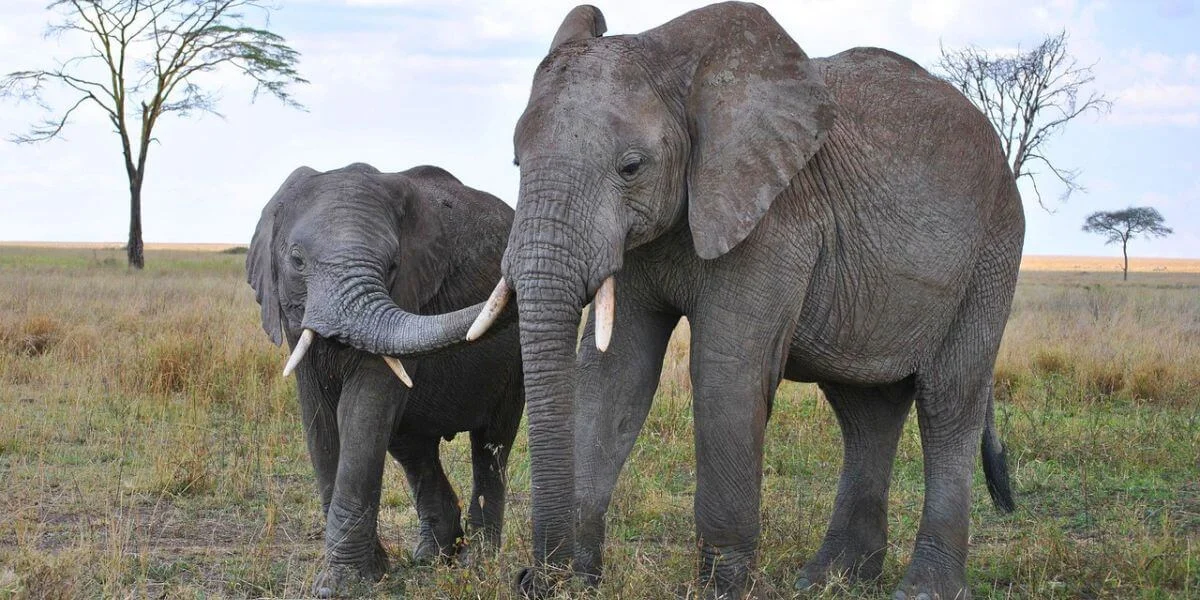
The death of a prominent international trophy hunter in the dense rainforests of Gabon has reignited the global debate over the ethics and safety of high-stakes big-game hunting. On April 24, 2026, reports confirmed that a wealthy individual, whose identity has been associated with numerous high-profile kills over several decades, was killed during a confrontation with a herd of forest elephants. The incident occurred while the hunter was participating in a sanctioned, paid excursion in a remote region of the Central African nation, an area known for its biodiversity and its significant population of the critically endangered African forest elephant (Loxodonta cyclotis).
According to preliminary reports from local authorities and the hunting party’s surviving guides, the incident was not a targeted elephant hunt. The hunter was reportedly tracking a specific species of antelope when the group inadvertently intercepted a matriarchal elephant unit. The encounter escalated rapidly when the hunting party found themselves in close proximity to five female elephants and at least one calf. In what biological experts describe as a classic defensive maneuver, the adult females moved to protect the young calf, resulting in the fatal trampling of the hunter. The guide accompanying the hunter managed to escape with minor injuries, but the primary client was pronounced dead at the scene.
Chronology of the Incident
The expedition began in the early morning hours of April 24, as the hunting party moved through the thick undergrowth of the Gabonese interior. Gabon, which is roughly 88% forested, presents a challenging environment for hunters and trackers alike, with visibility often limited to a few meters. The party was reportedly utilizing professional tracking services to locate trophy-sized game, specifically focusing on bovid species native to the region.
At approximately 2:00 PM local time, the group entered a clearing where the elephant herd was foraging. Eyewitness accounts suggest that the hunting party was caught off guard by the speed of the elephants’ reaction. Unlike the larger savanna elephants, forest elephants are known for being more reclusive and can become highly aggressive if they perceive a direct threat to their offspring.
When the hunter attempted to navigate around the herd to maintain his track on the antelope, the lead matriarch reportedly gave a warning trumpet before charging. The group was unable to retreat to a safe distance in time. The elephants, acting in a coordinated defensive formation, moved toward the perceived intruders. The hunter was caught in the path of the charging matriarchs and sustained catastrophic injuries. Recovery efforts were delayed by several hours as the herd remained in the vicinity, displaying agitated behavior consistent with herd protection protocols.
Behavioral Analysis: The Matriarchal Defense Mechanism
The incident underscores the complex social structures of elephants and the inherent risks of human-wildlife interaction in hunting zones. Female elephants live in tightly bonded matriarchal groups led by the oldest and most experienced female. These units are characterized by intense devotion to the survival of the group, particularly the calves.
Ethologists note that when a calf is present, the "fight or flight" threshold for a matriarch is significantly lowered. In the context of the Gabon incident, the presence of armed humans in a restricted space likely triggered an instinctive defensive response. Dr. Helena Vreeland, a wildlife biologist specializing in African megafauna, noted that "elephants possess high levels of emotional intelligence and situational awareness. When they perceive a threat—especially one carrying the scent of humans and the sound of machinery or weapons—the matriarchal instinct is to neutralize that threat to ensure the safety of the next generation."
Furthermore, research indicates that elephants in regions where hunting or poaching occurs can develop a form of collective trauma or heightened sensitivity to human presence. This "landscape of fear" can lead to more frequent and more violent encounters between humans and elephants, as the animals learn to associate humans with lethal danger.
The Status of Forest Elephants in Gabon
Gabon is currently the last stronghold for the African forest elephant. While populations across the rest of the continent have been decimated by poaching and habitat loss, Gabon’s commitment to conservation has allowed its population to remain relatively stable, though still categorized as critically endangered by the International Union for Conservation of Nature (IUCN).
The country has established an extensive network of 13 national parks, covering approximately 10% of its landmass. However, trophy hunting remains legal in certain designated zones outside these parks, providing a source of revenue that the government argues is necessary for funding anti-poaching patrols and community development. This "sustainable use" model is a point of contention among international conservation groups, who argue that the presence of hunters in elephant habitats creates unnecessary conflict and undermines the moral authority of conservation efforts.
Data from the Gabonese Ministry of Forests and Environment indicates that human-wildlife conflict has been on the rise over the last decade. As human activities—including logging, agriculture, and trophy hunting—encroach further into primary forests, the frequency of fatal encounters has increased. This latest incident involving a foreign national is expected to prompt a review of safety protocols for guided hunting excursions in the region.
The Global Industry and Ethical Debate
Trophy hunting is a multi-million dollar global industry, with wealthy individuals paying tens of thousands of dollars for the opportunity to kill exotic animals. Proponents of the industry, such as the Safari Club International (SCI), argue that regulated hunting provides essential funding for habitat preservation and incentivizes local communities to protect wildlife rather than engage in illegal poaching. They claim that the "harvesting" of older animals does not harm the overall population dynamics.
Conversely, organizations like PETA (People for the Ethical Treatment of Animals) and the Born Free Foundation view the practice as an archaic and cruel vestige of colonial-era attitudes toward nature. They argue that the "sport" is fundamentally a slaughter of sentient beings for vanity. In response to the Gabon incident, animal rights advocates have pointed out the irony of a hunter being killed by the very wildlife he sought to dominate.
"While hunters choose to stalk and kill, the animals never choose to be part of this violence," a spokesperson for PETA stated in a press release following the report. "For these animals, the presence of hunters means terror and pain. This incident is a tragic reminder that animals will defend their families with the same ferocity as any human parent."
Corporate Involvement and the UPS Controversy
The death of the hunter has also brought renewed attention to the logistics of the trophy hunting industry. A major point of friction involves the transport of animal parts—heads, skins, and tusks—from Africa to North America and Europe. United Parcel Service (UPS), one of the world’s largest shipping companies, has faced sustained pressure from activists to ban the shipment of "hunting trophies."
While UPS has already implemented bans on the shipment of shark fins, ivory, and certain live animals, it continues to allow the transport of legally obtained hunting trophies. Critics argue that this policy is inconsistent. If the company recognizes the ethical and conservation-related issues surrounding ivory, they contend, it should logically extend that ban to the entire body of the animal from which the ivory was taken.
Currently, over 100,000 people have signed petitions urging UPS to align its shipping policies with modern conservation ethics. The industry’s reliance on global shipping infrastructure means that a ban by a major carrier like UPS could significantly complicate the logistics for international hunters, potentially reducing the appeal of overseas hunting expeditions.
Broader Implications for Wildlife Management
The fatality in Gabon is likely to have several long-term implications for wildlife management and international relations. First, it may lead to stricter regulations regarding the proximity of hunting parties to protected species. Even when a hunter is not targeting an elephant, the accidental encounter can be lethal, suggesting that current "buffer zones" or scouting techniques may be insufficient.
Second, the incident highlights the economic vulnerability of the trophy hunting model. When high-profile deaths occur, it often leads to a temporary decline in bookings and increased insurance premiums for excursion operators. This volatility has led some conservationists to advocate for a transition toward "non-consumptive" wildlife tourism, such as high-end photography safaris, which generate revenue without the removal of individual animals from the ecosystem.
Finally, the incident serves as a grim case study in the unpredictability of nature. Despite the advancements in modern weaponry and GPS tracking, the dense rainforest remains an environment where the balance of power can shift in an instant. The coordinated response of the elephant herd in Gabon demonstrates a level of social cohesion and defensive capability that continues to challenge human encroachment.
As the body of the hunter is repatriated and the Gabonese authorities conclude their investigation, the international community remains divided. For some, the event is a tragic accident involving a legal and economically beneficial activity. For others, it is a predictable consequence of a violent hobby that disregards the intrinsic value of animal life. Regardless of the perspective, the death of the millionaire hunter in the Gabonese forest stands as a stark reminder of the enduring power of the natural world and the risks inherent in the pursuit of the "ultimate trophy."

