


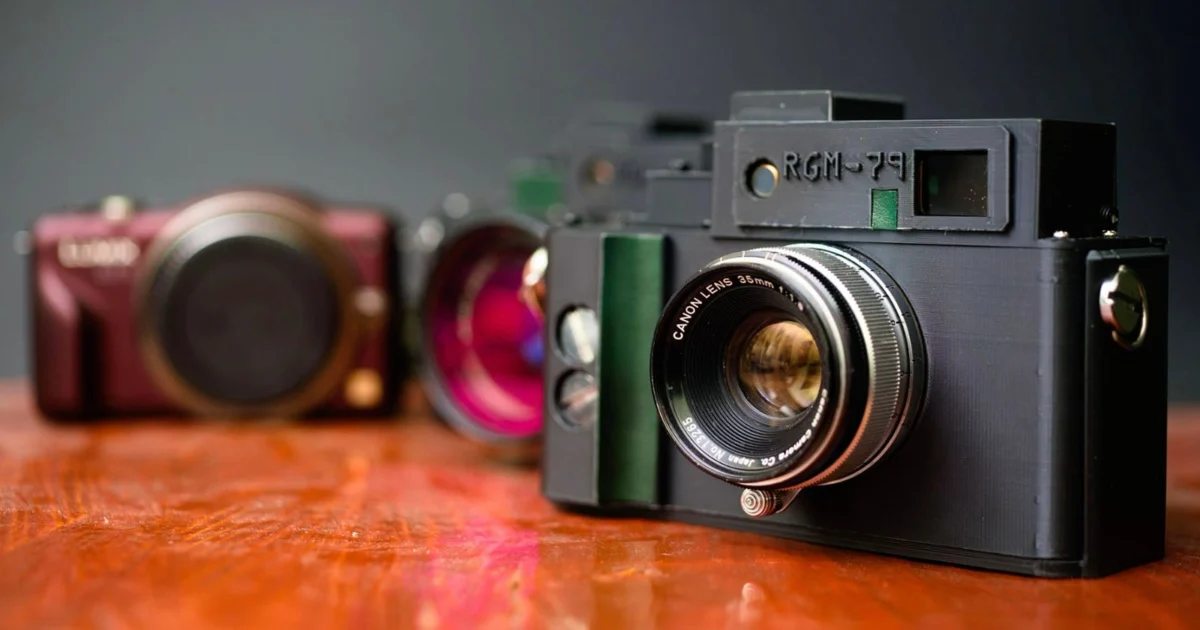
The digital rangefinder market has long been defined by a significant barrier to entry, characterized by the high cost of specialized equipment and a limited number of manufacturers. For many photography enthusiasts, the tactile experience of a manual rangefinder—coupling a bright-line viewfinder with a mechanical focusing system—remains the pinnacle of street and documentary photography. However, with modern digital Leica M-series cameras often retailing for several thousand dollars and vintage digital options like the Epson R-D1 becoming increasingly rare and expensive, the niche has remained inaccessible to the average hobbyist. In response to this market gap, a photographer and creator known as Mr. 50mm has unveiled the RGM-79, a DIY digital rangefinder project that can be constructed for approximately $200 to $250. This project represents a significant development in the "Frankencamera" community, merging salvaged components from disparate eras of photographic history into a functional modern tool.
The Economic Context of Digital Rangefinders
To understand the significance of the RGM-79 project, one must examine the current state of the digital rangefinder market. Historically, the rangefinder was the standard for professional photojournalism, championed by brands like Leica, Contax, and Nikon in the mid-20th century. While the industry transitioned to SLRs and eventually DSLRs, the rangefinder retained a loyal following due to its compact size, quiet operation, and the unique ability for photographers to see outside the frame lines.
When the digital revolution occurred, the complexity of aligning a digital sensor with a mechanical rangefinder mechanism proved difficult and costly. The Epson R-D1, released in 2004, was the first of its kind, followed by the Leica M8 in 2006. At the time of their release, these cameras were expensive but obtainable on the used market a decade later for reasonable prices. However, in the 2020s, a "vintage digital" trend has seen the prices of these early CCD-sensor cameras skyrocket. A used Leica M8 currently commands between $2,000 and $3,000, while the Epson R-D1 often sells for over $1,500. New models, such as the Leica M11, retail for nearly $9,000. Mr. 50mm’s project aims to bypass this "paywall" by utilizing affordable, readily available "donor" cameras.
The Technical Foundation: A Tale of Two Donors
The RGM-79 project relies on what the creator describes as "sacrifices"—the dismantling of two functional cameras to create one hybrid device. The build requires a Panasonic Lumix DMC-GF3 and a Soviet-era Fed 5 rangefinder. These two choices are strategic, balancing modern electronic imaging capabilities with classic mechanical rangefinder optics.
The Panasonic GF3: The Digital Heart
The Panasonic GF3, released in 2011, serves as the internal imaging pipeline for the RGM-79. As a Micro Four Thirds (MFT) mirrorless camera, the GF3 features a 12.1-megapixel Live MOS sensor and the Venus Engine FHD processor. Its selection for this project is due to several factors:
- Compactness: The GF3 was one of the smallest interchangeable lens cameras of its era, making its internal circuit boards and sensor assembly ideal for housing within a custom 3D-printed body.
- Affordability: Currently, the GF3 can be found on secondary markets such as KEH or eBay for approximately $90 to $100.
- Short Flange Distance: The Micro Four Thirds system has a very short flange focal distance (20mm), which allows for the adaptation of various vintage lenses, including Leica M and L39 mounts, with enough room for the rangefinder mechanism.
The Fed 5: The Mechanical Soul
The Fed 5 is a rugged, mass-produced rangefinder camera from the Soviet Union, manufactured by the FED factory in Kharkiv, Ukraine, between 1977 and 1996. It uses the Leica Thread Mount (LTM/M39). In the RGM-79 project, the Fed 5 is partially stripped to provide the optical rangefinder assembly. This includes the viewfinder, the secondary window for the rangefinder patch, and the internal prisms. Mr. 50mm specifies that the version with diopter adjustment is preferred to ensure compatibility with the 3D-printed housing. These cameras are frequently available on eBay for under $100, often including a Sharp Industar-61 lens.
Engineering and Construction: The Build Process
The construction of the RGM-79 is classified by its creator as a "moderately difficult" project, requiring a blend of delicate electronics work, mechanical alignment, and 3D printing. The process involves four primary phases: procurement, teardown, integration, and calibration.
Disassembly and Salvage
The first and perhaps most perilous stage involves the complete teardown of the Panasonic GF3. Builders must extract the sensor, the main motherboard, the rear LCD screen, and the battery housing. Mr. 50mm notes that the electronics in the GF3 are notably fragile, particularly the ribbon cables connecting the sensor to the processor. The Fed 5 undergoes a "partial" teardown, where the top plate and the rangefinder optical block are removed from the film-advance mechanism and shutter assembly.
3D Printing the Chassis
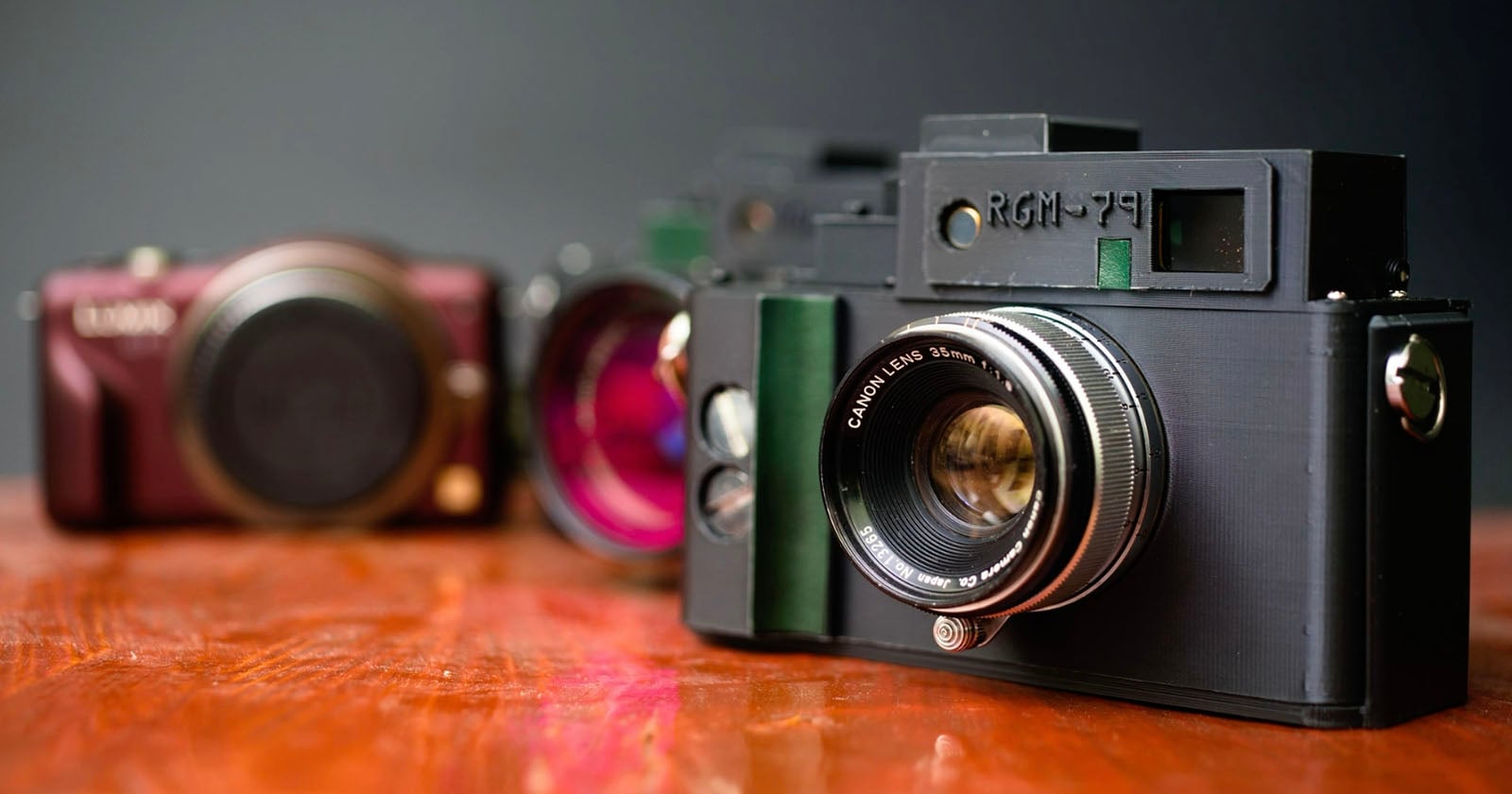
The core of the RGM-79 is a custom-designed 3D-printed body. This chassis must be printed with high precision to ensure that the distance between the lens mount and the digital sensor—the flange focal distance—is exact. For an M-mount version, the builder must integrate a dedicated lens adapter, such as those manufactured by Fotodiox. The 3D-printed housing also provides the mounting points for the GF3’s buttons and the Fed 5’s optical windows.
Integration and Wiring
Once the components are salvaged, they are fitted into the new housing. This requires careful cable management to ensure the LCD screen remains functional for menu navigation and image playback, even though the primary composition is intended to be done through the optical rangefinder. The project essentially creates a "digital back" for the Fed 5’s optical system, housed in a modern, ergonomic shell.
Optical Calibration
The most technically demanding aspect of the build is the calibration of the rangefinder. In a true rangefinder, the focus of the lens is mechanically coupled to the rangefinder patch in the viewfinder. Because the RGM-79 uses a digital sensor in a custom body, the builder must ensure that when the rangefinder patch indicates an image is in focus, the light is hitting the digital sensor with equal precision. This requires fine-tuning the physical position of the rangefinder block relative to the sensor plane.
Performance and Implications for Photography
While the RGM-79 does not offer the full-frame sensor or the refined aesthetics of a Leica, it provides a unique photographic experience that is otherwise unavailable at its price point. The 12.1-megapixel sensor of the GF3, while older, is capable of producing high-quality images, particularly when paired with vintage LTM or M-mount glass.
The User Experience
The RGM-79 offers a tactile, "slow" photography experience. Users must manually focus using the rangefinder patch and manually set exposure settings via the GF3’s interface. This hybrid approach appeals to "purists" who enjoy the mechanical involvement of rangefinder photography but require the immediate feedback and convenience of digital files.
The DIY Movement and the "Right to Repair"
Beyond its utility as a camera, the RGM-79 project is a testament to the growing DIY movement in photography. As manufacturers move toward more closed systems and "disposable" consumer electronics, projects like this highlight the potential for repurposing older technology. By providing the instructions and files on platforms like Hackaday, Mr. 50mm contributes to an open-source culture where hardware can be modified, repaired, and reimagined.
Market Impact and Community Reception
The photography community has reacted with significant interest to the RGM-79. On platforms like YouTube and Hackaday, enthusiasts have praised the project for its ingenuity and its role in democratizing a niche format.
Comparison to Commercial Alternatives
| Feature | Leica M11 | Panasonic GF3 (Donor) | RGM-79 (DIY) |
|---|---|---|---|
| Sensor Type | Full Frame (60MP) | Micro Four Thirds (12MP) | Micro Four Thirds (12MP) |
| Focusing | Mechanical Rangefinder | Contrast Detect AF | Mechanical Rangefinder |
| Price | ~$8,995 | ~$100 (Used) | ~$250 (Total Build) |
| Build Difficulty | N/A | N/A | Moderate |
The data suggests that for the cost of a single Leica M11 battery (approx. $170), a photographer could nearly complete the entire RGM-79 build. This stark price contrast is the primary driver of the project’s popularity.
Conclusion: The Future of the RGM-79
Mr. 50mm continues to be a prominent figure in the photography-nerd subculture, with his YouTube channel serving as a resource for deep dives into CCD sensors, vintage flashes, and experimental builds. The RGM-79 is more than just a cheap camera; it is a proof-of-concept that the high cost of digital rangefinder photography is a result of market positioning rather than an absolute technological impossibility.
As 3D printing technology becomes more accessible and used camera parts remain plentiful, the RGM-79 may be the first of many community-driven projects to challenge the status quo of the camera industry. For those willing to risk a "sacrifice" and pick up a soldering iron, the world of digital rangefinder photography is no longer locked behind a four-figure price tag. The RGM-79 stands as a functional piece of engineering that bridges the gap between the mechanical precision of the Soviet era and the digital convenience of the 21st century.

