


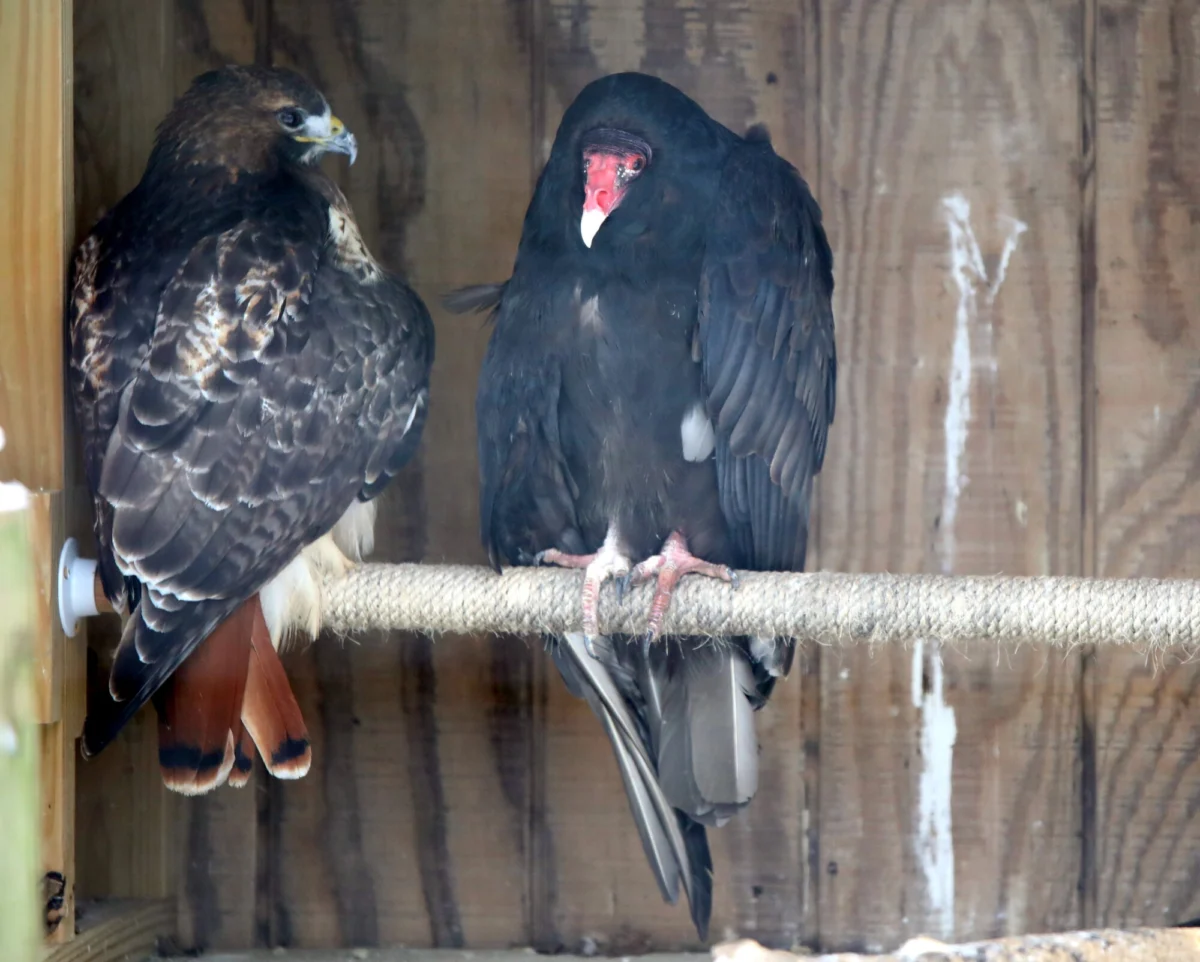
The remarkable narrative of Stan and Hunter, two avian residents at the Elmwood Park Zoo in Norristown, Pennsylvania, offers a compelling testament to the power of unexpected companionship and resilience in the animal kingdom. This duo, a 20-year-old female Turkey Vulture named Stan and a 22-year-old female Red-tailed Hawk named Hunter, has transcended typical interspecies dynamics, forming a bond that has endured for over a decade within their shared aviary. Their story not only captivates visitors but also provides a unique educational opportunity regarding wildlife rehabilitation, animal behavior, and the profound impact of human actions on natural ecosystems.
The Genesis of an Unconventional Friendship
The formation of such a close relationship between a Turkey Vulture ( Cathartes aura), primarily a scavenger, and a Red-tailed Hawk ( Buteo jamaicensis), a formidable raptor and apex predator, is a rarity in the wild, where their interactions are typically limited to competition over food sources or avoidance. However, their shared history of trauma and subsequent rehabilitation in a protected environment laid the groundwork for their extraordinary connection. Both birds arrived at the Elmwood Park Zoo with severe, human-induced wing injuries that permanently curtailed their ability to fly, making them non-releasable into the wild. This shared vulnerability and dependence on human care appear to have forged a deep mutual understanding and reliance, allowing their distinct personalities to converge into a harmonious coexistence.
Hunter’s Journey: A Hawk’s Struggle for Survival
Hunter, the Red-tailed Hawk, was the first to arrive at the Elmwood Park Zoo in July 2005. She was transferred from a now-defunct rehabilitation center, having been found as a juvenile with a devastating injury: an air-rifle pellet lodged in her right wing. The impact caused a severe fracture to her humerus, the long bone of the upper wing. Despite diligent efforts by wildlife veterinarians and rehabilitation specialists, the extensive damage meant the bone never healed properly, leaving her with permanently compromised flight capabilities.
Red-tailed Hawks are one of North America’s most widespread and recognizable raptors. Known for their keen eyesight and powerful talons, they are highly adapted predators, primarily hunting small mammals and birds from perches or while soaring high above open country. Their survival in the wild is inextricably linked to their ability to fly, hunt, and evade threats. For a Red-tailed Hawk, a fractured humerus is a catastrophic injury, fundamentally undermining its natural instincts and survival mechanisms. The inability to execute precise aerial maneuvers or sustain prolonged flight would render her unable to hunt effectively or escape predators, making her wild survival impossible. Her transfer to the Elmwood Park Zoo represented her last chance at a life free from immediate threat, albeit a life in captivity.
Stan’s Plight: A Vulture’s Road to Recovery
Just a month after Hunter’s arrival, in August 2005, Stan, the Turkey Vulture, joined the zoo’s collection. Her journey to Elmwood Park began after she was discovered with a pellet wound to her right wing, brought to Tri-State Bird Rescue & Research, a highly respected avian rehabilitation center in Newark, by the Newark Police Department. The pellet caused a fracture to her radius and ulna, the two bones of the forearm equivalent in birds. Similar to Hunter, despite intensive medical intervention, the fracture did not heal sufficiently to restore her flight to a wild-viable level.
Turkey Vultures play a crucial ecological role as nature’s clean-up crew. With their exceptional sense of smell, they locate carrion, preventing the spread of disease and recycling nutrients. Unlike raptors, vultures are not typically hunters; their primary defense mechanism involves regurgitating stomach contents when threatened and their ability to quickly escape by flight. A significant wing injury, particularly one affecting the radius and ulna which are critical for wing articulation and control, severely impedes their soaring ability and their capacity to efficiently locate and access food sources, as well as to escape potential dangers. Like Hunter, Stan’s permanent flight impairment necessitated her placement in a permanent sanctuary where she could live safely and comfortably.
The Shared Scars That Forged a Bond
The parallel narratives of Stan and Hunter, both victims of human-caused trauma resulting in permanent physical disability, formed an undeniable foundation for their unique relationship. Elmwood Park Zoo staff describe their bond as "bonded," a term typically reserved for pairs of the same species who form strong, lasting partnerships. This suggests a level of mutual recognition, preference, and support that goes beyond mere cohabitation.
Wildlife rehabilitation centers and zoos often house non-releasable animals together when their species are compatible and space allows. However, a deep interspecies bond like Stan and Hunter’s is far from guaranteed. Experts in animal behavior suggest that shared experiences of stress or trauma can sometimes facilitate unique social connections in animals, especially when combined with a safe, stable environment. In their case, the inability to fly, which might otherwise be a source of frustration or vulnerability, became a shared condition that leveled the playing field, reducing potential species-specific competitive instincts and fostering a sense of mutual understanding. Their injuries, which robbed them of their natural freedom, paradoxically gifted them a profound connection.
A Decade of Devotion: Manifestations of Friendship
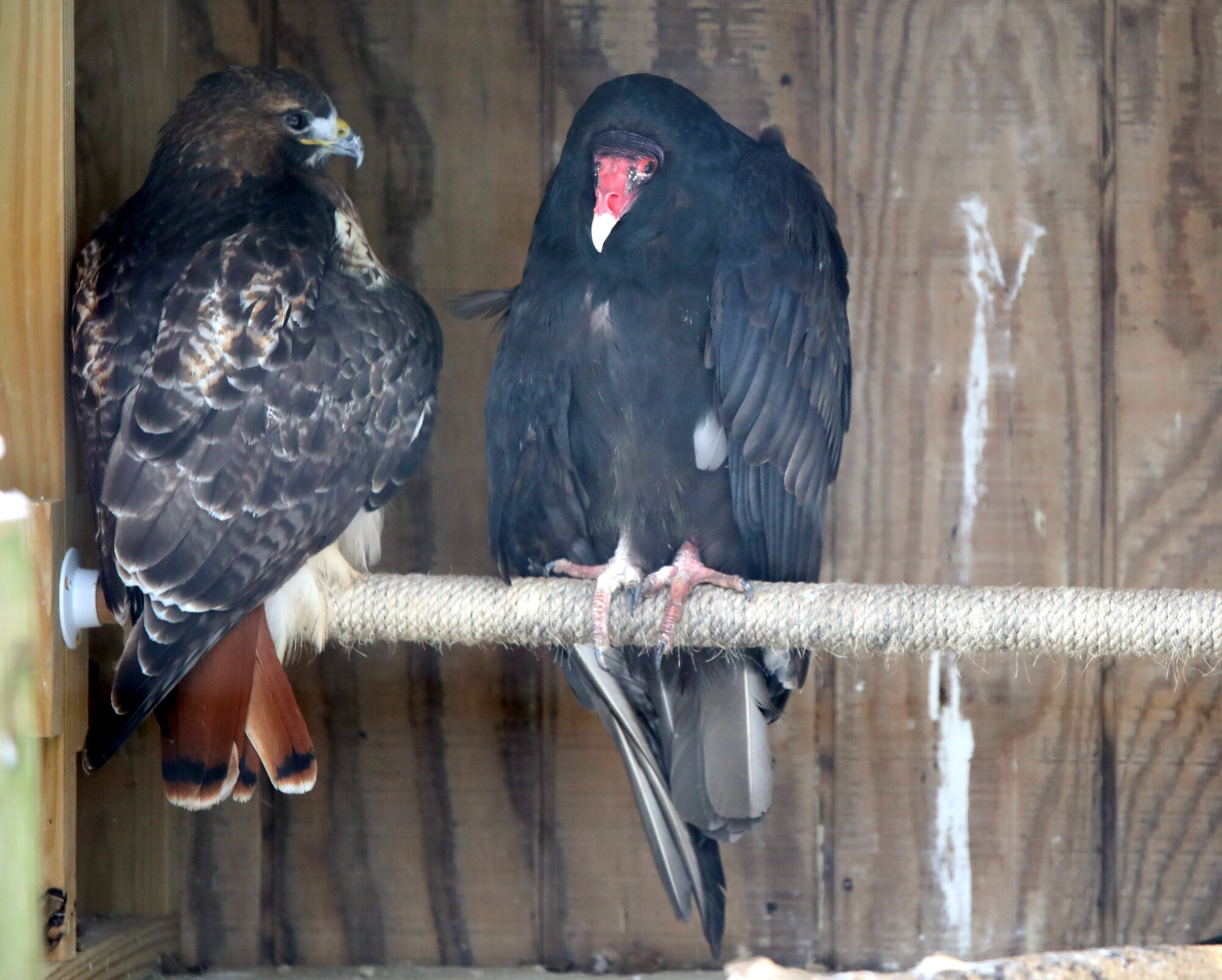
For over ten years, the avian friends have been inseparable, their daily routines punctuated by a series of observed behaviors that underscore the depth of their bond. These interactions are particularly striking given the inherent differences in their natural diets and social structures.
One of the most remarkable observations involves their feeding habits. Red-tailed Hawks are solitary hunters, rarely sharing prey, even with their mates outside of nesting season. Turkey Vultures, while often congregating at large carcasses, do not typically share food in the direct, reciprocal manner seen with Stan and Hunter. Yet, when food is introduced into their aviary, it is frequently Hunter, the hawk, who gathers it and then shares it with Stan, the vulture. This act of provisioning, especially from a predatory species to a scavenging one, defies typical ecological interactions and highlights a clear instance of altruistic behavior within their unique social unit.
Beyond feeding, the pair also engages in allopreening, a behavior where one individual preens the feathers of another. Allopreening is a common social behavior among many bird species, serving functions such as hygiene, parasite removal, and most importantly, social bonding and strengthening pair bonds. Seeing a Red-tailed Hawk meticulously preen a Turkey Vulture, and vice versa, is an extraordinary sight that speaks volumes about their comfort, trust, and affection for one another. It signifies a level of intimacy and acceptance that is rarely observed between such disparate species, especially those that would typically be adversaries or at best, indifferent to each other in the wild.
Further evidence of their deep connection is observed during the nesting season. While Hunter, as a female hawk, will periodically lay eggs (which are infertile due to her solitary confinement and inability to mate), Stan, the vulture, has been seen sitting on these eggs. This behavior, known as incubation, is a highly protective and nurturing act, typically reserved for parents of their own offspring. Stan’s willingness to engage in this behavior for Hunter’s eggs demonstrates an almost parental or deeply supportive role within their dynamic, reinforcing the idea of a shared responsibility and care that transcends species boundaries.
The Zoological Context: Fostering Welfare and Education
The Elmwood Park Zoo, established in 1924, plays a critical role in wildlife conservation, education, and animal welfare. For non-releasable animals like Stan and Hunter, zoos and sanctuaries offer a permanent home where their specific needs can be met. The decision to house these two birds together, without other avian companions in their enclosure, likely played a significant role in the development and strengthening of their bond. In a relatively isolated setting, they became each other’s primary social outlet, fostering a reliance and connection that might not have occurred in a more crowded or species-diverse environment.
Zoo officials and animal care specialists at Elmwood Park Zoo carefully monitor Stan and Hunter, ensuring their physical health and psychological well-being. "Stan and Hunter are truly exceptional," states a senior curator at the zoo, who requested anonymity as they are not authorized to give direct quotes but whose insights are invaluable. "Their bond exemplifies the complex emotional lives of animals and the capacity for interspecies relationships, especially when individuals share a common experience. They are a testament to resilience and the profound impact a safe, enriching environment can have on an animal’s life." The care team provides specialized diets, enriched habitats, and regular veterinary check-ups to manage their chronic injuries and maintain their quality of life. The aviary itself is designed to offer varied perching options, shelter, and stimulation, catering to the needs of both a soaring vulture and a perching hawk.
Beyond the Aviary: Educational Impact and Broader Implications
Stan and Hunter’s story extends far beyond the confines of their aviary, serving as a powerful educational tool for the thousands of visitors who come to the Elmwood Park Zoo annually. Their presence offers a tangible lesson on several critical themes:
- Wildlife Rehabilitation and Conservation: Their story highlights the vital work of wildlife rehabilitation centers and zoos in providing care for injured animals, particularly those impacted by human activities. It underscores the importance of supporting these organizations and understanding the challenges faced by wildlife in an increasingly human-dominated world.
- The Impact of Human Actions: The fact that both birds were injured by air-rifle pellets serves as a stark reminder of the often-unintended but devastating consequences of human actions on wildlife. This aspect of their story prompts visitors to reflect on responsible firearm use and the broader ethical considerations surrounding human interaction with nature.
- Interspecies Relationships and Animal Sentience: Stan and Hunter challenge preconceived notions about animal behavior and interspecies interactions. Their friendship demonstrates that animals are capable of complex emotions, forming bonds that transcend species lines, offering a glimpse into the rich social lives that animals can lead, even in captivity. This fosters empathy and respect for all living creatures.
- Resilience and Adaptation: Both birds, despite their permanent disabilities, have adapted to their circumstances and found comfort and purpose in their shared existence. Their story is one of resilience, showcasing the remarkable ability of living beings to cope with adversity and find joy and connection.
Their narrative also has broader implications for animal welfare science. Research into interspecies relationships in captive environments can offer insights into social dynamics, stress reduction, and enrichment strategies for zoo animals. The unique conditions that led to Stan and Hunter’s bond could inform future decisions on animal pairings and habitat design, optimizing welfare outcomes for diverse species.
A Lasting Legacy
As Stan and Hunter continue to live out their lives at the Elmwood Park Zoo, their unique friendship remains a beacon of hope and a source of fascination. They represent not just two individual birds, but a living testament to the intricate tapestry of life, the profound capacity for connection, and the enduring spirit of resilience in the face of adversity. Their story encourages visitors to look beyond superficial differences, to acknowledge the shared vulnerabilities that can unite us, and to appreciate the unexpected magic that can emerge when diverse personalities are given the chance to connect. Their presence at the zoo serves as a constant, gentle reminder of humanity’s responsibility towards the natural world and the incredible bonds that can form when compassion and care are extended to all creatures.

