


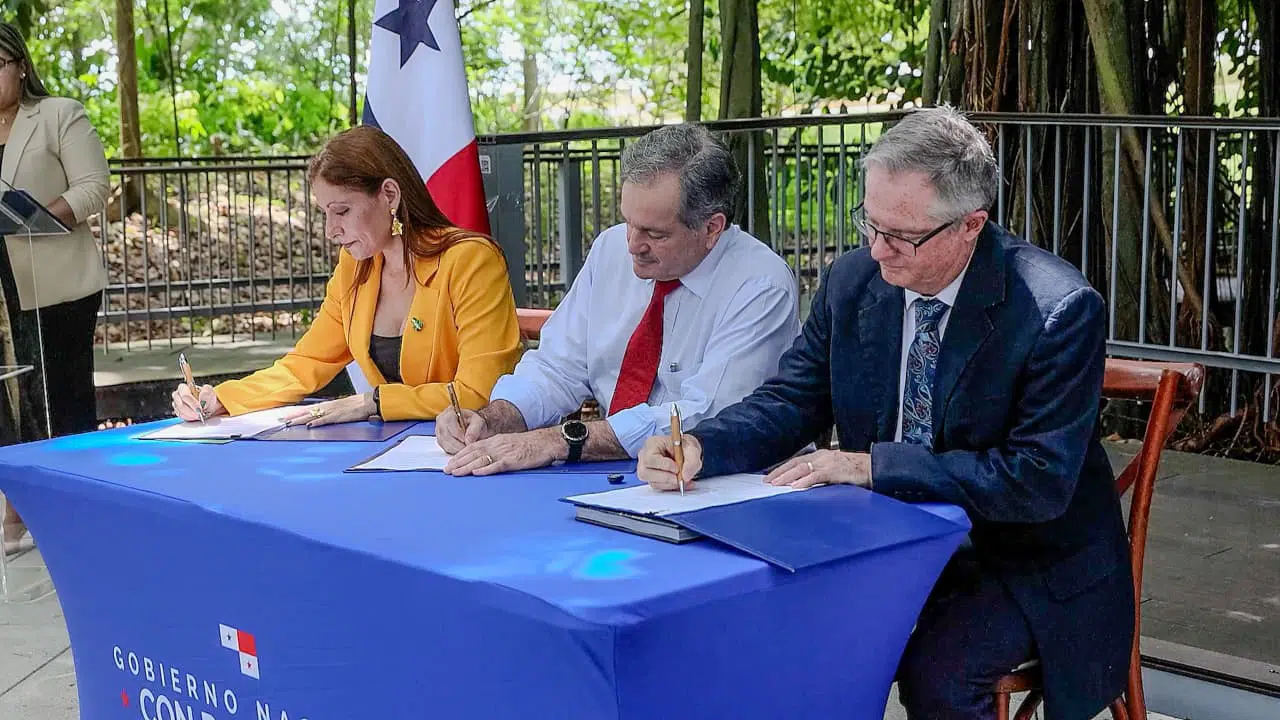
On May 18, 2026, Panama’s Ministry of Environment, in a significant stride towards safeguarding its rich natural heritage, formalized its commitment to a comprehensive re-evaluation and enhancement of its network of Key Biodiversity Areas (KBAs). This pivotal moment was marked by the signing of a Memorandum of Understanding (MOU) between the Ministry, the KBA Association, and the Amphibian Survival Alliance (ASA). The agreement underscores Panama’s dedication to identifying, mapping, and protecting sites of critical importance for the persistence of the nation’s diverse flora and fauna.
This initiative is strategically aligned with Panama’s obligations under the Kunming-Montreal Global Biodiversity Framework (KMGBF), a landmark international agreement adopted in December 2022. The KMGBF sets ambitious targets for the global community to halt and reverse biodiversity loss by 2030, emphasizing the urgent need for effective conservation strategies. For Panama, this MOU signifies a concrete step towards meeting these international commitments, particularly those concerning biodiversity conservation, integrated spatial planning, ecological restoration, and the robust protection of areas that harbor exceptional biodiversity.
Understanding Key Biodiversity Areas (KBAs)
Key Biodiversity Areas are sites that are globally important for the persistence of biodiversity. They are identified using a standardized set of scientific criteria developed by the International Union for Conservation of Nature (IUCN) and adopted by the Convention on Biological Diversity (CBD). KBAs can encompass terrestrial, freshwater, and marine ecosystems and are crucial for the survival of species and habitats facing threats. The identification and effective management of KBAs are central to national and global conservation efforts.
A Deeper Dive into Panama’s KBA Initiative
The national KBA assessment process in Panama aims to meticulously identify, precisely map, and thoroughly document those geographical locations that are indispensable for maintaining biodiversity across the country. The outcomes of this comprehensive assessment are expected to directly inform and bolster the implementation of Panama’s National Biodiversity Strategy and Action Plan (NBSAP). Furthermore, it will be instrumental in achieving the nation’s conservation priorities, including the ambitious "30×30" target. This global goal, championed by the KMGBF, calls for the effective protection and conservation of at least 30% of terrestrial and marine areas by the year 2030. Panama’s proactive engagement in updating its KBA network demonstrates a clear intent to contribute significantly to this global endeavor.
The implications of this initiative extend beyond mere identification. By designating and effectively managing KBAs, Panama aims to create a robust framework for conservation that can guide land-use planning, prioritize conservation investments, and facilitate collaborative efforts between government agencies, NGOs, local communities, and the private sector. This integrated approach is vital for ensuring that conservation efforts are not only scientifically sound but also socially and economically sustainable.

The Historical Trajectory of Biodiversity Hotspots in Panama
Panama’s journey towards recognizing and protecting its vital biodiversity sites is built upon a solid foundation, tracing its roots back to the pioneering work of the Audubon Society of Panama. As a dedicated partner of BirdLife International, the Audubon Society of Panama initiated the Important Bird Areas (IBA) Program in 1995. This groundbreaking program received crucial funding from the Natura Foundation, enabling its launch in collaboration with BirdLife International. The program’s initial focus was on identifying and conserving areas critical for bird populations, which are often indicators of broader ecosystem health.
A landmark publication in 2009, "IBAs of the Americas," brought significant visibility to these vital bird habitats. This comprehensive document highlighted 53 global IBAs within Panama, collectively spanning an impressive 2,501,046 hectares. This area represented nearly 29% of the country’s total landmass, underscoring the immense ecological significance of these sites.
The evolution of conservation science and international standards led to a broader framework for identifying critical biodiversity sites. In 2016, the Global Standard for the Identification of Key Biodiversity Areas was published. This standard provided a comprehensive umbrella framework, encompassing sites important not only for birds but also for a wide range of species and habitats. Following the official adoption of these KBA criteria, all of Panama’s existing IBAs were formally recognized as KBAs. These pre-existing IBAs now serve as the essential starting point for the current, more comprehensive KBA assessment and updating process. This historical context highlights Panama’s long-standing commitment to biodiversity conservation and its adaptive approach to adopting global best practices.
Establishing the National Coordination Group for KBAs
In a crucial parallel development, on Tuesday, May 19, a pivotal meeting convened to discuss and formalize the establishment of the National Coordination Group (NCG) for KBAs in Panama. This meeting marked a significant step forward in operationalizing the KBA assessment process. The NCG is envisioned as a multidisciplinary collective of experts, bringing together specialists in various species groups, encompassing flora, fauna, and other critical elements of biodiversity. This group will also include professionals with expertise in public policy and conservation management.
The mandate of the NCG is multifaceted: to facilitate the identification and rigorous assessment of key biodiversity sites across the nation, and, in a subsequent phase, to spearhead efforts towards their effective conservation and management. This collaborative approach is designed to ensure that the KBA process is scientifically robust, inclusive, and strategically aligned with national policy objectives.
Gabriela Toscano, Biodiversity Conservation Manager for BirdLife Americas, was an active participant in this crucial meeting. She shared invaluable insights with the attendees, focusing on the technical aspects and operational functions of the NCG. Her presence and contribution underscored the international collaboration and support underpinning Panama’s KBA initiative.

Reflecting on the commencement of this process in Panama, Toscano expressed her profound optimism: "We are witnessing a historic milestone for nature in Panama! The beginning of this process fills us with joy and optimism, as it represents a great opportunity to unite science and action in favour of the country’s incredible biodiversity." Her statement highlights the transformative potential of the KBA initiative and the collaborative spirit driving it forward.
Broader Implications and Future Outlook
The formalization of Panama’s KBA updating process carries significant weight for national and international conservation efforts. By strengthening its KBA network, Panama is not only fulfilling its commitments under the KMGBF but also enhancing its capacity to attract international funding and technical assistance for conservation projects. Globally, robust KBA data is essential for informing the designation of protected areas, guiding conservation investments, and monitoring progress towards global biodiversity targets.
The involvement of the Amphibian Survival Alliance (ASA) in this initiative is particularly noteworthy. Amphibians are highly sensitive to environmental changes and are often considered indicators of ecosystem health. Their inclusion highlights Panama’s commitment to protecting a wide spectrum of biodiversity, including vulnerable and often overlooked groups. The ASA’s expertise in amphibian conservation will be invaluable in identifying and safeguarding critical habitats for these species.
Furthermore, the success of this KBA initiative will likely depend on strong inter-institutional collaboration and effective stakeholder engagement. The NCG’s composition, including public policy professionals, suggests a commitment to integrating KBA findings into national development planning. This holistic approach is crucial for ensuring that conservation goals are aligned with economic development and that biodiversity considerations are mainstreamed across all sectors.
The updated KBA inventory will serve as a critical tool for Panama to identify priority areas for conservation action, including the establishment of new protected areas, the expansion of existing ones, and the implementation of targeted conservation measures within KBAs that may not be formally protected. This will be particularly important for achieving the 30×30 target, which requires not only the designation of protected areas but also their effective management and equitable governance.
As Panama embarks on this vital undertaking, the international conservation community will be closely watching. The nation’s success in updating and effectively managing its KBAs will serve as a valuable case study and a potential model for other countries striving to meet their biodiversity commitments and safeguard their natural heritage for future generations. The meticulous work of the NCG and the unwavering commitment of the Ministry of Environment, supported by international partners, lay the groundwork for a more resilient and biodiverse future for Panama.

