


The landscape of animal ownership in the United States is undergoing a significant transformation as legislative bodies at the local, state, and federal levels introduce an increasing number of bills aimed at regulating, restricting, or in some cases, prohibiting the keeping of various species. For members of the avicultural community—ranging from casual pet owners to professional breeders and exhibitors—the ability to navigate and monitor these legal developments has become a matter of necessity. The American Federation of Aviculture (AFA) has recently emphasized that the modern definition of legislation has evolved far beyond the simple proposing of laws, moving into a complex arena where specialized lobbying groups hold substantial influence over the language and scope of new regulations.
The Mechanics of Modern Legislation: Bills, Ordinances, and Regulations
To understand the current threats facing bird ownership, one must first distinguish between the various forms of legal mandates. Most modern legislation begins as a "Bill," which serves as the draft of a proposed law. While these documents typically include introductory summaries explaining the intent of the law and its enforcement mechanisms, legal experts warn that these summaries can often be reductive or misleading. Bills are frequently drafted not by the legislators themselves, but by third-party lobbying organizations with specific ideological agendas. In the realm of animal law, organizations focused on animal rights and animal welfare often present pre-drafted bills to representatives for introduction into the legislative system.
At the local level, these legislative efforts are typically referred to as "ordinances." These are civil mandates rather than criminal laws, but their impact can be equally devastating for bird keepers. A common example involves municipal ordinances that limit the number of "companion animals" a household may possess. While these laws are often marketed as measures to prevent "puppy mills" or animal hoarding, they frequently utilize broad language that includes birds, fish, and small mammals. An ordinance originally intended to limit a household to six dogs or cats can, through subsequent amendments or broad definitions of the term "pet," suddenly render a canary breeder with a dozen birds in violation of local law.
Unlike laws and ordinances, which require a formal vote by a city council, state legislature, or the U.S. Congress, "regulations" are the specific rules written by government agencies to implement and enforce existing laws. Agencies such as the U.S. Fish and Wildlife Service (USFWS) or the United States Department of Agriculture (USDA) can alter these regulations through a process of public notice and comment, rather than a legislative vote. A primary example of this is the process by which species are added to the Endangered Species Act (ESA), a move that can drastically restrict the interstate transport and sale of specific bird species overnight.
The Influence of Advocacy Groups and "Creeping" Legislation
The AFA Legislative Committee has noted a sharp increase in "anti-animal use" bills that utilize strategic verbiage to gain public support. Phrases such as "eliminating inhumane treatment" or "preventing overpopulation" are frequently used to mask broader goals that may eventually lead to total prohibitions on the keeping of certain species. This phenomenon is often described by legal analysts as "creeping legislation," where a bill targeting a widely unpopular practice—such as the use of certain animals in traveling circuses—contains definitions of "wild" or "exotic" animals that are broad enough to eventually encompass parrots, finches, or birds of prey.
The strategic danger lies in the precedent set by these bills. If a restrictive law is passed in one state, it provides a template for lobbying groups to introduce similar language in other jurisdictions. This creates a "domino effect" where the legal rights of animal owners are slowly eroded across the country. The AFA maintains that many of these lobbying organizations possess agendas that do not align with the views of the general public or the practical needs of conservationists and pet owners.
Statistical Overview and Economic Impact of the Avicultural Sector
The scale of the avicultural community in the United States is substantial, making the potential impact of restrictive legislation a significant economic concern. According to data from the American Pet Products Association (APPA), approximately 5.7 million households in the U.S. own at least one bird. The broader pet industry, which includes the sale of birds, specialized feeds, habitats, and veterinary care, contributes billions of dollars to the national economy annually.
In 2023, pet owners in the U.S. spent an estimated $143.6 billion on their animals. A significant portion of this spending is directed toward specialized avian care. If legislative restrictions continue to expand, the economic fallout would extend beyond the owners to include avian veterinarians, specialized feed manufacturers, and small-scale breeders who provide the foundation for the pet bird market. Furthermore, the loss of private aviculture would have a measurable impact on conservation efforts, as many private breeders maintain "safety net" populations of species that are currently threatened or extinct in the wild.
Chronology of Key Regulatory Shifts in Aviculture
To understand the current legislative climate, it is necessary to look at the timeline of major regulatory actions that have shaped the industry:
- 1900: The Lacey Act is passed, becoming the first federal law protecting wildlife. Over the decades, its amendments have significantly impacted the importation and interstate transport of birds.
- 1973: The Endangered Species Act (ESA) is enacted. While vital for conservation, its listing of common captive-bred species often complicates the lives of domestic bird owners.
- 1992: The Wild Bird Conservation Act (WBCA) is signed into law, effectively ending the mass importation of wild-caught birds into the U.S. and shifting the focus to domestic captive breeding.
- 2013-2014: The USDA updates the "Retail Pet Store Rule" under the Animal Welfare Act (AWA). This change redefined many home-based breeders as "retail pet stores," requiring federal licensing and inspections for those selling animals "sight-unseen" (such as via the internet).
- 2020-Present: A surge in state-level "Exotic Animal Bans" and "Retail Pet Sale Bans" begins to appear in legislatures across California, New York, and Illinois, often including birds within the scope of restricted species.
Official Responses and Advocacy Efforts
The AFA, alongside other organizations such as the Pet Advocacy Network (formerly PIJAC) and various specialty bird clubs, serves as a watchdog for the community. These organizations argue that the most effective way to protect the rights of bird owners is through early intervention in the legislative process.
"Monitoring legislative efforts is not just about stopping bad laws; it’s about educating legislators who may not understand the nuances of avian husbandry," says a representative of the AFA’s legislative team. "Most representatives are not experts in ornithology. They rely on the information provided to them. If the only information they receive comes from groups that want to end animal ownership, the resulting laws will reflect that bias."
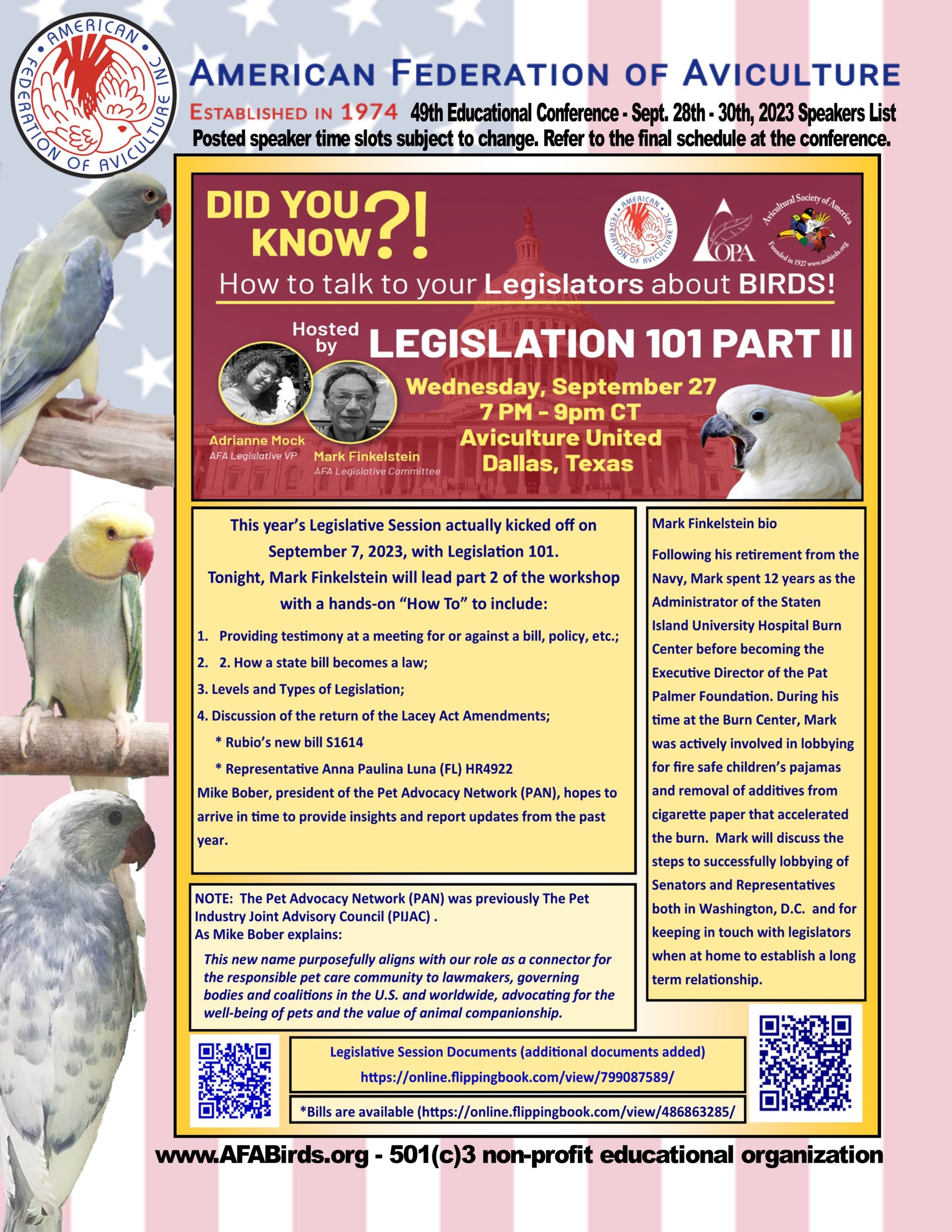
The AFA encourages bird owners to participate in "Legislation 101" training courses to better understand how to communicate with their elected officials. By engaging in the public comment periods for proposed regulations and attending local city council meetings, bird owners can ensure that their perspective is included in the record.
Broader Implications and Fact-Based Analysis
The long-term implications of current legislative trends suggest a move toward more centralized control over animal ownership. If the "civil" nature of ordinances is misunderstood by the public, many owners may find themselves facing mounting fines and legal battles without the protections afforded in criminal court. Because ordinances are civil, the burden of proof is often lower, and the penalties—while not involving jail time—can lead to the seizure of animals and the loss of property rights.
Furthermore, the shift from legislative voting to agency regulation represents a move away from direct democratic oversight. When the USFWS or USDA changes a rule, the public’s only recourse is the "notice and comment" period, which many average citizens find difficult to navigate. This underscores the importance of umbrella organizations like the AFA, which have the resources to analyze thousands of pages of regulatory text and provide concise guidance to the public.
In conclusion, the monitoring of legislation is the primary defense mechanism for the avicultural community. As the volume of anti-animal ownership bills continues to rise, the survival of the hobby and the professional industry depends on the vigilance of individual owners. By staying informed through the AFA’s legislative tracking tools and understanding the distinction between bills, ordinances, and regulations, bird enthusiasts can act to ensure that the joy of avian companionship remains a protected right for future generations. The eventual goal of many current legislative efforts is the gradual elimination of birds from private life; only through active, informed advocacy can this trend be countered.

