


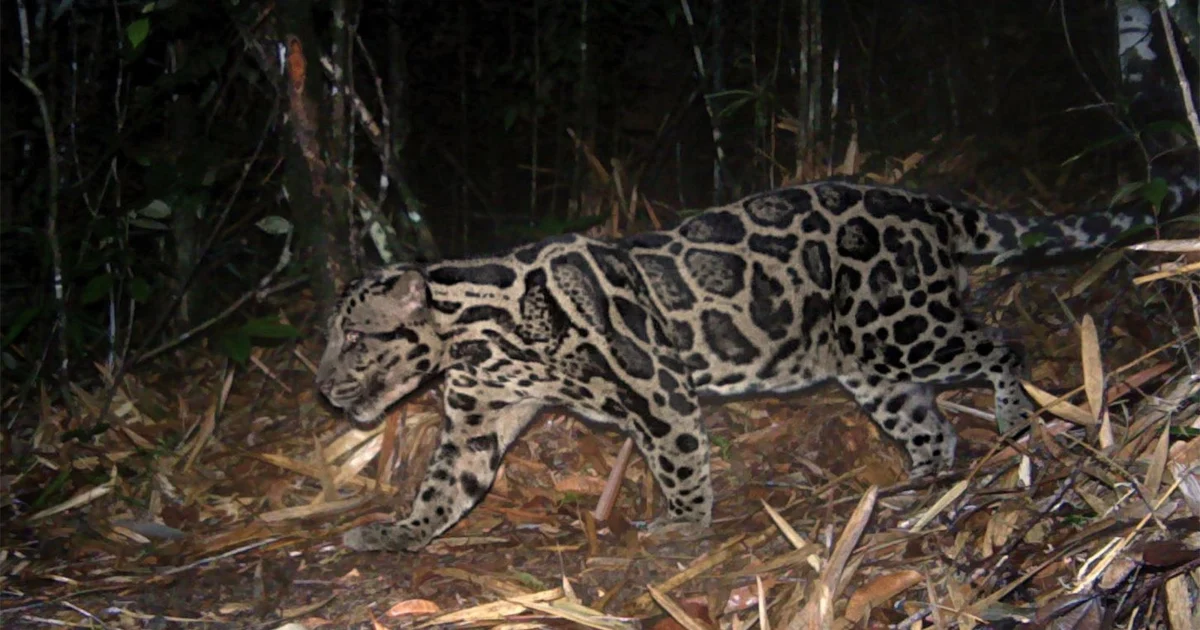
In the dense, humid rainforests of Sabah, Malaysian Borneo, a region often referred to as the "Amazon of Asia," a landmark scientific achievement has rewritten the understanding of one of the world’s most elusive predators. Through a collaborative effort spanning more than 15 years, researchers from the Leibniz Institute for Zoo and Wildlife Research (Leibniz-IZW), the Sabah Forestry Department, and the global wild cat conservation organization Panthera have documented the longest recorded residence time for a Sunda clouded leopard (Neofelis diardi) in the wild. This longitudinal study, recently published in the peer-reviewed journal Biotropica, provides a rare and detailed window into the life history, movement patterns, and survival of a species that has long remained a mystery to the scientific community.
The Sunda clouded leopard is a medium-sized wild cat found exclusively on the islands of Borneo and Sumatra. Distinct from its mainland relative, the Sunda species is characterized by its large, dark, cloud-like markings and its reputation as one of the most arboreal of the world’s felids. Despite its status as a top predator in its ecosystem, the species is classified as Vulnerable by the International Union for Conservation of Nature (IUCN), facing persistent threats from habitat loss, fragmentation, and poaching. The results of this 15-year study offer not only biological data but also a critical roadmap for the conservation of these "ghosts of the forest."
The Genesis of the 15-Year Research Initiative
The research project, which began in 2007 and concluded its most recent phase in 2023, represents one of the most sustained efforts to track individual wild cats in Southeast Asia. Over the course of a decade and a half, the team conducted 13 separate camera-trap surveys across the Deramakot-Tangkulap forest landscape. This region is particularly significant because it includes managed production forests, providing a unique environment to study how clouded leopards coexist with human activities such as sustainable logging.
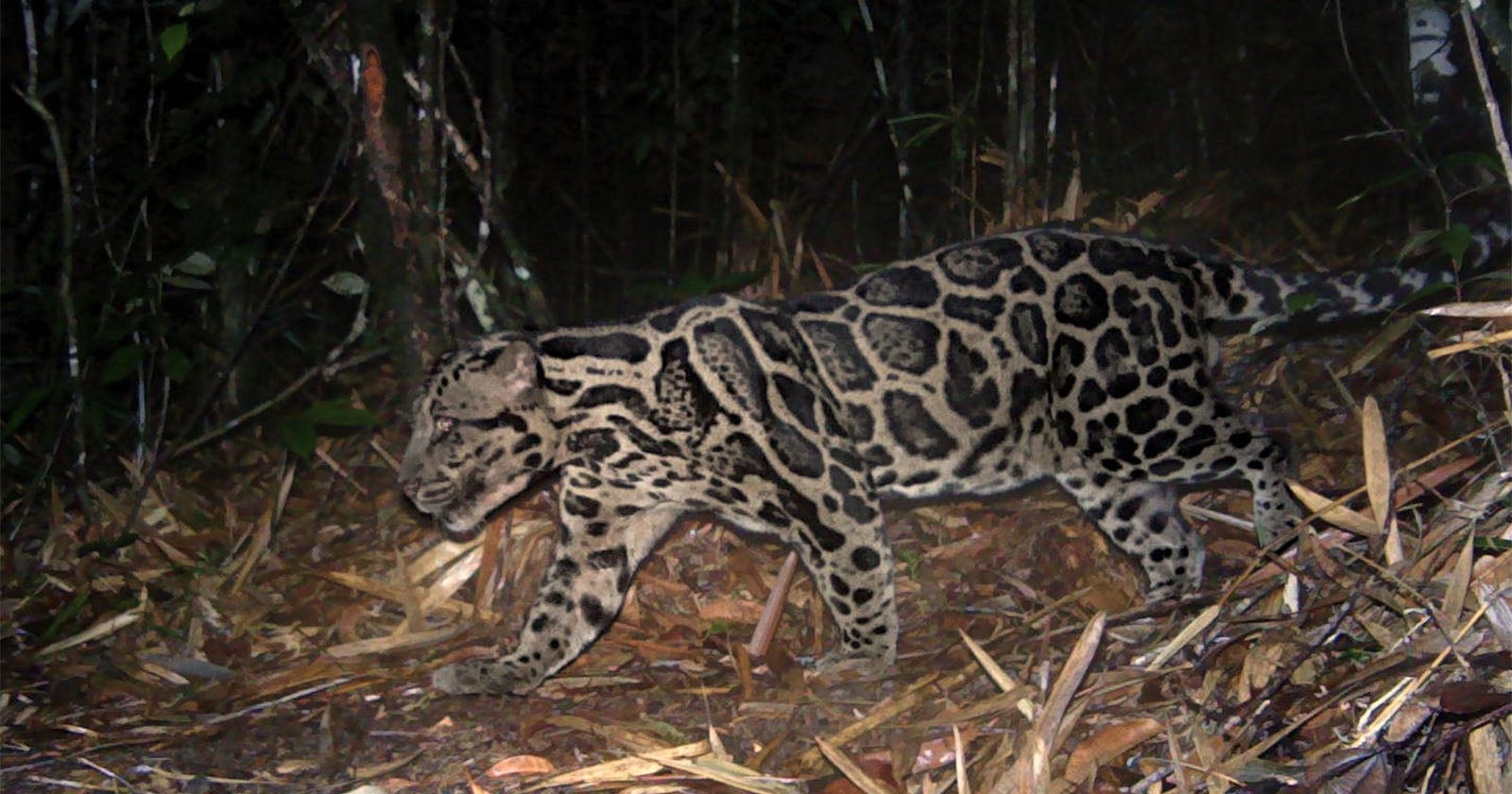
Remote camera traps have revolutionized the study of cryptic species. These devices, equipped with passive infrared sensors, allow scientists to capture high-resolution images of animals without human interference. Because Sunda clouded leopards possess unique coat patterns, researchers can identify individuals much like humans are identified by fingerprints. This capability allowed the team to track specific leopards across years and even decades, building a longitudinal database that was previously non-existent for the species.
Throughout the study, the researchers identified numerous individuals, but one female leopard emerged as a focal point of the findings. Observed on camera for a total of 6.51 years, she surpassed the previous record of 5.92 years held by a male. Based on her physical development and the timing of her first and last captures, scientists estimate she was approximately 8.5 years old at the time of her last recording. This data point is crucial, as lifespan and residence time are fundamental metrics used to calculate population density, breeding success, and overall species viability.
Evolutionary Significance and Biological Characteristics
The Sunda clouded leopard occupies a unique evolutionary niche, often described by biologists as a "bridge" between the lineage of big cats (Panthera) and smaller wild cats. While they are not closely related to true leopards, they possess the longest canine teeth relative to body size of any living felid—a trait that mirrors the prehistoric saber-toothed cats. These biological adaptations make them formidable hunters, capable of taking down prey significantly larger than themselves, including proboscis monkeys, deer, and bearded pigs.
Their physical structure is optimized for life in the canopy. They possess rotating ankles that allow them to climb down trees head-first, a feat few other cat species can achieve. However, this arboreal nature also makes them incredibly difficult to study. Much of their life is spent high above the forest floor, away from the typical placement of camera traps. The 15-year study highlighted this "detection bias," revealing that female Sunda clouded leopards are detected 68 percent less frequently than males. This is attributed to the females’ smaller home ranges and their tendency to spend even more time in the canopy to avoid larger predators or male leopards.
Chronology of the Long-Term Monitoring Program
The research timeline highlights the persistence required to study such an elusive animal:
- 2007–2009: The Leibniz-IZW and Sabah Forestry Department initiate the first systematic camera-trap surveys in the Deramakot Forest Reserve. Initial data focuses on establishing baseline population estimates.
- 2010–2015: The study expands into the Tangkulap Forest Reserve. Researchers begin to notice the recurrence of specific individuals, including the record-breaking female. Data shows that the leopards are utilizing "logging roads" and forest edges for movement.
- 2016–2020: Integration of more advanced spatial capture-recapture (SCR) models. The team documents a male leopard traveling nearly 40 kilometers (25 miles) between forest preserves, highlighting the importance of habitat corridors.
- 2021–2023: The final phase of the current study concludes, confirming the 8.5-year estimated age of the record-holding female. The findings are compiled for publication in Biotropica.
This timeline underscores the limitations of short-term studies. In many wildlife assessments, researchers spend only a year or two in the field. Had this study ended after five years, the record-breaking longevity of the female leopard would have gone unrecorded, and the understanding of the species’ resilience in logged landscapes would have been significantly diminished.
Addressing the Gender Gap in Wildlife Science
One of the most significant takeaways from the research is the identification of a massive "blind spot" regarding female leopards. Thye Lim Tee, Project Coordinator at Panthera Malaysia, noted that the under-detection of females could lead to inaccurate assessments of breeding success. If scientists only see males, they might assume a population is declining or that females are absent, when in fact the females are simply utilizing different strata of the forest.
"To better protect the Sunda clouded leopard, our future assessments should view the lack of female detections as a sign to explore the forest interior more thoroughly, rather than assuming they simply aren’t present," Tee explained. This insight is driving a shift in how camera traps are deployed. Future surveys may involve placing cameras higher in the trees or deeper within the primary forest interior to better capture the movements of females and their cubs.
Human Activity and Habitat Persistence
The Deramakot-Tangkulap landscape is not a pristine, untouched wilderness. It is a mosaic of protected areas and forests managed for timber. The fact that the record-holding female thrived in this environment for over eight years is a testament to the species’ adaptability, provided that the habitat remains connected and prey populations are stable.
However, the study also serves as a warning. While this individual survived, the Sunda clouded leopard remains under intense pressure from the expansion of oil palm plantations and infrastructure development across Borneo. When forests are converted into monoculture plantations, the complex canopy structure these cats rely on is destroyed. The study’s finding that leopards can move 40 kilometers between preserves emphasizes the need for "wildlife corridors"—strips of forest that allow animals to travel safely between larger protected areas.
Official Reactions and Conservation Implications
Wai-Ming Wong, Director of Small Cat Conservation Science at Panthera, emphasized the necessity of longitudinal data for modern conservation. "Long-term, large-scale monitoring allows us to move beyond snapshots and truly understand how wild cat populations persist over time," Wong stated. "Without it, we risk missing the very dynamics that determine their survival."
The Leibniz Institute for Zoo and Wildlife Research echoed these sentiments, noting that the study provides the first reliable estimate of wild lifespans for the species. Knowing that a clouded leopard can live at least 8.5 years in the wild helps conservationists model how many litters a female might produce in her lifetime, which is a key variable in determining whether a population is growing or shrinking.
Future Outlook: Protecting the Amazon of Asia
The success of the 15-year study has set a new standard for wildlife research in Southeast Asia. It demonstrates that with international cooperation and local government support, it is possible to track the life cycles of the world’s most secretive animals. The Sabah Forestry Department has used this data to further refine its "forest management units," ensuring that logging activities do not interfere with known leopard hotspots.
As climate change and land-use pressure continue to mount, the data gathered in Sabah will be vital. The record-breaking female leopard has become a symbol of resilience. Her ability to navigate a landscape shaped by human activity for nearly a decade suggests that there is a path forward for the Sunda clouded leopard—if humanity provides the necessary space and scientific rigor to protect them.
The research team plans to continue monitoring the Sabah landscape, with a renewed focus on the arboreal habits of females and the dispersal patterns of young leopards. By closing the information gaps identified in this study, conservationists hope to ensure that the "clouded" markings of this magnificent cat do not fade into the shadows of extinction.

