


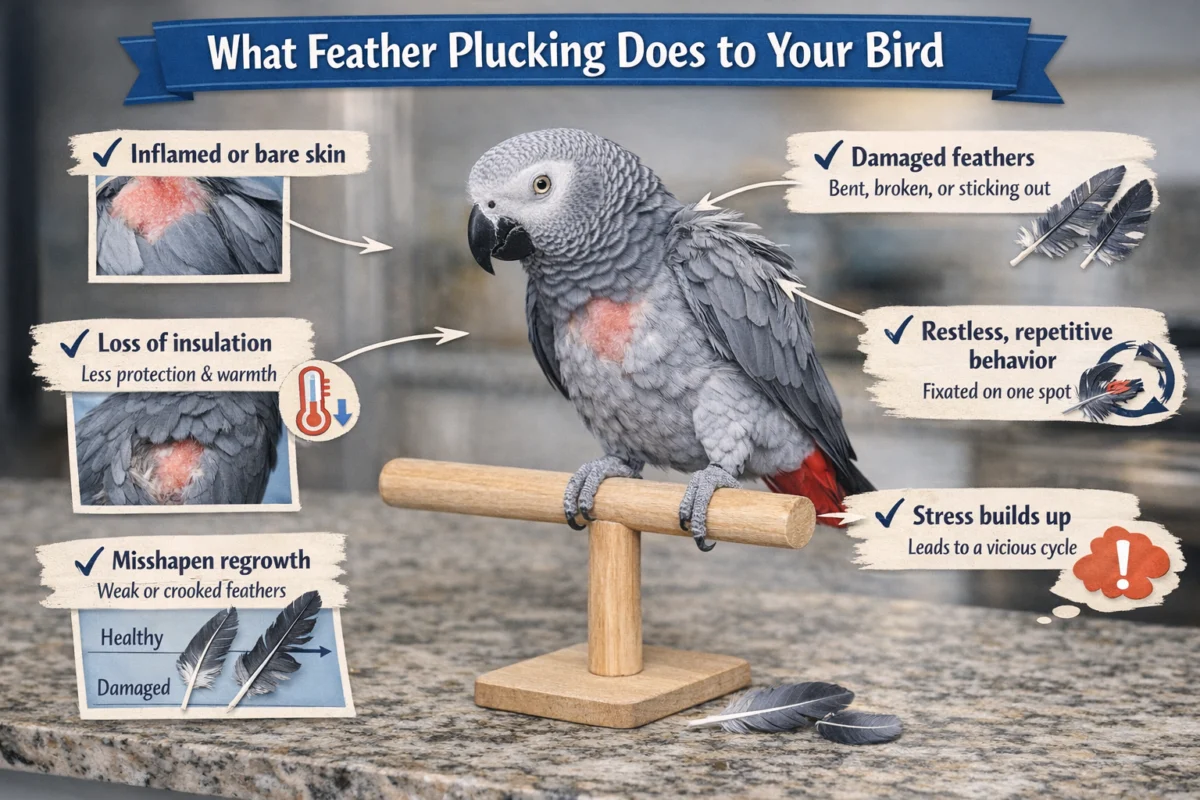
Feather destruction in captive psittacine species has emerged as one of the most significant behavioral health challenges in modern aviculture. As pet ownership trends show an increase in the adoption of highly intelligent species such as African Greys, Cockatoos, and Macaws, veterinary behaviorists report a rising frequency of cases involving feather plucking and self-mutilation. Recognizing the early symptoms of this condition is paramount, as the transition from a standard seasonal molt to a chronic, self-destructive habit can occur rapidly, often leaving owners to grapple with the psychological and physical deterioration of their companions.
Defining the Diagnostic Threshold
The primary challenge for bird owners lies in distinguishing between the natural cycle of molting and the onset of behavioral pathology. Molting is an evolutionary necessity, characterized by the systematic shedding of old, worn feathers and the growth of new plumage. This process typically occurs in a symmetrical, predictable pattern. During a healthy molt, a bird will exhibit preening behavior—the act of using the beak and tongue to smooth, align, and clean feathers—which is a fundamental social and hygienic activity.
In contrast, feather plucking, medically referred to as pterotillomania, is defined by the repetitive, non-grooming extraction or breakage of feathers. Unlike the calm, rhythmic nature of preening, plucking is characterized by intensity and fixation. The avian patient often focuses on a specific anatomical region, such as the chest, wings, or legs, repeatedly pulling at, chewing, or snapping the feathers. When this behavior escalates to the point of breaking the skin, the condition is classified as feather-mutilation syndrome, which poses an immediate risk of secondary bacterial infections, hemorrhage, and systemic physiological stress.
The Chronology of Behavioral Degradation
The progression of feather-destructive behavior typically follows a discernible timeline. In the initial stages, owners may notice an accumulation of damaged feathers on the cage floor that appear "chewed" rather than naturally shed. This is frequently followed by the appearance of bald patches or thinning in areas accessible to the bird’s beak.
If left unaddressed, the cycle enters a self-reinforcing phase. As the bird destroys its own plumage, the skin underneath becomes exposed, irritated, and often dry. This localized discomfort triggers an increased urge to manipulate the area, leading the bird to return to the site with greater frequency. By this stage, the behavior is no longer merely a response to an initial stressor but has become a habitual, compulsive response. Veterinary data suggests that the window for successful intervention is narrowest during these early stages; once the neural pathways for this behavior are established, the likelihood of a full recovery decreases significantly.
Etiological Factors: Why Birds Pluck
Scientific literature indicates that feather plucking is rarely a solitary behavioral issue but rather a symptom of underlying physical or psychological distress. Experts categorize the triggers into three primary domains: physiological, environmental, and psychological.
Physiological triggers often include nutritional deficiencies, such as low levels of Vitamin A, calcium, or essential fatty acids, which can lead to skin irritation. Furthermore, chronic dehydration, internal parasites, and hormonal imbalances—particularly during sexual maturity—are frequently cited as primary catalysts.
Environmental stressors play an equally significant role. Captive birds, which often possess the cognitive capacity of a human toddler, are highly sensitive to their surroundings. Common environmental triggers include irregular light cycles, lack of sufficient sleep (most species require 10 to 12 hours of uninterrupted rest), and a lack of cognitive stimulation. When a bird is confined to a cage without adequate foraging opportunities or social interaction, it may resort to self-stimulation as a coping mechanism.

Data-Driven Implications for Avian Health
The broader impact of feather plucking on the avian patient is severe. Beyond the obvious aesthetic damage, the loss of down feathers compromises the bird’s ability to thermoregulate. This forces the body to expend excess energy to maintain core temperature, which can lead to metabolic strain. Furthermore, the constant cycle of inflammation and tissue repair places a significant burden on the immune system, making the bird more susceptible to opportunistic infections.
Studies conducted by avian health organizations indicate that up to 10% of captive parrots exhibit some form of feather-destructive behavior at any given time. Analysis of these cases reveals that the prevalence is higher in species known for complex social structures in the wild, such as the African Grey parrot. This reinforces the hypothesis that the modern captive environment often fails to meet the sophisticated psychological needs of these highly social animals.
Clinical Protocols and Strategic Interventions
Veterinary intervention is the necessary first step for any bird demonstrating signs of plucking. A standard diagnostic workup includes a complete blood count (CBC), chemistry panel, and screenings for heavy metal toxicity and viral infections. Only after ruling out medical causes can a behavioral modification plan be implemented.
- Environmental Enrichment: Replacing passive perches with complex foraging toys that require problem-solving to obtain food can significantly reduce idle time, a known precursor to plucking.
- Nutritional Optimization: Transitioning birds from an all-seed diet to a nutritionally balanced, formulated diet can resolve systemic inflammation and improve skin integrity.
- Photoperiod Regulation: Ensuring a strict, consistent light/dark cycle helps stabilize hormonal levels, reducing the frustration associated with erratic reproductive drives.
- Social Integration: Increasing the frequency of positive social interaction and training sessions helps mitigate the anxiety that often manifests as self-mutilation.
Official Responses and Professional Perspectives
Avian veterinarians emphasize that there is no "silver bullet" for feather plucking. The consensus among avian practitioners is that recovery is a marathon, not a sprint. Dr. Diane Burroughs, an expert in avian behavior, notes that "the behavior is a signal. The bird is attempting to communicate an unmet need or a physical discomfort. When we look at the behavior as a symptom rather than the problem itself, we shift the focus from punishment or prevention to true resolution."
The implications for the owner-bird relationship are profound. Owners are often advised to avoid negative reinforcement, as yelling or startling the bird during a plucking episode can increase the bird’s anxiety, inadvertently rewarding the behavior with attention. Instead, the current gold standard in veterinary care involves "distraction and redirection," wherein the owner interrupts the behavior with a neutral, positive interaction, thereby breaking the cycle without reinforcing the negative habit.
The Path to Recovery
Recovery requires a commitment to a multi-faceted approach. Owners should maintain a detailed log of the bird’s behavior, noting the time of day, environmental factors, and the specific location of the plucking. This data is invaluable to a veterinarian when tailoring a treatment plan.
The prognosis for recovery depends heavily on the duration of the behavior. Birds that have been plucking for years may have deeply ingrained behavioral patterns that require long-term management rather than a permanent "cure." However, with patience, veterinary oversight, and a comprehensive overhaul of the bird’s captive lifestyle, many owners successfully see a reduction in symptoms and a significant improvement in their companion’s quality of life.
In conclusion, the emergence of feather plucking should be treated with the same urgency as any other acute medical condition. By monitoring for early signs, addressing the root causes through a professional medical lens, and enriching the bird’s environment, owners can play a pivotal role in preventing a manageable stress response from escalating into a chronic, life-altering condition. The health of the bird depends on the owner’s ability to act early, listen to the cues provided by the bird’s behavior, and implement evidence-based changes to the home environment.

