


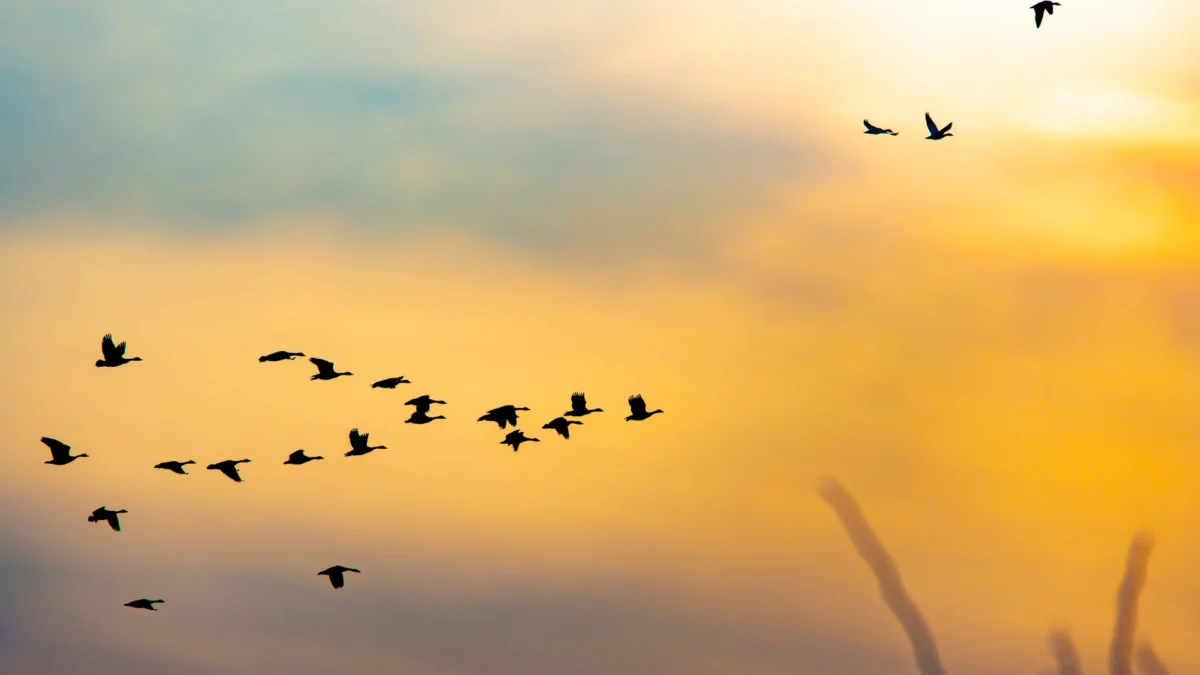
The annual spectacle of fall bird migration is officially underway across the United States, with meteorological data and ornithological tracking systems indicating that more than 200 million birds are currently in transit. As atmospheric conditions align to favor southbound movement, the skies over the central United States have become a primary aerial corridor for millions of avian travelers. This seasonal phenomenon, tracked meticulously by the Cornell Lab of Ornithology’s BirdCast initiative, represents a critical phase in the life cycle of countless North American species as they navigate toward their wintering grounds in the southern United States, the Caribbean, and Central and South America.
Current projections for the week of August 26 indicate that the most intense migratory activity is concentrated in a vertical band across the nation’s midsection. Birdwatchers, researchers, and conservationists in states including Iowa, Missouri, Kansas, Oklahoma, and Texas are witnessing a surge in activity, with Minnesota, North Dakota, and South Dakota also serving as key transit zones. These data points are derived from advanced weather surveillance radar, which transforms the atmospheric clutter of bird flocks into actionable intelligence for scientists monitoring biodiversity and migration trends.
A Chronology of the 2026 Fall Migration
Migration is rarely a slow, uniform drift; it is a pulse-like phenomenon driven by environmental cues and atmospheric stability. As of late August 2026, the movement has shifted into a high-gear phase. The chronology of this current event began in early August with the movement of shorebirds and early-nesting passerines. However, the current week marks the first major mass exodus of songbirds—a category including warblers, vireos, and flycatchers—that typically breed in the northern boreal forests and temperate regions of the U.S. and Canada.
Over the past 48 hours, radar signatures across the Upper Midwest showed a significant escalation in nighttime departures. This suggests that the birds are responding to a shifting pressure gradient that provides a tailwind, allowing for more efficient flight at altitudes that can reach several thousand feet. This pulse is expected to continue through the remainder of the week, with models suggesting that the "front" of migrating birds will push steadily southward, potentially impacting avian density in the Gulf Coast states by the weekend.
The Science of Nocturnal Flight
A common misconception among the general public is that bird migration is a predominantly daytime event. In reality, the vast majority of songbirds engage in nocturnal migration. This strategy offers several distinct survival advantages. Nighttime temperatures are generally cooler, which helps birds manage the intense heat generated by their flight muscles. Furthermore, the nocturnal environment offers protection from daytime raptors, such as hawks and falcons, that rely on visual hunting techniques.
Ornithologists utilize specialized weather surveillance radar to monitor these nighttime pulses. While these systems were originally designed to track precipitation, they have been repurposed by researchers to identify "biological signatures" in the atmosphere. These radars detect the mass movement of birds as they take off at dusk, ascend to cruising altitude, and eventually descend at dawn to forage. On peak nights during the autumn, it is estimated that upwards of one billion birds can be airborne across the continental United States. The current movement of 200 million birds is a significant, though early, indicator of the intensity the season will reach by mid-September.
Ecological Implications and Biodiversity
The migration of these millions of birds is not merely a scenic wonder; it is a vital ecological process. Migratory birds serve as essential pollinators, seed dispersers, and controllers of insect populations. During their stopovers, they consume vast quantities of insects, many of which are considered agricultural pests. The health of these populations is a sensitive barometer for the broader environmental state of North America.

Conservationists and ecologists emphasize that the success of this migration is highly dependent on the availability of "stopover habitats." As birds complete their overnight flights, they are often exhausted and require immediate access to food and water. Urbanization and habitat fragmentation pose severe threats to these species, as birds may find themselves in "ecological traps"—areas that appear suitable for resting but offer little in the way of resources or protection from artificial light pollution.
Analysis of Current Data and Trends
The concentration of migration in the central U.S. is not random. It is influenced by the "Great Plains Flyway," a massive migratory route that offers a relatively unobstructed path for birds traveling from northern latitudes to the tropics. The current data from the Cornell Lab of Ornithology highlights the importance of protecting riparian corridors and forested patches within this flyway.
Comparing the 2026 data to historical baselines, experts note that while the timing of migration remains largely consistent, the sheer volume of birds in certain regions can fluctuate based on breeding success in the previous spring and summer. A successful nesting season, free from severe drought or extreme weather events, typically results in higher migratory numbers. Conversely, environmental stressors in the nesting grounds can lead to diminished pulses of migratory activity.
Guidance for the Birding Community
For the amateur naturalist and the seasoned birdwatcher alike, the current surge presents a rare opportunity for observation. The optimal window for viewing is the early morning hours following a high-activity night. When birds arrive at dawn, they are often focused on foraging to replenish fat stores. This "refueling" period makes them more visible in parks, suburban backyards, and wetland areas.
Birders are encouraged to leverage the BirdCast forecast maps, which provide real-time updates on migration intensity. These tools allow enthusiasts to predict when a "fallout" might occur—an event where high numbers of birds are grounded by weather conditions, making them temporarily abundant in local habitats. Whether one is in the plains of Kansas or the wetlands of Texas, the next few days offer an unparalleled look at one of nature’s most complex and enduring cycles.
Broader Perspectives and Future Outlook
While the current figures are impressive, the challenges facing migratory species remain significant. Light pollution in major metropolitan areas is a growing concern, as artificial light can disorient nocturnal migrants, leading to collisions with buildings and structures. Many cities are now implementing "lights-out" initiatives during peak migration weeks, turning off non-essential lighting in skyscrapers to ensure that millions of birds can pass through urban centers safely.
The 2026 fall migration is a reminder of the interconnectedness of our ecosystems. The birds currently passing through the central United States are the same ones that will reach their winter homes in the coming months, only to return north in the spring to complete the cycle once more. As the data continues to flow in, researchers remain vigilant in their efforts to study the impacts of climate change on migration timing. Shifts in temperature and blooming cycles can cause a "phenological mismatch," where birds arrive at their destination before or after their primary food sources—such as caterpillars or nectar—are available.
As the 200 million birds currently traversing the central U.S. continue their journey, they serve as a testament to the resilience of migratory life. The collaboration between technology and natural history has allowed us to witness this event with unprecedented clarity. For the coming days, the focus remains on the movement across the heartland, providing a critical window for researchers to gather data that will inform conservation policy for years to come. The skies may seem empty to the naked eye, but with the aid of modern surveillance, the true magnitude of this seasonal migration is revealed, underscoring the necessity of protecting the corridors and habitats that sustain these millions of travelers.

