


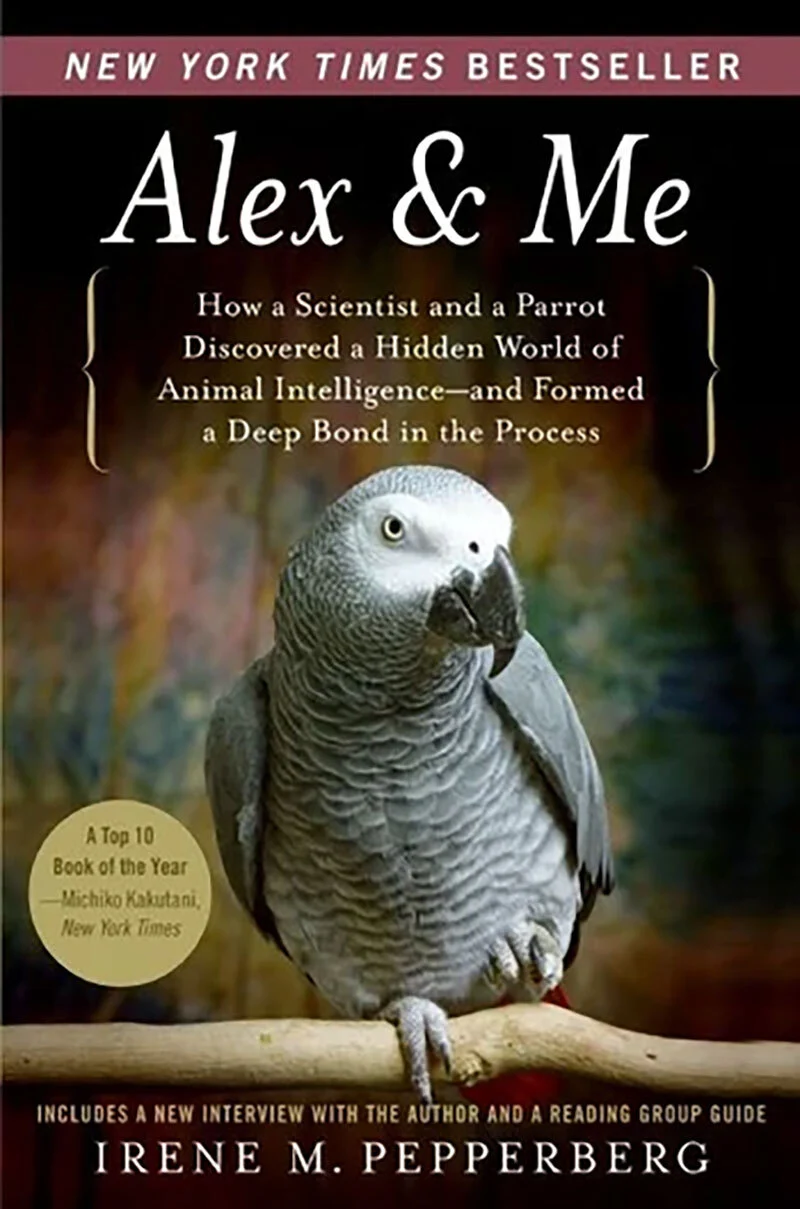
In February 2027, the Ensemble Studio Theater in New York City will host the highly anticipated premiere of Beyond Words, a theatrical production that chronicles the transformative scientific partnership between Dr. Irene Pepperberg and her world-renowned research subject, Alex the African grey parrot. This play, which has already garnered critical acclaim in regional theater circuits, marks a significant milestone in the effort to bridge the gap between rigorous animal cognition research and public understanding. For Dr. Pepperberg, the production is not merely a biographical retelling but a calculated effort to preserve the integrity of a research career that redefined the scientific community’s perception of avian intelligence.
A Legacy Born of Scientific Persistence
The genesis of this theatrical project is inextricably linked to the profound impact of Alex, an African grey parrot who, over the course of three decades, demonstrated cognitive abilities that challenged the long-held belief that birds were capable only of rote mimicry. Following Alex’s death in September 2007, Dr. Pepperberg found herself at a crossroads. While she was besieged by offers from film studios and producers seeking to capitalize on the public’s fascination with the parrot, she remained fiercely protective of the science.
Dr. Pepperberg’s primary concern was the potential for commercialization to dilute the significance of her work. Having faced considerable skepticism from the academic community—partly because her training was in chemistry rather than behavioral psychology, and partly because the prevailing scientific orthodoxy of the 1970s was deeply resistant to the notion of nonhuman consciousness—she was determined that any public-facing medium must prioritize the scientific methodology and the empirical data behind her findings.
Chronology of a Scientific Narrative
The journey of the project follows a distinct timeline that reflects both the patience required for scientific inquiry and the challenges of the performing arts industry:
- September 2007: Alex passes away. Dr. Pepperberg begins work on the memoir Alex & Me to secure the bird’s legacy.
- 2008: Alex & Me is published, reaching #16 on the New York Times Best Seller list.
- 2010s: Dr. Pepperberg consistently declines offers for dramatizations that do not align with her standards of scientific rigor.
- The Mid-2010s: Playwright Laura Maria Censabella approaches Dr. Pepperberg with a proposal to apply for a Sloan Foundation grant. The foundation is noted for supporting "science-centric" plays such as Proof and Copenhagen.
- 2018–2020: The script undergoes extensive development. Dr. Pepperberg maintains editorial control over the scientific accuracy of the production.
- Spring 2022: The first reading occurs at the Ensemble Studio Theater. Despite a minimalist presentation, the performance receives a standing ovation.
- Spring 2024: The Central Square Theater in Cambridge, Massachusetts, mounts the first full-scale production.
- February 2027: The official New York City premiere is scheduled.
The Sloan Foundation’s Influence on Science Communication
The partnership with the Sloan Foundation provided a unique platform for the project. By focusing on the intersection of the humanities and the hard sciences, the foundation’s grant program serves as a bridge for narratives that might otherwise be dismissed as purely "human-interest" stories. For Dr. Pepperberg, this was the necessary validation.
"I didn’t want to lose control of what he meant to the scientific world," Dr. Pepperberg noted during the developmental stages of the script. The playwright’s ability to weave the narrative of a woman navigating the gendered hierarchies of academia with the technical aspects of linguistics and behavioral studies was key to securing Dr. Pepperberg’s trust.
The play also functions as a "meta-commentary" on the scientific process. By portraying the friction between the researcher and the academic establishment, the audience is invited to consider the difficulty of introducing paradigm-shifting ideas into the scientific canon. The rehearsals, which Dr. Pepperberg described as a therapeutic exercise, forced a confrontation with the personal sacrifices necessitated by her professional dedication.
Critical Reception and Regional Success
The 2024 production at the Central Square Theater served as a litmus test for the play’s broader appeal. Despite a challenging post-pandemic climate for regional arts, the production was named a Boston Globe Critic’s Pick. Critics lauded the performance for its ability to treat the subject matter with intellectual weight while maintaining emotional resonance.
A critical highlight of the regional production was the portrayal of Alex. The actor tasked with the role received an Elliot Norton Theater Award nomination, underscoring the production’s success in animating a nonhuman subject without resorting to anthropomorphic caricature. This was a vital distinction for Dr. Pepperberg, who has spent her career advocating for the respect of avian sentience based on empirical data rather than sentimentality.
Scientific Implications and Future Outlook
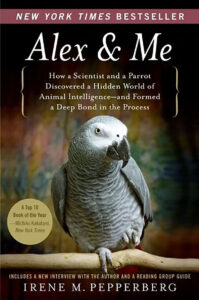
Beyond its merits as a piece of theater, Beyond Words holds significance for the field of ethology. By presenting the data regarding Alex’s ability to identify objects, understand concepts of "same" and "different," and utilize English labels for communication, the play serves as a medium for public education.
The implications are twofold:
- Public Engagement: It demonstrates that the public is capable of engaging with complex scientific concepts when they are presented through a narrative structure that honors the human element of discovery.
- Professional Advocacy: It provides a template for future scientists to collaborate with artists to ensure that their life’s work is not misrepresented in popular media.
As the production prepares for its New York premiere, the focus remains on the core goal identified by Dr. Pepperberg: shifting the paradigm of how humans interact with the natural world. By positioning Alex as an individual with agency and intelligence, the play challenges the audience to re-evaluate their relationship with nonhuman species.
The transition from a laboratory setting in the 1970s and 80s to the stage in 2027 represents the culmination of a long-term strategy to institutionalize the findings of the Pepperberg Lab. As the curtain rises in February, the production stands as a testament to the idea that scientific discovery is rarely a solitary endeavor—it is a dialogue between the researcher, the subject, and, ultimately, the public that must decide how to integrate these findings into their own understanding of nature.
For the scientific community, the play represents a rare instance where the "human" behind the research—the struggles for funding, the rejection of peer-reviewed papers, and the personal exhaustion—is brought to the forefront alongside the data. In an era where public trust in science is frequently tested, Beyond Words offers a humanized, yet scientifically grounded, look at the pursuit of knowledge.

