


A groundbreaking fossil discovery is illuminating one of Earth’s most extraordinary survival narratives and simultaneously resolving a scientific enigma that has perplexed researchers for decades. Lystrosaurus, a hardy, herbivorous precursor to mammals, emerged as one of the dominant life forms on the planet in the aftermath of the End-Permian Mass Extinction, approximately 252 million years ago. This cataclysmic event decimated the vast majority of life, plunging the Earth into an era of extreme heat, volatile environmental conditions, and prolonged droughts. Against this backdrop of devastation, Lystrosaurus not only persevered but thrived, a testament to its remarkable resilience.
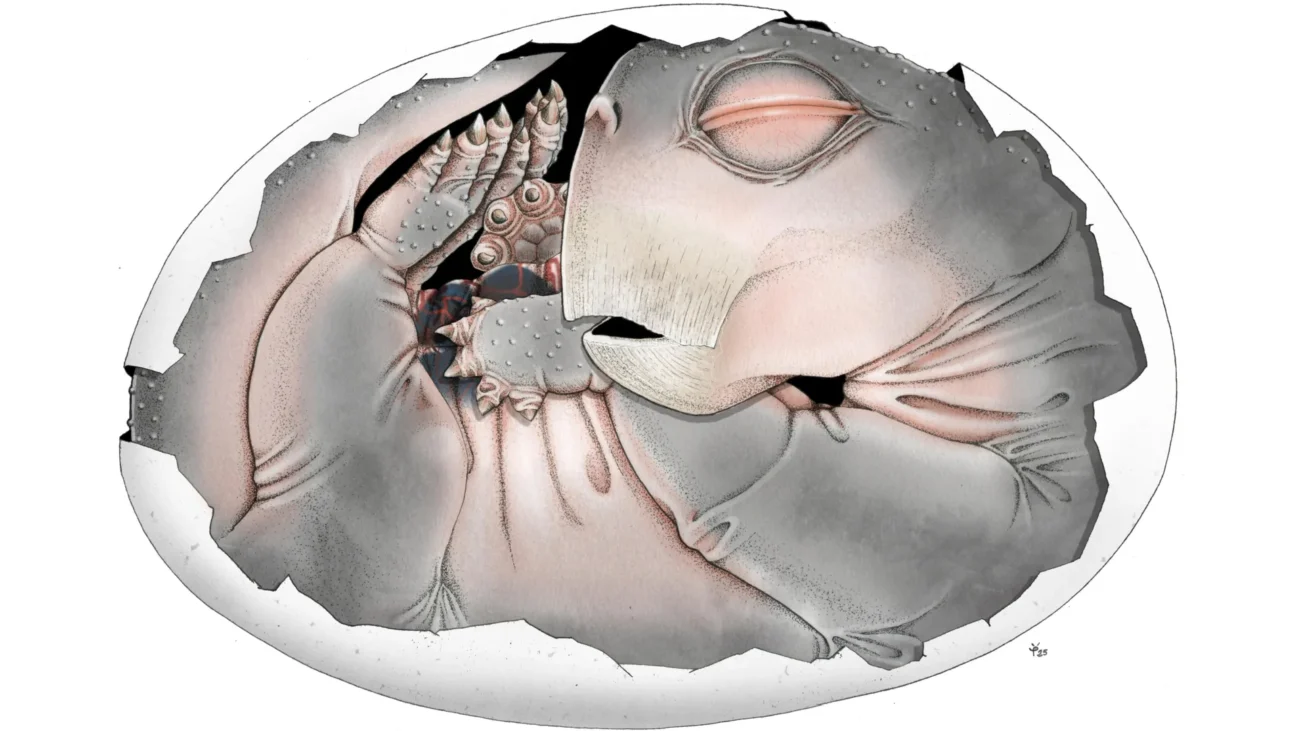
New research, meticulously detailed in the peer-reviewed journal PLOS ONE, describes a discovery that fundamentally reshapes our understanding of this ancient creature. An international collaborative effort, spearheaded by Professor Julien Benoit, Professor Jennifer Botha from the Evolutionary Studies Institute at the University of the Witwatersrand in South Africa, and Dr. Vincent Fernandez from the ESRF – The European Synchrotron in France, has identified a fossilized egg containing a Lystrosaurus embryo, estimated to be around 250 million years old. This remarkable find marks the first confirmed egg ever unearthed from an ancestor of mammals, definitively answering a question that has long lingered at the forefront of early mammalian evolution: did the precursors to modern mammals reproduce by laying eggs? The answer, now unequivocally supported by fossil evidence, is a resounding yes.
The Elusive Nature of Ancient Mammal Ancestor Eggs
The rarity of such discoveries is largely attributed to the presumed nature of these ancient eggs. Researchers posit that Lystrosaurus eggs possessed soft shells, a characteristic that significantly hindered their fossilization potential. Unlike the robust, mineralized eggs of dinosaurs, which are far more amenable to preservation over geological timescales, soft-shelled eggs are prone to decay before the fossilization process can take hold. This inherent fragility makes the present finding exceptionally rare and scientifically invaluable.
However, the significance of this discovery extends far beyond simply confirming the reproductive mode of Lystrosaurus. It provides a critical window into the evolutionary strategies that enabled this lineage to navigate and dominate a world irrevocably altered by the End-Permian extinction.
Professor Jennifer Botha recounted the genesis of this extraordinary find: "This fossil was discovered during a field excursion I led in 2008, nearly 17 years ago. My preparator and exceptional fossil finder, John Nyaphuli, identified a small nodule that at first revealed only tiny flecks of bone. As he carefully prepared the specimen, it became clear that it was a perfectly curled-up Lystrosaurus hatchling. I suspected even then that it had died within the egg, but at the time, we simply didn’t have the technology to confirm it." This initial observation, made nearly two decades ago, laid the groundwork for a revelation that would require advancements in scientific technology to fully realize.
Advanced Imaging Unlocks the Secrets of a Prehistoric Embryo
The advent of modern synchrotron X-ray computed tomography (CT) scanning, coupled with the powerful X-ray capabilities at the ESRF, provided the researchers with the precise tools needed to meticulously examine the fossil. These sophisticated techniques allowed for an unprecedented level of detail in visualizing the internal structures of the specimen, confirming Professor Botha’s long-held suspicions.
Dr. Vincent Fernandez underscored the excitement surrounding this technological breakthrough: "Understanding reproduction in mammal ancestors has been a long-lasting enigma, and this fossil provides a key piece to this puzzle. It was essential that we scanned the fossil just right to capture the level of detail needed to resolve such tiny, delicate bones." The successful imaging revealed a crucial detail about the embryo’s developmental stage.
Professor Julien Benoit elaborated on this pivotal finding: "When I saw the incomplete mandibular symphysis, I was genuinely excited. The mandible, the lower jaw, is made up of two halves that must fuse before the animal can feed. The fact that this fusion had not yet occurred shows that the individual would have been incapable of feeding itself." This observation strongly indicates that the embryo perished before it could hatch and achieve independence.
Insights into Reproduction and Early Life Strategies
The study’s analysis suggests that Lystrosaurus produced relatively large eggs in proportion to its body size. This characteristic is observed in modern oviparous (egg-laying) species where larger eggs typically contain a more substantial yolk. This abundance of yolk provides the developing embryo with sufficient nutrients to complete its development internally, negating the necessity for parental provisioning after hatching. This finding implies that Lystrosaurus, unlike modern mammals, did not nurse its young with milk.
The advantage of larger eggs in the post-extinction environment was multifaceted. Beyond their nutritional richness, these eggs were inherently more resistant to desiccation, a critical factor in the arid and unstable climate that characterized the world following the End-Permian extinction. This increased resilience would have significantly improved the survival rates of developing embryos in an environment where water scarcity was a constant threat.
The research further indicates that Lystrosaurus hatchlings were likely precocial. This developmental strategy means they were born or hatched at an advanced stage of development, possessing a degree of independence. Such precocial young would have been capable of foraging for food, evading predators, and reaching maturity at a relatively rapid pace. In essence, Lystrosaurus achieved ecological dominance through a combination of rapid growth and early reproductive maturity.
A Winning Strategy in a Devastated World
In the face of the extreme environmental pressures that followed the mass extinction event, this reproductive and developmental strategy proved exceptionally effective. The discovery offers the first direct, tangible evidence that the ancestors of mammals laid eggs, and it provides a compelling explanation for the remarkable success of Lystrosaurus in the post-extinction ecosystems.
The End-Permian Mass Extinction, often referred to as the "Great Dying," stands as the most severe extinction event in Earth’s history. It occurred approximately 252 million years ago, marking the boundary between the Permian and Triassic periods. The leading scientific consensus attributes this catastrophic event to massive volcanic activity associated with the Siberian Traps, a vast region of flood basalt in Siberia. The eruption of these supervolcanoes released enormous quantities of greenhouse gases, such as carbon dioxide and methane, into the atmosphere. This influx triggered a rapid and drastic global warming trend.
Timeline of the End-Permian Extinction and its Aftermath:
- Late Permian Period (approx. 299 to 252 million years ago): A period of relative ecological stability, with diverse flora and fauna.
- Onset of the Siberian Traps Eruptions (approx. 252 million years ago): Massive volcanic activity begins, releasing immense volumes of greenhouse gases and other toxic substances.
- The "Great Dying" (approx. 252 million years ago): The most severe extinction event in Earth’s history unfolds over a relatively short geological timeframe. Estimates suggest that up to 96% of marine species and 70% of terrestrial vertebrate species went extinct.
- Early Triassic Period (approx. 252 to 247 million years ago): The immediate aftermath of the extinction. The Earth experiences extreme heat, ocean acidification, widespread anoxia (lack of oxygen), and prolonged droughts. Life struggles to recover, and ecosystems are severely simplified.
- Rise of Lystrosaurus (Early Triassic): Lystrosaurus, a small, pig-sized dicynodont (a group of therapsids), emerges as one of the few dominant terrestrial vertebrates. Its resilience and adaptability allow it to exploit the depopulated landscapes.
- Later Triassic Period (approx. 237 to 201 million years ago): Recovery of biodiversity continues, with the emergence of new groups of reptiles, including the archosaurs, which would eventually give rise to dinosaurs and crocodiles.
The environmental consequences of the Siberian Traps eruptions were profound and multifaceted:
- Global Warming: The release of vast quantities of CO2 and methane led to a dramatic increase in global temperatures, estimated to be as high as 10-15 degrees Celsius above pre-industrial levels. This extreme heat would have been lethal to many organisms not adapted to such conditions.
- Ocean Acidification: The absorption of excess atmospheric CO2 by the oceans caused a significant decrease in pH, leading to ocean acidification. This severely impacted marine life, particularly organisms with calcium carbonate shells or skeletons.
- Ocean Anoxia: Warming ocean waters hold less dissolved oxygen. Combined with increased nutrient runoff from land, this led to widespread anoxic (oxygen-depleted) zones in the oceans, creating "dead zones" where most marine life could not survive.
- Ozone Depletion: Volcanic eruptions can release sulfur dioxide, which can lead to the formation of acid rain and also deplete the Earth’s ozone layer. A weakened ozone layer allows more harmful ultraviolet (UV) radiation to reach the Earth’s surface, damaging DNA and increasing mutation rates in living organisms.
- Droughts and Desertification: The altered atmospheric composition and temperature regimes likely led to more extreme weather patterns, including prolonged droughts and widespread desertification on land.
In this drastically altered and hostile world, Lystrosaurus‘s ability to reproduce rapidly and produce offspring capable of independent survival would have been a significant evolutionary advantage. Its herbivorous diet would have allowed it to exploit the available plant life, which, though reduced, would have been more accessible than for many other terrestrial animals.
As scientists continue their exploration of ancient life, a unifying pattern is emerging: survival during periods of extreme global crisis is intrinsically linked to adaptability, resilience, and effective reproductive strategies. Lystrosaurus appears to have embodied all three of these crucial elements.
Official Responses and Expert Commentary
The researchers involved expressed profound satisfaction with the implications of their findings.
Professor Julien Benoit remarked, "This research is important because it provides the first direct evidence that mammal ancestors, such as Lystrosaurus, laid eggs, resolving a long-standing question about the origins of mammalian reproduction. Beyond this fundamental insight, it reveals how reproductive strategies can shape survival in extreme environments: by producing large, yolk-rich eggs and precocial young, Lystrosaurus was able to thrive in the harsh, unpredictable conditions following the end-Permian mass extinction. In a modern context, this work is highly impactful because it offers a deep-time perspective on resilience and adaptability in the face of rapid climate change and ecological crisis. Understanding how past organisms survived global upheaval helps scientists better predict how species today might respond to ongoing environmental stress, making this discovery not just a breakthrough in paleontology, but also highly relevant to current biodiversity and climate challenges. The opportunity to work at the European Synchrotron Radiation Facility alongside beamline scientists was also an unforgettable part of the journey. The cutting-edge data we generated there allowed us to ‘see’ inside the fossil in extraordinary detail, ultimately revealing that the embryo was still at a pre-hatching stage. That moment, when the pieces all came together, was incredibly rewarding."
Professor Jennifer Botha added, "What makes this work especially exciting is that we were able to quite literally follow in John Nyaphuli’s footsteps, returning to a specimen he discovered nearly two decades ago and finally solve the puzzle he uncovered. At the time, all we had was a beautifully curled embryo, but no preserved eggshell to prove it had died within an egg. Using modern imaging techniques, we were able to answer that question definitively. It is also thrilling because this discovery breaks entirely new ground. For over 150 years of South African paleontology, no fossil had ever been conclusively identified as a therapsid egg. This is the first time we can say, with confidence, that mammal ancestors like Lystrosaurus laid eggs, making it a true milestone in the field."
The discovery also offers a compelling case study for broader scientific disciplines. Paleontologists, evolutionary biologists, and climate scientists alike can draw valuable insights from the strategies employed by organisms that survived the End-Permian extinction. The resilience demonstrated by Lystrosaurus serves as a powerful reminder of life’s capacity to adapt and persist even in the face of catastrophic environmental change.
Broader Impact and Implications for Understanding Resilience
The implications of this discovery extend far beyond the specific lineage of Lystrosaurus. It provides a tangible link in the evolutionary chain, bridging the gap between early amniotes (reptiles, birds, and mammals) and the emergence of more derived mammalian traits. The confirmation that mammal ancestors laid eggs fundamentally alters our understanding of the early stages of mammalian evolution, suggesting that key mammalian characteristics, such as lactation and live birth, evolved later in the lineage.
Furthermore, the study offers a critical deep-time perspective on resilience and adaptability in the face of rapid environmental upheaval. In an era marked by accelerating climate change and growing biodiversity loss, understanding how past organisms successfully navigated global crises offers invaluable lessons. The reproductive and developmental strategies of Lystrosaurus highlight how specific adaptations can confer a significant survival advantage in challenging and unpredictable environments.
This research underscores the interconnectedness of evolutionary biology, paleontology, and climate science. By examining the fossil record, scientists can glean insights into the mechanisms that have driven life’s survival and diversification throughout Earth’s history. The success of Lystrosaurus in the harsh post-extinction world serves as a potent analogy for contemporary ecological challenges, emphasizing the importance of understanding evolutionary strategies that promote resilience in the face of environmental stress. The ability of this ancient creature to thrive under extreme conditions provides a compelling narrative of survival and adaptability, offering both scientific understanding and a measure of hope for the planet’s future biodiversity.

