


The United States Department of Defense is currently navigating a period of intense scrutiny and mounting political pressure to overhaul its Military Working Dog (MWD) program. This surge in criticism follows the release of a scathing watchdog report that exposed what investigators termed "deplorable" and "unsatisfactory" conditions within the Pentagon’s canine facilities. The findings have reignited a long-standing debate over the ethical use of animals in combat and domestic security roles, prompting calls from advocacy groups to phase out biological units in favor of advanced robotic quadrupeds.
A comprehensive 34-page report recently issued by the Office of the Inspector General (OIG) detailed a systemic failure to provide adequate care, exercise, and medical attention to the animals tasked with protecting American service members. The investigation, which included site visits to the MWD program’s primary headquarters at Joint Base San Antonio-Lackland in Texas, as well as other installations, uncovered a pattern of neglect that has resulted in significant animal suffering and, in several instances, preventable loss of life.
Investigating the Findings of the Inspector General Report
The OIG report serves as a damning indictment of the current management of the MWD program, which is overseen primarily by the Air Force. Investigators found that at a single base in Texas, at least 22 dogs sustained heat-related injuries over a three-year period. More alarmingly, the report confirmed that at least four dogs suffered deaths that were deemed preventable, occurring between 2021 and 2023.
The root of the issue, according to the report, stems from "manpower challenges" and a chronic shortage of qualified caretakers. This staffing deficit has led to a breakdown in basic animal husbandry protocols. Dozens of dogs were reportedly walked only three or four days a week, often for as little as ten minutes per session. For high-drive breeds such as German Shepherds, Belgian Malinois, and Dutch Shepherds—which require intense physical, social, and cognitive stimulation—this lack of activity has led to severe psychological distress.
Inspectors documented various "stress behaviors" among the kenneled animals, including continuous spinning, repetitive jumping, and dogs biting or chewing on their metal water buckets. The physical environment was equally concerning; the report highlighted kennels plagued by mold, leaks, and inadequate ventilation. In some instances, dogs were exposed to extreme ambient temperatures and precipitation without proper shelter, leading to physical signs of heat stress such as rapid panting and enlarged tongues. Furthermore, the report noted failures in basic sanitation, including the inadequate removal of waste, which facilitated the spread of diseases within and between military installations.
The Ethical Argument for Robotic Replacement
In light of these revelations, People for the Ethical Treatment of Animals (PETA) has intensified its campaign to end the use of dogs in military and police work. In an exclusive letter sent to the White House on Friday, the organization urged the administration to transition toward robotic alternatives. The letter, signed by Daniel Paden, PETA’s Vice President of Legal Advocacy, argued that unlike human service members, dogs cannot consent to being placed in high-risk environments.
"Unlike the brave service members and officers who choose to put their lives on the line, [military and police dogs] can’t consent to being used as living shields or being sent into violent situations they did not cause—and many pay with their lives," the letter stated. Paden further emphasized that the OIG report proves these animals are not even safe during their time on domestic bases, let alone in active combat zones.
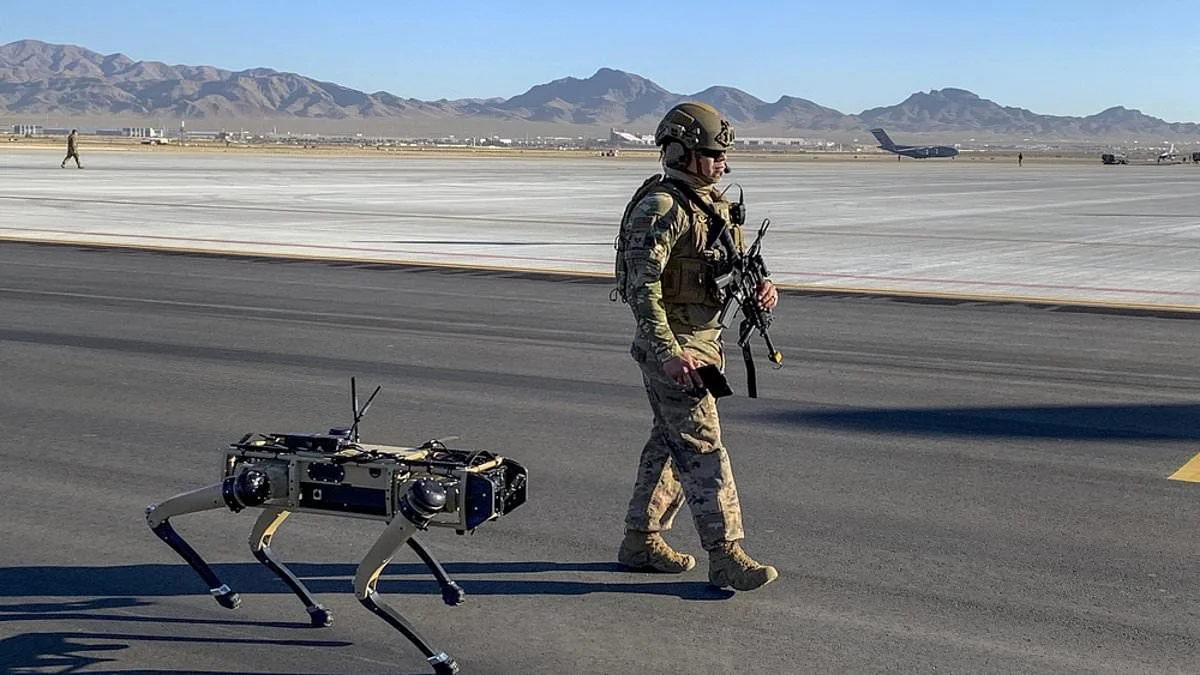
PETA’s proposal centers on the deployment of "robot dogs," such as Boston Dynamics’ "Spot" or Ghost Robotics’ "Vision 60." These machines are designed to mimic the movement of quadrupeds and can be equipped with a variety of sensors to perform the tasks traditionally assigned to MWDs, such as patrolling, reconnaissance, and detecting hazardous materials.
Technological Capabilities vs. Biological Intuition
The debate over replacing MWDs with robots involves a complex comparison of biological capability and mechanical durability. Currently, there are approximately 2,200 MWDs serving across all branches of the U.S. military. They are utilized for a wide range of critical missions, including:
- Searching for explosives and narcotics.
- Scouting for survivors in disaster zones.
- Providing perimeter security and sentry duties.
- Tracking human targets in diverse terrains.
Proponents of the robotic transition point to the clear advantages of machines: they do not feel pain, they do not require social stimulation or lifelong veterinary care, and they can operate in environments that would be lethal to a biological organism, such as areas with high chemical or radiological contamination.
Models like the Vision 60, currently under evaluation by the Air Force and Marine Corps, weigh approximately 100 pounds and can operate for up to three hours on a single battery charge. They are designed to function in extreme temperatures and can be teleoperated or run semi-autonomously. These robots are already seeing limited use; for example, the Massachusetts State Police have utilized them for de-escalating volatile domestic situations, and similar units are slated for security roles at the upcoming World Cup in Mexico.
However, critics and military insiders argue that technology has not yet reached a point where it can fully replicate the sensory sophistication of a dog. A dog’s sense of smell is estimated to be 10,000 to 100,000 times more acute than a human’s, and their ability to process complex olfactory data remains superior to most portable electronic sensors. Furthermore, the "emotional intelligence" and bond between a handler and a dog provide a level of adaptability in the field that current AI-driven systems cannot match.
Historical Context and a Legacy of Reform Efforts
The current crisis is not an isolated incident but rather the latest chapter in a decades-long struggle to reform the military’s treatment of working animals. The Pentagon faced significant backlash following the Vietnam War, during which approximately 4,000 dogs were deployed. When U.S. forces withdrew in the early 1970s, the majority of these dogs were abandoned or euthanized rather than being returned to the United States, a move that veterans and handlers viewed as a profound betrayal.
In response to public outcry, a law was passed in 2000 requiring that retired MWDs be made available for adoption. Despite this, concerns have persisted. In 2006, the military was criticized for euthanizing retired dogs at Lackland Air Force Base for reasons that critics claimed were insufficiently explained. More recently, a 2022 report by the Government Accountability Office (GAO) identified similar patterns of abuse and neglect among the nearly 5,600 dogs working across various federal agencies, suggesting that the issues are systemic rather than localized.
Official Responses and Political Friction
The Air Force has responded to the OIG report by affirming its commitment to the "ethical and effective utilization" of MWDs. In a statement, a spokesperson claimed the program is working to implement the Inspector General’s recommendations for facility improvements and staffing. However, the Air Force also disputed some of the report’s more severe findings, asserting that autopsies of the dogs mentioned in the report showed their deaths were not directly "attributed to neglect."
The political dimension of this issue is further complicated by the current administration’s stance on defense policy. Some Pentagon insiders suggest that recommendations from organizations like PETA may face resistance due to perceived ideological differences. There is skepticism within the Department of Defense regarding whether Defense Secretary Pete Hegseth would entertain suggestions from groups often characterized by the political right as "woke" activists. One source noted that the administration is more likely to prioritize traditional military structures over radical shifts in animal welfare policy.
Analysis of Future Implications
The findings of the OIG report represent a significant hurdle for the Department of Defense. As the military continues to integrate autonomous systems into its operations, the pressure to replace biological units with robotic ones will likely increase, driven by both ethical concerns and the rising costs of animal care and facility maintenance.
If the Pentagon fails to address the "manpower challenges" and facility deficiencies highlighted in the report, it may find itself in a position where the legal and public relations costs of maintaining the MWD program outweigh its operational benefits. The transition to robotics, while technically challenging in terms of matching a dog’s olfactory capabilities, offers a path toward a "zero-casualty" model for non-human assets.
For now, the MWD program remains a cornerstone of military security. However, the transition from biological to mechanical "K-9s" appears less like a futuristic fantasy and more like an impending strategic shift. Whether the Trump administration will embrace this technological pivot or double down on internal reforms remains to be seen. What is clear, however, is that the status quo—defined by "Abu Ghraib-like" conditions for service animals—is increasingly untenable in the eyes of both watchdogs and the public.

