


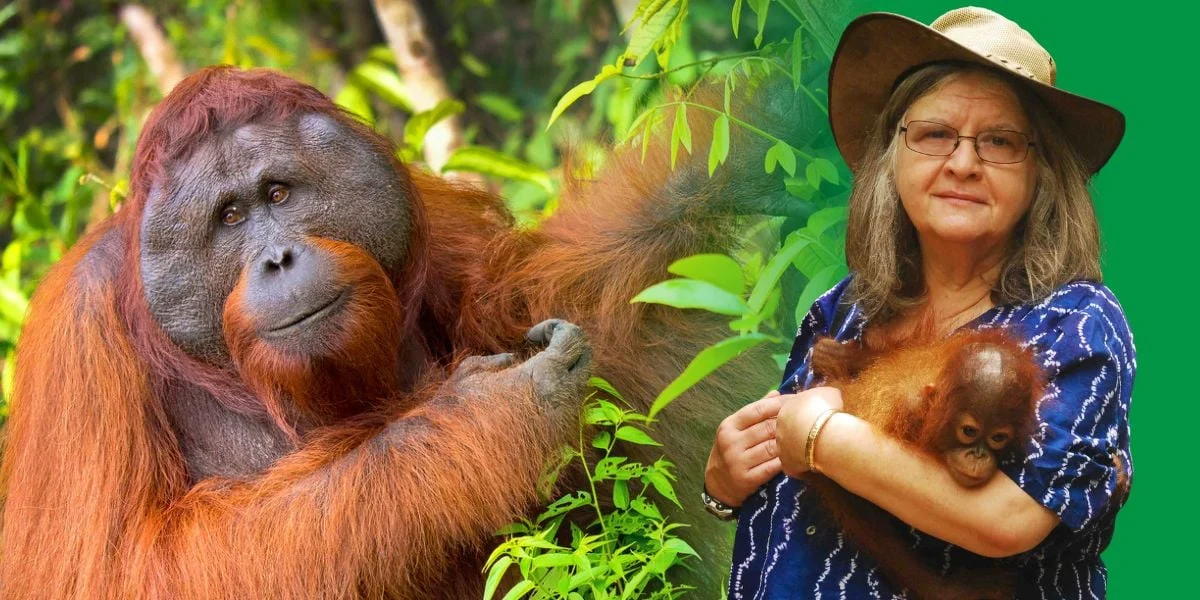
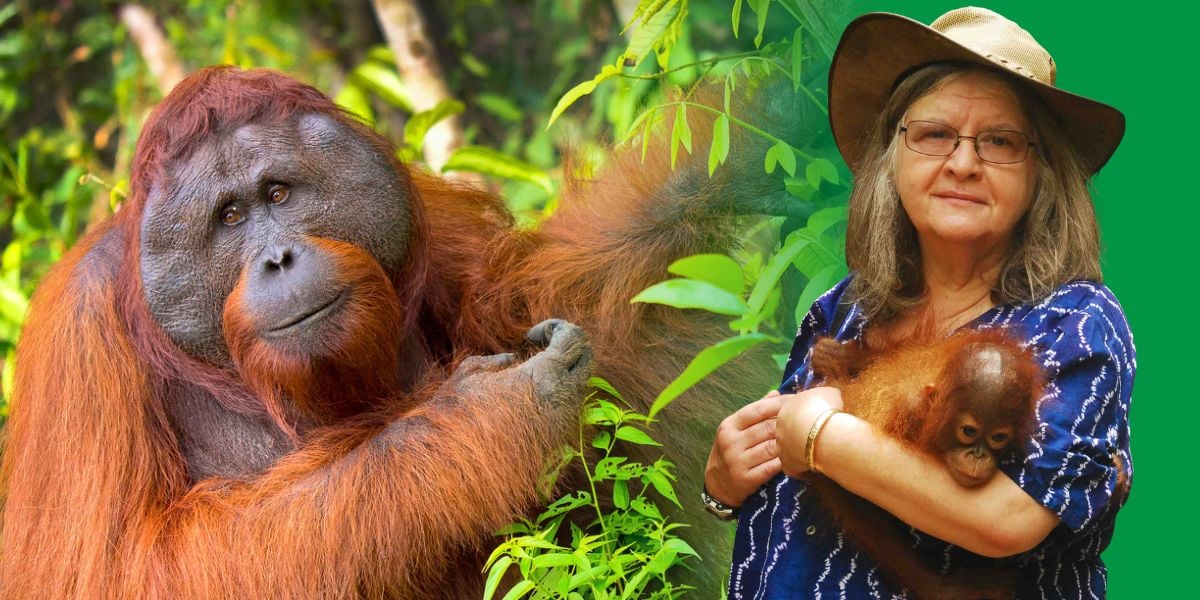
The global scientific and conservation communities are mourning the passing of Dr. Birutė Galdikas, a preeminent primatologist, anthropologist, and environmentalist whose five decades of field research fundamentally altered the human understanding of the great apes. As one of the world’s foremost authorities on orangutans, Dr. Galdikas transitioned from a dedicated researcher to a fierce advocate for the protection of the Indonesian rainforest, leaving behind a legacy that spans scientific literature, international policy, and the hearts of conservationists worldwide. Her work, which began in the early 1970s, provided the first comprehensive look at the "red apes" of Borneo, animals that were previously shrouded in mystery due to their solitary nature and the dense, inaccessible terrains they inhabit.
The Genesis of the Trimates and the Leakey Legacy
The trajectory of Dr. Galdikas’ career was set in motion by the legendary paleoanthropologist Dr. Louis Leakey. In the late 1960s, Leakey sought to understand human evolution by studying our closest living relatives in their natural habitats. He believed that women were better suited for long-term field observation due to what he perceived as their superior patience and attention to social nuance. This vision led to the formation of the "Trimates," a trio of pioneering women scientists who would redefine primatology: Jane Goodall, who studied chimpanzees in Tanzania; Dian Fossey, who observed mountain gorillas in Rwanda; and Birutė Galdikas, who took on the challenge of the Bornean orangutan.
While Goodall and Fossey began their work in the 1960s, Galdikas arrived in Indonesian Borneo in 1971. At the age of 25, accompanied by her then-husband Rod Brindamour, she established "Camp Leakey" in Tanjung Puting National Park. At the time, very little was known about orangutans compared to their African counterparts. They were elusive, arboreal, and lived in peat swamp forests that were notoriously difficult for researchers to navigate. Dr. Galdikas’ arrival marked the beginning of what would become one of the longest-running continuous studies of a single wild mammal species in the history of science.
Scientific Breakthroughs and the Discovery of the Solitary Ape
Before Dr. Galdikas began her research, orangutans were often dismissed as less social or less "intelligent" than chimpanzees because they did not live in large, obvious troupes. Through tens of thousands of hours of observation, Galdikas debunked these myths. She documented the complex social structures of orangutans, discovering that while they are semi-solitary, they maintain intricate "neighborhood" networks and recognize individual social bonds over many years.
One of her most significant scientific contributions was the documentation of the orangutan life cycle. She discovered that female orangutans have the longest birth interval of any land mammal, typically giving birth only once every eight years. This data provided a crucial, if sobering, insight for conservationists: because they reproduce so slowly, orangutan populations are incredibly fragile. Even a small increase in adult mortality rates can lead a population toward an irreversible "extinction vortex."
Dr. Galdikas also meticulously recorded the orangutan diet, identifying over 400 different types of food sources, including various fruits, barks, and insects. Her observations of nest-building—where orangutans craft sophisticated sleeping platforms high in the canopy every night—highlighted their cognitive complexity and engineering skills. She famously noted, "You’re looking at a fully conscious thinking, living being that is basically the same as us," a sentiment that bridged the gap between biological science and animal ethics.
The Transition from Researcher to Conservationist
As the decades passed, Dr. Galdikas’ role evolved from a detached observer to an active protector. In the 1970s and 80s, Borneo’s landscape began to change drastically due to illegal logging, mining, and the burgeoning palm oil industry. Recognizing that her research subjects would have no future if their habitat vanished, she co-founded Orangutan Foundation International (OFI) in 1986.
Under her leadership, OFI became a powerhouse for conservation. The organization focused on three main pillars: habitat protection, research, and rehabilitation. Dr. Galdikas was a pioneer in the rehabilitation of "ex-captive" orangutans—individuals who had been captured for the illegal pet trade or displaced by deforestation. She developed protocols for reintroducing these animals to the wild, a process that involved teaching orphaned orangutans the survival skills their mothers would have normally provided over nearly a decade of upbringing.
Her advocacy often put her at odds with powerful economic interests. The expansion of oil palm plantations in Kalimantan (Indonesian Borneo) remains the single greatest threat to orangutans. Dr. Galdikas was vocal about the ecological "desert" created by monoculture plantations, which replace biodiverse rainforests with sterile rows of palms, leaving orangutans to starve or be killed as "pests."
Chronology of Major Achievements and Recognition
Dr. Galdikas’ career is marked by numerous milestones that brought the plight of the orangutan to the global stage:
- 1971: Arrival in Tanjung Puting and the establishment of Camp Leakey.
- 1975: Her first cover story for National Geographic, titled "The Incredible Orangutan," which brought international attention to the species.
- 1986: Establishment of Orangutan Foundation International (OFI) to formalize conservation efforts.
- 1990: Recipient of the PETA Humanitarian Award, recognizing her advocacy for all primates.
- 1995: Publication of her memoir, Reflections of Eden, which detailed her life in the jungle and became a seminal text in environmental literature.
- 1997: Awarded the Tyler Prize for Environmental Achievement, often referred to as the "Nobel Prize for the Environment."
- 2011: Featured in the IMAX documentary Born to Be Wild, narrated by Morgan Freeman, which showcased her work with orphaned orangutans to a new generation.
Expanding the Scope: Advocacy for All Primates
While her name is synonymous with orangutans, Dr. Galdikas was a staunch defender of all non-human primates. She frequently spoke out against the use of primates in biomedical research and the entertainment industry. Her observations of macaques in the wild led her to advocate for their protection, noting that their social complexity and capacity for grief were nearly identical to those of humans.
In her writings, she described the "palpable grief" of a macaque mother carrying her deceased infant, using such observations to argue for a fundamental shift in how human legal systems view animals. Her collaboration with organizations like PETA helped push for the retirement of laboratory primates to sanctuaries, arguing that our "fellow primates" deserve the right to live in environments that respect their biological and psychological needs.
Supporting Data: The State of the Species Today
The loss of Dr. Galdikas comes at a critical juncture for the species she spent her life defending. Current data from the International Union for Conservation of Nature (IUCN) lists all three species of orangutan—the Bornean (Pongo pygmaeus), the Sumatran (Pongo abelii), and the recently identified Tapanuli (Pongo tapanuliensis)—as Critically Endangered.
- Population Decline: It is estimated that the Bornean orangutan population has declined by more than 60% since 1950, with projections suggesting a further 22% decline by 2025.
- Habitat Loss: Indonesia lost approximately 24 million hectares of forest between 1990 and 2015, an area nearly the size of the United Kingdom.
- The Tapanuli Crisis: The Tapanuli orangutan, discovered in 2017, is the most endangered great ape in the world, with fewer than 800 individuals remaining in a single forest block in North Sumatra.
Dr. Galdikas often pointed to these statistics not as a sign of defeat, but as a call to action. She argued that the orangutan is a "keystone species"—by protecting the vast tracts of forest they require to survive, we inevitably protect thousands of other species of plants and animals, as well as the carbon-sequestering peatlands that are vital for global climate stability.
Reactions and Global Impact
The news of her passing has prompted tributes from across the globe. Colleagues have described her as a "force of nature" who possessed the rare ability to combine rigorous scientific inquiry with deep, empathetic activism. Government officials in Indonesia have acknowledged her role in putting Tanjung Puting on the map as a world-class conservation site, which now serves as a model for eco-tourism and sustainable forest management.
Dr. Galdikas’ influence extends into the academic world, where she served as a Professor at Simon Fraser University in British Columbia and mentored hundreds of students. Her "boots on the ground" approach to primatology inspired a generation of researchers to leave the laboratory and enter the field, emphasizing that one cannot truly understand an animal without understanding the ecosystem that sustains it.
A Legacy of Compassion and Scientific Rigor
Dr. Birutė Galdikas lived a life that was, in many ways, an act of defiance. She defied the expectations of what a young woman in the 1970s could achieve; she defied the logistical nightmares of the Borneo swamps; and she defied the corporate interests that sought to erase the rainforest.
Her legacy is not merely found in the dozens of academic papers she published or the awards on her shelf, but in the thousands of acres of forest that still stand because of her advocacy. It is found in the wild-born descendants of the orphans she once cradled at Camp Leakey. As the world faces an unprecedented biodiversity crisis, the life of Dr. Galdikas serves as a blueprint for how individual dedication can catalyze global change. To honor her is to continue the work of protecting the "garden of Eden" she so eloquently described—a world where humans and their primate kin can coexist in the shared shade of the rainforest canopy.

