


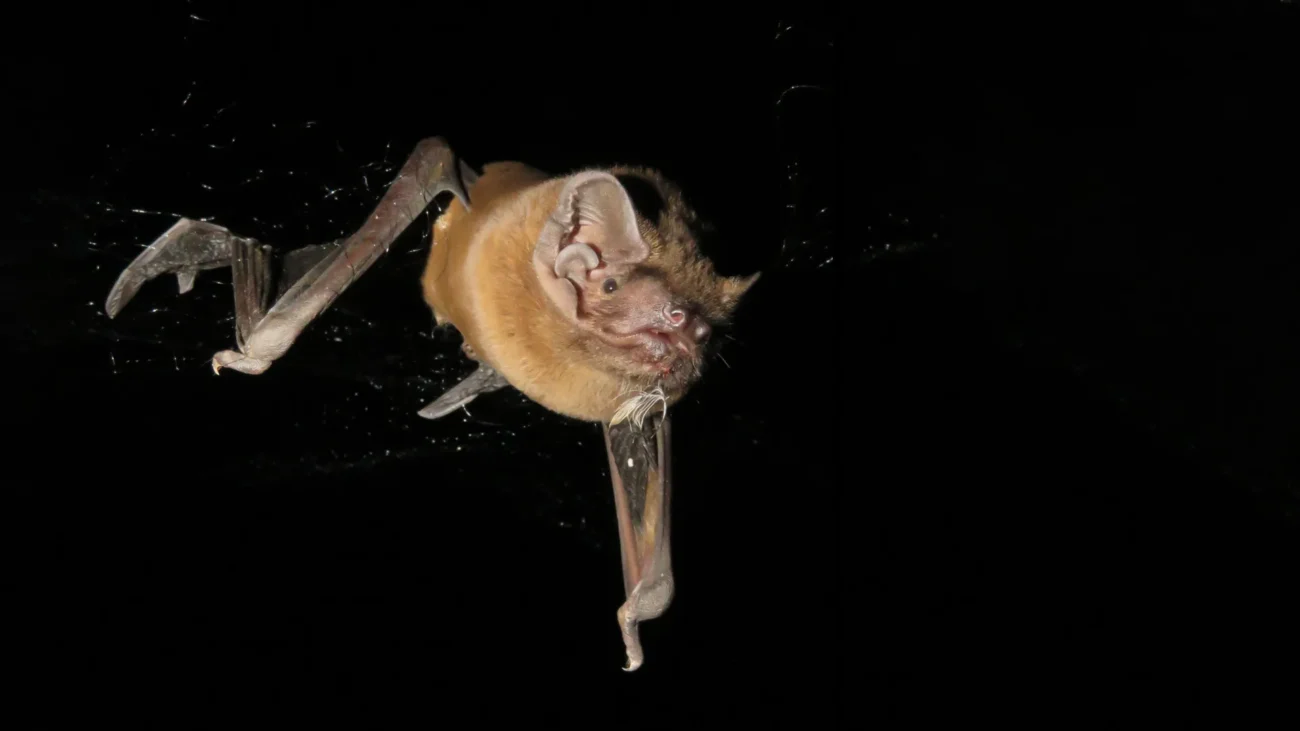
After nearly a quarter century of meticulous investigation, scientists have finally unraveled a remarkable mystery of the natural world: Europe’s largest bat, the greater noctule (Nyctalus lasiopterus), does not merely opportunistically snatch small birds; it actively hunts and captures them at altitudes exceeding a kilometer above the ground, consuming its prey while still in sustained flight. This groundbreaking discovery, published in the prestigious journal Science, paints a vivid picture of sophisticated nocturnal aerial predation, challenging long-held assumptions about bat feeding habits and the complex dynamics of the night sky.
A Decade-Long Quest for Elusive Truth
The journey to this astonishing revelation has been a protracted and challenging one, spanning over two decades. For years, the scientific community harbored a persistent hypothesis that certain large bat species might engage in avian predation. This idea, championed by pioneering Spanish bat expert Carlos Ibáñez and his colleagues at the Doñana Biological Station (CSIC) in Seville, began with seemingly innocuous findings. Nearly 25 years ago, Ibáñez discovered bird feathers within the droppings of greater noctules. This initial clue ignited a sustained effort to gather more concrete evidence, a mission that would become a cornerstone of his later career.
The greater noctule, a species known for its secretive, forest-dwelling nature, presented significant challenges to observation. Ibáñez’s team employed innovative techniques, including the use of "smart" roosts equipped with antennas designed to detect microchips implanted in the bats. This sophisticated system allowed for the real-time tracking of bat movements, storing invaluable data and sending immediate alerts to researchers. However, directly observing a bat capturing a bird in the vast expanse of the night sky proved exceedingly difficult. Researchers attempted a myriad of methods over the years, from roost cameras and military radar to hot-air balloons equipped with ultrasound recorders and advanced GPS trackers. The primary obstacle was the weight and size of the tracking equipment, which needed to be light enough for the bats to carry without hindering their flight capabilities. This technological hurdle, coupled with the inherent challenges of filming in complete darkness, meant that the hypothesis remained largely unconfirmed for decades, often met with skepticism due to the significant size difference between the predator and its prey. Birds, even small songbirds, can weigh nearly half as much as a greater noctule, making mid-air capture a feat of immense predatory prowess.
Technological Breakthroughs Illuminate the Night Sky
The turning point in this long-standing investigation arrived with the development of cutting-edge biologgers at Aarhus University. These incredibly lightweight devices, essentially tiny "backpacks" for bats, were instrumental in finally providing an unprecedented glimpse into the nocturnal hunting strategies of the greater noctule. The biologgers meticulously recorded a suite of crucial data points: altitude, acceleration, movement patterns, and the bats’ own echolocation calls. This technological leap enabled an international research team to effectively "ride along" with these elusive hunters, observing their activities at altitudes exceeding one kilometer above the ground.
The data gleaned from these advanced biologgers painted a remarkable picture. It revealed that greater noctules ascend to considerable heights in the night sky, a strategy seemingly employed to locate and ambush unsuspecting avian prey. Unlike insects, which are detected through echolocation, birds possess a greater capacity to evade ultrasonic calls. This means that the birds often only become aware of the imminent danger in the critical moments leading up to an attack. The success of the greater noctule in these aerial encounters hinges on its powerful, low-frequency echolocation calls, which allow it to detect potential prey at significant distances. As the bat closes in on a target, it transitions to rapid bursts of short-range calls, a clear signal that the final, decisive phase of the attack is underway.
Aerial Dogfights and Precarious Feasts
The information from the biologgers provided compelling evidence of highly dynamic and aggressive hunting maneuvers. The bats were observed to plunge toward their prey in steep, high-speed dives, a behavior that researchers likened to the precision attacks of fighter jets in aerial combat. In two particularly well-documented chases, the bats engaged in prolonged dives lasting 30 and an astounding 176 seconds, respectively. During these dives, the bats exerted significant effort, flapping their wings with increased intensity, tripling their acceleration, and maintaining a continuous barrage of attack calls.
While the first bat eventually abandoned its pursuit – a testament to the agility of birds even in the face of such formidable predators – the second bat achieved a successful capture after a chase that spanned nearly three minutes. This remarkable feat culminated in the capture of a robin at an altitude close to the ground. The auditory data captured by the biologgers during this event was both chilling and revelatory. It recorded 21 distinct distress calls from the robin, followed by an uninterrupted 23 minutes of chewing sounds as the bat continued to fly at low altitude, feeding on its substantial catch.
Further analysis, combining these auditory recordings with X-ray imaging and DNA analysis of bird wings recovered from beneath known hunting areas, has provided a comprehensive understanding of the entire predatory sequence. The research indicates that the bat kills the bird with a powerful bite. To facilitate easier consumption and reduce aerodynamic drag, the bat then expertly removes the bird’s wings. The remaining body of the bird is ingeniously held and consumed using the membrane between its hind legs, which effectively functions as a pouch, allowing the bat to continue feeding while in sustained flight.
A Remarkable Feat of Nature
Assistant Professor Laura Stidsholt from the Department of Biology at Aarhus University, a lead author on the study, emphasized the extraordinary nature of this discovery. "We know that songbirds perform wild evasive maneuvers such as loops and spirals to escape predators like hawks during the day — and they seem to use the same tactics against bats at night," she explained. "It’s fascinating that bats are not only able to catch them, but also to kill and eat them while flying. A bird like that weighs about half as much as the bat itself — it would be like me catching and eating a 35-kilo animal while jogging." Stidsholt, who has dedicated years to perfecting biologger technology for bat research, leading to numerous prior discoveries, was a Postdoc at the Leibniz Institute for Zoo and Wildlife Research (Leibniz-IZW) in Berlin when she completed the data collection and analysis for this project.
The confirmation of this decades-old hypothesis represents a significant triumph for the researchers involved. Elena Tena, a co-author on the study, described the moment she heard the recording of the bat consuming the robin as "both thrilling and sobering." She added, "While it evokes empathy for the prey, it is part of nature. We knew we had documented something extraordinary. For the team, it confirmed what we had been seeking for so long. I had to listen to it several times to fully grasp what we had recorded."
Implications for Conservation and Understanding
The implications of this research extend beyond a mere scientific curiosity. While the predatory prowess of the greater noctule is undeniable, the study provides reassurance that these bats do not pose a significant threat to overall songbird populations. The greater noctule itself is a rare and endangered species in many parts of its range, primarily due to the ongoing loss of its critical forest habitats.
Understanding the complex ecological role and behavior of this extraordinary nocturnal predator is now paramount for developing effective conservation and management strategies. The findings underscore the vital importance of preserving the forest ecosystems that support both the bats and their avian prey. By shedding light on the intricate dynamics of this high-altitude aerial predation, scientists are better equipped to protect one of Europe’s most remarkable, yet vulnerable, nocturnal hunters and ensure its continued survival in the wild. The successful confirmation of this long-held hypothesis serves as a powerful reminder of the vast, unexplored wonders that still exist within the natural world, waiting to be discovered through dedicated research and technological innovation.

