


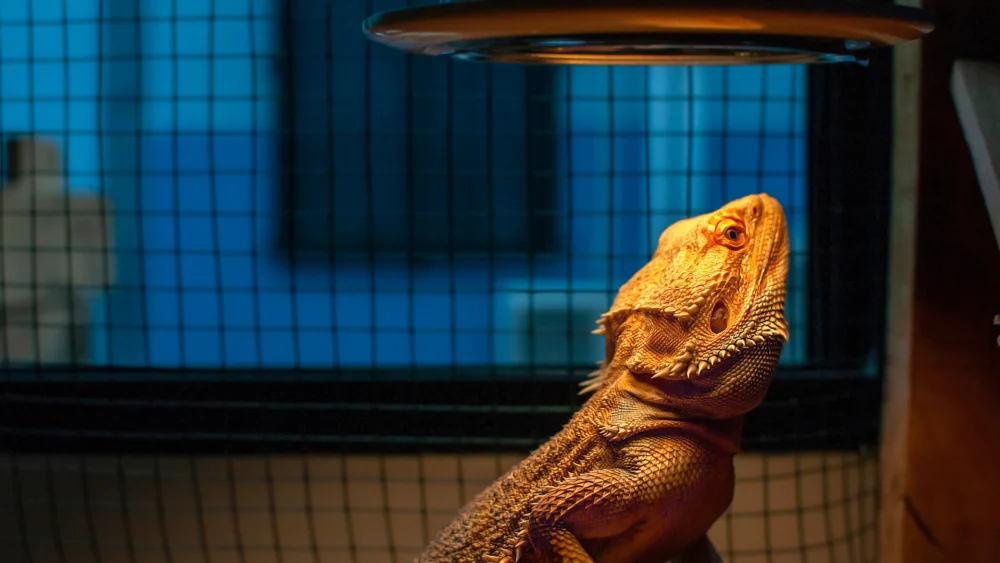
The evolution of exotic animal husbandry has reached a pivotal juncture as veterinary professionals and researchers redefine the role of artificial lighting in the health of captive species. For decades, the provision of ultraviolet B (UVB) radiation was considered a niche requirement, primarily reserved for diurnal, sun-basking reptiles such as green iguanas and bearded dragons. However, a growing body of evidence, spearheaded by experts like Dr. Mark Mitchell, a Professor of Zoological Medicine at Louisiana State University, suggests that the physiological necessity of UVB extends far beyond these traditional groups. Recent findings indicate that crepuscular reptiles, certain snake species, and even small mammals like rabbits and guinea pigs derive significant health benefits from controlled UVB exposure, challenging long-held assumptions about indoor animal care.
The Physics and Biology of Ultraviolet Radiation
To understand the clinical importance of lighting, one must first distinguish between the various segments of the electromagnetic spectrum. Ultraviolet radiation is categorized by wavelength, with shorter wavelengths possessing higher energy. Ultraviolet C (UVC), ranging from 100 to 280 nanometers (nm), is highly germicidal and is typically filtered out by the Earth’s atmosphere; in captive settings, it is used for sterilization but is hazardous to living tissue. Ultraviolet A (UVA), spanning 315 to 400 nm, is often referred to as "black light" and is known to influence the behavior and social signaling of many vertebrates.
The focus of current clinical research, however, is Ultraviolet B (UVB), which occupies the 280 to 315 nm range. This specific band of radiation is the primary catalyst for the synthesis of Vitamin D3 (cholecalciferol) in the skin. The biological pathway is a complex, multi-step process: when the skin is exposed to UVB, 7-dehydrocholesterol is photosynthetically converted into pre-vitamin D3. This precursor then undergoes a temperature-dependent conversion into Vitamin D3. Once formed, the hormone enters the bloodstream and travels to the liver, where it is hydroxylated into 25-hydroxyvitamin D3. The final step occurs in the kidneys, where it is converted into 1,25-dihydroxyvitamin D3, the active form of the hormone.
Vitamin D3 is not merely a nutrient but a critical hormone responsible for calcium homeostasis. It facilitates the absorption of calcium from the intestines, ensuring that the body has sufficient minerals for skeletal development, muscle contraction, and nerve signaling. Without adequate Vitamin D3, animals are at risk of developing metabolic bone disease (MBD), a debilitating and often fatal condition characterized by soft bones, fractures, and tremors.
A Chronology of Expanding Research
The history of UVB research in veterinary medicine reflects a steady expansion of the "target audience" for supplemental lighting. In the late 1990s and early 2000s, research focused almost exclusively on herbivorous, diurnal reptiles. Seminal studies by Bernard et al. (1991) and later Acierno and Mitchell (2006) established the groundwork for how artificial lights could replace natural sunlight in a laboratory or home setting.
By the mid-2010s, the scope began to widen. Research into the "Ferguson Zones"—a classification system for animal basking behaviors—helped veterinarians understand that even animals that do not bask in direct midday sun still require low-level UVB exposure. A major breakthrough occurred when researchers began looking at species previously thought to be exempt from lighting requirements. For instance, studies on corn snakes (Elaphe guttata) and leopard geckos (Eublepharis macularius) demonstrated that these animals, despite being crepuscular or nocturnal, showed a marked increase in circulating Vitamin D3 levels when provided with UVB.
The most surprising shift in the timeline came with the inclusion of small mammals. Between 2014 and 2023, studies on domestic rabbits, guinea pigs, and chinchillas revealed that these species also benefit from UVB. Historically, it was assumed that these mammals obtained all necessary Vitamin D through their diet. However, Emerson et al. (2014) and subsequent work by Watson and Mitchell showed that artificial UVB exposure significantly bolstered their Vitamin D status, suggesting that dietary intake alone may be insufficient for optimal health in indoor environments.
Data-Driven Insights: Not All Bulbs Are Equal
One of the most critical challenges identified in recent veterinary updates is the inconsistency of commercial lighting products. The term "full spectrum" is frequently used as a marketing tool but lacks a standardized regulatory definition. Dr. Mitchell emphasizes that two bulbs labeled similarly can produce vastly different quantities of UVB radiation.
Supporting data from various trials highlight several technical variables that caretakers must manage:
- The Inverse Square Law: The intensity of UVB radiation drops significantly as the distance between the bulb and the animal increases. A bulb that provides adequate radiation at 12 inches may be completely ineffective at 24 inches.
- The Glass Barrier: Common glass and many plastics are highly effective at filtering out UVB. Placing a high-quality UVB bulb over a glass terrarium lid essentially negates the benefits of the light, as the glass defracts the necessary wavelengths.
- Bulb Decay: UVB-producing phosphors in fluorescent tubes degrade over time. While a bulb may still produce visible light, its UVB output may drop to negligible levels within six to twelve months, necessitating regular replacement and monitoring with a radiometer.
Clinical Recommendations and the "Two-Hour Rule"
Despite the clear benefits of UVB, the veterinary community warns against overexposure. In nature, animals have the ability to self-regulate by moving between sun and shade—a behavior known as heliothermy. In a confined captive environment, providing intense UVB for 12 to 14 hours a day can lead to adverse effects.
Dr. Mitchell has documented cases of photokeratitis—painful inflammation of the cornea—in reptiles exposed to inappropriate artificial UVB sources. Furthermore, there is emerging concern regarding skin malignancies. Studies on inland bearded dragons (Pogona vitticeps) have suggested a potential link between excessive artificial UV exposure and the development of squamous cell carcinoma.
To mitigate these risks while still providing the benefits of Vitamin D3 synthesis, Dr. Mitchell currently recommends a "restricted exposure" model. In this framework, animals are provided with high-quality UVB lighting for only two hours per day. This duration appears sufficient to trigger the necessary hormonal pathways without reaching the threshold for tissue damage. This recommendation represents a significant shift from the traditional "lights on all day" approach and reflects a more nuanced, evidence-based strategy for exotic animal care.
Official Responses and Industry Impact
The response from the veterinary community and the pet care industry has been one of cautious adoption. The American Association of Veterinary State Boards (AAVSB) has recognized the importance of this data by approving continuing education (CE) credits for programs focusing on UVB lighting, such as those hosted by LafeberVet.
Industry manufacturers are also beginning to respond to the demand for better data. More companies are now providing "spectral power distribution" (SPD) charts for their bulbs, allowing savvy consumers and veterinarians to see exactly which wavelengths are being emitted. However, the lack of universal standards means that the burden of proof still largely rests on the caretaker to measure output using handheld radiometers.
Leading zoological institutions have already begun implementing these findings. Many zoos now use "solarmeters" to conduct weekly audits of their enclosures, ensuring that animals receive the exact micro-microwatts of UVB required for their specific Ferguson Zone classification.
Broader Implications for Animal Welfare
The implications of this research extend far beyond the prevention of bone disease. Adequate Vitamin D3 levels are increasingly linked to improved immune function, higher reproductive success rates, and overall better psychological well-being in captive animals. For species like the ball python (Python regius), which showed inconsistent results in some studies, the ongoing debate highlights the need for species-specific research rather than a "one size fits all" approach.
As we look toward the future of exotic pet medicine, the focus is shifting from "survival" to "thriving." The move toward evidence-based lighting protocols signifies a deeper understanding of the complex relationship between an animal’s environment and its internal physiology. By recognizing that light is a form of medicine—one that must be dosed as carefully as any pharmaceutical—veterinarians are setting a new standard for the care of the world’s most unique and sensitive species. The "Sunburned" update serves as a reminder that in the quest to mimic nature, precision and moderation are the keys to longevity and health.

