


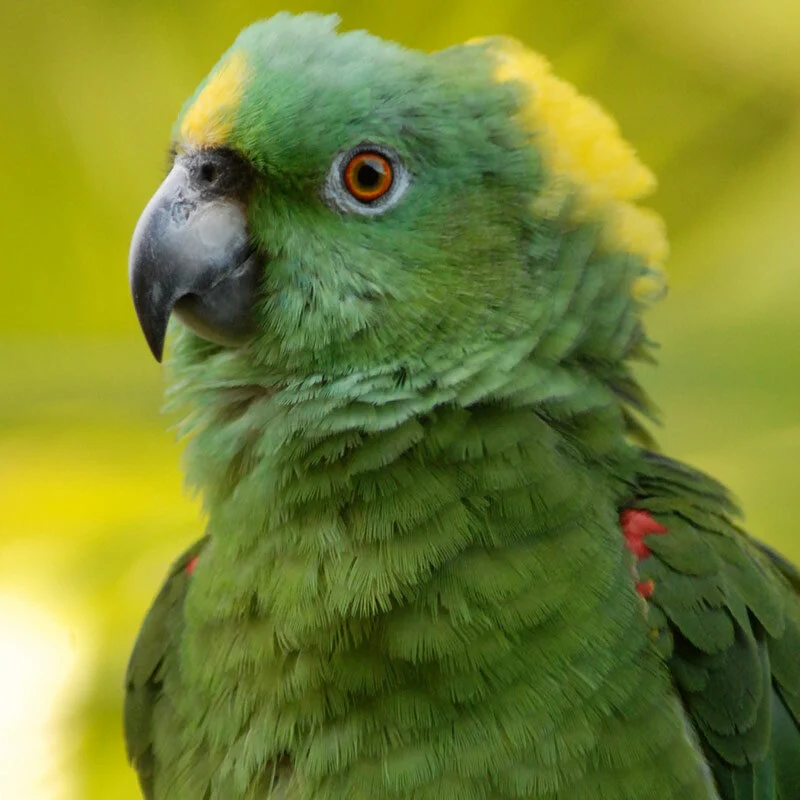
Parrots have long captivated human observers with their remarkable capacity for vocal mimicry, replicating human words and accents with uncanny accuracy. However, groundbreaking new research suggests that their internal communication systems are equally, if not more, sophisticated. A recent study focused on yellow-naped Amazon parrots has revealed that mated pairs engage in complex "warble" duets, comprising an astonishing 36 distinct call types arranged in patterned, rule-governed sequences. This discovery significantly bolsters the growing body of evidence indicating that parrots utilize highly structured and potentially language-like communication systems within their own species.
Published on February 12, 2026, the study, titled "Decoding Parrot Duets," was spearheaded by Dr. Christine R. Dahlin, a distinguished professor of biology at the University of Pittsburgh, alongside her five dedicated colleagues. Their findings, detailed in a prominent scientific journal, propose that yellow-naped Amazon parrots communicate through a learned system of vocalizations that bears striking functional resemblances to human language. This research pushes the boundaries of our understanding of animal cognition and the evolution of complex communication.
Unraveling the Structure of Parrot Duets
The core of Dr. Dahlin’s research centers on the intricate structure identified within the parrots’ duets. Scientists observed clear structural patterns and recognizable "rules" governing these vocal exchanges, drawing parallels to the syntactical and grammatical principles inherent in complex human speech. A particularly fascinating aspect of their findings was the discovery of sex-biased calls, with a significant majority—between 75% and 99%—primarily employed by either males or females. Even more compelling are the entirely sex-specific calls, produced exclusively by one gender, suggesting specialized roles or information exchange within pair bonds.
This level of vocal complexity is often associated with highly social animal species, a characteristic prominently displayed by yellow-naped Amazon parrots. These birds are already known for exhibiting regional dialects across their entire repertoire of calls, indicating a cultural transmission of vocalizations. The study further categorized their calls into two main groups: primary calls, which are the most prevalent, and "warble" calls. The warble call, identified as a faster and more diverse range of notes, appears to serve a crucial function for mated pairs, primarily for alerting and warning purposes. In total, the researchers meticulously identified 36 distinct call types, alongside an additional 11 calls that were heard only once during the extensive observation period, hinting at an even broader, yet rarely used, vocabulary.
A Deeper Dive into Avian Vocal Learning and Cognition
The ability of parrots to engage in such sophisticated vocalizations is rooted in their unique capacity for vocal learning, a trait shared by only a select few animal groups, including some songbirds, hummingbirds, bats, cetaceans, pinnipeds, and humans. Unlike species with innate vocalizations, vocal learners can modify their sounds based on social interaction and environmental cues. This flexibility is critical for developing complex, learned communication systems like those observed in the yellow-naped Amazon.
For decades, researchers have been fascinated by the cognitive abilities of parrots. Studies on species like African Grey Parrots have demonstrated their capacity for not just mimicry, but also for understanding context, associating words with objects, and even basic numerical concepts. The current study on yellow-naped Amazons elevates this understanding by moving beyond mere mimicry to the intrinsic structure of their own communication. It suggests that parrots aren’t just repeating sounds; they are actively constructing meaningful sequences, following internal rules, much like human grammar. This shifts the paradigm from viewing parrots as clever mimics to recognizing them as sophisticated communicators with potentially rich internal "languages."
The Scientific Journey Towards Decoding Animal Communication
The path to understanding animal communication has been a long and winding one, evolving from anecdotal observations to rigorous scientific inquiry. Early naturalists were often amazed by animal sounds but lacked the tools for systematic analysis. The mid-20th century saw the emergence of bioacoustics, utilizing spectrographic analysis to visualize sound patterns, allowing scientists to categorize and compare animal vocalizations with unprecedented precision.
Pioneering work in the 1960s and 70s on species like dolphins and chimpanzees sparked widespread public interest in the concept of animal "language." While initial claims often outpaced scientific evidence, these efforts laid the groundwork for more nuanced and methodologically sound investigations. The 1980s and 90s brought increased focus on birdsong, revealing its complex syntax and dialectal variations. Researchers began to identify "rules" in songbird communication, though often less complex than the multi-component sequences now being observed in parrots.
The present study by Dr. Dahlin and her team represents a significant leap forward in this chronology. By applying sophisticated analytical techniques to discern structural patterns and "rules" in the parrots’ duets, they are directly addressing the question of whether animal communication can possess syntactic organization—a hallmark often attributed exclusively to human language. This research builds upon decades of accumulated knowledge, leveraging advancements in acoustic recording, computational analysis, and cognitive ethology to reveal layers of complexity previously unimaginable. The publication date of February 12, 2026, positions this study as a contemporary benchmark in the ongoing quest to "break the code" of animal vocal communication.
Critical Conservation Imperatives and Broader Implications
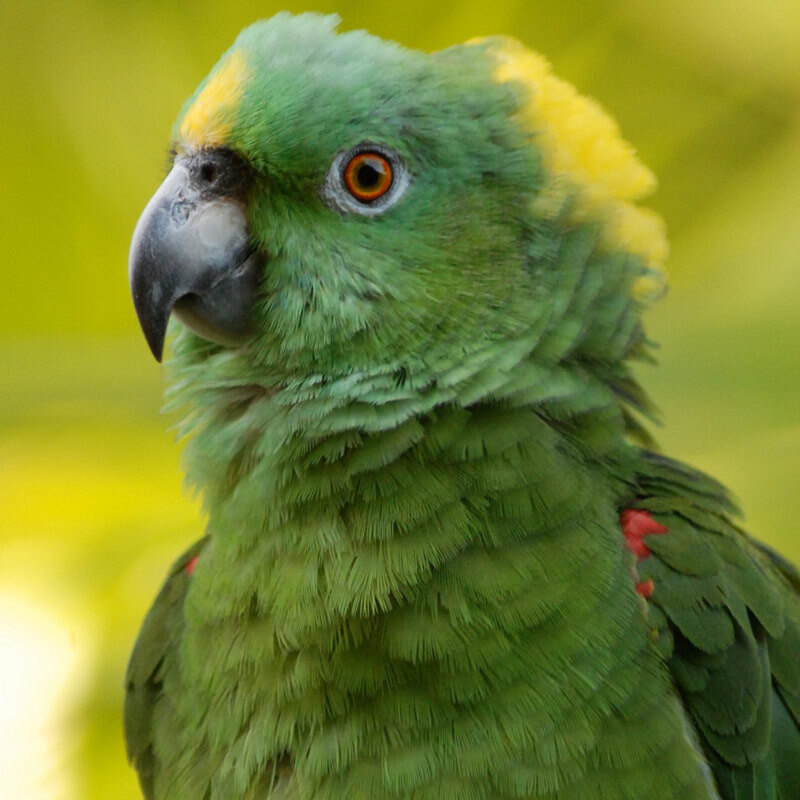
Beyond its profound scientific implications for understanding animal cognition and the evolution of language, this study carries a critical message for conservation. Yellow-naped Amazon parrots (Amazona auropalliata) are classified as critically endangered in the wild by organizations like BirdLife International. Their populations have suffered catastrophic declines due to a confluence of factors, primarily habitat destruction driven by deforestation for agriculture and development, and the relentless pressure of the illegal pet trade. These intelligent and social birds are highly prized for their mimicking abilities, leading to extensive poaching that decimates wild populations and disrupts their intricate social structures.
The discovery that these parrots possess such a complex and learned communication system underscores the immense biological value of preserving them. Each individual parrot represents not just a genetic lineage but also a repository of culturally transmitted knowledge, including their unique "dialects" and "linguistic rules." The loss of a population doesn’t just mean fewer birds; it means the loss of a unique cultural heritage and a valuable data set for understanding the origins and evolution of complex communication on Earth.
Dr. Dahlin and her colleagues emphasize this symbiotic relationship between research and conservation, stating, "If we hope to eventually break the code of their vocal communication system, it will likely take a sustained mix of conservation efforts, field observations, and playback experimentation." This highlights that understanding their communication is not merely an academic exercise but a practical tool for conservation. For instance, understanding warning calls could inform strategies to protect them from poachers, or identifying pair-bonding duets could aid in rehabilitation and reintroduction programs.
Furthermore, the study stresses the irreplaceable value of studying these communication systems in their natural habitats: "Ultimately, our work demonstrates the value of research into vocal complexity and syntactic organization in wild animal populations, as natural pressures shape communication in ways that cannot be replicated in captivity." The nuances, rules, and evolutionary pressures that shape such complex communication can only be observed and understood in the dynamic environment of the wild. Captive breeding programs are vital, but they cannot fully replicate the ecological context that fosters and refines these sophisticated vocal behaviors.
Reactions from the Scientific Community and Future Directions
The scientific community is expected to welcome these findings with considerable enthusiasm. Experts in bioacoustics, cognitive ethology, and evolutionary biology will likely see this study as a significant step towards bridging the gap between human and animal communication. While caution will remain regarding the direct equivalence of parrot communication to human language, the identification of "rule-governed sequences" and "sex-specific calls" provides concrete evidence of a highly structured system that warrants deeper investigation.
Conservation organizations, particularly those focused on parrots and endangered avian species, will likely leverage these findings to amplify their advocacy efforts. The notion that these critically endangered birds possess a "language-like" system could resonate powerfully with the public, fostering greater empathy and support for conservation initiatives.
Looking ahead, the research opens numerous avenues for future investigation. Playback experiments, where researchers play recorded calls to wild parrots and observe their responses, could provide crucial insights into the precise meaning and context of different call types. Longitudinal studies tracking individual pairs over extended periods could shed light on how these duets evolve, how new calls are learned, and how they contribute to social cohesion and reproductive success. Comparative studies with other parrot species or even other vocal learning animals could reveal common principles in the evolution of complex communication.
Ultimately, Dr. Dahlin’s research challenges us to reconsider our anthropocentric views on language and intelligence. It serves as a powerful reminder of the hidden complexities and profound depths of the natural world. As we continue to decode the intricate vocal tapestries of species like the yellow-naped Amazon parrot, we not only gain a deeper appreciation for their intelligence but also reinforce the urgent need to protect these magnificent creatures and their invaluable contributions to the planet’s biodiversity and cultural heritage. The quest to understand their "language" is intrinsically linked to the imperative of their survival.

