


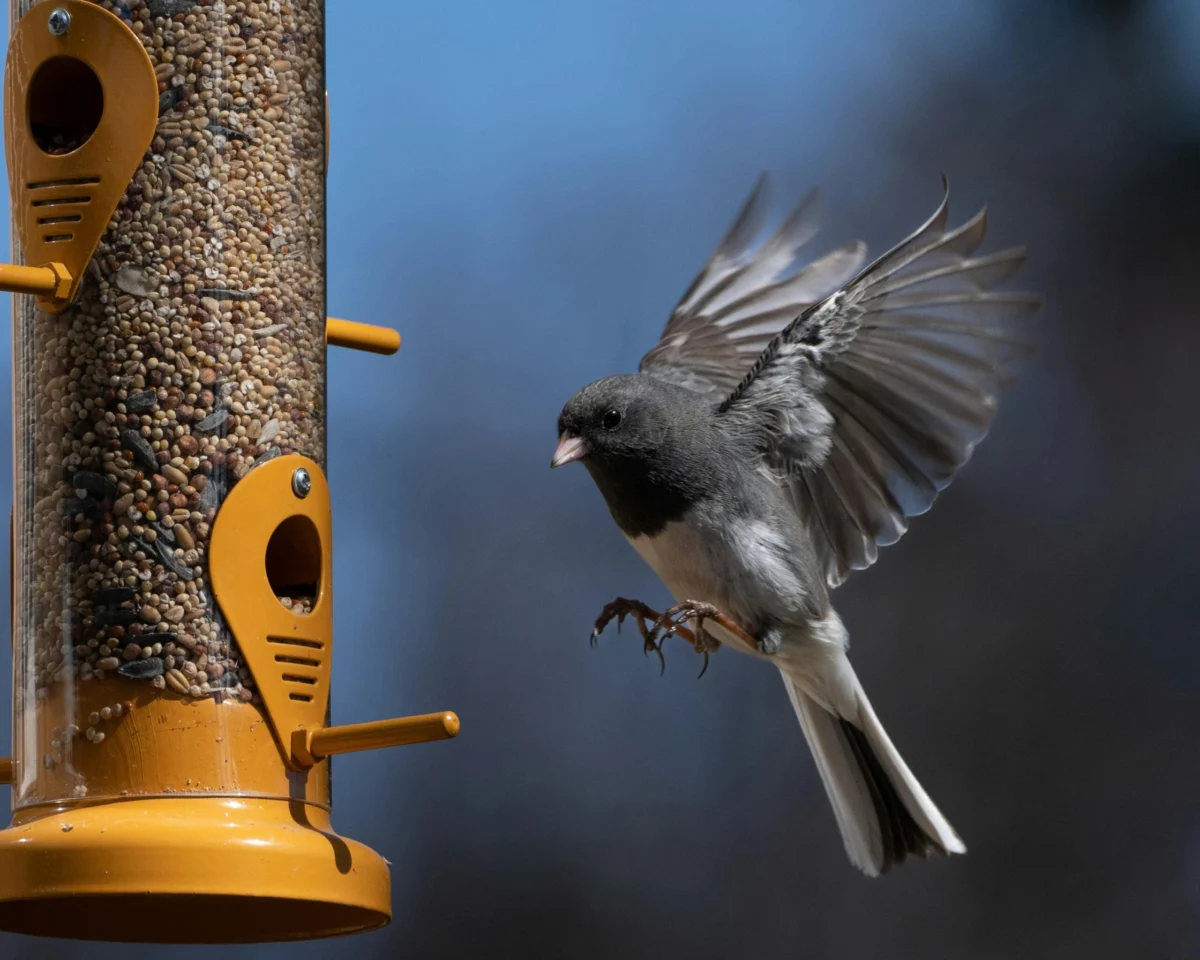
It’s a scene familiar to anyone who enjoys the simple pleasure of backyard birdwatching: you top up the bird feeder, step back inside, and within minutes, birds seem to appear as if from nowhere. While it might feel like a touch of magic, and as if they possess an uncanny sixth sense for a replenished food source, the reality is far more grounded in impressive biological and behavioral adaptations. Birds aren’t psychic, but their methods for locating bird feeders are a testament to their keen senses, remarkable memory, and complex social awareness. Understanding these mechanisms offers a fascinating glimpse into the intelligence and observational skills of our feathered neighbors.
The seemingly instantaneous arrival of birds at a refilled feeder is not a coincidence, but rather the result of a sophisticated, multi-faceted approach to foraging. These avian visitors primarily utilize their exceptional eyesight, a robust memory for reliable food locations, and the powerful influence of social cues. They are adept at spotting feeders and any associated movement from a distance, recalling past successful feeding sites, and are quick to join a gathering of fellow birds already partaking. While less primary, auditory cues and general activity around the feeder can also play a supplementary role in alerting them to a potential food source. This intricate interplay of sensory input and learned behavior explains why a feeder can transition from quiet to bustling in a matter of moments.
The Power of Sight: More Than Meets the Eye
Contrary to a common misconception, most backyard birds possess a relatively poor sense of smell. Their primary tool for navigating their world and locating sustenance is their extraordinary eyesight. Many bird species boast visual acuity that far surpasses our own, allowing them to detect subtle changes in their environment from significant distances. When a bird feeder is refilled, these changes are often readily apparent to a bird observing from a nearby perch, such as a tree, hedge, fence, or rooftop.
The act of refilling a feeder can involve several visual cues that attract avian attention. The sudden appearance of a new object, the movement of the feeder as it is accessed, or the glint of sunlight on fresh seed or the feeder itself can all serve as potent signals. Furthermore, some bird species have the ability to perceive ultraviolet (UV) light. This capability can make seeds and feeders appear more vibrant and distinct against natural backgrounds, further enhancing their detectability. For instance, certain seeds have UV-reflective coatings that make them stand out to birds, even if they appear less conspicuous to the human eye. This visual advantage is crucial for birds navigating complex environments and identifying potential food sources quickly and efficiently.
Debunking the Scent Myth: Do Birds Smell Bird Seed?
The idea that birds are drawn to feeders by the scent of bird seed is largely inaccurate for the majority of common feeder species. Compared to mammals, many birds have a limited olfactory system, meaning the aroma of seeds typically doesn’t travel far enough or isn’t potent enough to be their primary attractant. While some avian species, like vultures or seabirds, do have a more developed sense of smell and utilize it for finding carrion or fish, this is not the norm for the songbirds that frequent backyard feeders.
In specific circumstances, scent might play a minor role, particularly in dense foliage or during challenging weather conditions. However, for the typical garden or backyard feeder, the overwhelming drivers for bird attraction are visual confirmation, learned associations, and observing other birds. Birds are more likely to be responding to the sight of the feeder, the memory of a previously fruitful location, or the immediate presence of other feeding individuals, rather than a distant aroma of seeds.
Memory: The Cornerstone of Reliable Foraging
Birds possess a surprisingly robust memory, particularly when it comes to food sources. Once a bird feeder has consistently provided sustenance, birds will repeatedly return to investigate it, even if it is temporarily empty. This learned behavior allows them to efficiently map out reliable food locations within their territory. They quickly learn:

- The location of the feeder: Through repeated visits, birds establish a mental map of where the feeder is situated in their environment.
- The type of food offered: While not always the primary attractant, birds can learn to associate certain feeders with specific types of seeds or suet, which they may prefer.
- The reliability of the food source: Consistent refilling reinforces the feeder’s status as a dependable food provider, increasing the likelihood of return visits.
This capacity for memory is especially critical during the winter months when natural food sources become scarce. Remembering dependable feeding spots can be a matter of survival for many bird populations. Therefore, when birds appear moments after a feeder is refilled, it’s often not a sudden discovery, but rather a return to a known, reliable resource that they have been monitoring.
Social Learning: The Power of the Flock
Birds are inherently social creatures, and their interactions with each other play a significant role in how they find food. They don’t just observe their surroundings; they actively watch other birds. When one bird discovers a feeder and begins to feed, this activity acts as a powerful signal to others in the vicinity. This phenomenon, known as local enhancement, allows birds to locate food sources by observing the success and behavior of their conspecifics.
This social learning is particularly evident in highly social species such as tits, finches, sparrows, and starlings. The sight of one bird at a feeder can trigger a cascade effect, drawing in others who notice the activity. This indirect form of communication is incredibly effective. Birds don’t "tell" each other about food in the human sense of giving directions, but by observing where others are congregating and feeding, they can quickly identify new or replenished food opportunities. This ripple effect makes it appear as though birds are "spreading the news," transforming a solitary feeder into a communal dining spot in a very short time.
The Role of Sound and Activity: Supporting Cues
While sight and memory are the dominant forces in bird feeder location, sound and general activity also contribute to the process. The distinct rattle of seeds falling into the feeder, the subtle movement of the feeder itself, or the vocalizations of birds already engaged in feeding can all serve as supplementary cues. These auditory and kinetic signals act as confirmations, reinforcing what birds might already be observing or remembering.
For example, a bird might visually spot a potential feeder but hesitate. However, hearing the sounds of other birds feeding or seeing the feeder sway slightly can provide the final confirmation that food is indeed available and safe to access. This multi-sensory approach ensures that birds are highly attuned to their environment and can efficiently exploit available resources.
Why the Instantaneous Arrival? A Synthesis of Factors
The rapid appearance of birds after a feeder is refilled is a culmination of several factors working in concert:
- Proximity: Birds are often already in the vicinity, frequently moving between known food sources throughout the day. They might have been perched nearby, observing the feeder even before it was refilled.
- Memory Reinforcement: The act of refilling transforms the feeder from a "currently empty but potentially rewarding" location to an "actively feeding" site. Birds that had previously visited and found it empty will be drawn back by the renewed activity and visual cues.
- Social Attraction: If one or two birds arrive first, their presence quickly attracts others through social cues. This immediate flocking behavior can create the illusion of birds appearing out of nowhere.
Essentially, birds are constantly scouting and revisiting potential food locations. Refilling the feeder simply updates its status in their mental landscape from a place to check to a place to eat.
Enhancing Bird Feeder Accessibility
For those wishing to attract more avian visitors to their feeders more quickly and consistently, several practical steps can be taken:

- Strategic Placement: Position feeders in visible locations, away from dense foliage that might obscure them, but close enough to natural perches like trees or shrubs for birds to survey their surroundings.
- Clear Visibility: Ensure the feeder is easily seen from various angles. Avoid placing it directly behind obstructions.
- Consistent Refilling: Maintain a regular schedule for refilling feeders. This reinforces their reliability and helps birds build strong associations with the location.
- Variety of Food: Offer a diverse range of seeds, nuts, and suet to appeal to a wider array of bird species. Different birds have different dietary preferences.
- Auditory Cues: While not always controllable, the natural sounds of feeding can be attractive. Ensuring the feeder is not overly muffled can help.
- Proximity to Water: Bird baths or other water sources near feeders can also enhance their attractiveness, as birds need water for drinking and bathing.
Addressing Dependency Concerns
A common concern among bird feeder enthusiasts is whether birds become dependent on artificial food sources. Research and extensive observation suggest that this is generally not the case for most wild bird populations. Bird feeders typically serve as a supplement to natural food sources, rather than a complete replacement. Birds continue to engage in their natural foraging behaviors, seeking out insects, seeds, berries, and other sustenance from their environment.
While feeders can be particularly beneficial during harsh weather conditions, such as prolonged cold spells or droughts, when natural food is scarce, birds are adept at adjusting if a feeder is removed. Their innate survival instincts and their knowledge of natural food sources remain intact. The key is consistency; regular refilling provides a reliable resource that birds can count on, especially during challenging times, rather than fostering outright dependency.
A Window into Avian Intelligence
The seemingly magical appearance of birds at a refilled feeder is a profound illustration of their intelligence and adaptability. It is a direct result of:
- Exceptional Eyesight: Their ability to spot subtle changes from afar.
- Acute Memory: Their capacity to remember and return to reliable food sources.
- Social Dynamics: Their tendency to learn from and follow the lead of other birds.
- Sensory Integration: Their use of sight, sound, and activity to confirm food availability.
Observing this behavior offers a captivating glimpse into how birds navigate their complex world, interact with their environment, and communicate indirectly. It’s one of the many quiet joys of engaging with nature and a constant reminder that the familiar inhabitants of our gardens are sophisticated beings, perpetually observing, learning, and adapting to their surroundings.
Bird Feeder FAQs
Do birds find feeders by smell?
No. The vast majority of common feeder birds have a weak sense of smell. They primarily rely on excellent eyesight, a strong memory for food locations, and social cues from other birds to find feeders.
How long does it take birds to find a new feeder?
The time it takes for birds to discover a new feeder can vary significantly. It can range from a few hours for highly visible feeders in areas with abundant bird activity to several weeks for less conspicuous feeders or in locations with fewer local birds. Factors like the type of food offered and the feeder’s visibility play a crucial role.
Do birds remember feeder locations?
Yes. Many bird species, particularly those that are social and territorial, possess excellent memories for food sources. They will remember reliable feeding spots and revisit them regularly, even if the feeder is temporarily empty, to check for new offerings.
Do birds recognize humans who feed them?
While birds may not recognize individual humans in the same way we recognize faces, they are capable of learning associations. Many birds can learn to associate specific people, places, and routines with the presence of food and a sense of safety. Over time, they may become less wary of the individual who consistently fills the feeder, especially if that person moves calmly and predictably. This learned association of "person = food = low threat" can influence how closely birds approach.

