


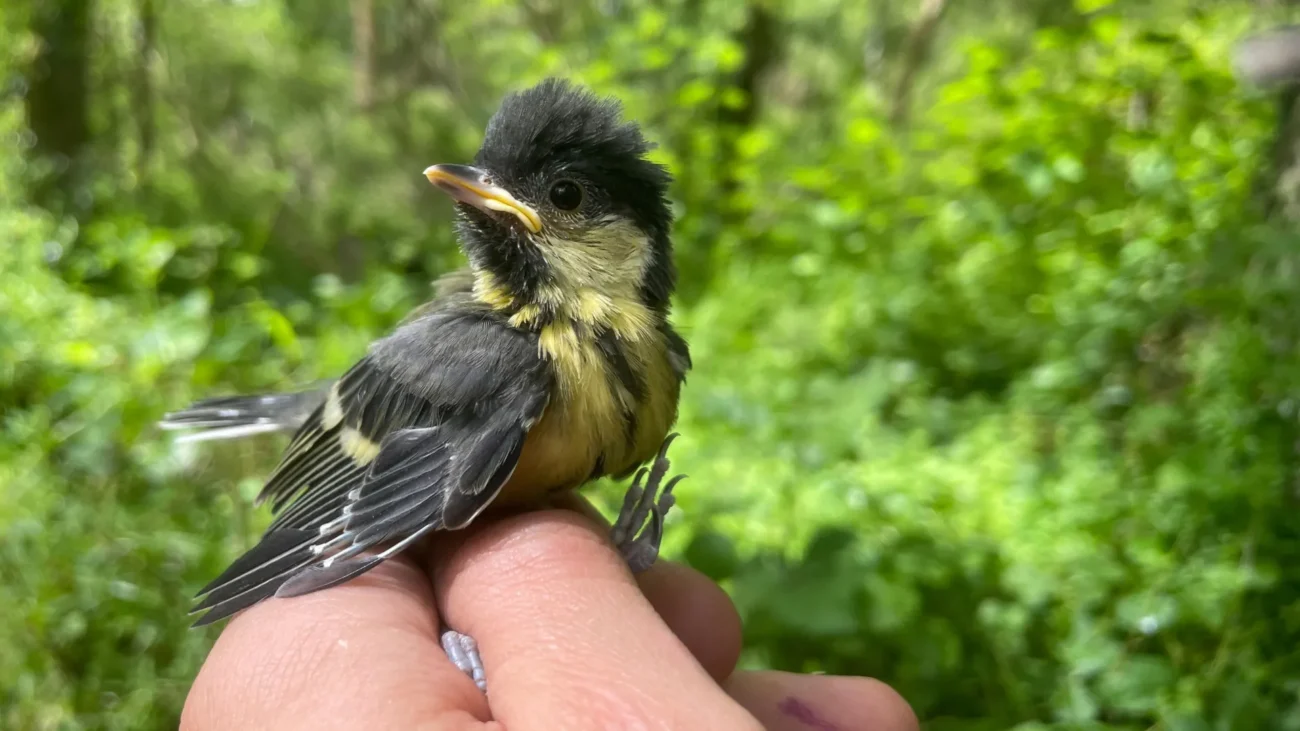
A groundbreaking six-decade study by the University of Oxford has unearthed a stark reality for the United Kingdom’s great tit population: sudden cold snaps and torrential downpours pose significant threats to the survival and development of young birds. Published on March 11, the research, which analyzed over 80,000 individual birds and their environmental conditions, offers a critical insight into how climate change is impacting avian life. Crucially, the findings suggest that an earlier start to the breeding season may offer a partial buffer against these increasingly severe weather events, though this adaptation also presents its own set of challenges.
The extensive dataset, meticulously compiled over 60 years at Oxford’s renowned Wytham Woods, provides an unprecedented longitudinal view of great tit populations. Scientists meticulously cross-referenced this biological data with detailed daily meteorological records. By pinpointing the coldest, wettest, and hottest days within each breeding season, the researchers were able to quantify the frequency of extreme weather occurrences during the most vulnerable stages of chick development. Their analysis focused on how these events influenced the fledging mass of nestlings – a key indicator of their subsequent survival chances.
The Dual Threat of Cold and Rain on Nestling Survival
The study’s revelations paint a concerning picture, particularly highlighting the acute vulnerability of newly hatched chicks. Severe cold experienced during the critical first week after hatching was found to be particularly detrimental, significantly hindering growth. As the chicks mature, however, the threat shifts, with heavy rainfall emerging as the more potent adversary. Both extreme cold and persistent rain were shown to reduce the body mass of fledglings by as much as 3%, a seemingly small percentage that can have profound implications for their ability to survive in the wild.
The impact of extreme weather is not always additive; in some instances, the combination of meteorological stressors can be exponentially more damaging. The research found that when intense heat coincides with heavy rainfall, the consequences for young birds are dramatically amplified. In such scenarios, fledging mass can plummet by an astonishing 27%, a devastating blow that disproportionately affects broods that hatch later in the breeding cycle. This synergistic effect underscores the complex interplay of environmental factors that shape avian survival.
Devi Satarkar, the lead researcher from the Department of Biology at the University of Oxford, elaborated on these findings: "In the Wytham population, great tits have adjusted to warmer springs by breeding earlier to track peak abundance of their main prey, caterpillars. This overall earlier laying is beneficial, buffering them against many impacts of extreme weather — but it also exposes them to cold spells early in the season. Even small early-life deficits can have large implications for survival. It will only get tougher for birds to keep up as extreme weather increases in frequency and intensity with climate change." This observation points to a complex evolutionary arms race between avian life and a rapidly changing climate, where adaptations themselves can create new vulnerabilities.
The Biological Mechanisms Behind Weather’s Toll
The physiological reasons behind these adverse effects are rooted in the fundamental needs of young birds. Newly hatched chicks possess a limited ability to regulate their own body temperature due to their lack of developed feathers. During periods of intense cold, a significant portion of their energy reserves, which should be dedicated to growth and development, must instead be diverted to thermoregulation – simply staying warm. This metabolic strain can lead to stunted growth and a weakened physical state.
Beyond direct physiological impacts, extreme weather also disrupts the critical food supply chain for nestlings. Both prolonged cold and heavy rainfall can significantly curtail the ability of parent birds to forage for food. This means fewer trips away from the nest, resulting in less nourishment for the hungry chicks. Furthermore, heavy rainfall can physically dislodge caterpillars from vegetation, the primary food source for many young songbirds. This reduction in the availability of these high-energy insect larvae directly impacts the chicks’ ability to meet their substantial caloric requirements, further exacerbating growth deficits.
An Unexpected Silver Lining: Mild Heat and its Benefits
Amidst the concerning findings, the study also revealed an unexpected nuance: periods of warmer weather, within certain parameters, were actually linked to heavier fledging weights. While high temperatures are typically associated with heat stress, the warmer periods observed in Oxfordshire were described as relatively mild, particularly when contrasted with the extreme heat experienced in more southerly regions of Europe.
Satarkar explained this phenomenon: "Extreme weather events are affecting wild bird populations in complex ways. The level of warmth we see in these heat extremes in Oxfordshire might boost growth because it can increase insect activity and visibility — making caterpillars easier to find — while letting parents forage more and reducing nestlings’ thermoregulatory costs. The high water content in caterpillars also helps against dehydration. This contrasts sharply with hotter regions like the Mediterranean, where similar events can exceed 35°C and harm nestlings." This highlights the critical importance of context and scale when assessing the impact of weather, demonstrating that what might be beneficial in one region could be detrimental in another. The high water content of caterpillars, for instance, can serve a dual purpose, providing both nutrition and hydration, a vital consideration in environments where water scarcity can become a concern.
The Advantage of an Early Start to the Breeding Season
The research strongly indicates that broods hatching earlier in the spring gain a significant advantage. These early nesters often benefit from a confluence of favorable conditions: abundant caterpillar populations coinciding with temperatures that remain within a safe and conducive range for chick development. In contrast, birds that commence their breeding efforts later in the season face a more challenging environment. Even when the peak temperatures experienced by these later broods are similar to those of their earlier counterparts (around 16-17°C), their fledglings are found to be approximately one-third lighter. This stark difference underscores the critical importance of timing in the face of fluctuating environmental conditions.
When considering long-term survival, the study’s data reveals that while extreme cold and rainfall consistently reduce the odds of young birds surviving to adulthood, warmer extremes, when mild, can exert small but positive influences. However, the overarching conclusion is that breeding earlier within the seasonal cycle appears to be a crucial strategy for shielding a significant portion of the great tit population from the most severe consequences of unpredictable weather patterns. This adaptive strategy, driven by evolutionary pressures, is a testament to the resilience of species, yet it also highlights their inherent dependence on predictable environmental cues.
Broader Implications for Wildlife Conservation in a Changing Climate
The implications of this Oxford study extend far beyond the great tit population in Wytham Woods. As climate change continues to intensify the frequency and severity of extreme weather events globally, understanding these nuanced impacts on wildlife becomes paramount. Scientists emphasize the growing necessity of monitoring microclimates and localized habitat differences, which can significantly influence how species respond to broader climatic shifts.
This granular level of environmental understanding is crucial for developing effective conservation strategies. This could include informed decisions about nest box placement to offer shelter from extreme elements, and targeted woodland management practices designed to enhance food availability and reduce exposure during critical developmental periods for vulnerable avian species. The research provides a compelling case for investing in fine-scale ecological monitoring to guide conservation efforts.
The research team at the University of Oxford intends to continue its long-term monitoring of the great tit population in Wytham Woods. Their ongoing work aims to decipher how these weather-driven effects might evolve in the future. A key area of inquiry will be to determine whether heatwaves that are currently considered moderate could transition into harmful conditions as global temperatures continue their upward trajectory. This forward-looking research is essential for anticipating future challenges and proactively developing strategies to safeguard biodiversity in an increasingly unpredictable world. The study serves as a potent reminder that the intricate web of life is directly influenced by the health of our planet’s climate, and that even seemingly small changes can have profound and cascading effects on the natural world.

