


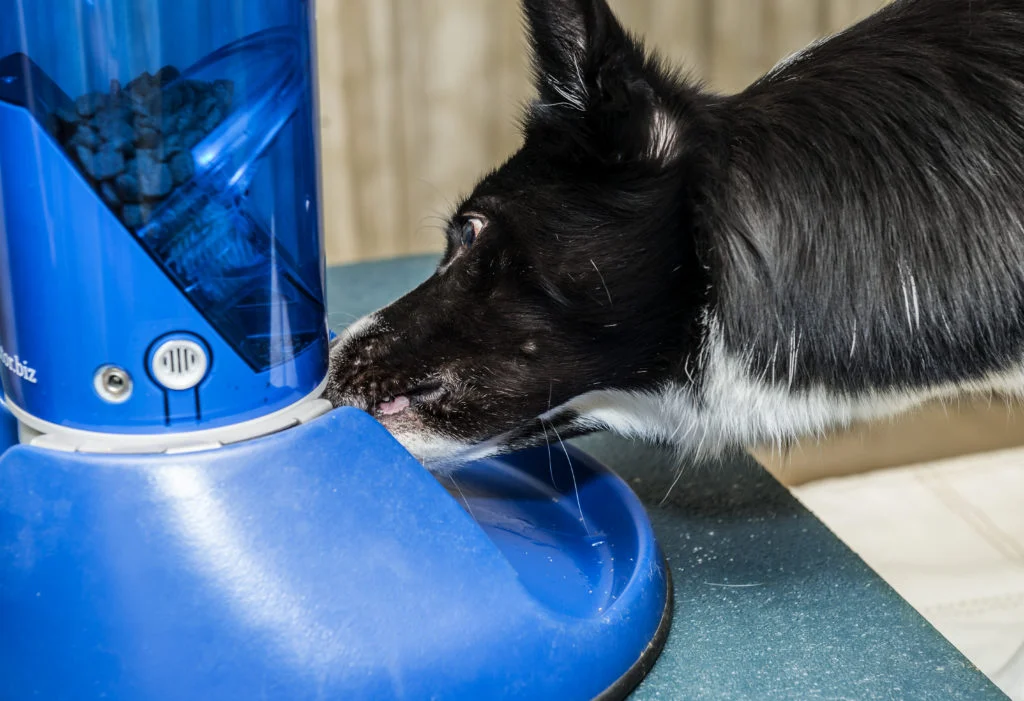
The advent of automated treat dispensers, such as the Pet Tutor, has revolutionized modern canine training, offering unprecedented opportunities for precise timing and hands-off reinforcement. However, the efficacy of these innovative tools hinges not merely on their deployment, but on a nuanced understanding of how dogs perceive and interact with them. A critical, yet often counterintuitive, principle in maximizing the Pet Tutor’s potential is to proactively establish and reinforce a physical distance between the dog and the device itself. This strategy, championed by experts like Dr. Deborah Jones, Ph.D., a renowned animal behaviorist and positive reinforcement trainer, aims to prevent fixation on the feeder, ensuring that the dog’s focus remains squarely on the desired behavior rather than the mechanism of reward delivery.
The Pitfall of Feeder Fixation: Why Distance Matters
Many dog owners might instinctively believe that a dog should associate proximity to the feeder with positive outcomes. However, this common assumption can inadvertently lead to behavioral challenges. Dogs, particularly those with a history of interacting with puzzle toys or treat-dispensing gadgets, are adept at problem-solving through physical manipulation. Without deliberate intervention, a dog might mistakenly interpret the Pet Tutor as another puzzle requiring direct engagement—nudging, pawing, or even attempting to "climb inside," as Dr. Jones observes with her dog, Star. This misinterpretation can lead to an undesirable obsession with the feeder itself, diverting attention from the actual training cues and potentially fostering resource-guarding behaviors or frustration when direct interaction doesn’t yield immediate results.
The objective of using a remote treat dispenser is to serve as a neutral, reliable delivery system for reinforcement, contingent solely on the dog performing a specific action. When a dog becomes fixated on the feeder, its cognitive resources are tied up in trying to manipulate the device rather than processing the trainer’s instructions or offering the desired behavior. This undermines the core principle of operant conditioning, where the behavior precedes the reward. By teaching distance, trainers can cultivate an environment where the feeder is understood purely as a consequence delivery system, activated only after the successful execution of a behavior. This distinction is paramount for effective, stress-free training and fostering a dog’s intrinsic motivation to learn.
Establishing the Foundation: Initial Setup and Reinforcement
Dr. Jones advocates for a structured introduction to the Pet Tutor, designed from the outset to promote appropriate interaction. The initial setup is crucial:
- Elevation and Orientation: The feeder should be positioned at an elevated height, making it physically inaccessible for direct interaction. Crucially, it should be turned so that treats fall directly onto the ground, not into a built-in bowl. This immediately shifts the dog’s attention from the device’s opening to the floor as the source of the reward. This subtle yet powerful reorientation prevents the dog from fixating on the dispenser’s chute or bowl, which are typically points of direct interaction in other feeder types.
- Initial Treat Delivery to the Ground: When introducing the Pet Tutor, the first few treat releases should clearly demonstrate where the food will appear. Guiding the dog’s attention to the falling treats on the ground, if necessary, helps solidify the understanding that the ground is the retrieval zone, not the feeder itself. This creates a clear association: sound of feeder activation + treat on ground = reward.
This foundational approach leverages a dog’s natural inclination to gravitate towards the source of food. By making the ground the immediate source of the treat, rather than the feeder’s opening, the dog naturally learns to focus away from the device. This initial conditioning lays the groundwork for more advanced behavioral training, ensuring the tool serves its intended purpose as a neutral, consequence-delivery mechanism.
Addressing Pre-Existing Fixation: A Case Study with Star
For dogs that have already developed a strong desire to interact directly with the Pet Tutor, such as Dr. Jones’s dog, Star, a more intensive approach is required. Star’s history of "practically sticking her nose up into the machine" during grooming sessions illustrates a common challenge. In such cases, the training goal shifts from simply establishing distance to actively re-conditioning the dog to move away from the feeder.
This retraining process demands patience and precise timing. The trainer must strategically make the feeder inaccessible, as Dr. Jones did, and then observe for any subtle indication of the dog moving away from the device. Even a slight backward step, a turn of the head, or a moment of disengagement from the feeder is immediately reinforced with a treat dispensed onto the ground. This process, while seemingly counterintuitive—rewarding movement away from the source of food—is a powerful lesson in stimulus control. It teaches the dog that desirable behaviors, even if they involve distancing themselves from a perceived reward source, are what lead to actual reinforcement. The visual evidence of Star successfully catching treats in mid-air, having moved away from the feeder, powerfully illustrates the effectiveness of this re-conditioning. It highlights the dog’s capacity to adapt its understanding of reinforcement contingencies when clear, consistent signals are provided.
The Psychology of Distance: Operant Conditioning and Stimulus Control
The success of this methodology is deeply rooted in the principles of operant conditioning, a learning process through which the strength of a behavior is modified by reinforcement or punishment. In this context, the Pet Tutor acts as a highly consistent and unbiased reinforcer. By teaching the dog to maintain distance, trainers are essentially:
- Preventing the Feeder from Becoming an Undesirable Secondary Reinforcer: If the dog gains satisfaction from physically interacting with the feeder, the act of interaction itself can become a secondary reinforcer, distracting from the primary goal of performing the desired behavior. By ensuring interaction with the feeder never yields a reward, this undesirable association is prevented.
- Enhancing Stimulus Control: The goal is for the cue from the trainer, or the dog’s own initiated behavior, to be the primary stimulus for reinforcement, not the feeder’s presence. When a dog learns that performing a specific action (e.g., sitting calmly, going to a mat) leads to a treat from the feeder (but not with the feeder), the feeder becomes a neutral delivery device, and the dog’s focus shifts to the antecedent behavior.
- Reducing Frustration and Anxiety: A dog fixated on a feeder might experience frustration if its attempts to interact with it are unsuccessful. By establishing clear boundaries and demonstrating that rewards come after specific behaviors and away from the device, the training process becomes clearer and less anxiety-inducing for the animal. This fosters a calmer, more focused learner.
The meticulous application of these principles ensures that the dog learns a fundamental rule: "My behavior dictates the reward, not my interaction with the treat machine."
Building Complexity: Integrating Stations and Advanced Behaviors
Once the dog consistently demonstrates an understanding of maintaining distance from the Pet Tutor, the training can be progressed to more complex scenarios. A crucial next step involves introducing a designated "station," such as a dog bed or mat, positioned a short distance from the feeder. This phase of training further solidifies the concept that reinforcement is tied to specific behaviors performed away from the delivery device.
The progression typically involves:
- Introducing the Station: Place a mat or bed a few feet away from the elevated Pet Tutor.
- Reinforcing Proximity: Initially, reward the dog for simply moving towards the mat, then for stepping onto it.
- Reinforcing Position: Gradually reinforce the dog for lying down on the mat, staying on the mat, and eventually, for remaining calmly on the mat for increasing durations. Each successful step is immediately followed by a treat dispensed from the Pet Tutor onto the floor near the mat, not near the feeder itself.
- Increasing Distance and Duration: Over time, the mat can be moved further away from the feeder, and the duration the dog needs to stay on the mat before receiving a reward can be extended.
This "station training" not only reinforces the feeder-distance concept but also builds valuable foundation behaviors like "stay" and "go to your place," which are indispensable for managing dog behavior in various real-world situations. It demonstrates to the dog that "doing things away from the feeder pay off," transforming the Pet Tutor into a powerful tool for teaching independence, self-control, and the ability to work at a distance from the trainer.
A Detailed Implementation Guide: Steps for Success
To provide a clear roadmap for trainers and pet owners, Dr. Jones’s methodology can be summarized in a chronological, step-by-step guide:
- Initial Feeder Setup: Orient the Pet Tutor so that treats fall directly onto the floor, not into its integrated bowl.
- Elevate the Device: Place the feeder on a stable surface, ensuring it is elevated sufficiently to prevent the dog from easily interacting with it physically.
- Introduce Treat Delivery: Begin by activating the feeder to release treats onto the floor. If the dog appears confused, gently guide its attention to where the treats are falling.
- Reinforce "Backing Away": Observe your dog intently. The moment it exhibits even a slight movement away from the feeder, immediately activate the dispenser. This initial reinforcement of minimal distance is critical.
- Progressive Distance Reinforcement: Continuously reinforce the dog for increasing its distance from the feeder. Aim for progressively larger steps or a longer duration of disengagement.
- Introduce a Designated Station: Once the dog consistently maintains a small distance, introduce a bed or mat a short distance from the feeder.
- Guide to the Station: Encourage and reinforce the dog for moving towards the mat and stepping onto it. Use gentle verbal cues or lures if necessary, always followed by Pet Tutor reinforcement.
- Reinforce Station Behavior: Gradually reinforce the dog for lying down and remaining on the mat. The treats should still be delivered to the floor, ideally near the mat, maintaining the separation from the feeder itself.
- Generalize and Expand: As the dog masters staying on the mat at a distance, begin to use this setup for various other training exercises. This confirms that diverse behaviors performed away from the feeder lead to rewards.
Broader Impact and Implications: Unlocking the Pet Tutor’s Potential
The meticulous establishment of feeder distance transforms the Pet Tutor from a mere treat dispenser into an incredibly versatile and powerful training instrument. This foundational understanding allows trainers to leverage the device for a multitude of advanced applications, fundamentally improving canine behavior and welfare:
- Addressing Separation Anxiety: By teaching a dog to calmly settle on a mat at a distance, the Pet Tutor can be used to gradually desensitize dogs to owner departures, reinforcing calm behavior when alone.
- Counter-Conditioning Reactive Behaviors: For dogs that exhibit reactivity towards specific triggers (e.g., strangers at the door, other dogs), the Pet Tutor can be strategically used to deliver positive reinforcement when the dog observes the trigger calmly from a distance, thereby changing its emotional response.
- Teaching Polite Greetings: Instead of jumping on guests, a dog can be reinforced via the Pet Tutor for remaining in a "place" or performing a calm sit-stay when visitors arrive.
- Complex Trick and Obedience Training: The precise timing of reinforcement offered by the Pet Tutor is invaluable for shaping intricate behaviors, allowing trainers to reinforce specific nuances of a movement without physical interference.
- Promoting Independence in Learning: The remote nature of the device encourages the dog to think and offer behaviors independently, rather than relying solely on the handler’s physical cues or presence. This fosters a more confident and engaged learner.
- Enrichment and Mental Stimulation: Even outside of formal training, a properly introduced Pet Tutor can provide mental enrichment, delivering rewards for calm, independent behavior in various settings.
By ensuring the dog understands that the Pet Tutor is a neutral delivery system, not an object to be manipulated, trainers can unlock its full potential to foster positive behavioral change, strengthen the human-animal bond, and create a more harmonious living environment. This approach underscores the critical role of thoughtful methodology in integrating technology into animal training, emphasizing that even the most advanced tools require expert application to achieve optimal results.
Dr. Deborah Jones, Ph.D., a retired psychology professor, brings over 25 years of experience in positive reinforcement-based animal training. She is the author of 12 books on dog training, has developed several DVD series, and has trained multiple breeds to high-level titles in agility, rally, and obedience. Dr. Jones currently teaches online training classes and webinars at www.fenzidogsportsacademy.com and offers further information on her website at www.k9infocus.com. Her insights underscore the profound impact of well-structured training on both animal behavior and the effectiveness of modern training tools.

