


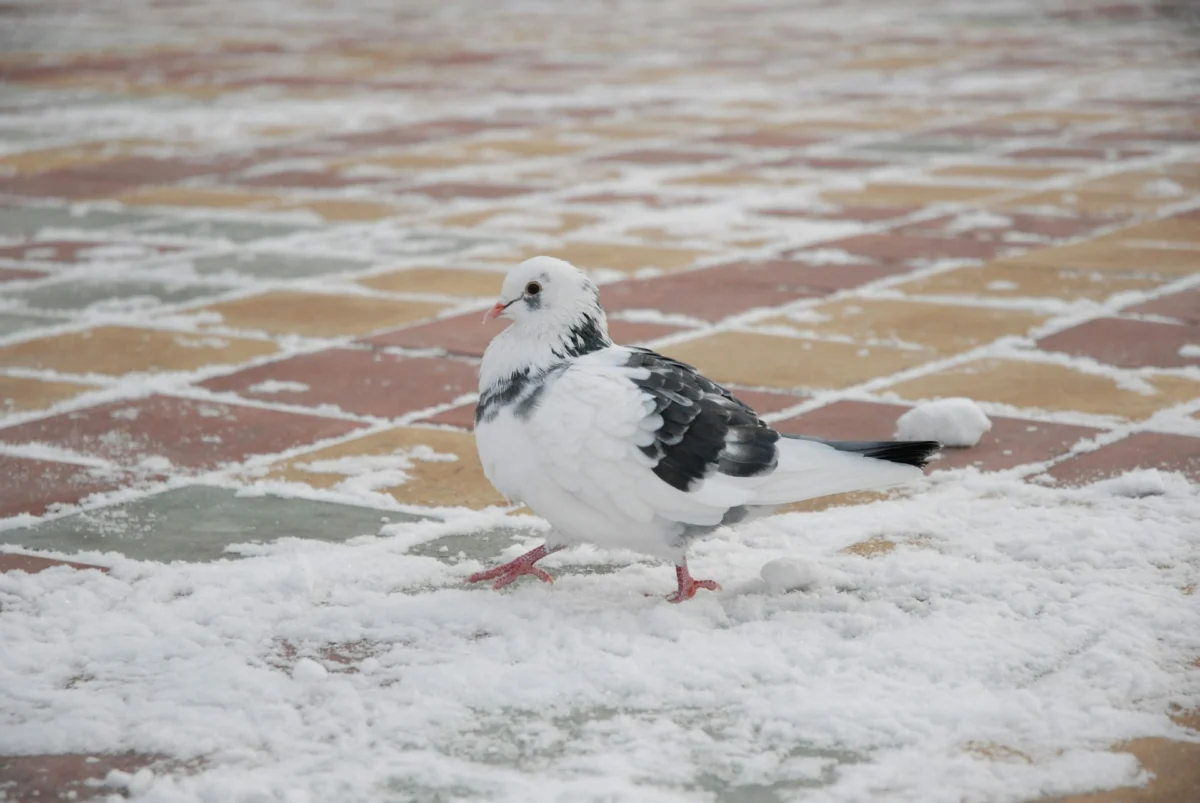
Watching a gull stand with apparent indifference on a frozen expanse or a duck glide serenely through water that would inflict agonizing frostbite on a human in mere minutes is one of winter’s most profound and visually arresting spectacles. For months on end, birds navigate a world teetering on the edge of extreme cold, yet their extremities remain remarkably functional, uninjured, and astonishingly warm. The key to this seemingly miraculous resilience lies in a sophisticated physiological adaptation, an evolutionary engineering marvel known as countercurrent heat exchange. This intricate biological mechanism allows avian species to thrive in environments where other creatures would succumb to the frigid elements.
The extraordinary ability of birds to withstand sub-zero temperatures is not a matter of magic but of finely tuned biological design. Unlike mammals, whose legs are packed with musculature, a bird’s legs possess very little muscle mass. The majority of the musculature responsible for limb movement is located higher up in the body, nestled within the insulated core and protected by dense layers of feathers. The exposed sections of a bird’s legs, therefore, consist primarily of bone, tendon, and a densely interwoven network of blood vessels. This specialized anatomical structure is the foundation upon which their exceptional cold tolerance is built, enabling them to endure conditions far beyond the physiological limits of most mammals.
At the heart of this adaptation is the elegant principle of countercurrent heat exchange. This process involves the strategic arrangement of blood vessels within a bird’s legs. Warm arterial blood, carrying heat from the body’s core, flows downwards towards the extremities. Simultaneously, cold venous blood, having circulated through the colder parts of the leg and feet, flows upwards back towards the body. The critical aspect of this system is that these warm arteries and cold veins are positioned in extremely close proximity, often running parallel to each other. As the warm arterial blood descends, it effectively transfers a significant portion of its heat to the colder venous blood ascending from the feet. By the time the venous blood reaches the bird’s torso, it has been substantially warmed, thereby protecting the vital core temperature from the external cold. Concurrently, the arterial blood, having relinquished much of its heat, arrives at the foot at a considerably lower temperature. This reduction in arterial blood temperature minimizes heat loss to the surrounding ice and frigid water, a crucial factor in preventing frostbite.
The efficacy of countercurrent heat exchange is further amplified by the unique adaptations within the bird’s foot tissues themselves. Because the internal temperature of the foot is deliberately allowed to drop to very low levels, the cellular structure and composition undergo significant adjustments. These adaptations include a reduction in the amount of freezable water within the tissues and a biochemical shift that enhances tolerance to extreme cold. Essentially, the cells become more resilient to the damaging effects of ice formation. Furthermore, birds possess the remarkable ability to dynamically control blood flow to their legs. In the face of severe cold, they can consciously reduce circulation to their extremities, a controlled measure to conserve core heat without triggering tissue damage or necrosis. This precise regulation ensures that while the feet may be cold, they remain alive and functional.
Species such as mallards and gulls are particularly adept at pushing these physiological limits. They are frequently observed standing for extended periods on icy surfaces or swimming in water that would be lethally cold for most creatures. Diving birds like loons, grebes, and certain species of ducks face even more extreme challenges. These birds not only immerse themselves in frigid water but also dive to considerable depths, subjecting their legs and feet to intense pressure and extreme cold. Yet, their legs remain fully operational, a testament to the remarkable evolutionary engineering at play.
The Perfect Adaptation for a Harsh Season: Beyond the Blood Vessels
While the countercurrent heat exchange system is the primary mechanism for maintaining leg and foot functionality in the cold, other factors contribute to a bird’s winter survival. Feathers, while not directly involved in warming the feet, play an indispensable role in overall thermoregulation. The dense plumage of birds acts as an exceptional insulator, trapping a layer of air close to the body and significantly minimizing heat loss from the torso. This efficiency in retaining core body heat is precisely what allows the specialized system in the legs to operate effectively. If the bird were constantly expending energy to keep its entire body warm, the energy reserves required to maintain functional feet in freezing conditions would be unsustainable.
Beyond physiological adaptations, birds also employ a range of behavioral strategies to further mitigate the effects of cold. Many species will instinctively alternate their stance, lifting one leg and tucking it into their warm, feathered belly. This simple act reduces the surface area exposed to the cold and allows the tucked leg to absorb residual heat from the body. This combination of sophisticated physiological design and instinctive behavioral adjustments creates an elegant and highly effective solution for life in environments where winter’s grip is unrelenting.
The countercurrent heat exchange system found in birds is widely regarded as one of the most refined examples of evolutionary engineering in the entire animal kingdom. It is a stark illustration of how natural selection can sculpt intricate biological machinery to meet the demands of specific environmental pressures. This adaptation allows birds to not only survive but to thrive, exploiting the resources available in snowy landscapes, remaining active on frozen lakes and rivers, and enduring conditions that would readily disable or prove fatal to most mammalian life.

Supporting Data and Scientific Understanding
Scientific studies have delved deeply into the mechanics of avian thermoregulation. Research has quantified the temperature gradients maintained in bird legs. For instance, studies on pigeons have shown that their feet can be maintained at temperatures just above freezing, around 0-2°C (32-36°F), while their core body temperature remains at a much higher approximately 40-42°C (104-108°F). This significant temperature differential is a direct result of the efficient heat transfer within the countercurrent system.
The density of blood vessels in a bird’s leg is remarkably high. The arteries and veins are often so tightly packed that they appear as a single, composite structure known as the "rete mirabile" (Latin for "wonderful net"). This dense vascular network maximizes the surface area for heat exchange. The diameter of these vessels is also precisely controlled by smooth muscles, allowing birds to modulate blood flow with great precision.
Further research has explored the biochemical adaptations within avian tissues. Studies have identified higher concentrations of cryoprotectants – substances that help prevent ice crystal formation – in the cells of bird extremities. Additionally, the cell membranes in these cold-exposed tissues exhibit altered lipid compositions, making them more fluid and functional at lower temperatures.
Chronology of Understanding
While the phenomenon of birds surviving in cold has been observed for millennia, scientific understanding of the underlying mechanisms has evolved over time. Early naturalists noted the apparent resilience of birds to cold but lacked the tools to fully explain it.
- 18th-19th Centuries: Early observations by naturalists began to document the remarkable ability of birds to withstand cold. However, explanations were largely anecdotal.
- Early 20th Century: Physiologists started to investigate thermoregulation in endotherms (warm-blooded animals). The concept of heat exchange was being explored in various biological contexts.
- Mid-20th Century: The principle of countercurrent heat exchange was formally described and recognized as a key mechanism in various physiological processes, including thermoregulation. Researchers began to apply this concept specifically to avian legs. Pioneering work by physiologists like C. Ladd Prosser and his colleagues laid crucial groundwork.
- Late 20th Century to Present: Advances in imaging techniques, physiological monitoring, and molecular biology have allowed for increasingly detailed studies. Researchers have been able to quantify temperature gradients, measure blood flow rates, and analyze biochemical changes at the cellular level, solidifying the understanding of countercurrent heat exchange as the primary driver of cold tolerance in bird feet. Genetic studies are also beginning to shed light on the evolutionary pathways that led to these adaptations.
Broader Impact and Implications
The study of avian winter survival has implications that extend beyond ornithology.
- Biomimicry and Engineering: The elegant efficiency of countercurrent heat exchange serves as a powerful model for engineers. This biological design has inspired the development of advanced heat exchangers used in various industrial applications, from medical devices to industrial cooling systems. Understanding how nature achieves such efficiency in heat transfer can lead to more sustainable and effective technological solutions.
- Climate Change Research: As global temperatures shift, understanding how animals adapt to extreme cold becomes increasingly relevant. While birds have evolved sophisticated mechanisms for cold tolerance, rapid and unprecedented changes in climate could still pose significant challenges. Studying their resilience can provide insights into the broader impacts of climate change on ecosystems and the potential for species adaptation.
- Conservation Efforts: Knowledge of avian physiology is crucial for effective wildlife conservation. Understanding the specific needs and vulnerabilities of different species during harsh winter conditions can inform habitat management strategies and inform efforts to protect migratory birds and resident populations facing increasing environmental pressures. For example, ensuring access to unfrozen water sources or areas with adequate food availability becomes paramount.
In conclusion, the sight of a bird standing unflustered on ice is not merely a picturesque winter scene but a profound demonstration of evolutionary ingenuity. The intricate interplay of anatomical structure, physiological processes, and behavioral adaptations, centered around the marvel of countercurrent heat exchange, allows these feathered creatures to defy the biting cold and continue their lives with remarkable resilience. This biological masterpiece continues to inspire scientific inquiry and offers valuable lessons for both understanding the natural world and developing innovative technological solutions.

