


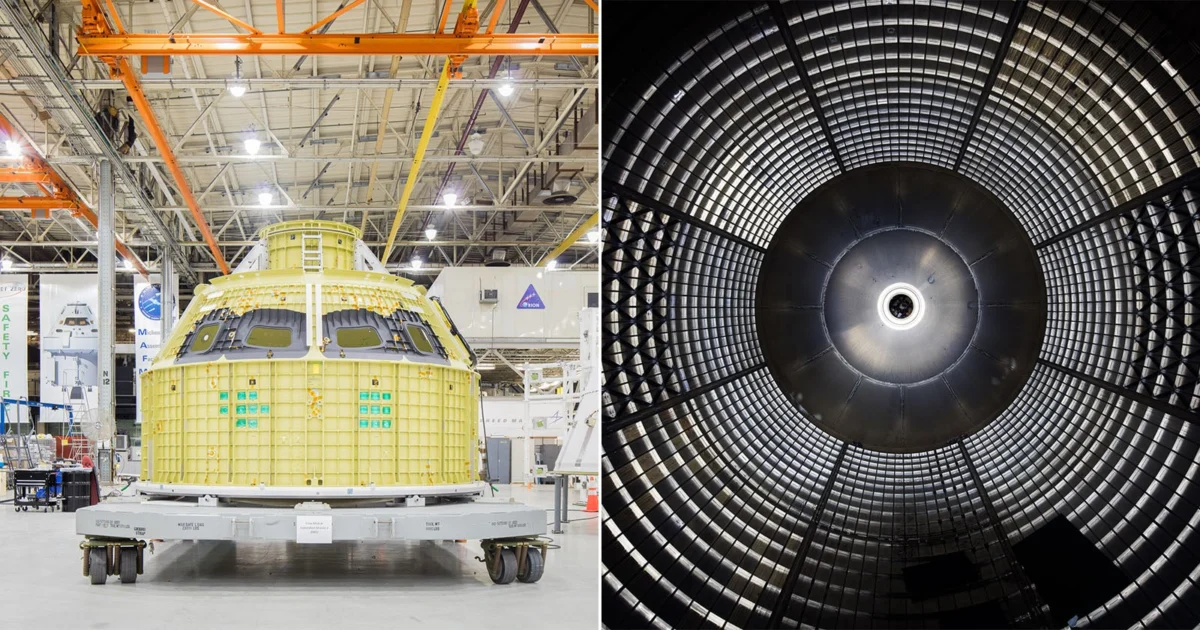
Professional architectural photographer Mike Kelley, renowned for his meticulous eye and the viral success of his Airportraits series, recently saw his 2018 work culminate in a historic moment as the Artemis II mission successfully transitioned from a collection of industrial components into a crewed lunar voyage. While Kelley has achieved significant commercial success in the realm of high-end real estate and modern museum photography, his career has been punctuated by personal artistic projects that open doors to what he describes as his "craziest opportunities." One such opportunity occurred six years ago when NASA invited a select group of photographers to the Michoud Assembly Facility in New Orleans, Louisiana, to provide a unique visual perspective on the assembly of the Orion crew capsule and the Space Launch System (SLS) rocket—the very hardware that recently propelled four astronauts toward the Moon.
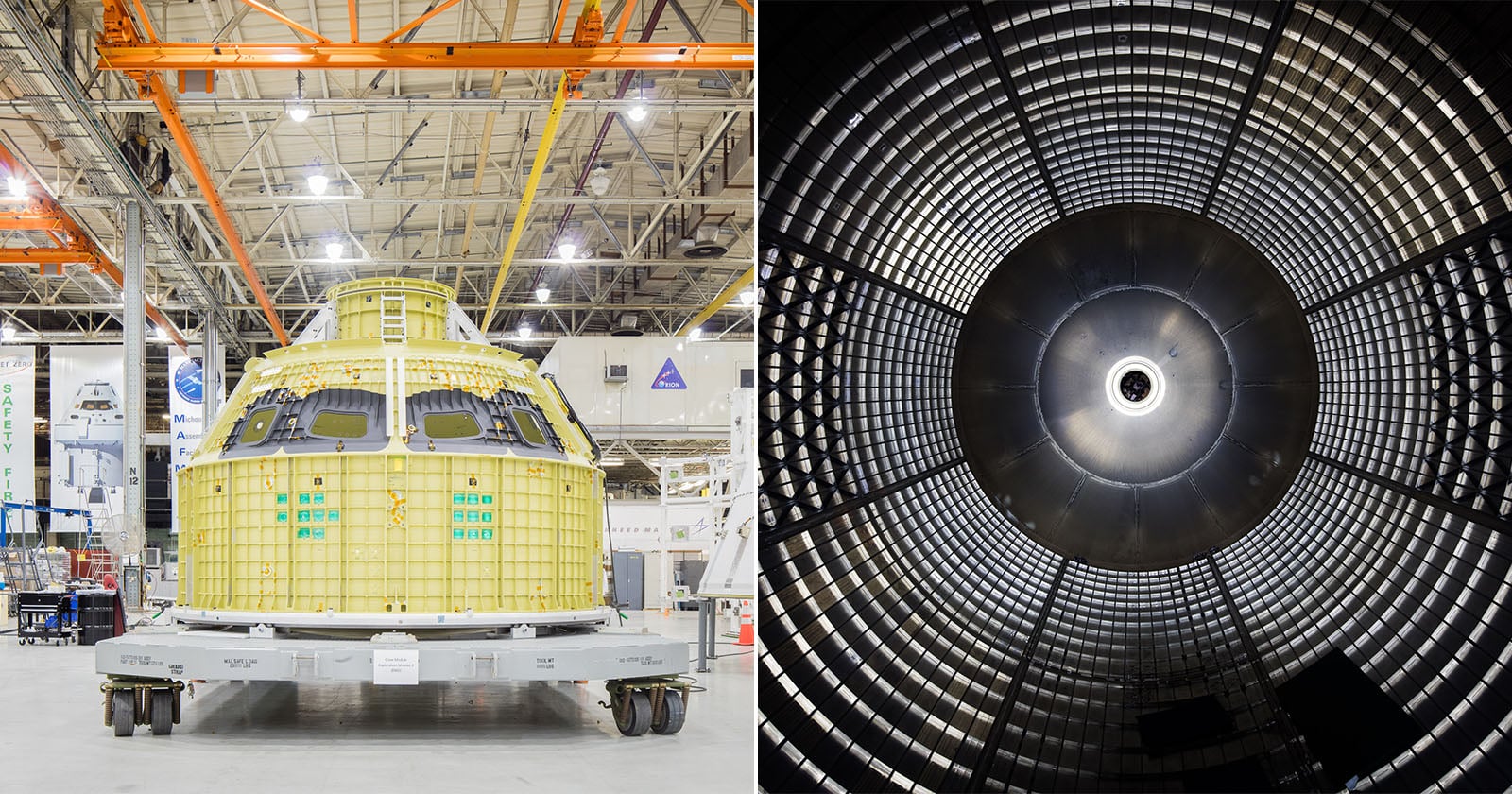
The photographs, captured in 2018, serve as a testament to the staggering duration of major space exploration missions. The Artemis program, which aims to establish a sustainable human presence on the lunar surface, traces its technological and bureaucratic lineage back to the Constellation project, which was initiated and then canceled over two decades ago. For Kelley, being chosen to document this "in-progress" phase of the spacecraft was a direct result of his previous viral success. He noted that in the modern media landscape, "virality" acts as a professional calling card, leading organizations like NASA to seek out creators who can offer a fresh, artistic "spin" on complex industrial subjects.
The Michoud Assembly Facility: A Factory of Giants
The Michoud Assembly Facility (MAF) is one of the largest manufacturing plants in the world, spanning 832 acres and featuring a 43-acre manufacturing building under one roof. Located in New Orleans, it has been a cornerstone of American aerospace history since the 1940s. During the Apollo era, it was used to build the first stages of the Saturn V rockets, and for thirty years, it served as the primary site for the construction of the Space Shuttle’s massive external fuel tanks.
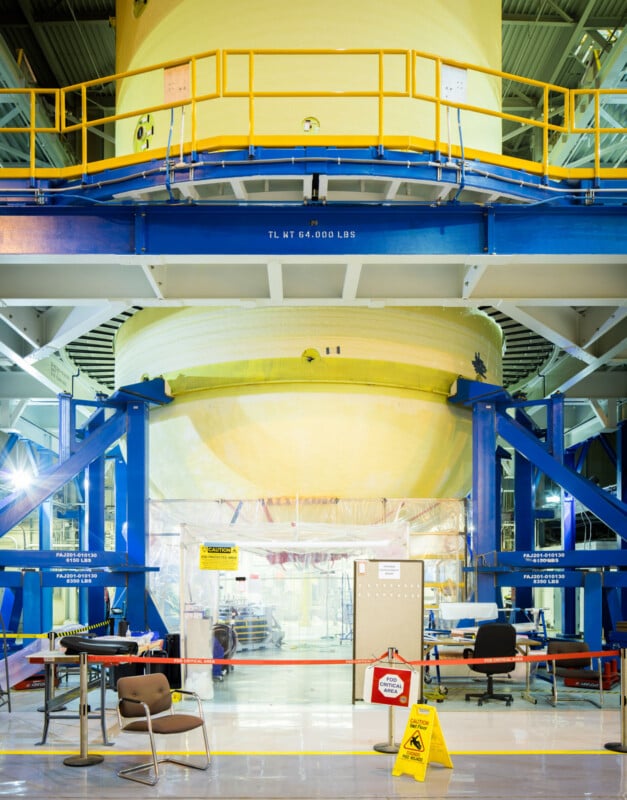
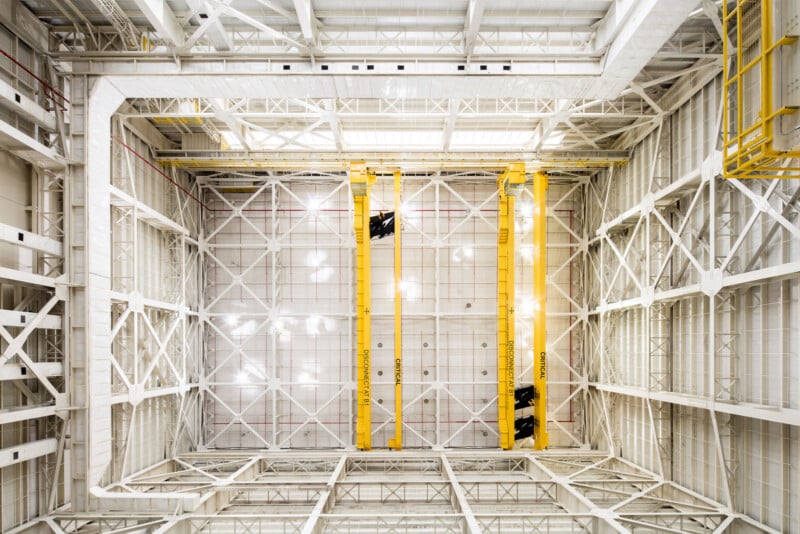
When Kelley entered the facility in 2018, he was stepping into a cathedral of engineering. His task was to document the fabrication of the Orion Multi-Purpose Crew Vehicle (MPCV) and the core stage of the SLS. The SLS is the most powerful rocket NASA has ever built, designed to send the Orion spacecraft, along with its crew and cargo, to the Moon in a single launch. Seeing these components in their skeletal or "yellow" state—the color of the protective primer used on the metallic structures—offered a rare glimpse into the sheer scale of the endeavor before the sleek white-and-black livery of the final flight-ready vehicle was applied.
Architectural Precision in an Aerospace Environment
Kelley’s approach to the NASA project was rooted in his discipline as an architectural photographer. Rather than treating the spacecraft as a standard news subject, he applied the same rigorous standards he uses when photographing luxury homes in Los Angeles or avant-garde museums. His goal was to capture the "line, form, and scale" of the structures, ensuring that the final images provided a sense of context often lost in tight, technical shots.
"I tried to just do what I do—photograph architecture—here and not try to reinvent the wheel or my process," Kelley explained. He avoided the temptation to use "action" styles, instead focusing on the geometry of the facility. This involved showing the vastness of the assembly bays, where human workers and heavy machinery appear dwarfed by the cylindrical sections of the rocket. By pulling back to show the surrounding scaffolding, yellow catwalks, and industrial cranes, Kelley documented not just the machine, but the environment required to birth it.
Technical Execution: The Power of Tilt-Shift Lenses
To achieve his vision, Kelley utilized the Canon EOS 5DSR, a 50.6-megapixel DSLR that remains a favorite among architectural photographers for its high resolution and lack of an anti-aliasing filter, which maximizes detail. However, the most critical tools in his kit were his Canon TS-E tilt-shift lenses—specifically the 17mm f/4L and the 24mm f/3.5L II.
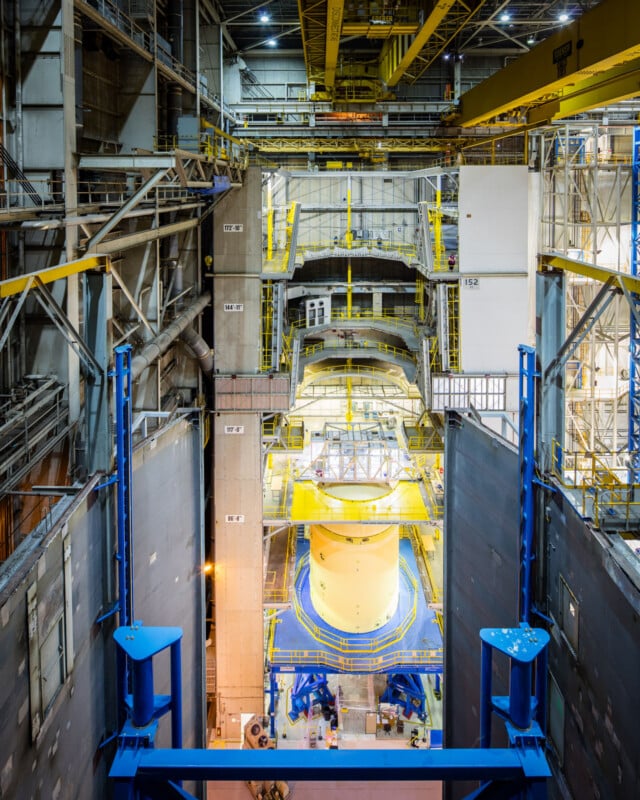
In architectural photography, tilt-shift lenses are essential for controlling perspective. When a photographer points a standard lens upward at a tall structure, the vertical lines appear to converge, creating a "leaning" effect. By using the "shift" function, Kelley could move the lens’s optical path independently of the camera sensor, allowing him to keep the camera level and the vertical lines of the rocket components perfectly straight.
Executing this in a high-security, high-stakes environment like Michoud presented unique challenges. "Crazily enough, a lot were actually handheld because I was up in the catwalk or literally inside a fuel tank and you can’t put a tripod down there," Kelley recalled. Handling a manual-focus tilt-shift lens while balanced on industrial scaffolding is a feat of technical dexterity, a "pat your head, rub your stomach situation" that required both physical balance and mathematical precision.
Chronology of the Artemis II Mission
The photographs captured by Kelley represent a middle chapter in a long-term saga of American spaceflight. To understand the significance of these images, one must look at the timeline of the SLS and Orion development:
- 2004–2010: The Constellation Program is developed and then largely canceled, though the Orion capsule design is retained.
- 2011: NASA announces the Space Launch System (SLS) as the new heavy-lift vehicle.
- 2014: The Orion capsule undergoes its first uncrewed flight test (EFT-1).
- 2018: Mike Kelley documents the assembly of Artemis II components at Michoud. At this stage, the core stage is undergoing "friction stir welding," a process that joins large aluminum panels without melting them.
- 2022: Artemis I, an uncrewed mission, successfully orbits the Moon and returns to Earth, proving the viability of the SLS and Orion heat shield.
- April 2026: Artemis II launches from Kennedy Space Center with a crew of four, marking the first time humans have left Low Earth Orbit (LEO) since 1972.
The Human Element and "Workhorse" Machinery
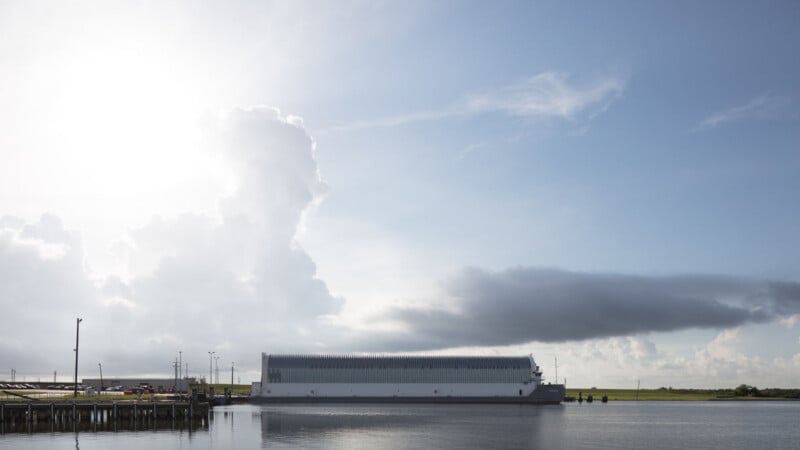
Beyond the high-tech spacecraft, Kelley found himself drawn to the more "pedestrian" aspects of the NASA facility. His portfolio includes shots of NASA-branded tugboats, industrial floor cleaners, and bicycles used by technicians to navigate the miles of floor space.
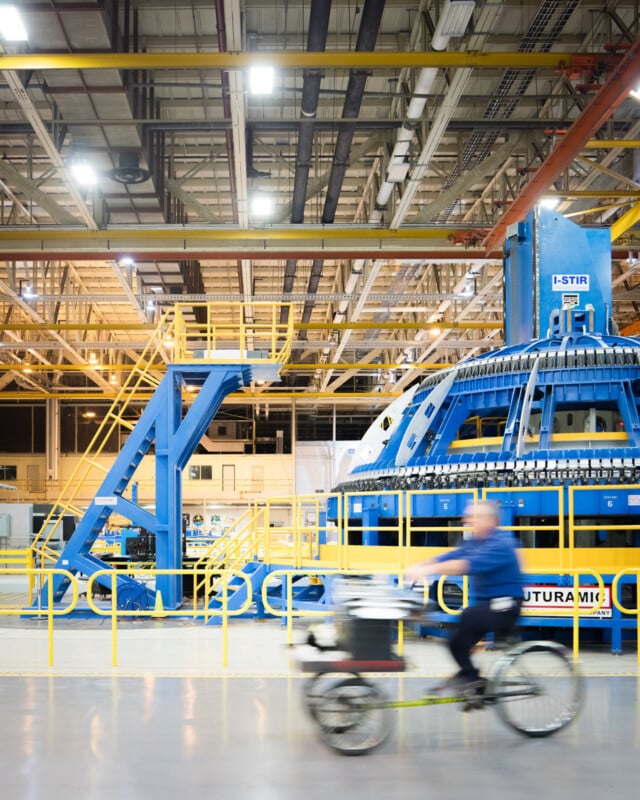
"I love some of the non-space NASA vehicles—the boats, the tugs, etc., which feel far more fun and pedestrian than the typical ‘spacey’ objects," Kelley said. This observation highlights a fundamental truth about aerospace engineering: it is supported by a massive infrastructure of traditional labor and "dependable workhorse machinery." These elements provide a humanizing counterpoint to the alien-looking technology of the Orion capsule, reminding the viewer that space exploration is a grounded, terrestrial effort.
Broader Impact and Public Engagement
The recent launch of Artemis II, which Kelley watched on his phone while pulled over on the side of the 101 freeway, represents a turning point for NASA. After the retirement of the Space Shuttle in 2011, there was a perceived lull in public excitement for government-led space exploration. Kelley, a "child of the 90s" who grew up with the Shuttle as a cultural icon, hopes that the return to the Moon will reignite a sense of collective national pride.
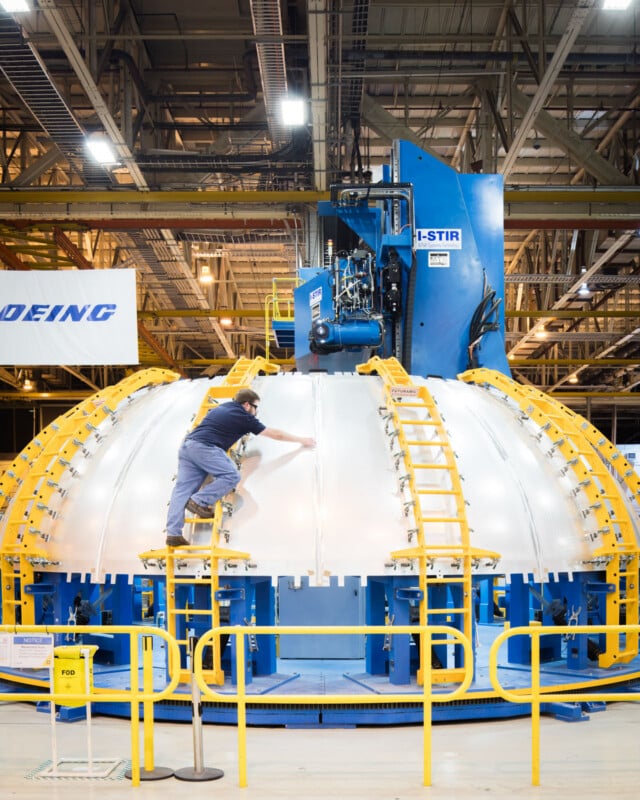
The role of professional photography in this process cannot be understated. By allowing artists like Kelley to document the process, NASA bridges the gap between cold engineering and public inspiration. The "arresting colors" and "correct scale" of Kelley’s work allow the public to appreciate the complexity of the mission long before the rocket reaches the launch pad.
The Artemis II mission is more than just a flight; it is a test of the systems that will eventually carry humans to Mars. The mission’s success, despite minor issues such as the widely reported "toilet drama" during the transit, proves that the components Kelley saw as static metal shells in 2018 were indeed capable of sustaining life in the vacuum of space.
Conclusion: A Legacy of Documentation
As NASA moves toward Artemis III—the mission intended to land the first woman and first person of color on the lunar surface—the documentation provided by photographers like Mike Kelley remains invaluable. These images capture the "before" of a historic "after," providing a visual record of the labor, the tools, and the architectural brilliance required to propel humanity into the next frontier. For Kelley, the project was a rare intersection of his professional expertise and a personal passion for aviation, resulting in a body of work that has gained renewed significance as the hardware he photographed now orbits the Moon. Through his lens, the Michoud Assembly Facility is revealed not just as a factory, but as the birthplace of modern mythology.

