


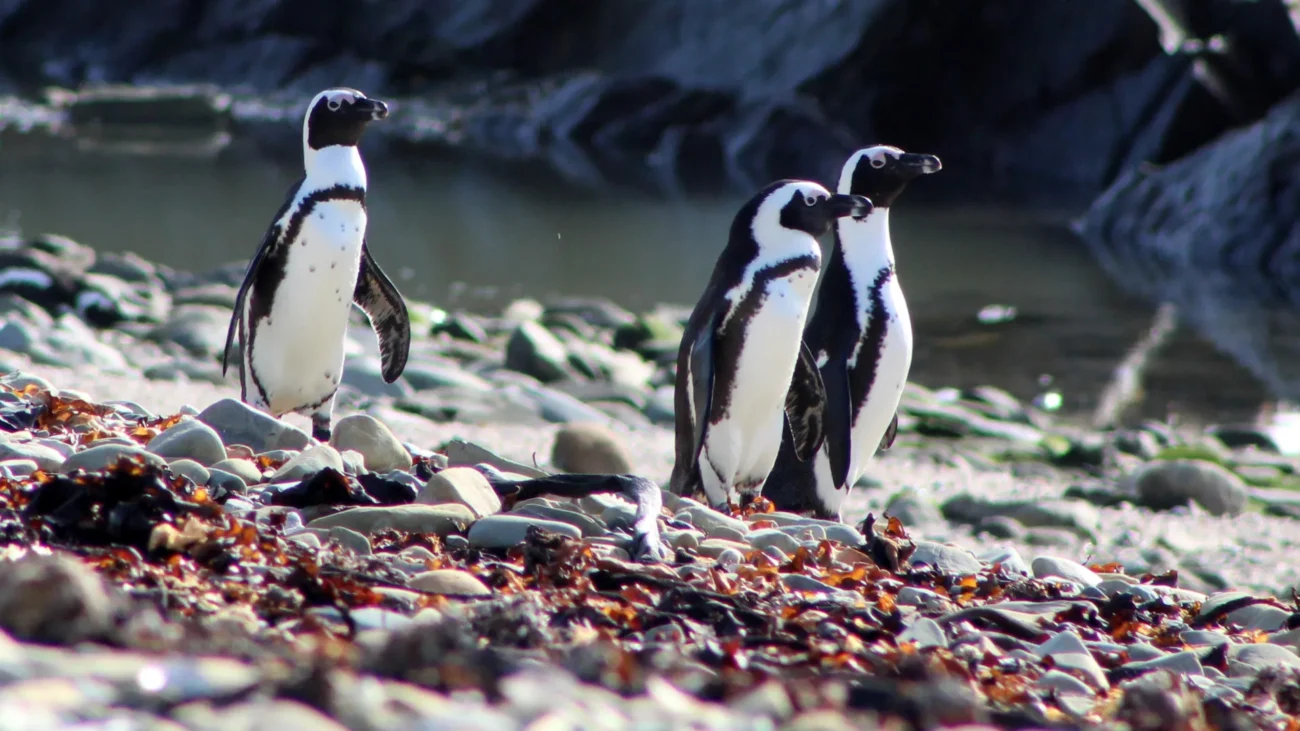
A groundbreaking study spearheaded by the University of St Andrews has unveiled a critical vulnerability for the Critically Endangered African penguin (Spheniscus demersus): these seabirds are significantly more inclined to forage in the same waters frequented by commercial fishing fleets during periods of low fish abundance. This heightened overlap in foraging grounds not only escalates direct competition for vital food resources but also exacerbates the immense pressure already threatening a species teetering on the brink of severe decline. The findings, published on November 17 in the esteemed Journal of Applied Ecology, introduce a novel metric, "overlap intensity," which moves beyond simply identifying shared spaces to quantifying the actual number of penguins affected by interactions with fishing vessels.
The Dire State of the African Penguin Population
The African penguin, once a thriving species, has experienced a catastrophic population collapse, with numbers plummeting by nearly 80% over the last three decades. This dramatic downturn is multifactorial, but a primary driver identified by researchers is the pervasive competition with local fisheries. These commercial operations target small pelagic fish, specifically sardines and anchovies, which form the cornerstone of the African penguin’s diet. The fisheries predominantly employ purse-seine nets, a method that involves encircling schools of fish with a vast wall of netting, effectively trapping them.
Dr. Jacqueline Glencross, the lead author of the study and a researcher at the Scottish Oceans Institute at the University of St Andrews, articulated the impetus behind this critical research. "We were driven by the necessity to develop a more nuanced understanding of the ecological impact of fisheries on penguin populations," Dr. Glencross stated. "Our goal was to move beyond simply mapping spatial overlap and to quantitatively assess how many individual penguins are potentially impacted when fishing activities occur in their foraging areas." This ambition has culminated in the development of "overlap intensity," a metric designed to provide a more accurate and actionable measure of conservation risk.
Tracking Data Reveals Alarming Overlap Patterns
The research team meticulously analyzed tracking data collected from African penguins nesting on Robben and Dassen Islands, two of the species’ most significant breeding colonies. This collaborative effort involved esteemed scientists from the University of Exeter, the South African Department of Forestry, Fisheries and the Environment, and BirdLife South Africa, underscoring the broad scientific consensus and commitment to addressing this conservation crisis.
The analysis revealed a stark and concerning trend: a dramatic surge in the overlap between penguin foraging areas and active fishing vessels during years characterized by diminished fish stocks. In 2016, a year when fish biomass was notably low, approximately 20% of the tracked penguins were observed foraging within regions also being utilized by commercial fishing fleets. In stark contrast, during years with more robust fish populations, this figure dwindled to a mere 4%. This significant disparity underscores a critical ecological principle: competition intensifies exponentially when the available prey is scarce.
The Perils of Prey Scarcity for Penguin Reproduction
The implications of this heightened competition are particularly dire during the critical chick-rearing season. Adult penguins, under immense pressure to provision their hungry chicks, must forage more frequently and efficiently. When their primary food sources are depleted or are being actively harvested by fishing vessels, these foraging trips become longer, more energy-intensive, and ultimately less successful. This can lead to chicks receiving insufficient food, resulting in increased mortality rates and further contributing to the species’ decline. The study’s findings provide concrete data supporting the anecdotal observations of conservationists who have long suspected this direct link between fishing pressure and penguin breeding success.
A New Tool for Conservation and Sustainable Fisheries Management
The development of the "overlap intensity" metric represents a significant advancement in conservation science. This tool offers a quantitative framework for assessing the ecological risks posed by fisheries to vulnerable marine predators. It is poised to become an indispensable asset for guiding ecosystem-based fishery management strategies, which aim to manage fisheries in a way that considers the broader ecological impacts.
Furthermore, the research provides robust scientific backing for the implementation of dynamic marine protected areas (MPAs). These are areas where fishing is restricted, and their effectiveness can be significantly enhanced by adapting their spatial extent and duration in response to real-time shifts in predator and prey behavior. By integrating data on fish abundance and the foraging patterns of penguins and fishing vessels, such dynamic MPAs could offer a more responsive and effective conservation measure, shifting protection efforts to areas and times of greatest need. This approach moves away from static, often ineffective, protected areas towards a more adaptive and precautionary management paradigm.
Legal Battles and Crucial Fishing Closures
The plight of the African penguin has recently taken center stage in a significant legal battle in South Africa, highlighting the urgent need for more effective fishing restrictions in proximity to critical breeding sites. Conservation organizations, alongside representatives from the fishing industry, reached a landmark high court agreement earlier this year. This agreement acknowledged the imperative for establishing fishery closures around penguin colonies.
In the wake of this judicial decision, the South African government has taken steps to reinstate fishing exclusion zones near Robben Island, a pivotal breeding colony extensively studied by the research team. These newly implemented no-fishing zones are reportedly designed to be more biologically meaningful than previous measures, indicating a potential shift towards a more precautionary approach to fisheries management in sensitive areas.
Dr. Glencross emphasized the critical importance of these conservation measures, stating, "Our research unequivocally demonstrates the necessity of these fishing closures. Previously unprotected areas that exhibited high overlap intensity were precisely where the penguins faced their most acute risks." The study provides the scientific evidence to justify and inform the implementation and effectiveness of such protective measures, moving beyond qualitative concerns to quantitative validation.
Broader Implications for Marine Ecosystem Health
The findings of the St Andrews study have far-reaching implications beyond the immediate conservation of the African penguin. They underscore the interconnectedness of marine ecosystems and the potential for human activities, such as industrial fishing, to have cascading effects on vulnerable species. The study serves as a potent reminder that fisheries management cannot operate in isolation; it must be integrated within a broader ecological framework that accounts for the needs of all species within the ecosystem.
The success of the African penguin is intrinsically linked to the health of its prey species and the overall marine environment. As climate change continues to alter oceanographic conditions, leading to shifts in fish distribution and abundance, the pressure on species like the African penguin is likely to intensify. Therefore, proactive and science-based management strategies are crucial for ensuring the long-term survival of these iconic birds and the marine ecosystems they inhabit.
Future Directions and the Path Forward
The research team plans to expand their work to other African penguin colonies and to incorporate additional environmental variables, such as oceanographic conditions and prey availability, into their models. This will allow for a more comprehensive understanding of the complex factors influencing penguin foraging behavior and their interactions with fisheries.
The study’s authors and conservation stakeholders are hopeful that the "overlap intensity" metric will be adopted by fisheries managers and policymakers to inform decision-making and promote more sustainable fishing practices. The ongoing dialogue between scientists, conservationists, and the fishing industry, facilitated by legal and scientific advancements, offers a glimmer of hope for the future of the African penguin and other marine species facing similar threats. The urgency of the situation cannot be overstated, and continued collaboration and decisive action are paramount to avert further irreversible losses in marine biodiversity. The coming years will be critical in determining whether these new insights translate into effective conservation outcomes for this beleaguered species.

