


The Close-up Photographer of the Year (CUPOTY) organization has officially announced the winners of its latest themed challenge, "Death and Decay," presenting a collection of images that pivot away from the traditional, sanitized view of the natural world. This year’s competition invited photographers to explore the visceral, the macabre, and the biological processes that facilitate the recycling of life. By focusing on the end of life and the subsequent decomposition or consumption of organisms, the challenge highlights a fundamental ecological truth: in the wild, death is not a conclusion but a necessary catalyst for new growth.
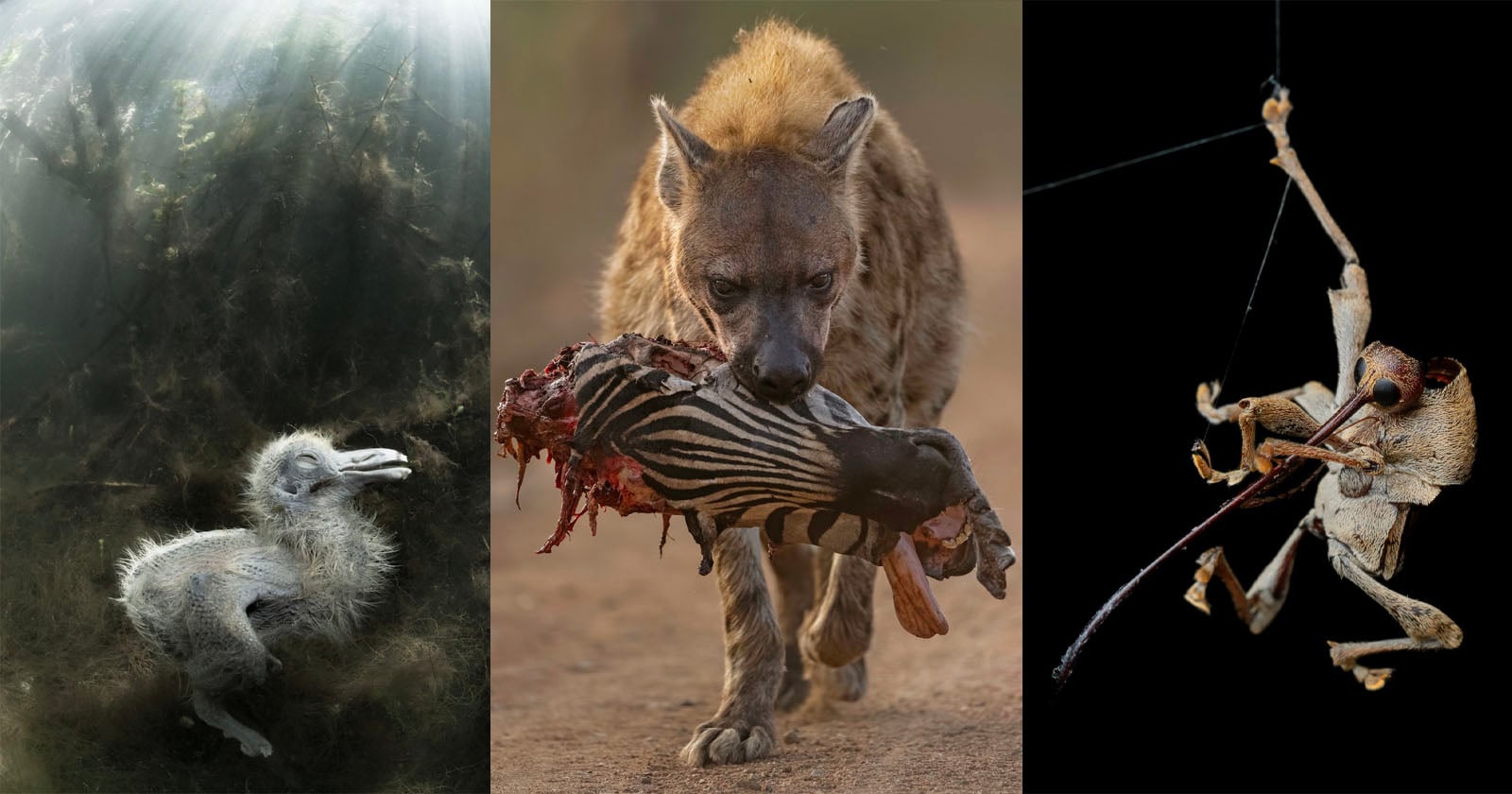
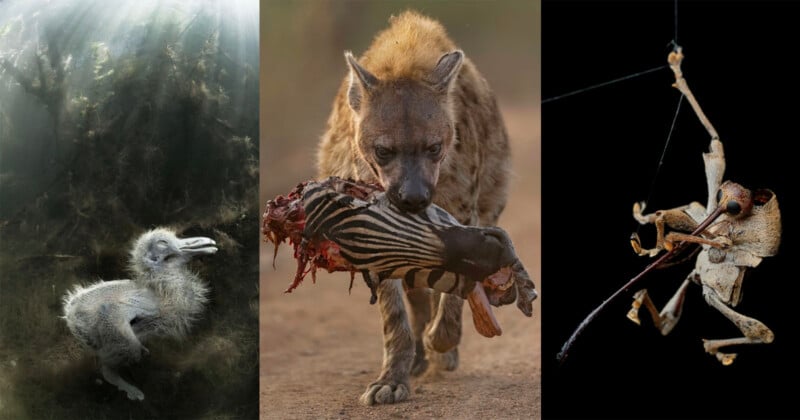
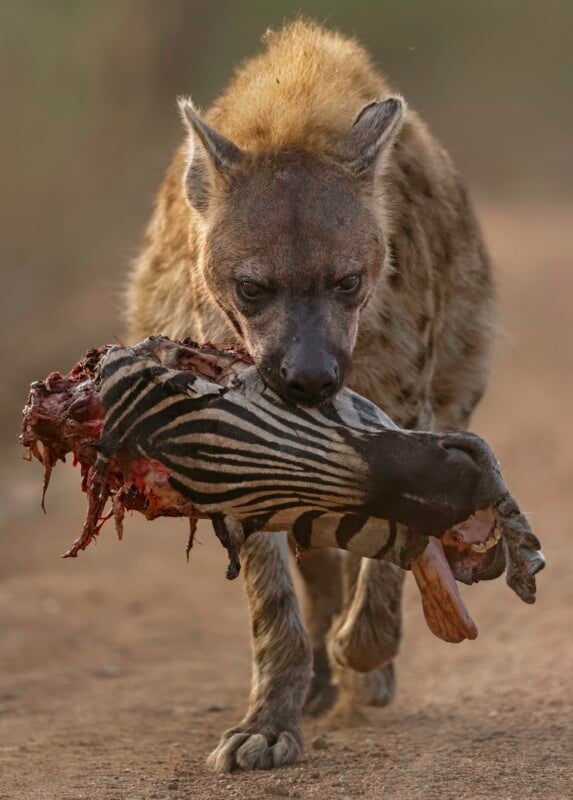
The 2026 challenge was won by South African photographer Willem Kruger, whose arresting portrait of a spotted hyena in Kruger National Park captures the raw reality of the African savanna. Kruger’s image, which serves as a stark reminder of the relentless efficiency of apex scavengers, depicts a hyena carrying the severed head of a zebra. The photograph was taken during an early morning game drive, a period when predators and scavengers are often most active as they secure the remains of overnight kills.
The Winning Vision: Willem Kruger’s "Hyena with Zebra Head"
Willem Kruger’s winning entry was selected for its uncompromising clarity and the narrative it conveys about survival. The image shows the hyena walking along a dirt road, the striped skin of the zebra head contrasting sharply with the predator’s mottled fur and the muted tones of the dusty environment. According to Kruger, the encounter happened unexpectedly. He and his wife were observing three hyenas when one approached their vehicle, carrying the trophy of a recent lion kill.
"In nature, almost nothing goes to waste," Kruger remarked upon his win. "Even hyenas have a family to feed, and they do it with remarkable commitment." This sentiment aligns with the ecological role of the spotted hyena (Crocuta crocuta), a species often misunderstood as merely a scavenger. In reality, hyenas are highly intelligent social hunters, though they play a vital role in the ecosystem by consuming bones and carcasses that other predators leave behind. Their powerful jaws and specialized digestive systems allow them to process nearly every part of a carcass, ensuring that nutrients are returned to the soil.
As the winner of the challenge, Kruger receives a cash prize of £300 (approximately $400) and will see his work featured in the 2026 CUPOTY ebook. His victory underscores the competition’s goal: to find beauty and technical excellence in subjects that might otherwise be considered repulsive or distressing.
The Competition Structure and Chronology
The "Death and Decay" challenge is a specialized segment of the broader Close-up Photographer of the Year competition. Founded by photojournalists Tracy and Daniel Calder, CUPOTY has grown into one of the most prestigious platforms for macro and close-up photography. The challenge format allows the community to vote on specific themes, providing a focused creative outlet during the months leading up to the main annual event.
The timeline for the current cycle began in November, when the "Death and Decay" theme was opened for entries. Following a rigorous judging process throughout the winter, the winners were announced in April 2026. This announcement serves as a precursor to the main CUPOTY competition, which is scheduled to open for entries in May. The main competition features several categories, including Animals, Plants and Fungi, Intimate Landscape, and Underwater, drawing thousands of submissions from professional and amateur photographers globally.
Runners-Up and the Pathos of the Natural World
The second and third-place entries further explore the diverse manifestations of the theme across different species and environments.
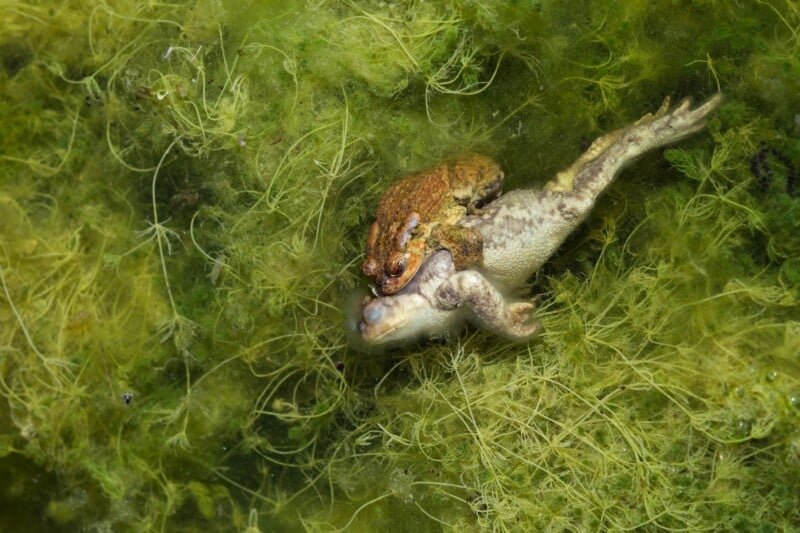
The runner-up position was awarded to Juan Jesus Gonzalez Ahumada for his photograph titled "True Love." Taken in the Sierra Blanca natural area of southern Spain, the image depicts a common toad (Bufo bufo) firmly embracing a deceased female in a pool of water. This behavior, known as amplexus, is a drive so instinctual that males will often refuse to release their grip even after the female has died. The photograph captures a tragic yet fascinating biological imperative, set against the green, algae-rich waters of a vernal pool.
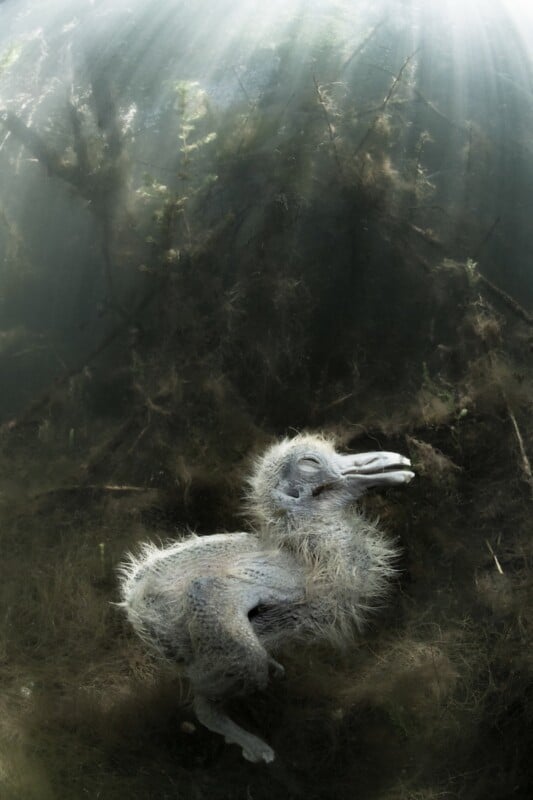
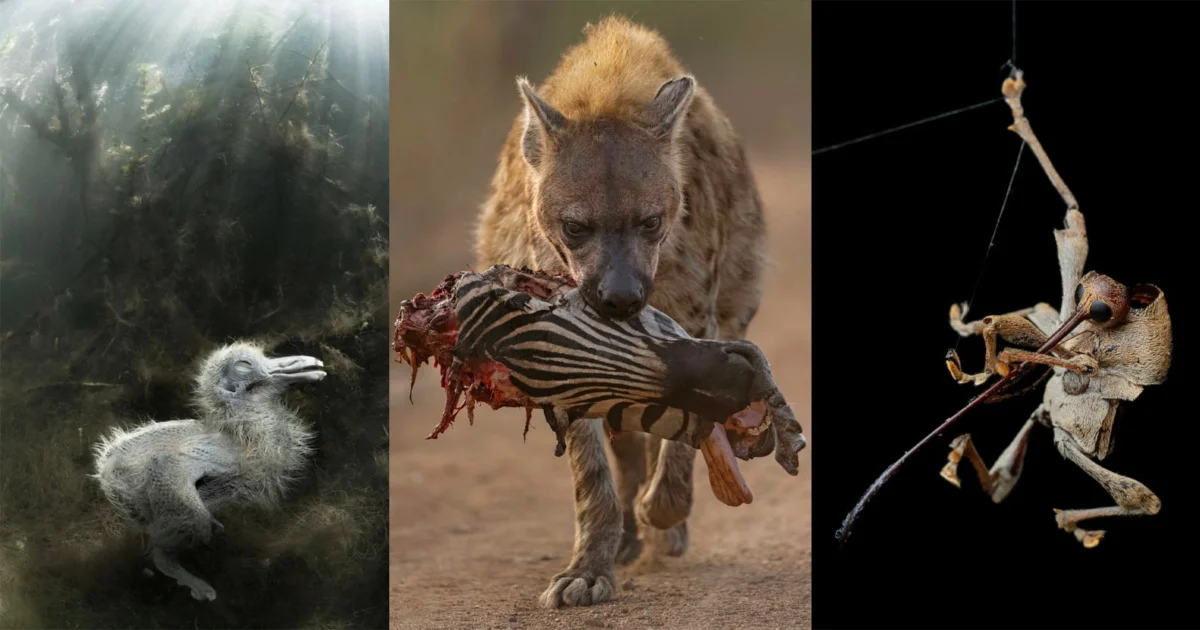
In third place, Gael Modrak presented "Dead Chick of the Pond," a somber and ethereal image of a waterfowl chick lying at the bottom of a pond in Viry-Chatillon, near Paris. The photograph utilizes the clarity of the water and the play of sunlight to create a peaceful, almost painterly scene of a life cut short. The presence of aquatic plants and roots surrounding the small, fluffy body emphasizes the process of reintegration into the pond’s ecosystem.
Finalist Highlights: Predation and Parasitism
The finalist gallery showcases the breadth of the "Death and Decay" theme, moving from large mammals to the microscopic world of fungi and insects. These images provide insight into the specialized ways in which organisms die and are repurposed.
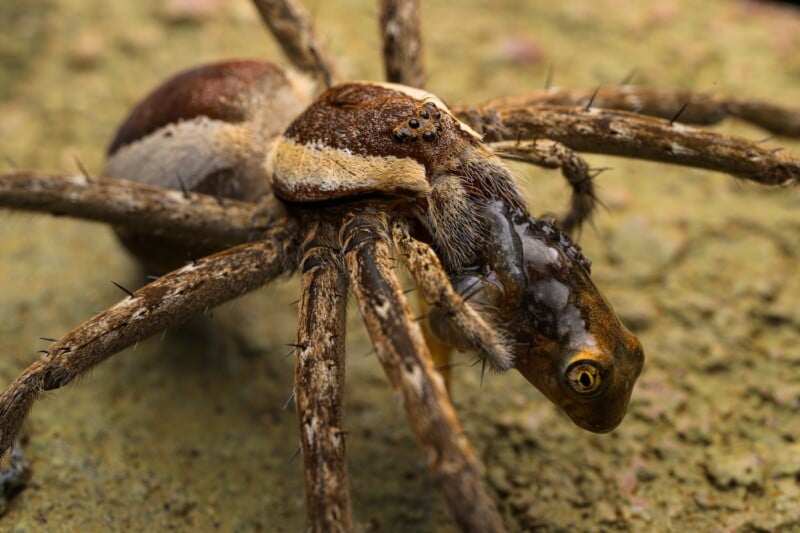
- Emanuele Biggi (Madagascar): Biggi’s photograph of a fishing spider feeding on a froglet on Nosy Komba island captures a high-stakes moment of predation. The detail in the spider’s eyes and the texture of the frog’s skin highlight the precision of macro photography in documenting predator-prey interactions.
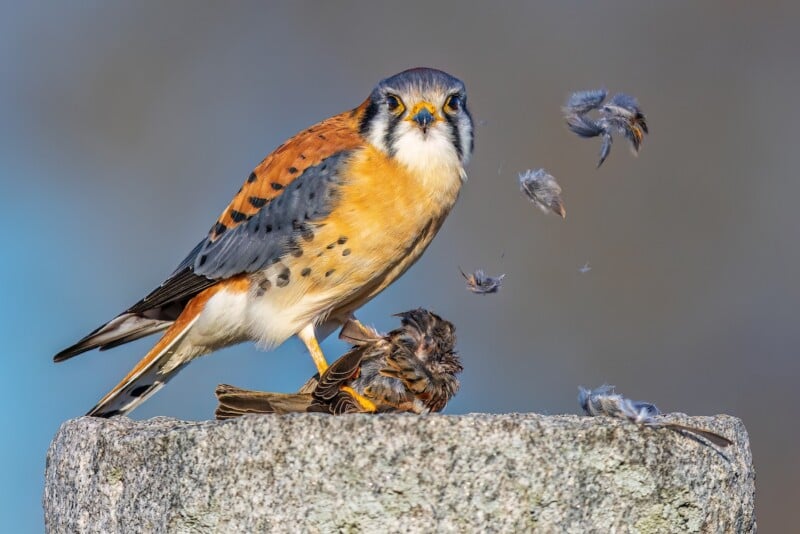
- Jason Gilbody (USA): In a cemetery in Massachusetts, Gilbody captured an American kestrel plucking a sparrow atop a gravestone. The floating feathers caught in the wind add a sense of movement and fleetingness to the scene, contrasting the life of the raptor with the death of its prey.
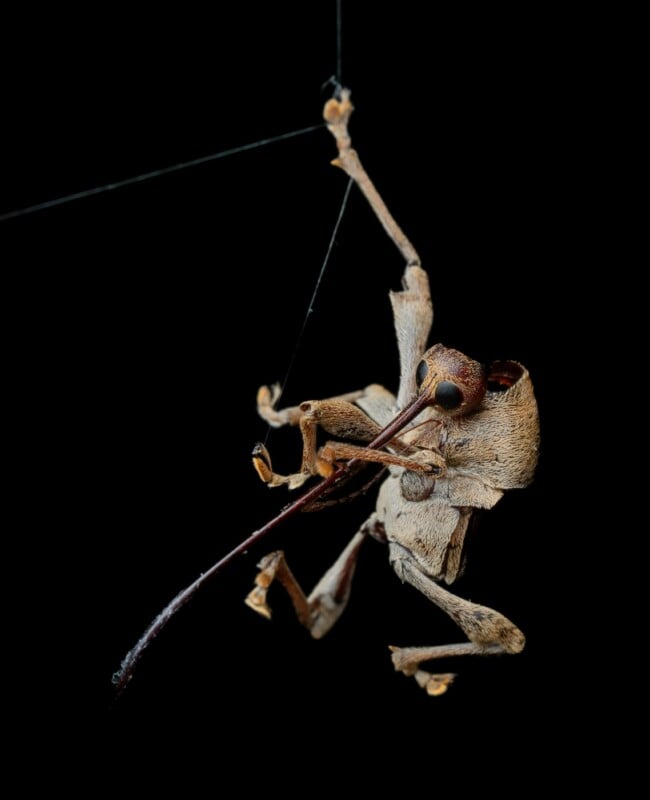
- Ken Bluma (USA): Bluma’s image of an acorn weevil exoskeleton, suspended by a strand of silk, offers a more skeletal interpretation of decay. The hollowed-out shell, once a living insect, becomes a delicate "marionette" in the forest undergrowth.
- Emanuele Biggi (Italy): Another entry by Biggi features an entomopathogenic fungus emerging from the body of a dead moth. This image illustrates the "zombie" fungi phenomenon, where a parasite consumes its host from the inside out before erupting to spread its spores, a quintessential example of death fueling new, albeit parasitic, life.
Scientific and Ecological Analysis: The Importance of Decay
While the imagery of the CUPOTY challenge may be unsettling to some, it serves an important educational purpose. From a biological perspective, decay is the engine of the biosphere. Decomposers—including fungi, bacteria, and carrion-eating insects—break down complex organic molecules into simpler nutrients like nitrogen, phosphorus, and carbon.
Without the processes depicted in these photographs, ecosystems would quickly become choked with organic waste, and the soil would be depleted of the nutrients necessary for plant life. Scavengers like the hyena in Kruger’s photograph and the butterflies in Indranil Basu Mallick’s finalist entry (which shows them drawing nutrients from a road-killed snake) are essential for disease control. By quickly removing carcasses, these animals prevent the spread of pathogens that could otherwise devastate local wildlife populations.
The "Death and Decay" challenge forces the viewer to confront the "red in tooth and claw" reality of nature, as described by Alfred Lord Tennyson. However, by applying the techniques of close-up photography—selective focus, careful lighting, and intimate framing—the photographers transform these scenes into objects of contemplation.
Technical Excellence in Macro Photography
The images featured in the challenge represent significant technical achievements. Close-up photography requires a deep understanding of optics, as the depth of field becomes incredibly shallow at high magnifications. Photographers must often use techniques like focus stacking, where multiple images taken at different focal points are combined, to ensure the entire subject is sharp.
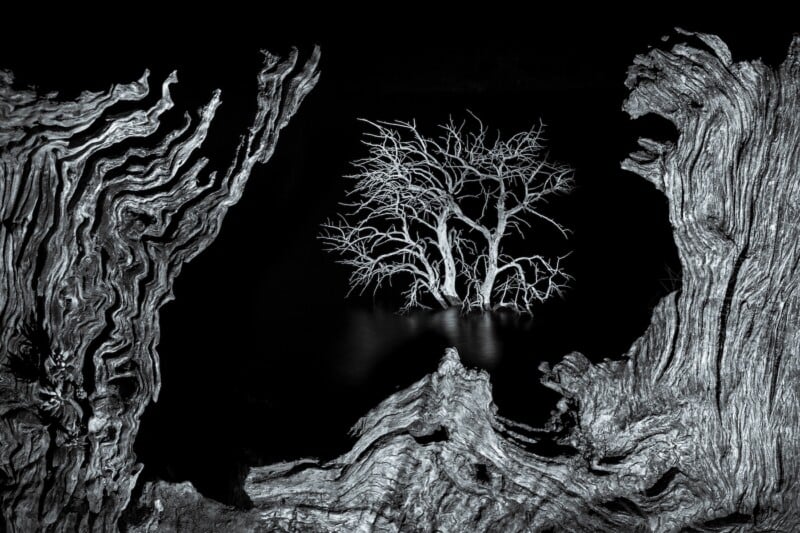
In the "Death and Decay" context, many of these images were taken in challenging field conditions—underwater, at night, or in the middle of active predation. Juan Jesus Gonzalez Ahumada’s finalist entry, "The Souls of the Swamp," utilized a dual focal-length long-exposure technique to capture dead trees in a reservoir at night. This technical complexity allows photographers to reveal textures and structures—such as the microscopic "spikes" of a fungus or the iridescent wings of a birth-giving aphid—that are invisible to the naked eye.
Broader Implications and Public Reception
The CUPOTY "Death and Decay" challenge contributes to a growing movement in wildlife photography that favors "honest" reporting over purely aesthetic or "cute" imagery. By documenting the harsher aspects of nature, photographers provide a more complete record of biodiversity and animal behavior.
The public response to such imagery is often a mix of fascination and discomfort. However, the organizers of CUPOTY argue that acknowledging death is vital for a true appreciation of life. The competition serves as a reminder that the natural world operates on a scale of time and morality that is indifferent to human sensibilities.
As the photography community looks toward the main 2026 competition, the "Death and Decay" challenge remains a standout exhibition of how the camera can be used to explore the most profound transitions in the natural world. The full gallery of winners and finalists is currently available on the CUPOTY website, offering a comprehensive look at the beauty found within the inevitable cycle of life and death.

