


The intricate journeys of migratory birds, spanning continents and connecting diverse ecosystems, underscore the critical importance of conservation efforts along global flyways. These avian travelers, navigating vast distances between breeding and non-breeding grounds, rely on a network of vital habitats, collectively known as flyways. A significant undertaking to safeguard these populations is currently underway, focusing on the expansive African-Eurasian Flyway, a route that links the Arctic to the southernmost reaches of Africa. This ambitious project, a collaboration between the RSPB (Royal Society for the Protection of Birds) in the UK and its partners, with crucial support from the Ecological Restoration Fund (ERF), highlights the complex challenges and profound rewards of protecting these interconnected natural systems.
The African-Eurasian Flyway is a testament to the interconnectedness of our planet’s biodiversity. It serves as a crucial corridor for millions of birds annually, facilitating their survival and reproductive success. The conservation of these routes is not merely an environmental concern; it is a matter of ecological integrity, impacting landscapes, countries, and even entire continents. Understanding the intricacies of this flyway and the threats it faces is paramount to ensuring the continued existence of numerous bird species.
The African-Eurasian Flyway: A Global Network of Life
The African-Eurasian Flyway is one of the world’s most significant migratory routes, encompassing a vast geographical area. It stretches from the Arctic Circle, where many species breed during the brief summer months, down through Europe and the Middle East, across the Sahara Desert, and into sub-Saharan Africa, reaching as far south as South Africa. This immense corridor is characterized by a diverse array of habitats, including tundra, forests, wetlands, grasslands, and coastal areas, each playing a unique role in the migratory cycle.

The ERF-supported project, in partnership with the RSPB, aims to bolster conservation initiatives along this flyway. The project focuses on identifying and protecting critical sites that serve as breeding grounds, stopover points, and wintering areas for migratory waterbirds. These sites are often wetlands, which are particularly vulnerable to human impact and climate change.
Monitoring Waterbirds in Malawi: A Focus on Chia Lagoon
Blessings Chingagwe, Programme Manager at the Wildlife and Environmental Society of Malawi (WESM), the BirdLife Partner in Malawi, is at the forefront of these conservation efforts. WESM’s work at Chia Lagoon, situated in the Nkhotakota district of Malawi, exemplifies the on-the-ground challenges and successes of flyway conservation. Chia Lagoon is a vital stopover and non-breeding site for migratory waterbirds, making it a critical link in the African-Eurasian Flyway.
Chia Lagoon: A Biodiversity Hotspot
Chia Lagoon, recently recognized as a Key Biodiversity Area (KBA), is a 1700-hectare shallow freshwater wetland. Its ecological significance lies in its dynamic nature, characterized by fluctuating water levels that expose rich mudflats. These mudflats are teeming with invertebrates, providing an essential food source for a diverse array of both migratory and resident waterbirds.

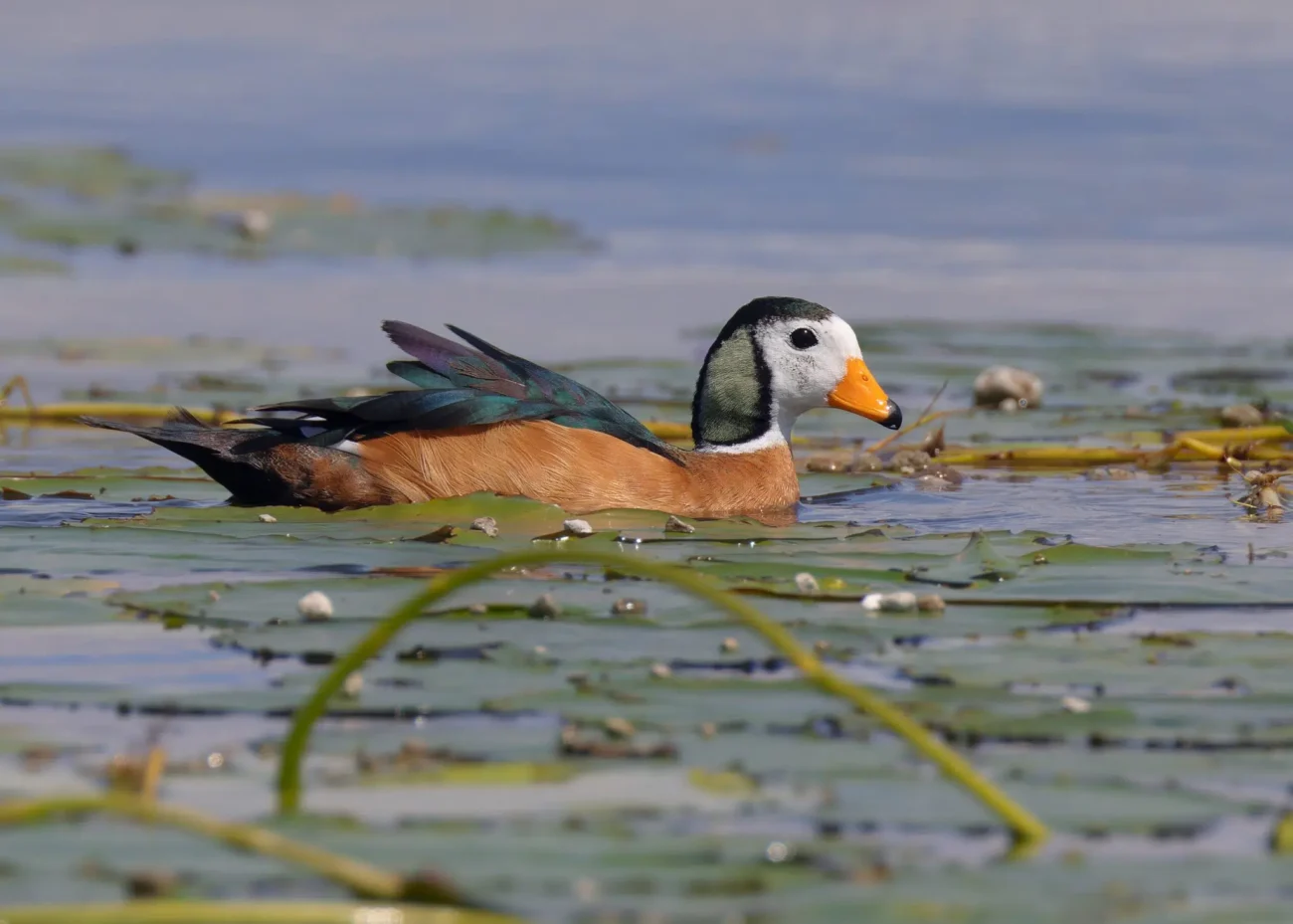
The lagoon’s habitat mosaic includes open water bodies, extensive mudflats, seasonally flooded grasslands, and surrounding agricultural landscapes. This varied environment supports a rich avian community, with notable species including the Black Heron (Egretta ardesiaca), Ring-necked Dove (Streptopelia capicola), Lesser Masked Weaver (Ploceus intermedius), African Jacana (Actophilornis africanus), and the African Pygmy-goose (Nettapus auritus). For migratory birds, Chia Lagoon offers crucial opportunities for feeding, resting, and refuge during their arduous journeys, particularly during the non-breeding season. Its ecological productivity and strategic location within Malawi make it an indispensable component of the broader African-Eurasian Flyway network.
Conservation in Action: WESM’s Initiatives at Chia Lagoon
WESM’s work at Chia Lagoon is multifaceted, encompassing data collection, community engagement, and advocacy. Over the past three years, with funding from the Darwin Initiative, WESM has undertaken the first comprehensive biodiversity and ecological assessment of the lagoon. This project marks a significant step, as Chia Lagoon is an unprotected wetland, making such a detailed study particularly crucial for informing future conservation strategies.
Waterbird Monitoring and Community Engagement
Regular waterbird monitoring has been conducted for over two years, yielding encouraging results. The number of bird records has steadily increased since 2023, growing from an initial dataset of 68 records to over 110. This increase may reflect improved survey efforts, a growing understanding of the site’s importance, or potentially an increase in the number of birds utilizing the lagoon.

To address the threat of uncontrolled hunting practices, WESM has established 18 "bird hunting clubs." These clubs are tasked with holding individual hunters accountable for adhering to hunting quotas, target species, and approved hunting methods. Furthermore, 12 members from these clubs have been trained to conduct continuous monitoring and raise awareness within local communities and among stakeholders about the ecological significance of the lagoon.
Addressing Threats and Challenges
Despite the progress, Chia Lagoon faces several significant challenges. Securing effective protection for the lagoon while ensuring sustainable community benefits remains a central hurdle. While the project’s primary focus is on waterbirds, fishing activities pose a considerable threat, particularly to the aquatic vegetation. The establishment of new docks and fishing activities within designated sanctuaries, which often overlap with bird sanctuaries, directly impacts the delicate ecosystem.
The proliferation of Invasive Alien Species (IAS), such as Azolla and Water Hyacinth, also poses a serious threat to the lagoon’s habitat. The removal of these invasive plants is complicated by the presence of crocodiles, which present a significant safety risk to those involved in removal efforts. WESM is actively seeking feasible and safe methodologies to address this ongoing challenge.

A Broader Perspective: The Interconnectedness of Flyways
Blessings Chingagwe emphasizes the profound interconnectedness of migratory bird populations and their habitats. "Migratory birds connect continents," she states. "A bird feeding at Chia Lagoon may have travelled thousands of kilometres from Europe or Asia. If just one important wetland along the flyway is lost or degraded, it can affect populations across multiple countries. Protecting wetlands in Malawi is part of protecting a global ecological system." This statement underscores the global responsibility inherent in local conservation actions.
The implications of neglecting these vital wetland habitats are far-reaching. The degradation or loss of a single critical site can trigger cascading effects, impacting bird populations across an entire flyway. This highlights the urgent need for coordinated international efforts and robust local conservation strategies.
The Whiskered Tern: An Ambassador for the Flyway
When asked to choose a species that best represents the flyway, Chingagwe selects the Whiskered Tern (Chlidonias hybrida). "With the tern being a long-range migratory bird, it is the best representation of global connectivity!" she explains. "Arriving in Malawi with the December rains, it reminds us that this small country, let alone a small wetland, is not isolated from the global community. If we are to protect the Whiskered Tern, we mean to protect every marsh, lake, river and wetland along its path. This is a perfect ambassador of the flyway because it knows no boundaries."
The Whiskered Tern, a species known for its extensive migratory movements, serves as a powerful symbol of the interconnectedness of ecosystems across vast distances. Its presence in Malawi signifies its journey from distant breeding grounds, a journey that necessitates the integrity of numerous habitats along its route. Protecting this single species inherently means safeguarding a multitude of landscapes, from its breeding grounds in Eurasia to its wintering sites in Africa.

Moments of Discovery and Community Awakening
The field of conservation is often punctuated by moments of unexpected discovery and profound connection. Chingagwe shares a humorous anecdote about the misidentification of a bird named "Jane Tambala" by the local community. This led to a delightful revelation when it was discovered that "Jane Tambala" was, in fact, the name of a participant in their program, and the bird in question was the African Jacana. Such instances highlight the cultural integration and local understanding that can enrich conservation efforts.
Another common, albeit slightly amusing, interaction involves community members inquiring if the WESM team is "feeding" the birds. This reflects a misunderstanding of conservation goals, where the focus is on protecting natural habitats and allowing birds to forage independently, rather than providing artificial sustenance. Each encounter serves as an opportunity to educate and foster a deeper understanding of ecological principles.
Optimism for the Future: Data, Awareness, and Policy
Despite the challenges, Chingagwe expresses a strong sense of optimism regarding the future of conservation at Chia Lagoon. "What makes me optimistic is that we now have solid scientific data for the first time, along with growing community awareness," she states. This dual approach, combining robust scientific evidence with heightened community engagement, is proving to be a powerful catalyst for change.
The project has garnered significant attention from local authorities. The District Council is now actively discussing the development of a comprehensive management plan for the wetland ecosystem, a crucial step towards formal protection. Furthermore, the Department of National Parks and Wildlife, which serves as the focal point for the Convention on the Conservation of Migratory Species (CMS), has indicated a willingness to consider proposing Chia Lagoon as a Ramsar site. Designation as a Ramsar site would provide international recognition and enhance conservation efforts through established frameworks for wetland protection.

Broader Implications and Future Directions
The success of the ERF-supported project in Malawi has far-reaching implications for flyway conservation globally. It demonstrates that by investing in local partnerships, scientific research, and community empowerment, significant strides can be made in protecting vulnerable ecosystems and migratory species. The project’s focus on an unprotected wetland highlights the urgent need to identify and safeguard such critical sites before they are irrevocably degraded.
The Ecological Restoration Fund (ERF) plays a pivotal role in supporting initiatives that protect biodiverse hotspots, restore degraded landscapes, and promote local environmental activism. Its commitment to re-establishing nature’s interconnections, while simultaneously fostering cultural, social, and economic opportunities for local communities, is a model for sustainable conservation. The partnership with the Darwin Initiative, funded by the UK government, further amplifies the impact of these vital conservation endeavors.
As the conservation community continues to grapple with the impacts of climate change, habitat loss, and human-wildlife conflict, the lessons learned from projects like the one at Chia Lagoon become increasingly valuable. The dedication of individuals like Blessings Chingagwe, and the collaborative spirit of organizations such as WESM and the RSPB, offer hope for the future of migratory birds and the planet’s precious natural heritage. The intricate journeys of these avian travelers serve as a constant reminder of our shared responsibility to protect the vital ecosystems that sustain them and, in turn, sustain us all.

