


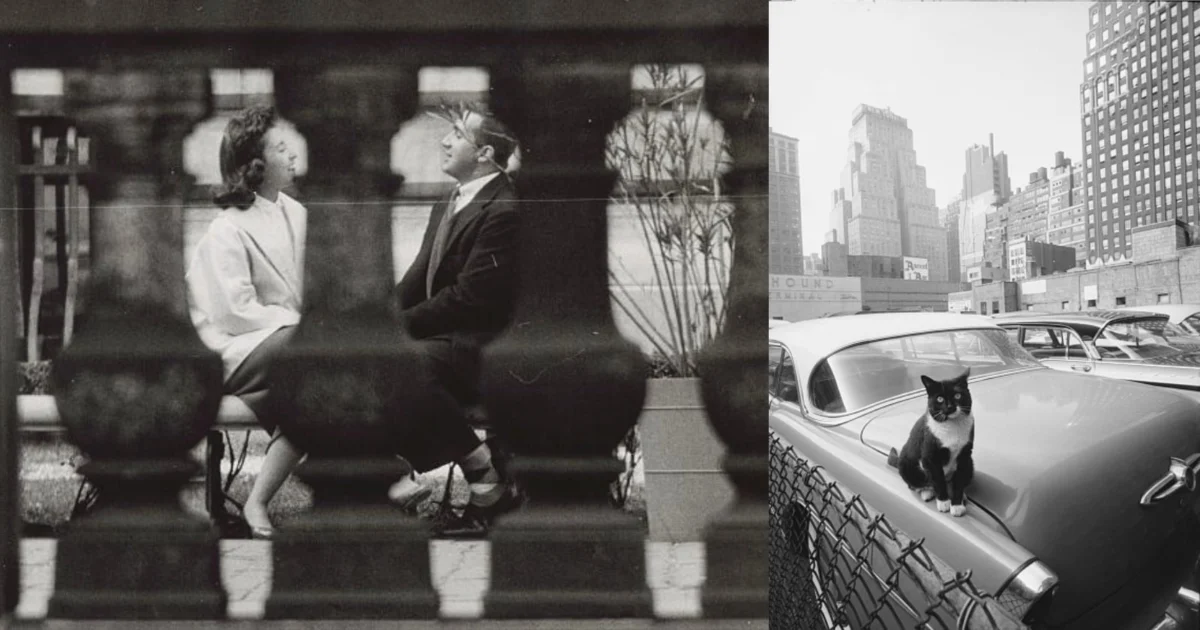
For nearly two decades, a solitary figure moved through the bustling streets of Manhattan with a precision that bordered on the ritualistic. Every afternoon at exactly 2:00 p.m., Angelo Antonio Rizzuto would descend from his modest living quarters, camera in hand, to execute a self-imposed mandate: the comprehensive documentation of New York City. Between 1952 and 1964, Rizzuto captured tens of thousands of images, creating a staggering visual record of a city in flux. Yet, like the now-famous Vivian Maier, Rizzuto’s monumental body of work remained almost entirely anonymous during his lifetime. It was only after his death, and following decades of archival processing, that the world began to grasp the scale of the "Anthony Angel Collection"—a cache of 60,000 photographs that offers a haunting, geometric, and deeply human perspective on mid-century New York.
The story of Angelo Rizzuto is one of artistic obsession intertwined with personal tragedy and profound social isolation. While his photographs crackle with the energy of the city’s crowds and the soaring ambition of its architecture, the man behind the lens lived a life of increasing withdrawal. His legacy, now preserved within the Library of Congress, serves as a poignant reminder of the "hidden" masters of photography—individuals whose work exists not for fame or commercial gain, but as a necessary response to their own internal world and the environment they inhabited.
A Life Defined by Turmoil and Transition
Angelo Antonio Rizzuto was born in 1906 in South Dakota to Sicilian immigrant parents. His early years were spent in Omaha, Nebraska, where his family sought the American Dream through labor and land ownership. Rizzuto was intellectually gifted, eventually securing a place at Harvard Law School. However, his trajectory toward a conventional professional life was derailed by a series of personal and psychological crises. He did not complete his studies at Harvard, and the death of his father triggered a bitter and protracted legal dispute over the family estate.
The fallout from this familial strife was catastrophic for Rizzuto’s mental health. In 1941, following a suicide attempt, he was institutionalized. This period marked the beginning of a long struggle with mental illness that would color the rest of his life. After a brief and troubled stint in the military, which resulted in a medical discharge, Rizzuto spent years drifting across the United States. It was not until he settled in New York City in the late 1940s that he found the canvas for his life’s work.
Despite his struggles, Rizzuto was not without resources. He eventually used his inheritance to purchase a brownstone on East 51st Street. In a striking paradox that defined his existence, he did not live in the spacious house he owned. Instead, he rented a cramped, isolated room elsewhere, using the brownstone primarily as a laboratory and darkroom. This separation of "living" and "creating" highlighted his reclusive nature; he avoided social contact for the vast majority of the day, emerging only for his 2:00 p.m. photographic excursions.
The "Little Old New York" Project: A Decadelong Obsession
Rizzuto’s photographic output was not aimless. He was driven by a specific, ambitious goal: the publication of a book he titled Little Old New York. This project was intended to be a definitive visual essay on the city’s character. His methodology was as rigorous as his schedule. Rizzuto frequently used bulk film, which he loaded into his cameras to allow for hundreds of exposures in a single outing. On some days, he would carry multiple cameras, each designated for different types of shots or lighting conditions.
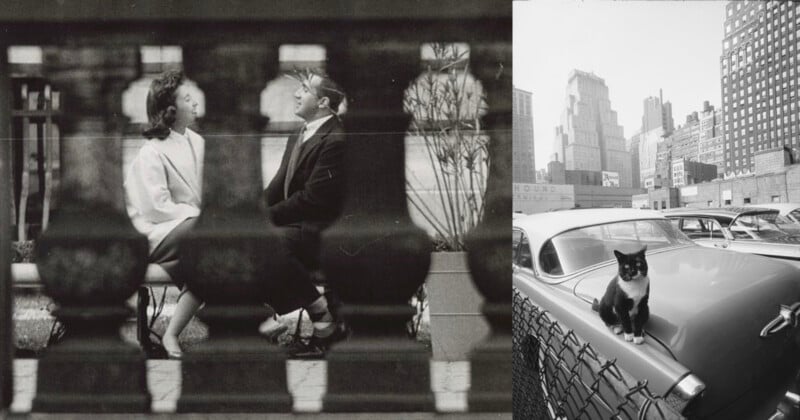
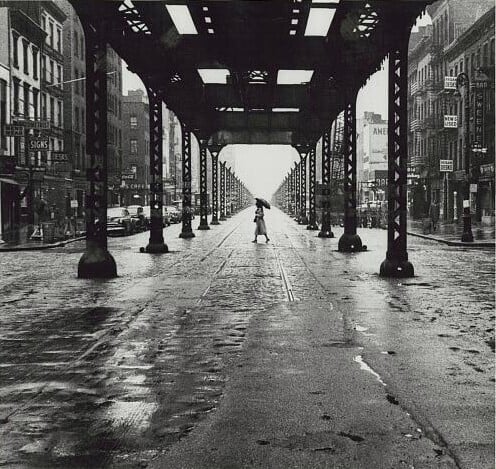
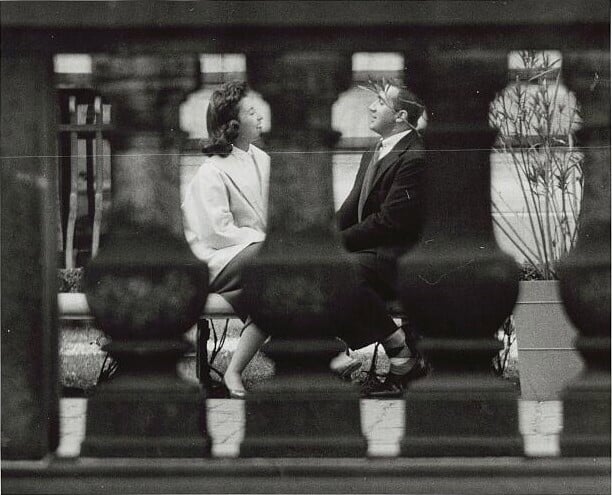
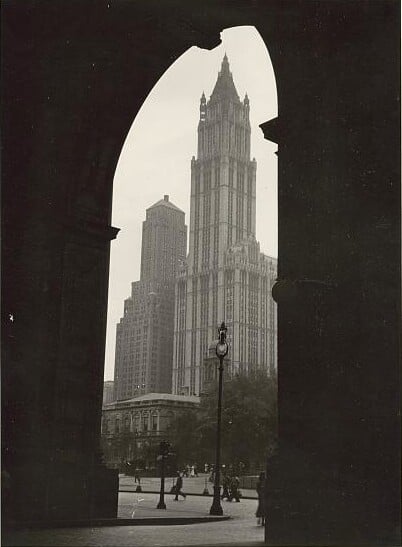
His archive, which eventually grew to approximately 60,000 images, reveals a photographer with a sophisticated eye for composition. Rizzuto was particularly drawn to the "bones" of the city. He frequently photographed the massive infrastructure of Manhattan—the Woolworth Building, the Brooklyn Bridge, and the complex web of subway tracks. He utilized architectural elements such as railings, fences, and window frames to create "layers" within his images, often framing his subjects in a way that emphasized the claustrophobia and the grandeur of urban life.
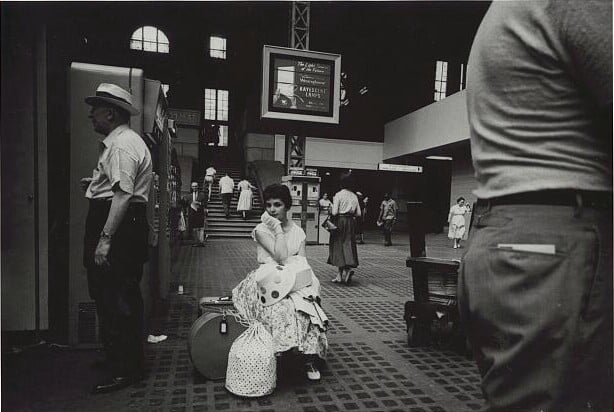
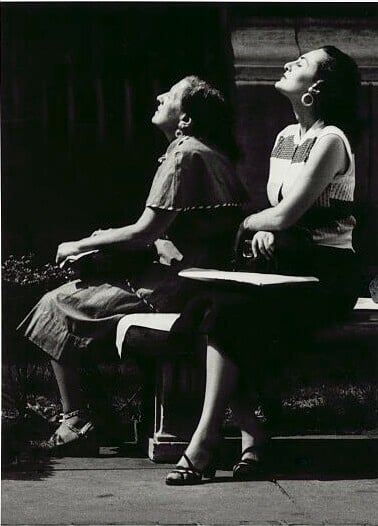
However, the "Anthony Angel" Collection—the name Rizzuto adopted as an Americanized pseudonym—is not merely a collection of architectural studies. It is a deeply empathetic record of the city’s inhabitants. Rizzuto captured commuters in Penn Station, children playing on sidewalks, and nuns moving through the city like silent sentinels. His subjects were often unaware of his presence, resulting in candid moments of joy, exhaustion, and contemplation. One of his most celebrated recurring themes was the subway system, where he captured the diverse faces of New York in the close quarters of the underground.
Chronology of an Artist in the Shadows
The timeline of Rizzuto’s life in New York provides a framework for understanding his prolific output:

- 1940s: Rizzuto arrives in New York City after years of itinerant travel and psychiatric challenges.
- 1949: He begins taking photographs in earnest, focusing on iconic landmarks like the Woolworth Building.
- 1952: The "2:00 p.m. ritual" becomes a fixed part of his daily life. He begins the formal process of documenting the city for Little Old New York.
- 1953: A shift occurs in his work. He begins a practice of ending almost every roll of film with a self-portrait. These images often show Rizzuto at the same angles and in the same light as his subjects, suggesting a psychological merging with his work.
- 1952–1964: The peak of his productivity. He produces the bulk of the 60,000 images now held by the Library of Congress.
- 1964: Rizzuto’s health begins to decline, and his daily photographic excursions become less frequent.
- 1967: Angelo Rizzuto dies of cancer. In his will, he leaves his entire archive and the proceeds from the sale of his East 51st Street brownstone to the Library of Congress, with the express wish that they publish his book.
The Library of Congress and the Preservation of a Legacy
The journey of Rizzuto’s work from a reclusive darkroom to a national archive was fraught with legal hurdles. Following his death in 1967, his will was contested by surviving family members. This litigation tied up the estate for years, leaving the massive collection of negatives and prints in a state of limbo. It was not until 2001 that the Library of Congress finally took full control of the archive and the accompanying funds.
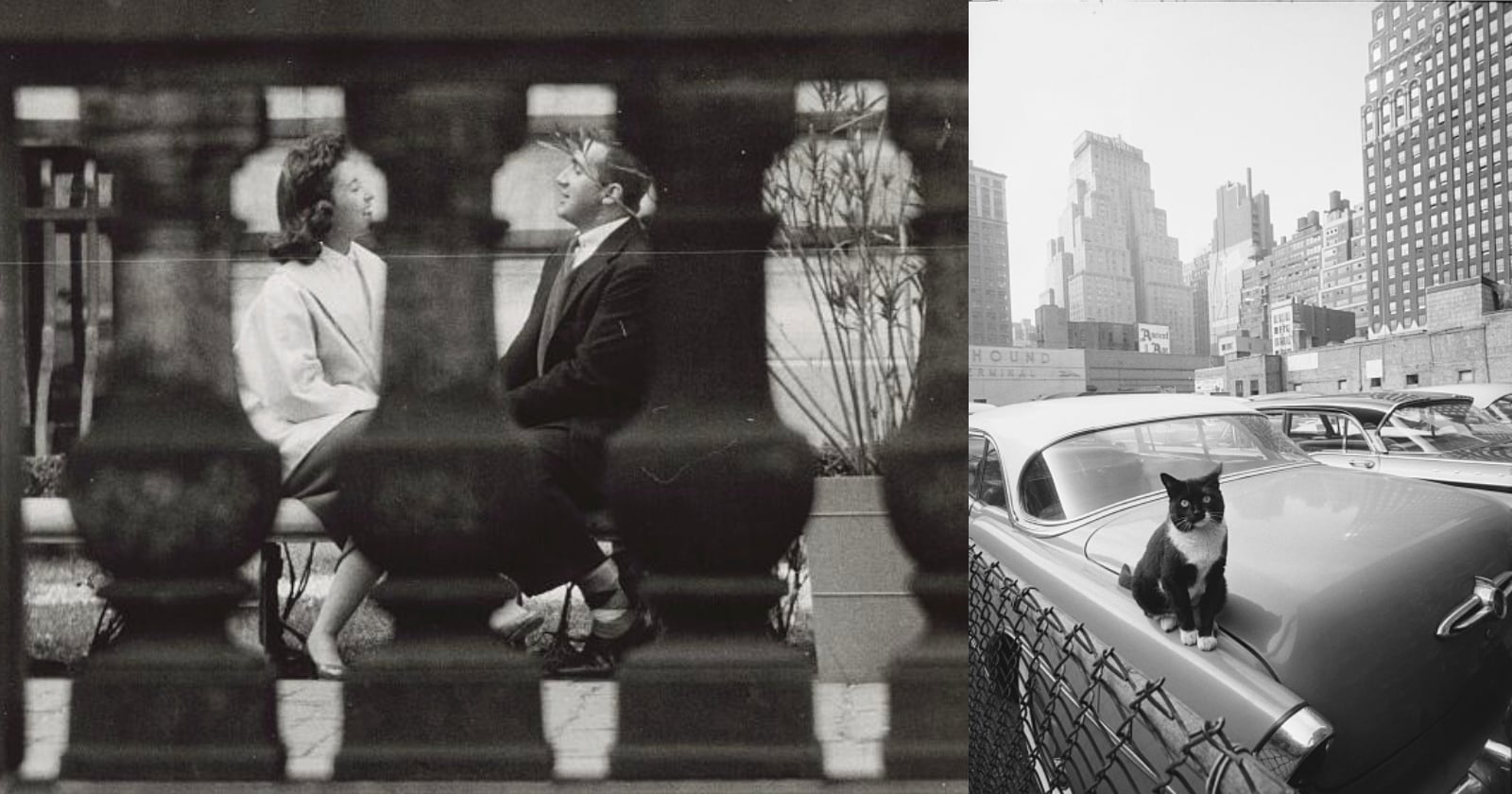
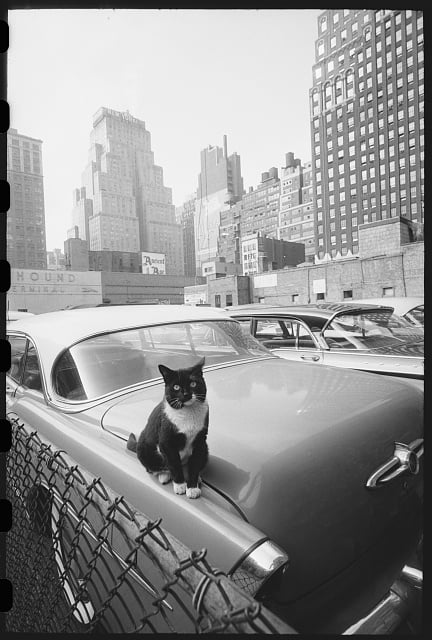
The task of cataloging 60,000 images was monumental. Unlike many photographers who organize their work chronologically, Rizzuto organized his contact sheets by theme. This thematic arrangement provided a window into his psyche but presented a challenge for traditional archival methods. Jan Grenci, a reference specialist in the Prints and Photographs Division of the Library of Congress, played a pivotal role in bringing Rizzuto’s work to light. In her analysis, she noted the recurring motifs that obsessed the photographer: "cats and dogs, children, storefronts, people on the subway and in train stations, and nuns."
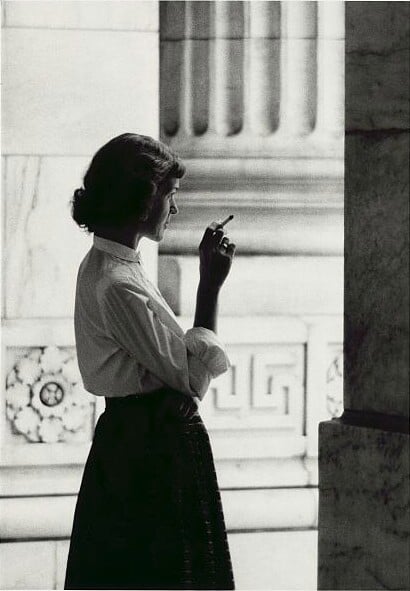
The Library of Congress honored Rizzuto’s final request by naming the archive the "Anthony Angel Collection." Over the last two decades, the digitization of these images has allowed researchers and the public to finally see the "Little Old New York" that Rizzuto spent his life trying to build.
Parallel Lives: Rizzuto vs. Vivian Maier
The discovery of Rizzuto’s work has inevitably drawn comparisons to Vivian Maier, the Chicago nanny whose massive archive of street photography was discovered at an estate auction in 2007. Both photographers were "outsiders" who lived solitary lives while obsessively documenting the world around them. Neither sought the limelight, and both possessed a technical and artistic proficiency that rivaled the professional photojournalists of their era.
However, the differences in their legacies are significant. Maier’s work was discovered by chance and became a global sensation through savvy marketing and a series of high-profile exhibitions and documentaries. Her estate became the subject of intense commercial and legal disputes. In contrast, Rizzuto took deliberate steps to ensure his work reached a public institution. By bequeathing his archive directly to the Library of Congress, he bypassed the commercial art market, ensuring that his work would be preserved as a historical and artistic resource rather than a commodity.
Furthermore, Rizzuto’s work is arguably more "architectural" and "intentional" in its project-based nature. While Maier was a brilliant observer of human moments, Rizzuto was attempting to map the very soul of a city through its physical structures and its inhabitants. His self-portraits also add a layer of psychological complexity that is less present in Maier’s work, offering a raw look at the man behind the lens.
Analysis: The Significance of the "Undiscovered" Artist
The emergence of the Anthony Angel Collection raises profound questions about the nature of art and the history of photography. For decades, the canon of street photography was defined by names like Henri Cartier-Bresson, Robert Frank, and Diane Arbus—photographers who were part of an established artistic community. The cases of Rizzuto and Maier suggest that a parallel history of photography exists—one created in the shadows by individuals for whom the act of taking a picture was a private necessity rather than a public performance.
Rizzuto’s work is particularly significant for its sheer volume and consistency. To photograph a single city for 18 years with such intensity provides a "time-lapse" of urban evolution that is rare in the medium. His focus on the geometric and the structural also aligns him with the modernist traditions of the early 20th century, even as his candid shots of New Yorkers anticipate the gritty street photography of the 1960s and 70s.
From a sociological perspective, Rizzuto’s archive is an invaluable record of mid-century New York. It captures a city in the midst of the post-war boom, showing the construction of new skyscrapers alongside the persistence of "Little Old New York" in the faces of its elderly residents and its quiet corners.
Conclusion: A Vision Realized Posthumously
Angelo Antonio Rizzuto died without ever seeing his book published or his photographs hanging in a gallery. He remained "Anthony Angel" to the few who knew him—a quiet, eccentric man who walked the streets with a camera. Yet, his foresight in gifting his life’s work to the Library of Congress ensured that his obsession would eventually find its audience.
Today, the Anthony Angel Collection stands as a testament to the power of the singular vision. Rizzuto’s photographs do more than just show us what New York looked like; they show us how it felt to one man who stood on the outside looking in. As more of his 60,000 images are analyzed and shared, Rizzuto is finally taking his place among the great chroniclers of the American urban experience. His story confirms that art does not always require an audience to be valid; sometimes, the act of seeing is enough. Through the lens of Angelo Rizzuto, the "Little Old New York" he loved is no longer a private memory, but a public treasure.

